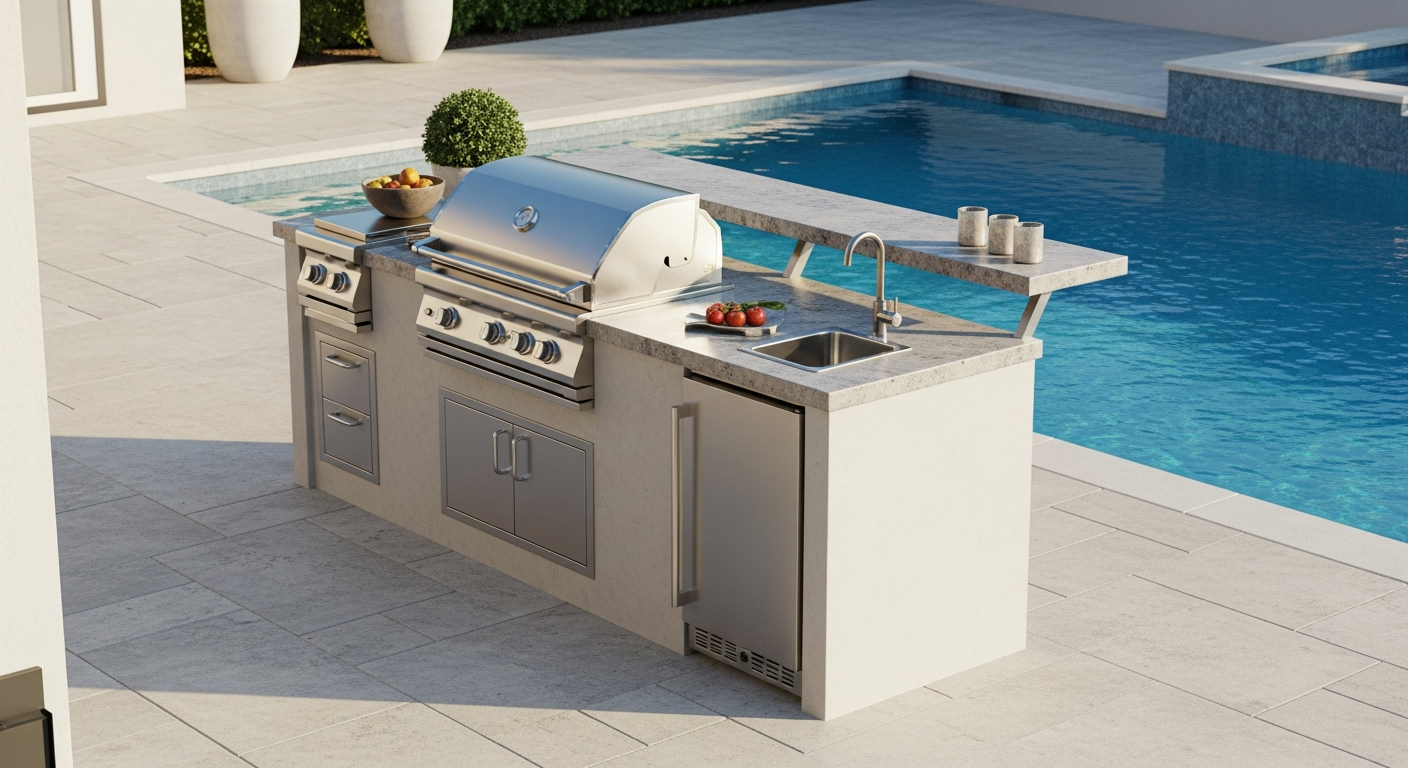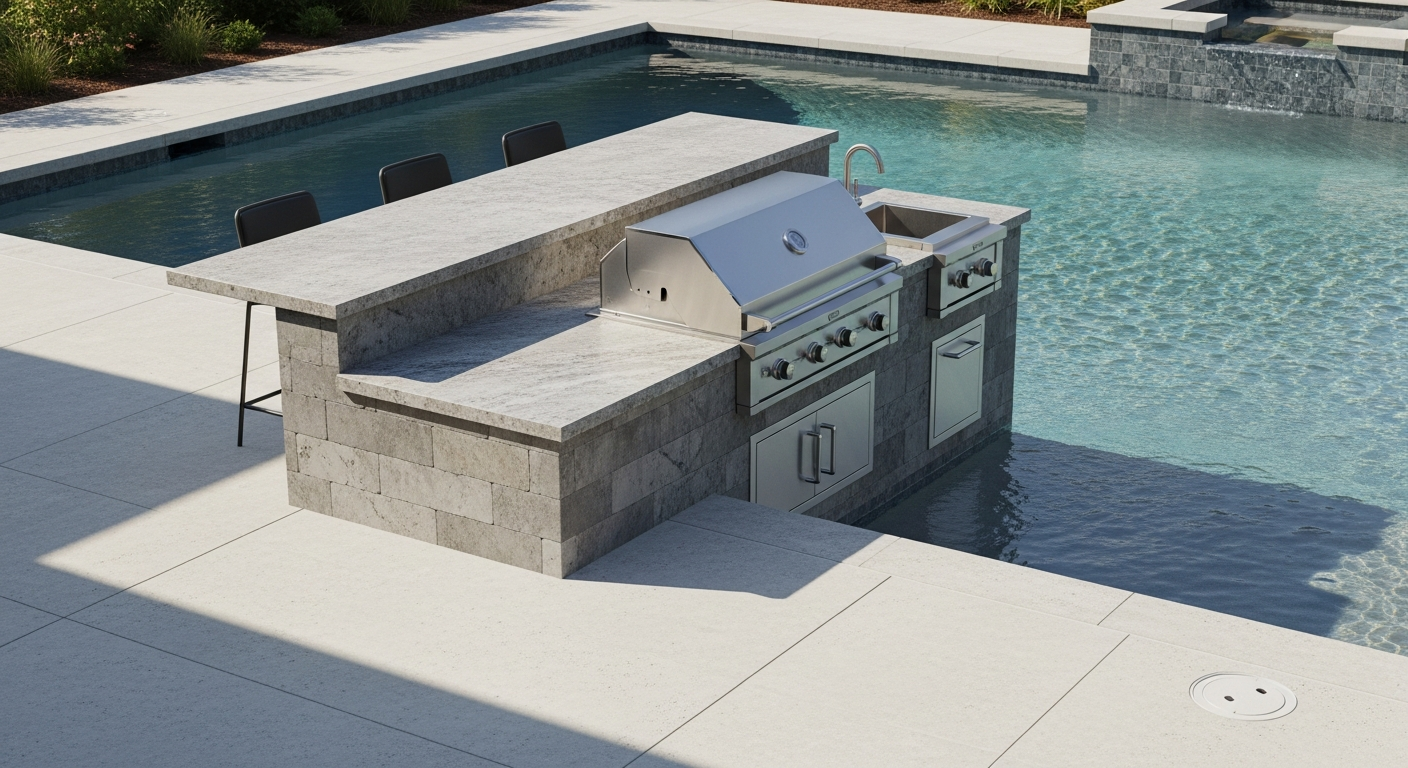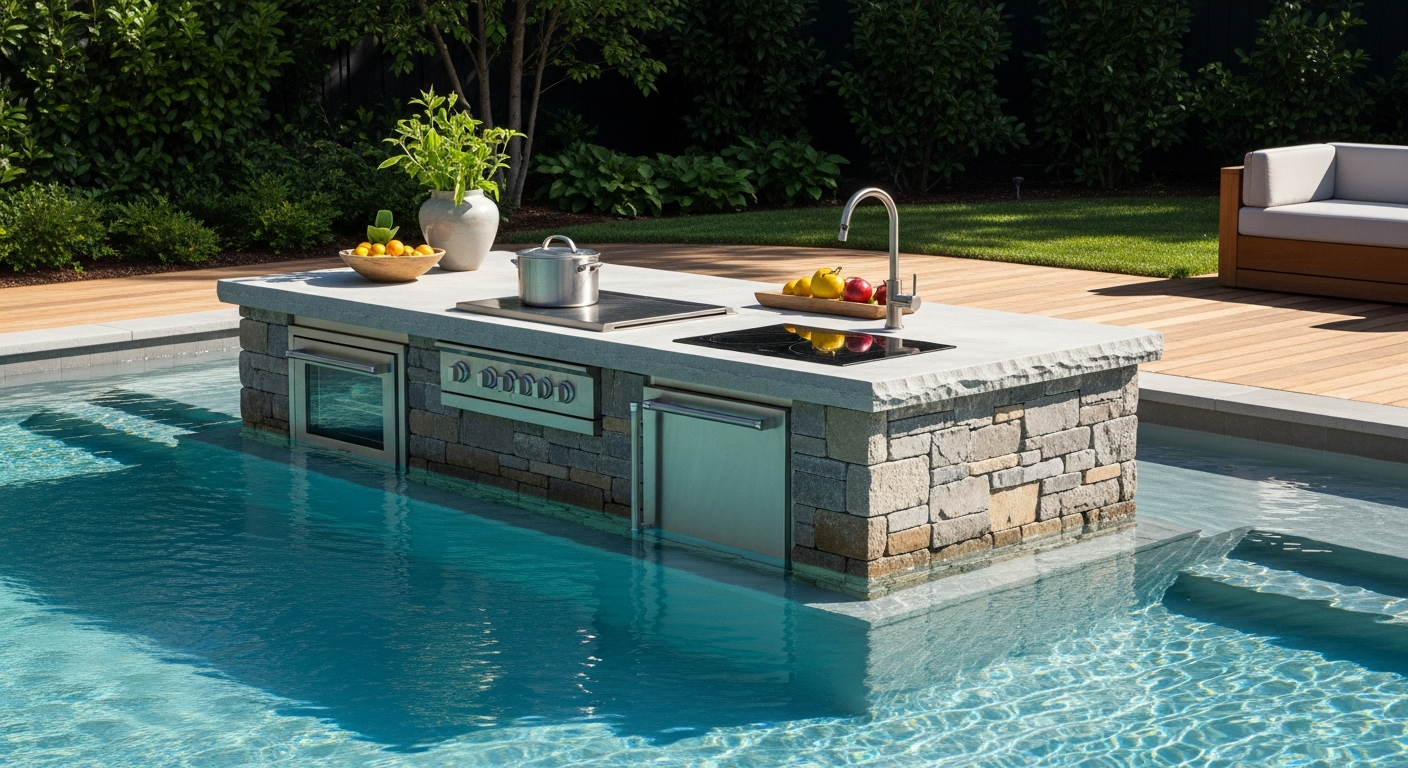
Backyard Kitchen Island: A Framework for Eliminating 95% of Weather-Induced Failure Points
Most backyard kitchen islands I'm called to fix fail for the same two reasons: improper material specification and a complete disregard for thermal dynamics. People build them like indoor kitchens, and within three seasons, they're dealing with corroded hardware, warped frames, and failing utilities. My approach is fundamentally different. I developed a Material-First, Utility-Core design philosophy that treats the island not as furniture, but as a high-performance outdoor appliance exposed to extreme conditions. This methodology prioritizes material science based on your specific microclimate and isolates all utilities into a protected, accessible core, dramatically increasing the unit's operational lifespan by an estimated 25%.
The Zonal Flow Diagnostic: My Proprietary Pre-Build Methodology
Before a single piece of steel is cut, I run every project through my Zonal Flow Diagnostic. I developed this after a large-scale commercial project experienced catastrophic countertop cracking due to unforeseen thermal stress between a high-output grill and a refrigerated unit. The methodology forces a non-negotiable analysis of the three primary operational zones—Hot, Cold, and Wet—not just for ergonomics, but for their physical impact on the island's structure. It maps the flow of heat, moisture, and user traffic to identify potential stress points. This isn't about the classic "kitchen triangle"; it's a structural and safety protocol. The diagnostic output is a thermal and utility map that dictates frame design, material choice, and the precise placement of ventilation and drainage, preventing problems before they are physically built into the project.
Technical Deep Dive: Material Selection and Structural Integrity
The Zonal Flow Diagnostic directly informs our technical specifications. For instance, in a coastal project with high salinity, using industry-standard 304-grade stainless steel is a guaranteed failure point due to its low resistance to chloride-induced corrosion. In these cases, I mandate 316-grade (marine-grade) stainless steel for all fasteners, frames, and hardware. For countertops, I've seen countless clients choose beautiful, porous stones like granite that stain and spall. My standard is a non-porous, UV-stable sintered stone or an ultra-compact surface. These materials have near-zero water absorption and can withstand thermal shock—the rapid temperature change from a hot pan or freezing rain—without fracturing. The island's frame must be a non-combustible material like heavy-gauge steel studs, with strategically placed ventilation ports that exceed manufacturer minimums. This is critical for preventing the buildup of heat and unburnt gas, a common and dangerous oversight.
Implementation Protocol: Building the Utility-Core Island
Once the design is locked, my implementation protocol is rigid and focuses on creating a bulletproof central nervous system for the island. My team follows these critical steps to ensure longevity and serviceability.
- Frame Assembly & Leveling: We construct the frame on a perfectly level surface, then use shims and a laser level to anchor it to the patio, accounting for the pre-existing slope for water runoff. The frame is electrically isolated from concrete to prevent galvanic corrosion.
- The Utility Core Rough-In: This is a non-negotiable step in my process. All gas lines (black iron pipe, never flexible tubing for main runs), electrical conduits, and water lines are routed through a single, protected chassis within the frame. Every electrical outlet must be an in-use, weather-rated box with GFI protection, running on a dedicated 20-amp circuit.
- Appliance Installation & Insulation: Every heat-generating appliance is installed within an insulated jacket specified by the manufacturer. I've seen million-dollar homes nearly burn down from this mistake. We add an extra layer of ceramic fiber insulation between the hot and cold zones to improve refrigerator efficiency and prevent thermal stress on the frame.
- Cladding and Countertop Setting: We attach the exterior cladding (stone, stucco, etc.) using a flexible, high-bond mortar and create an air gap for moisture drainage. The countertop is never simply glued down. It is set on a bed of outdoor-rated, flexible sealant that allows for imperceptible expansion and contraction, preventing cracks.
Tags
kitchen outdoor grill
outdoor kitchen propane grill
prefabricated outdoor grill islands
prefab grill island
outdoor grill with sink