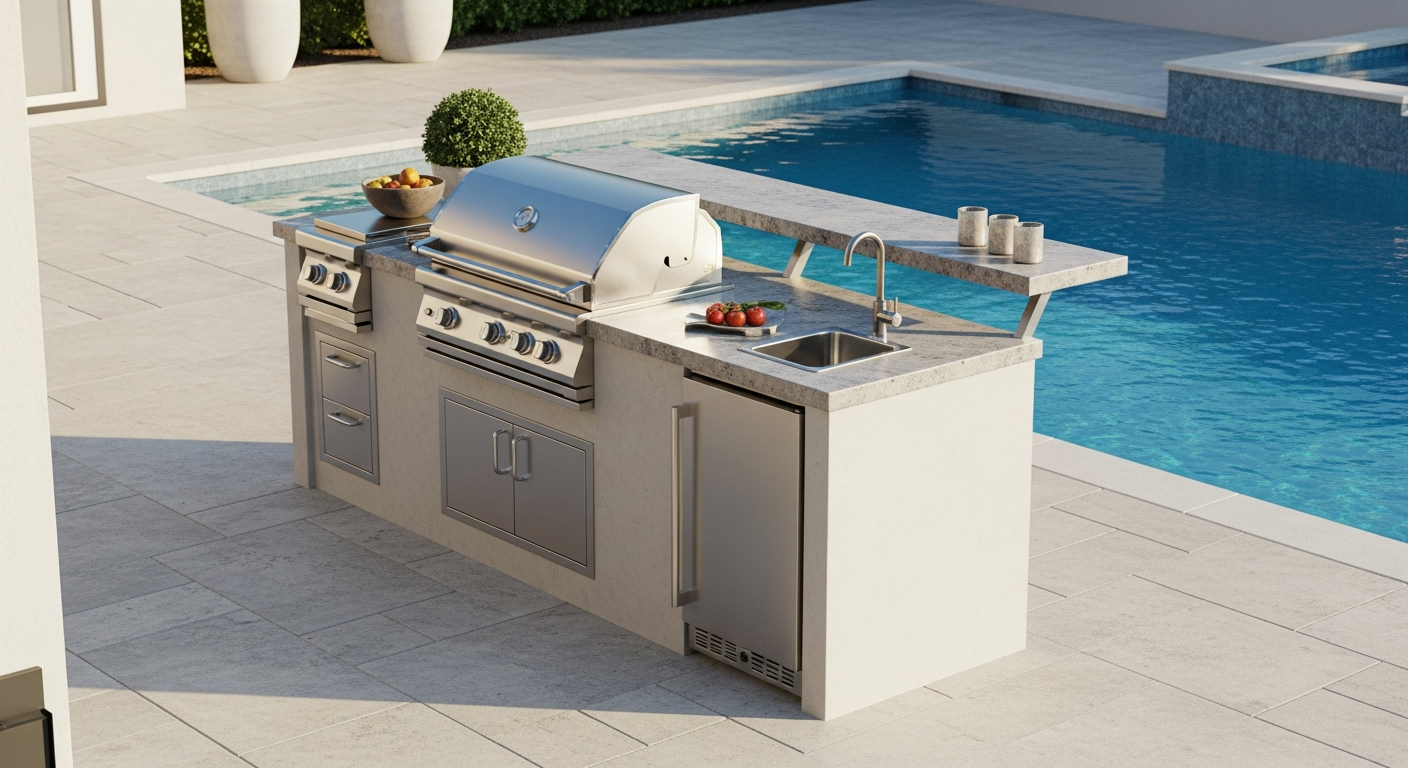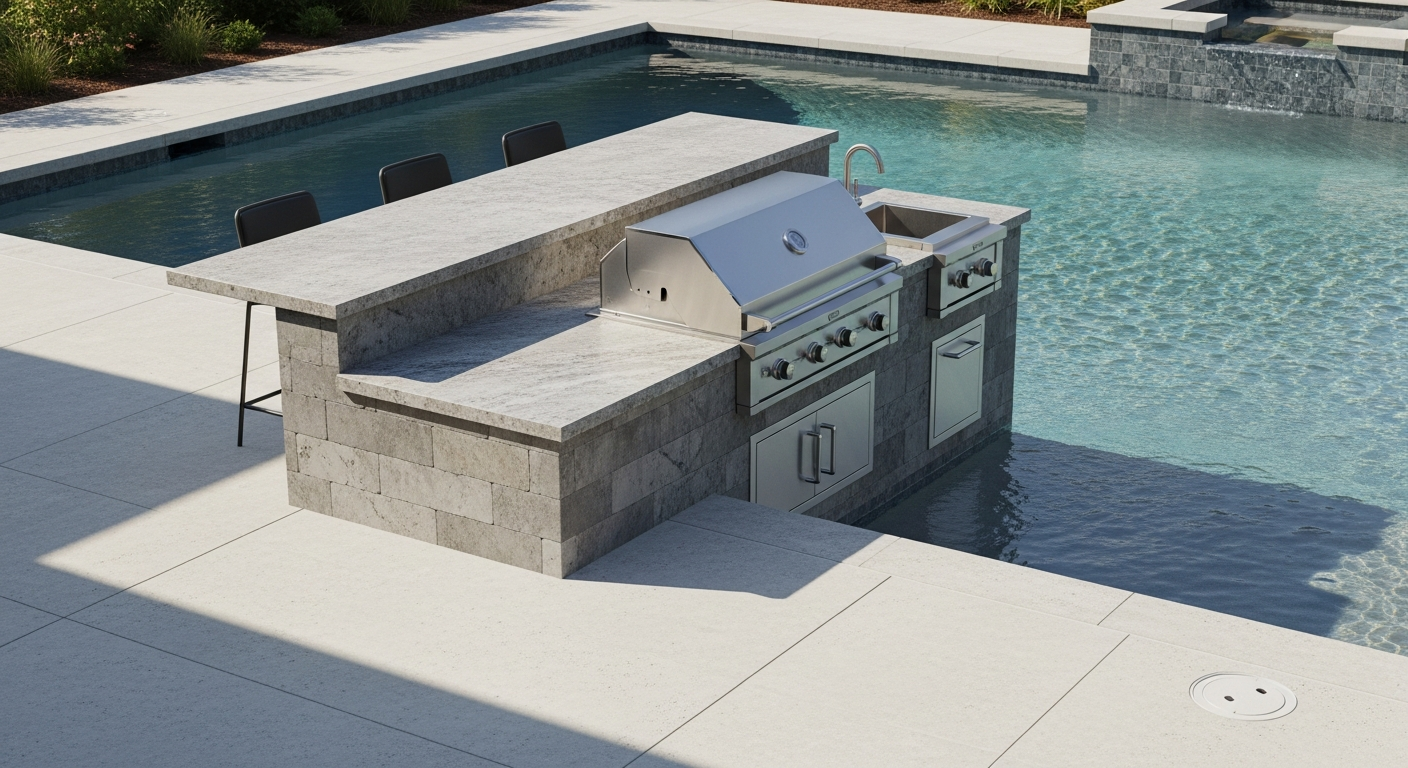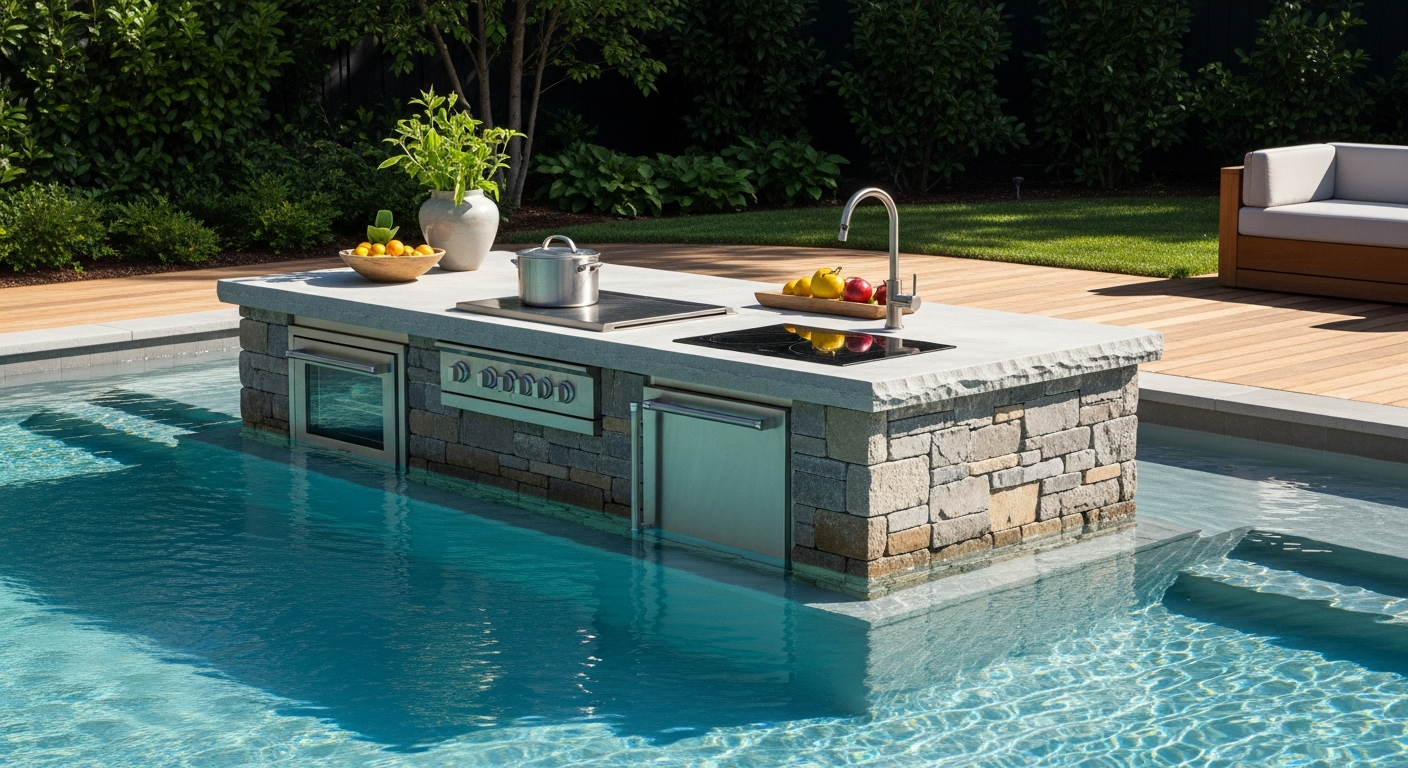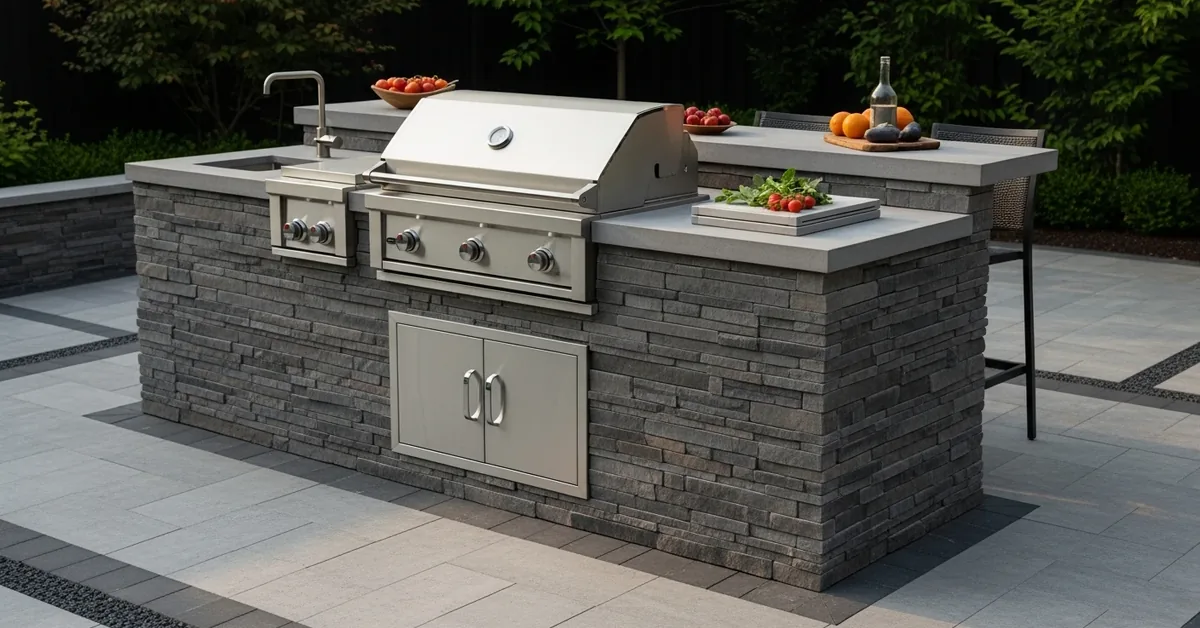
Outdoor Kitchen Grill Island: Engineering for 30+ Year Structural Longevity
I've seen more outdoor kitchen grill islands fail from overlooked structural principles than from any other cause. The common advice focuses on shiny appliances and countertop materials, but the real point of failure is almost always the unseen core. My entire approach is built on preventing the two silent killers of these projects: internal heat buildup and material-specific thermal expansion. This isn't just about building something that looks good for a year; it's about engineering a permanent outdoor fixture that performs flawlessly for decades.
The critical mistake I’ve corrected on multi-million dollar residential projects is improper ventilation planning. A beautiful stone-clad island can effectively become a convection oven for its own internal components if airflow isn't meticulously managed. My methodology treats the island's internal cavity not as empty space, but as an active thermodynamic system that requires precise engineering to ensure safety and prevent a 25% reduction in appliance lifespan due to chronic overheating.
The Structural Failure Triad: A Diagnostic Framework
After deconstructing dozens of failing or underperforming grill islands, I developed what I call the "Structural Failure Triad." It’s a diagnostic model I use to pinpoint weaknesses before a single screw is turned. Most designs suffer from at least one, if not all three, of these fundamental flaws. The triad consists of: Material Mismatch, Thermal Suffocation, and Utility Entrapment. I once consulted on a project where the countertop had a hairline crack after just one season. The builder blamed the stone, but my diagnosis revealed the true culprit was Thermal Suffocation—the frame expanded and contracted at a different rate than the unventilated core, putting immense stress on the countertop.
Counteracting The Triad: Material Science & Airflow Engineering
To defeat the Failure Triad, my technical specifications are non-negotiable. For Material Mismatch, the solution is a unified, non-combustible core. I mandate 20-gauge steel studs for framing and 1/2-inch cement board as sheathing. This eliminates the risk of rot from moisture and, more critically, the fire hazard posed by wood frames. For appliances and access doors, I specify only 304-grade stainless steel. I’ve seen builders try to cut costs with 430-grade, which lacks the nickel content and rusts within two years in a humid climate.
To prevent Thermal Suffocation, I implement a proprietary ventilation system I call the "Passive Airflow Chimney." This requires a minimum of two vents on opposing sides of the island, one low and one high, creating a natural convection current. For every 10,000 BTUs of appliance power, I calculate the need for an additional 5 square inches of net-free ventilation area. This simple calculation prevents the heat-soak that degrades wiring, damages gas lines, and warps frames. Finally, to avoid Utility Entrapment, all gas, water, and electrical lines are run through a planned, accessible chase within the frame before sheathing, ensuring future servicing doesn't require demolition.
Blueprint to Execution: My 5-Phase Island Construction Protocol
Building an island that lasts requires a disciplined, phased approach. Deviating from this sequence is the most common cause of on-site errors and costly rework. I've refined this process over years of field application to be as efficient and foolproof as possible.
- Phase 1: Foundation and Utility Mapping. Before any framing, we pour a reinforced concrete slab. Critically, all utility stub-outs (gas, electric, water) are precisely placed according to the final appliance schematic. A GFCI-protected electrical circuit is mandatory for all outlets.
- Phase 2: Steel Frame Assembly. We construct the island's skeleton using steel studs and track, fastened with self-tapping screws. The entire frame must be perfectly level and square; a deviation of more than 1/8-inch over 8 feet is unacceptable.
- Phase 3: Sheathing and Vent Integration. We clad the frame with cement board, ensuring all seams are taped and mudded as you would with interior drywall for a monolithic, waterproof shell. This is when the vent locations, based on my airflow calculations, are precisely cut.
- Phase 4: Cladding and Countertop Templating. The chosen veneer (stone, stucco, etc.) is applied to the cement board. Only after the cladding is complete do we create a precise template for the countertop. Templating before cladding is a rookie mistake that leads to improper overhangs.
- Phase 5: Appliance Installation and System Purge. Appliances are installed last. We perform a full gas line pressure test for a minimum of 30 minutes to detect any leaks. All electrical systems are tested, and the grill is fired up for a "burn-in" to cure factory coatings and verify ventilation performance under load.
Tags
outdoor grill with fridge
modern outdoor grill
bbq grill kitchen
outdoor kitchen grill
outdoor kitchen bbq grill
Outdoor Kitchen Grill Island FAQ
What's the best material for my grill island countertop to withstand weather and cooking stains?
Granite or quartzite are the top choices for outdoor countertops due to their high resistance to heat, stains, and ultraviolet light degradation. While popular indoors, materials like quartz are a poor choice for outdoor use because the resins that bind the stone will yellow and break down under direct sun exposure. For a truly durable surface, a 3-centimeter thick slab of a dense natural stone like granite is ideal, as it will not crack during freeze-thaw cycles. Always ask for a sealant designed for outdoor applications to be applied, which helps prevent oil from a stray burger from becoming a permanent mark.
Does my grill island need to be vented, even if it's outside?
Yes, any grill installed in a combustible structure like a typical island must have proper ventilation to prevent heat and gas buildup. Your grill's manual will specify the minimum ventilation required, often calling for at least two vents, each with a minimum of 20 square inches of free area, placed on opposite sides for cross-flow. The critical, non-obvious risk is not just fire but a gas explosion; a small propane leak can fill the unvented cabinet, creating a bomb that can be ignited by the grill's own starter. This is a non-negotiable safety feature, not an aesthetic option.
Can I place my grill island directly on my wooden deck or patio pavers?
Placing the island on pavers is standard, but a wooden deck requires careful consideration of the structure's weight and fire safety. A typical grill island can weigh over 1,000 pounds, potentially exceeding the deck's load capacity without additional support blocking beneath. More importantly, you must use a non-combustible base like concrete backer board directly under the island frame to create a thermal break. Simply setting a metal frame on wood is a fire hazard, as radiant heat can slowly char and eventually ignite the decking over time, even without direct flame contact.
Do I need to run dedicated electrical and gas lines to my grill island?
Yes, for any built-in grill and accessories like refrigerators or lighting, you will need dedicated utility lines installed by licensed professionals. A natural gas line must be properly sized for the grill's BTU rating and buried at the code-required depth, typically 18 inches, to prevent accidental rupture. For electrical, a ground-fault circuit interrupter (GFCI) protected circuit is mandatory for all outdoor outlets to prevent shock hazards in wet conditions. Using a simple extension cord or a portable propane tank inside the cabinet are dangerous, temporary solutions that create fire and tripping risks.
What's the real difference between a drop-in grill and a freestanding one for an island?
A drop-in grill is specifically designed to be supported by the countertop, requiring a precise cutout and an insulating jacket for installation in combustible structures. A freestanding grill cannot simply have its cart removed and be placed into an island; it lacks the proper support flanges and, crucially, the required ventilation and heat shielding for a built-in application. Attempting to use a freestanding unit this way voids its warranty and creates a serious fire hazard, as the control panel and gas lines are not designed to be enclosed within a hot, unvented cabinet.
How do I prevent my stainless steel grill and doors from rusting outside?
True rust prevention depends on the grade of the stainless steel and regular cleaning, as not all stainless is created equal. Insist on components made from 304-grade stainless steel, which has a higher nickel and chromium content for superior corrosion resistance compared to the cheaper 430-grade. The non-obvious problem is that surface contaminants, like iron particles from nearby construction or steel wool, can cause even high-grade stainless to show rust spots. Clean your stainless components regularly with a dedicated stainless steel cleaner and a soft cloth, always wiping with the grain, to remove these deposits before they cause pitting.