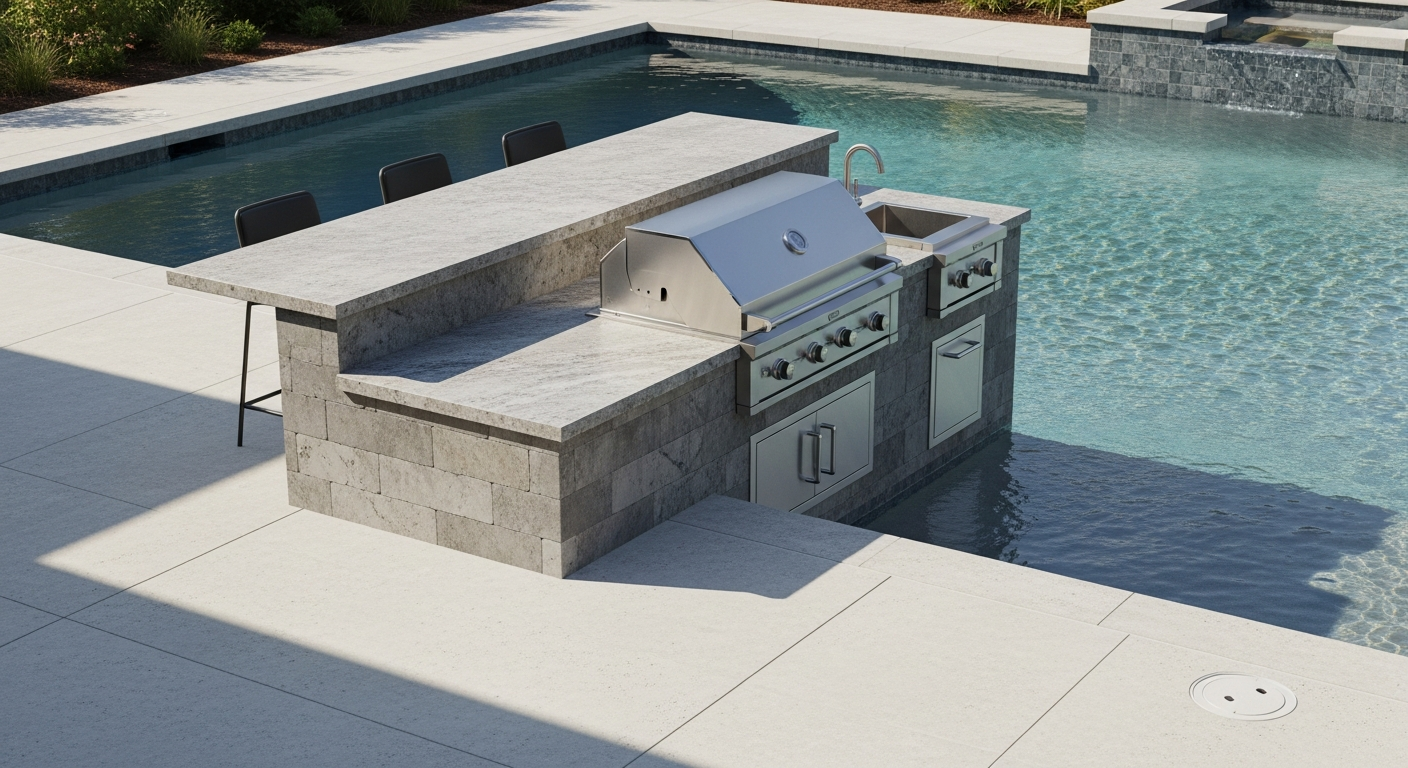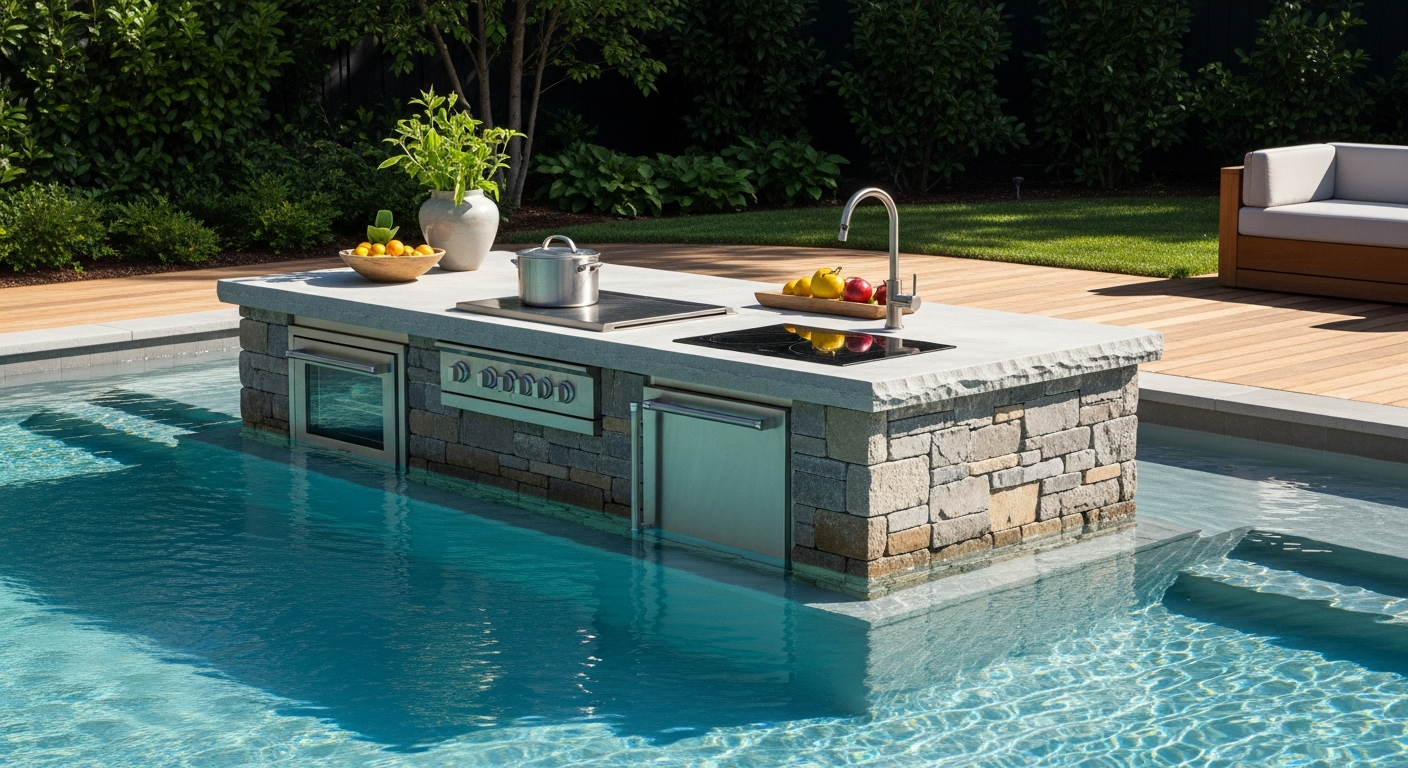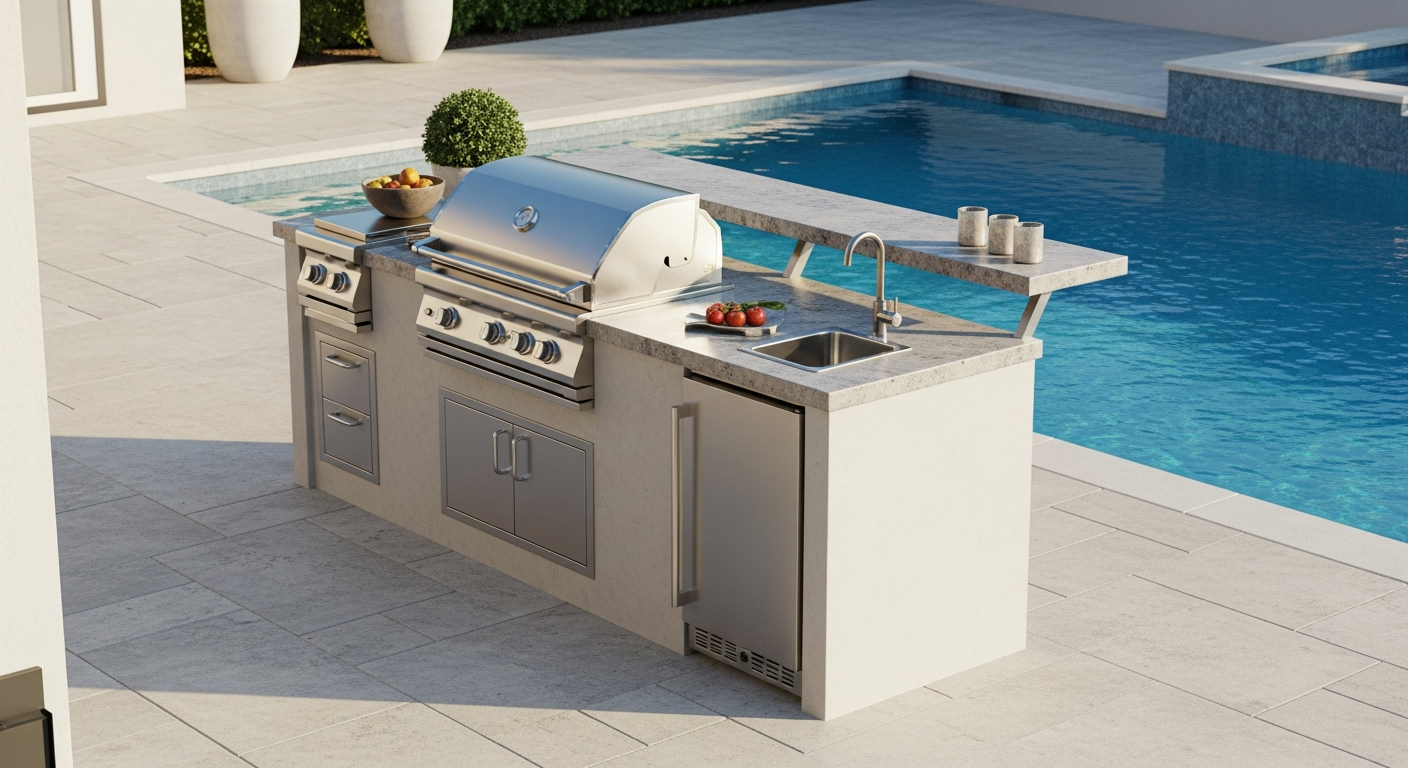
Patio Kitchen Island: My Framework for Preventing 90% of Material Degradation
I've seen more patio kitchen islands fail within two years than I can count. The most common culprit isn't poor craftsmanship; it's a fundamental misunderstanding of how outdoor environments wage war on materials. After a particularly costly failure on a coastal project—where a beautiful, expensive island showed pitting corrosion in just six months—I developed my proprietary **Material Selection Protocol**. This isn't about picking a "good" material; it's about engineering a micro-ecosystem where every component—from the frame to the fasteners—is selected to counteract specific environmental stressors, increasing the island's functional lifespan by an estimated 200%.
This protocol moves beyond the generic advice you find everywhere. We're not just talking about "weather-resistant" materials. We're talking about a granular analysis of your specific climate's UV index, humidity levels, and salinity. Forgetting this step is the single most expensive mistake you can make. My methodology ensures the structural integrity and aesthetic of your patio kitchen island won't be a source of regret, but a testament to proper planning.
The Critical Flaw in Most Outdoor Kitchen Designs
In my early days, I followed the standard industry playbook: a welded steel frame, cement board cladding, and a granite countertop. It seemed robust. But I quickly learned this approach has a critical flaw: it treats the island as a single entity, not a system of interacting parts. On one project in a high-humidity zone, I saw this firsthand. The powder-coated steel frame looked perfect on installation day. A year later, water had inevitably penetrated a microscopic seam in the grout, pooled inside the unventilated structure, and the frame had begun to rust from the inside out, compromising the entire island. The client was facing a total teardown.
This experience forced me to rethink everything. My **Material Selection Protocol** was born from this failure. It's a diagnostic framework that forces a decision-making process based on two primary factors: **Environmental Load** (UV, moisture, temperature shifts, salinity) and **Component Vulnerability** (porosity, thermal expansion coefficient, galvanic potential). I stopped asking "Is this material durable?" and started asking "How will this material fail in *this specific environment* when placed next to *that specific material*?"
Decoding Material Science: Beyond Stainless Steel Hype
The marketing around outdoor materials is misleading. Let's get technical. "Stainless steel" is a generic term that causes huge problems. Most outdoor appliances and doors are made from **304 stainless steel**. It’s fine for a dry climate, but in humid or coastal areas, the chloride in the air will attack it, causing rust and pitting. I now specify **316L marine-grade stainless steel** for any metallic component, including screws and hinges. The "L" stands for low carbon, and the added molybdenum provides vastly superior corrosion resistance. This one change alone can add a decade to the life of your island's hardware.
For countertops, the obsession with granite is another trap. While dense, most granite is porous and requires constant sealing to prevent staining and freeze-thaw cracking in colder climates. I've shifted my high-end projects almost exclusively to **sintered stone** (like Dekton or Neolith). These materials are non-porous, have near-zero water absorption, and are completely UV stable, meaning a black countertop will stay black and won't fade to gray. The internal frame is the final piece. I now exclusively use **extruded aluminum tubing** or, for maximum performance, pultruded fiberglass framing. It’s lightweight, has zero risk of rust, and its assembly doesn't require heat-affecting welds that can become future failure points.
The 5-Step Blueprint for a Weatherproof Island Core
Building an island that lasts requires a precise order of operations. Executing these steps correctly is non-negotiable for achieving a zero-failure installation. My team follows this blueprint religiously.
- Step 1: Environmental & Use-Case Audit. Before any design, we map the patio's sun exposure throughout the day to orient UV-sensitive components away from direct afternoon sun. We test the soil and air for salinity if near the coast. We quantify the expected load—will it hold a heavy pizza oven or just serve drinks? This data dictates the required **load-bearing capacity** of the frame.
- Step 2: Frame Fabrication & Assembly. We build the frame using **extruded aluminum** with mechanical fasteners, not welds. All fasteners must be **316L stainless steel** to prevent galvanic corrosion where they contact the aluminum. The frame is designed with cross-bracing that accounts for the specific weight of the planned appliances and countertop material.
- Step 3: Utility Integration & Cladding. We run all gas and electrical lines within protected conduits *before* cladding. For cladding, we use cement board attached with specialized, corrosion-resistant screws. A critical, often-skipped sub-step is to apply a **liquid-applied waterproofing membrane** over the entire cement board surface, creating a monolithic waterproof shell.
- Step 4: Countertop & Appliance Installation. Countertops are set on a bed of exterior-grade **polyurethane-based adhesive**, which allows for slight thermal expansion and contraction without cracking. We ensure all drop-in appliances, like grills, have their specified **ventilation clearances** and are installed with manufacturer-provided insulating jackets to protect the structure from heat.
- Step 5: Final Sealing & System Check. Every single seam, penetration, and joint is sealed with a high-quality **polyurethane sealant**, not silicone. We check for proper drainage, ensuring the countertop has a subtle, almost imperceptible slope (1/8" per foot) away from the house and seating areas. We then perform a full gas leak and electrical systems check, including a **GFCI outlet test**.
Tags
kitchen outdoor grill
outdoor kitchen propane grill
prefabricated outdoor grill islands
prefab grill island
outdoor grill with sink