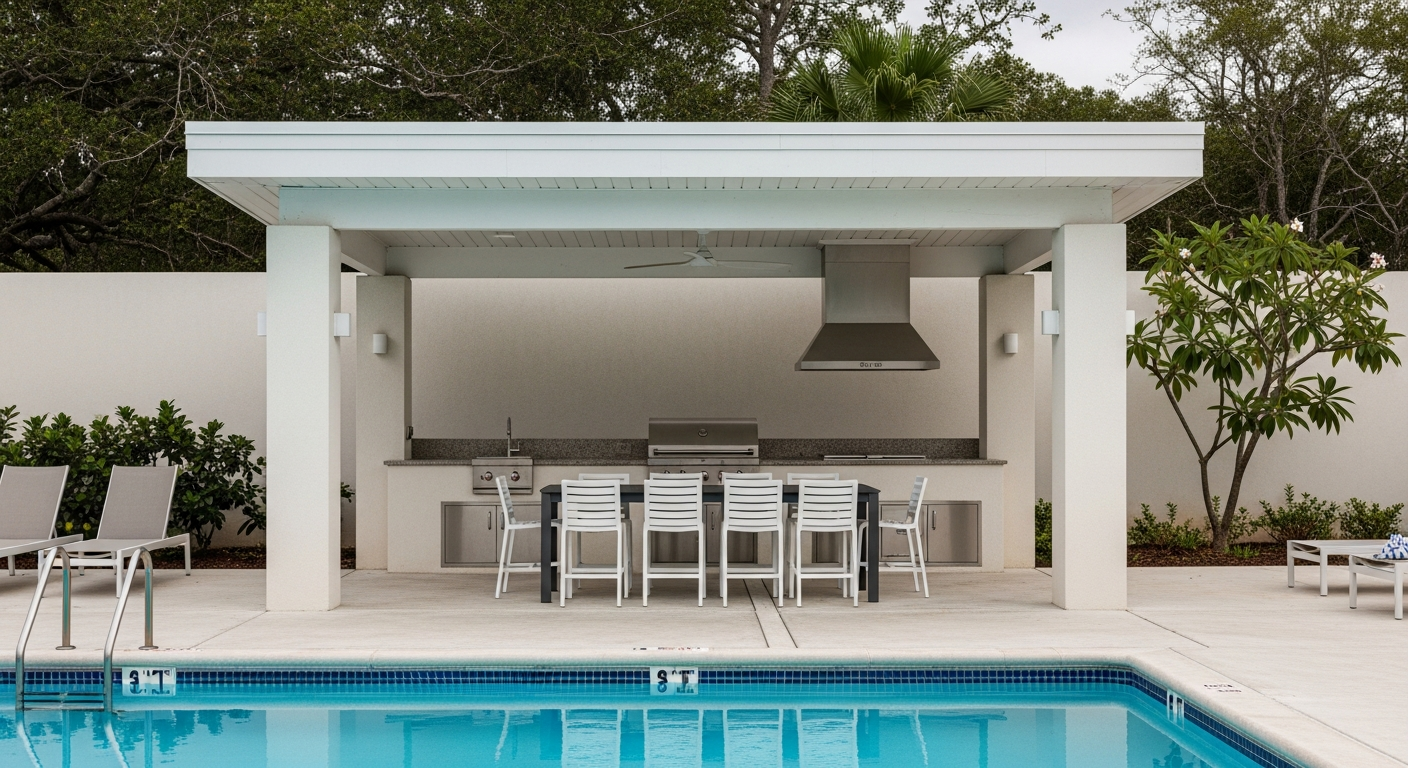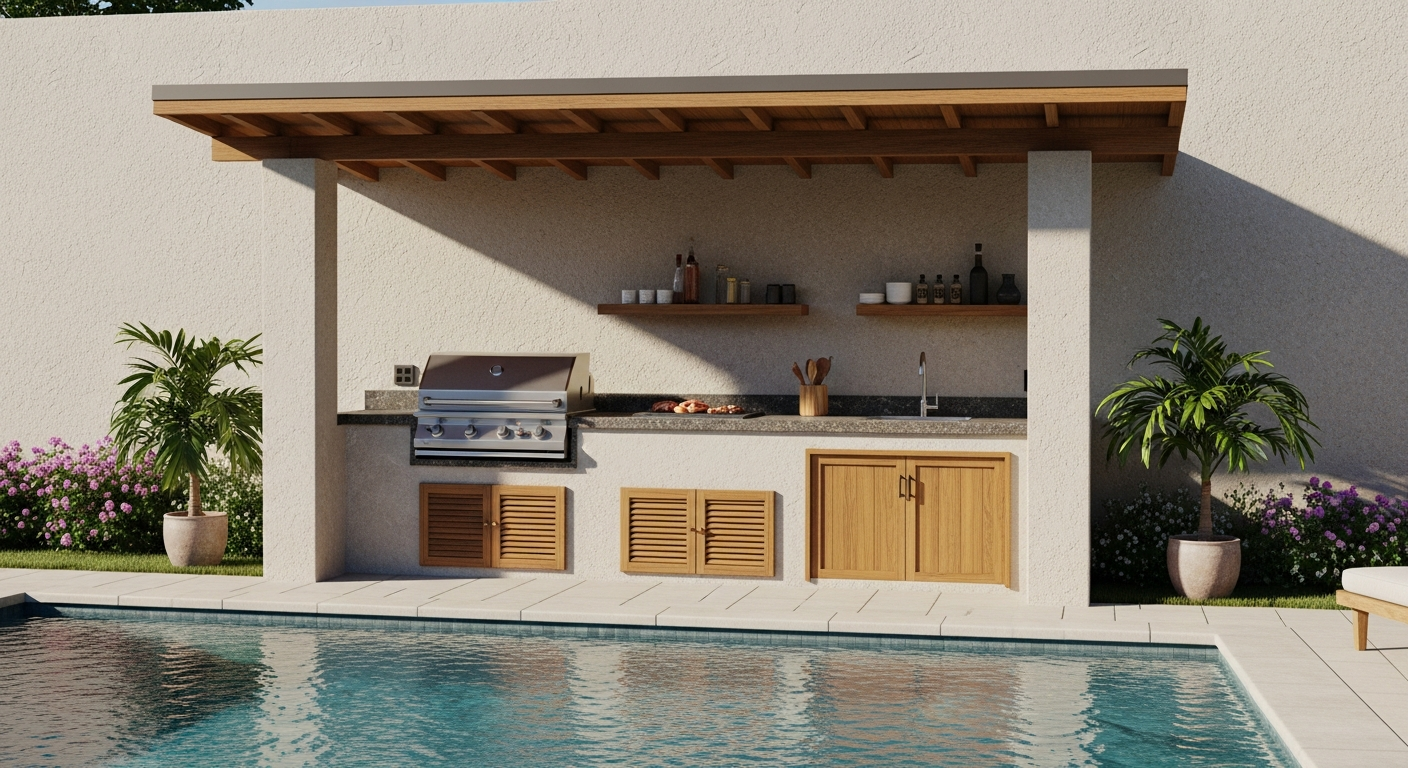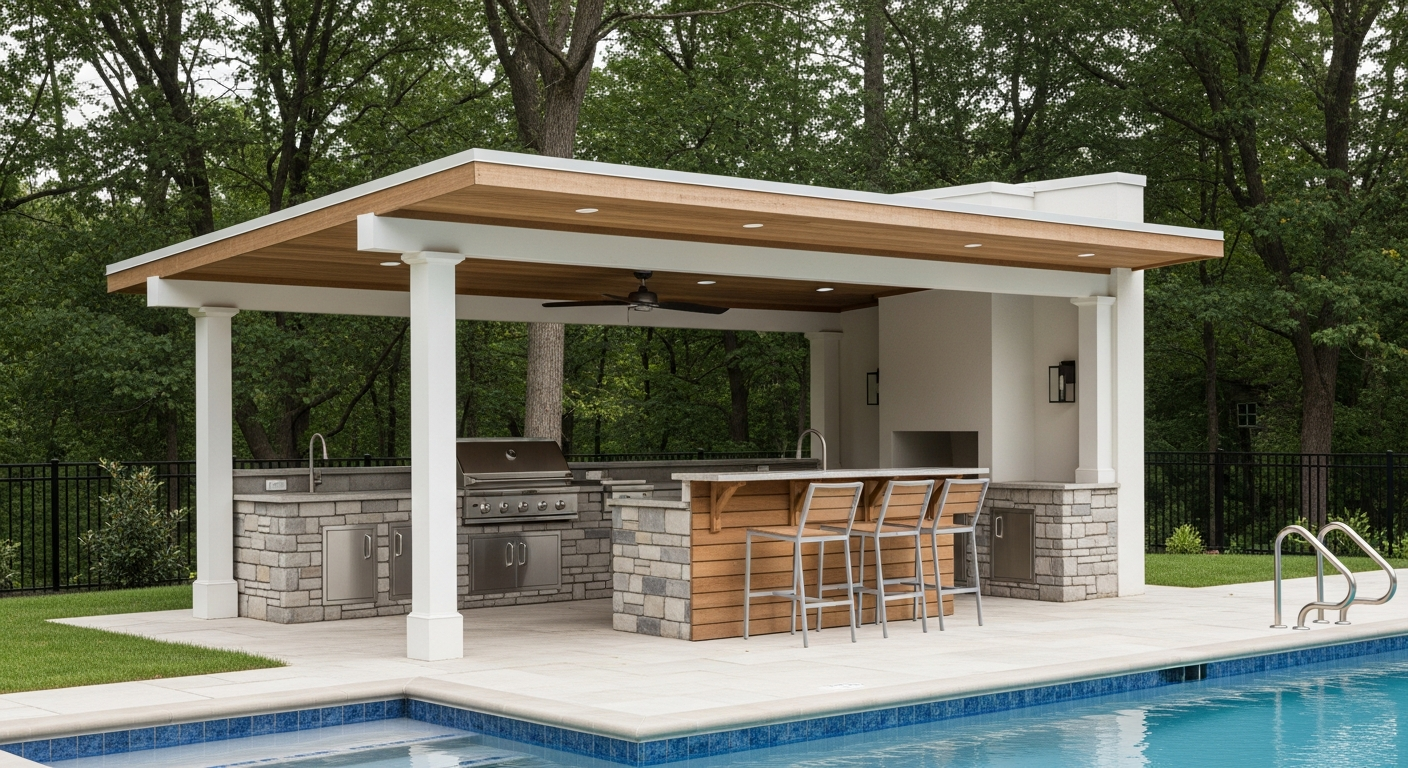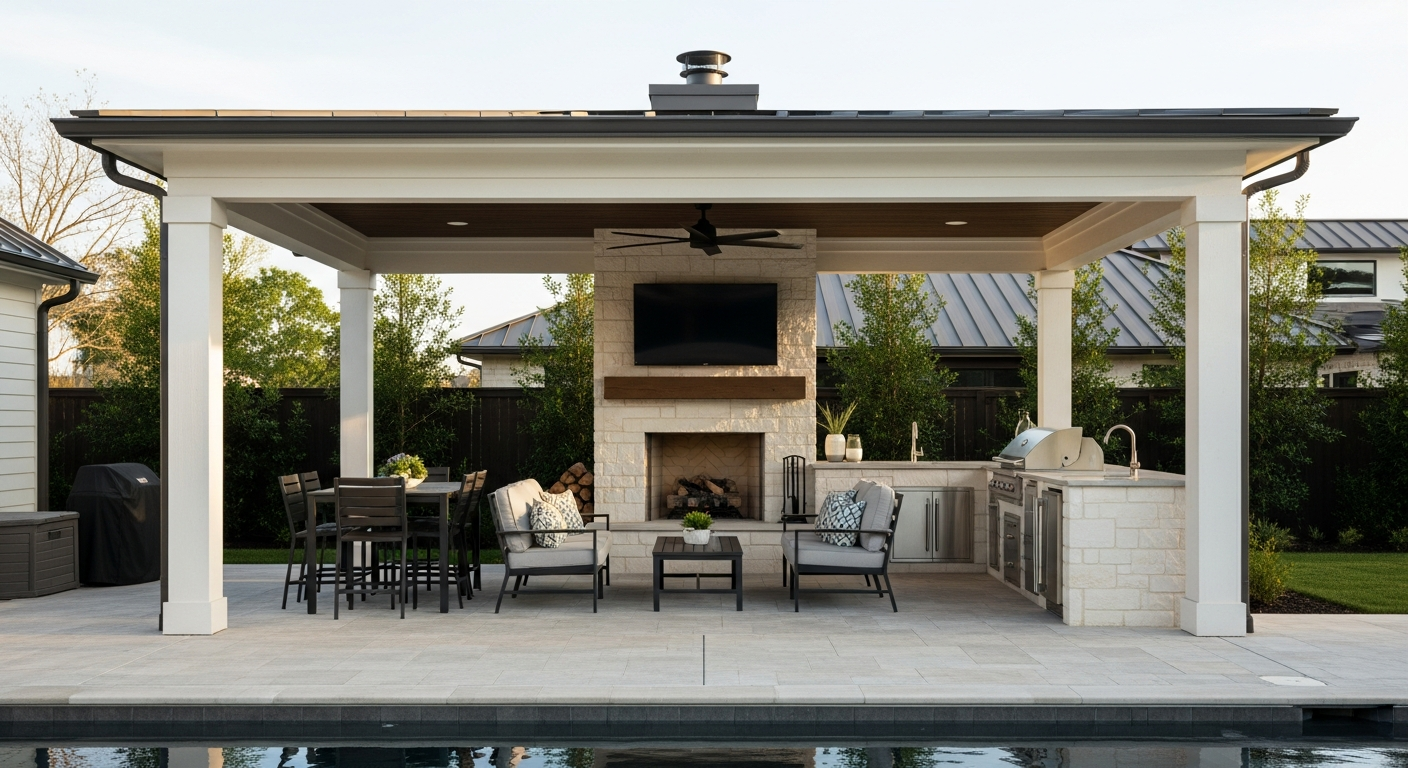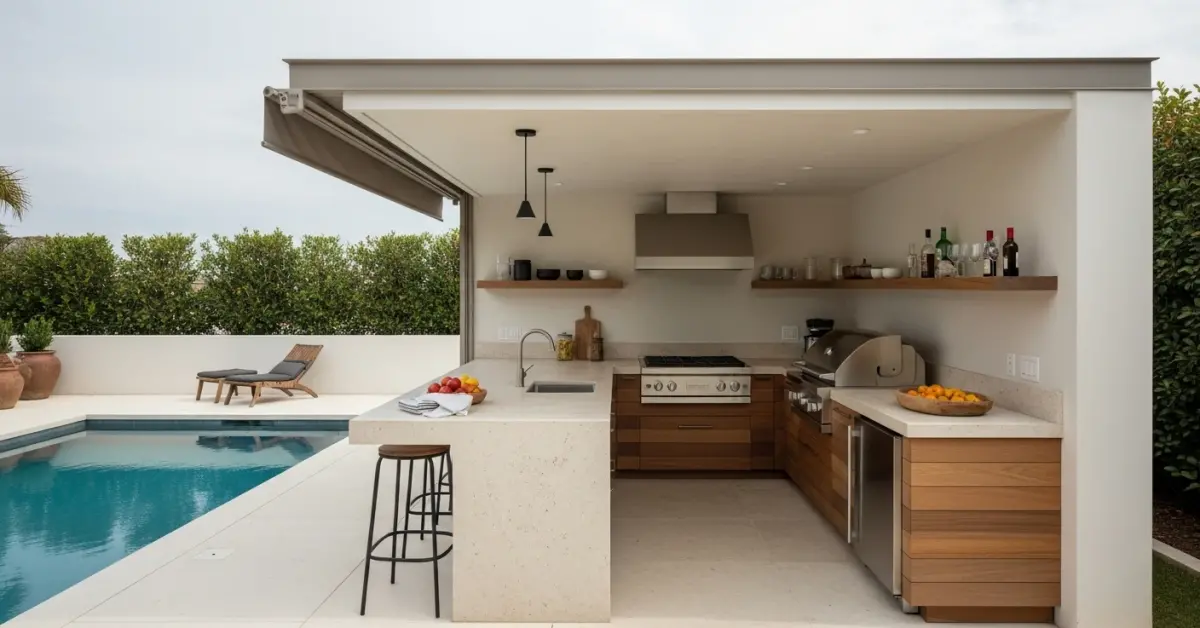
Covered Outdoor Kitchen Design: My Framework for Preventing 90% of Common Structural & System Failures
Most covered outdoor kitchen designs I'm called in to fix fail for two reasons that have nothing to do with the grill: improper ventilation dynamics and material thermal incompatibility. People assume that putting a roof over the space makes it an extension of their home, but in reality, it creates a unique microclimate. The structure traps heat, smoke, and moisture in ways an open-air patio never would, leading to premature material degradation and a genuinely unpleasant cooking environment.
My approach isn't about picking the fanciest appliances; it's about engineering a resilient system from the ground up. I learned this the hard way on a large-scale residential project where the client's beautiful cedar-paneled ceiling was irreversibly stained with soot within six months. The culprit wasn't a faulty grill, but a vent hood with a CFM (Cubic Feet per Minute) rating that was 40% below what the space's volume and the grill's BTU output required. That costly mistake led me to develop a system that front-loads the technical diagnostics to prevent these exact failures.
The A.V.M. Protocol: My Diagnostic Blueprint for Environmental Integrity
Before I even consider a layout, I run every project through my proprietary A.V.M. (Airflow, Vapor, Material) Protocol. It's a non-negotiable diagnostic phase that quantifies the environmental stresses the kitchen will endure. Most designers focus on aesthetics and workflow, which are important, but they are secondary to the physics of a covered outdoor space. The A.V.M. protocol forces a critical analysis of the three elements that most often lead to system failure.
I developed this after realizing that standard building codes are often insufficient for these hybrid indoor-outdoor structures. They don't adequately account for the intense, concentrated bursts of heat, grease, and vapor from a high-output grill combined with ambient humidity and crosswinds. The protocol is my method for ensuring the structure's longevity and performance, moving beyond generic advice to hard data.
Deep Dive: Calculating Air Volume and Selecting Materials Beyond the Label
The core of the A.V.M. Protocol is technical calculation. For Airflow, I calculate the total cubic footage of the covered space and cross-reference it with the total BTU output of all cooking appliances. My baseline rule is to specify a vent hood with a CFM rating of at least 1 for every 100 BTUs, plus a 25% surplus for environmental variables. So, a 100,000 BTU grill system absolutely requires a minimum 1250 CFM professional-grade hood, not a standard indoor model.
For Material selection, I go beyond "weather-resistant." I analyze the material's coefficient of thermal expansion. In a covered space, a dark granite countertop can reach extreme temperatures when hit by afternoon sun, causing it to expand significantly more than its masonry base, which can lead to cracking over time. I now specify materials like sintered stone or specific quartzites with lower expansion coefficients for high-sun-exposure projects. Similarly, for cabinetry, I've stopped using 304 stainless steel in coastal or high-humidity zones. The small price increase for 316L "marine-grade" steel, with its added molybdenum content, provides a massive increase in corrosion resistance, preventing rust stains and structural decay I’ve seen time and again.
Implementation Framework: A Phased Rollout for Technical Precision
Executing the design correctly is just as critical as the plan itself. I insist on a specific construction sequence to eliminate the risk of costly rework. The most common error I see is building the entire structure before running utilities, forcing electricians and plumbers to make compromises that can affect long-term safety and performance.
My implementation is broken down into non-negotiable phases:
- Phase 1: Foundation and Utility Stubs. We pour the concrete slab or footings and, crucially, run all electrical conduit and gas and water lines to their exact termination points *before* any framing begins. This ensures perfect placement and avoids drilling through structural elements later.
- Phase 2: Core Structure and Non-Combustible Zone. The framing and roof are built. I mandate a strict non-combustible zone using steel studs and cement board in the entire wall area behind the grill, extending at least 12 inches on either side. This is a critical fire-safety measure.
- Phase 3: Cabinetry, Venting, and Countertop Templating. With the core structure in place, the cabinets and vent hood are installed. The countertops are templated only *after* all base units are permanently fixed to guarantee a perfect fit.
- Phase 4: Appliance Installation and Final Connections. Appliances are installed, and the final utility connections are made. Every single electrical outlet must be a GFCI-protected receptacle enclosed in a "bubble" cover for moisture protection.
- Phase 5: System Commissioning. This is my final quality check. We perform a full-power test of all appliances and a smoke test on the ventilation hood to ensure it's creating negative pressure and exhausting properly without any smoke spillage.
Tags
outdoor kitchen with roof
covering for outdoor kitchen
covered outdoor kitchen designs
covered outdoor kitchen plans
outdoor kitchen under covered patio
Covered Outdoor Kitchen FAQ
What kind of ventilation is required for a grill under a covered patio?
You must install a dedicated outdoor-rated range hood with a higher CFM rating than an indoor model, typically starting at 1200 CFM. This is a non-negotiable safety requirement to manage heat, smoke, and dangerous gases like carbon monoxide. Standard indoor hoods are not built to withstand the grease load or weather exposure and will fail prematurely. The hood must be installed at a specific height, usually 30 to 36 inches above the cooking surface, and vented directly outside, never into the ceiling cavity of the covered structure, which poses a significant fire hazard.
Are special 'outdoor-rated' appliances really necessary for a covered kitchen?
Yes, using only outdoor-rated appliances is critical for both safety and longevity, even in a covered space. These units are built with 304-grade stainless steel to resist corrosion from humidity and have sealed electrical components to prevent moisture intrusion, which can cause short circuits and fire risks. An indoor refrigerator, for example, lacks the robust insulation and powerful compressor needed to maintain safe food temperatures during a 90-degree summer day, leading to spoilage and premature equipment failure.
What countertops can withstand the elements in a covered outdoor kitchen?
Granite, soapstone, and concrete are top choices for their durability and resistance to thermal shock from a hot pan or freezing temperatures. While quartz is popular indoors, most brands are not warrantied for outdoor use because the resins that bind the stone can yellow and degrade with long-term UV exposure, even in a covered but bright area. For a lower-maintenance option, consider porcelain slabs, which are non-porous, meaning they won't stain from spills like wine or grease, and are completely unaffected by UV rays or frost.
How much clearance do I need between my grill and the structure's walls?
You must maintain a minimum clearance of at least 12 inches between the back and sides of your grill and any combustible materials like wood posts or siding. This is a critical fire safety specification found in the appliance manual, and ignoring it is a common cause of structural fires. For high-powered grills, this distance may need to be even greater. We always recommend installing a stainless steel heat shield on any nearby vertical surfaces to provide an extra layer of protection and reflect radiant heat away from the structure.
Can I use standard indoor cabinets for my covered outdoor kitchen?
No, you should never use indoor cabinets, as they will quickly warp, delaminate, and rot from ambient humidity and temperature swings. Outdoor cabinetry is constructed from materials like marine-grade polymers (HDPE), stainless steel, or teak, which are specifically designed to be impervious to moisture and insect damage. A frequent point of failure even with these materials is the hardware; ensure all hinges, handles, and drawer slides are made from 304 or 316-grade stainless steel to prevent rust and seizure.
What are the key utility requirements for plumbing and gas lines?
All water supply lines must be installed with a dedicated shutoff valve and a drainage point to allow for proper winterization, preventing freeze-burst damage that can destroy pipes and flood the structure. For gas, a licensed professional must run a dedicated, properly sized line directly from the source, incorporating an accessible emergency shutoff valve located within 6 feet of the appliances. Using flexible connectors intended for indoor use is a code violation and a serious leak risk outdoors.