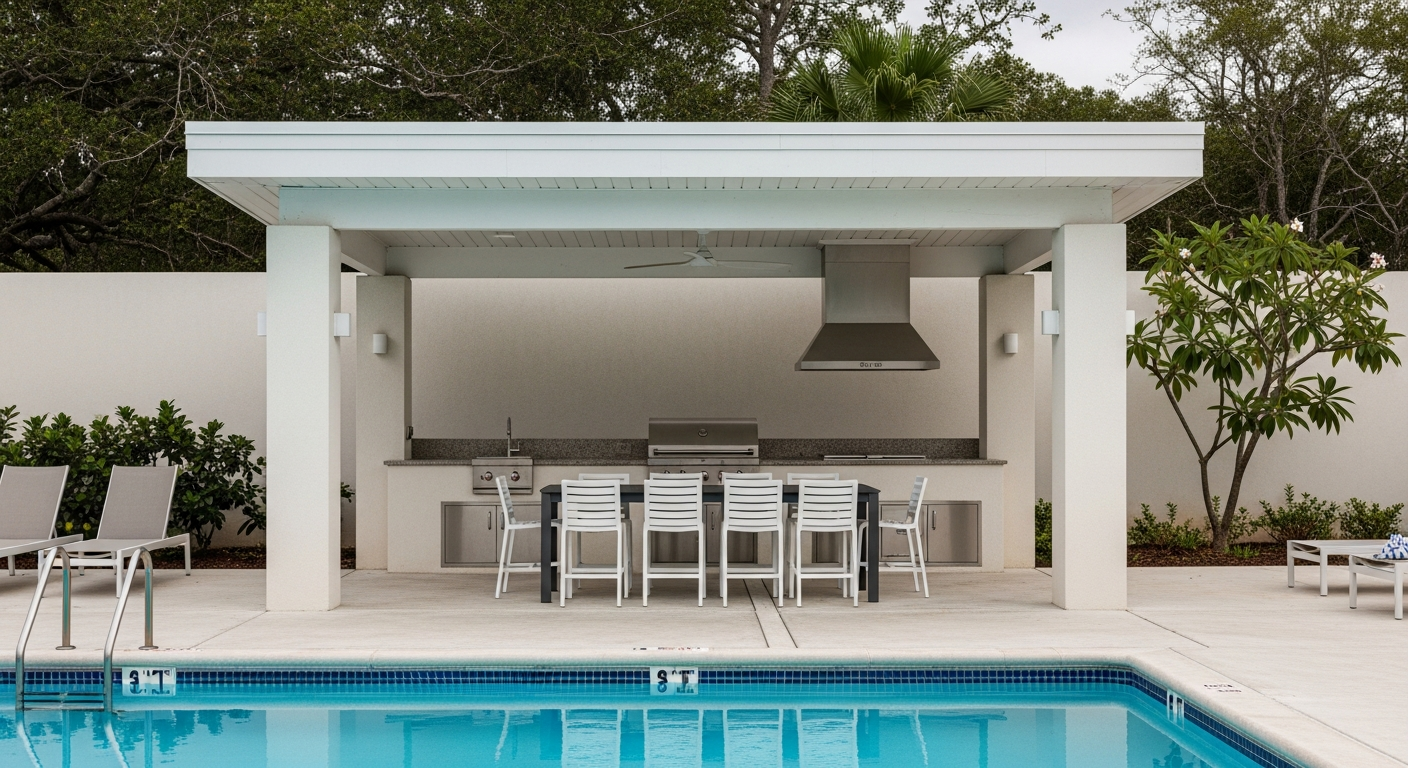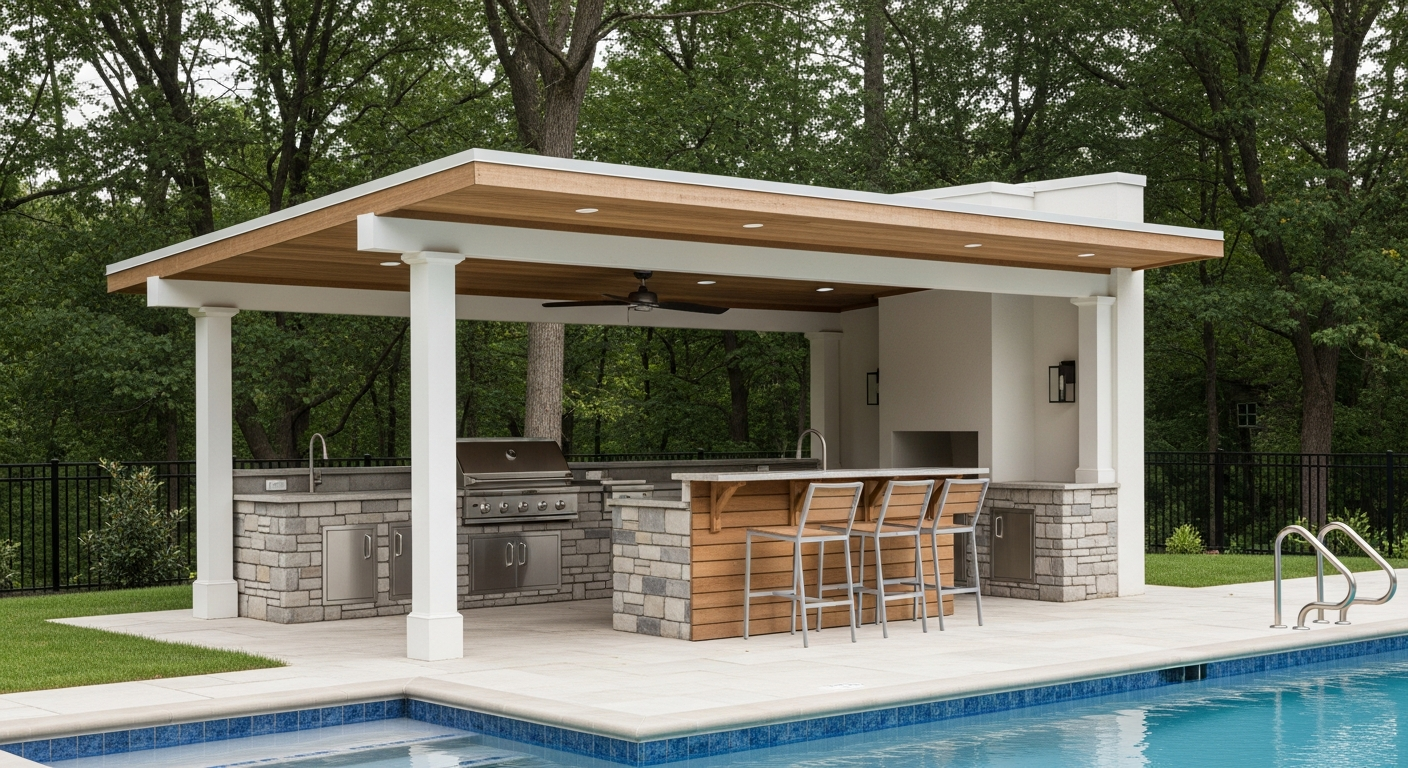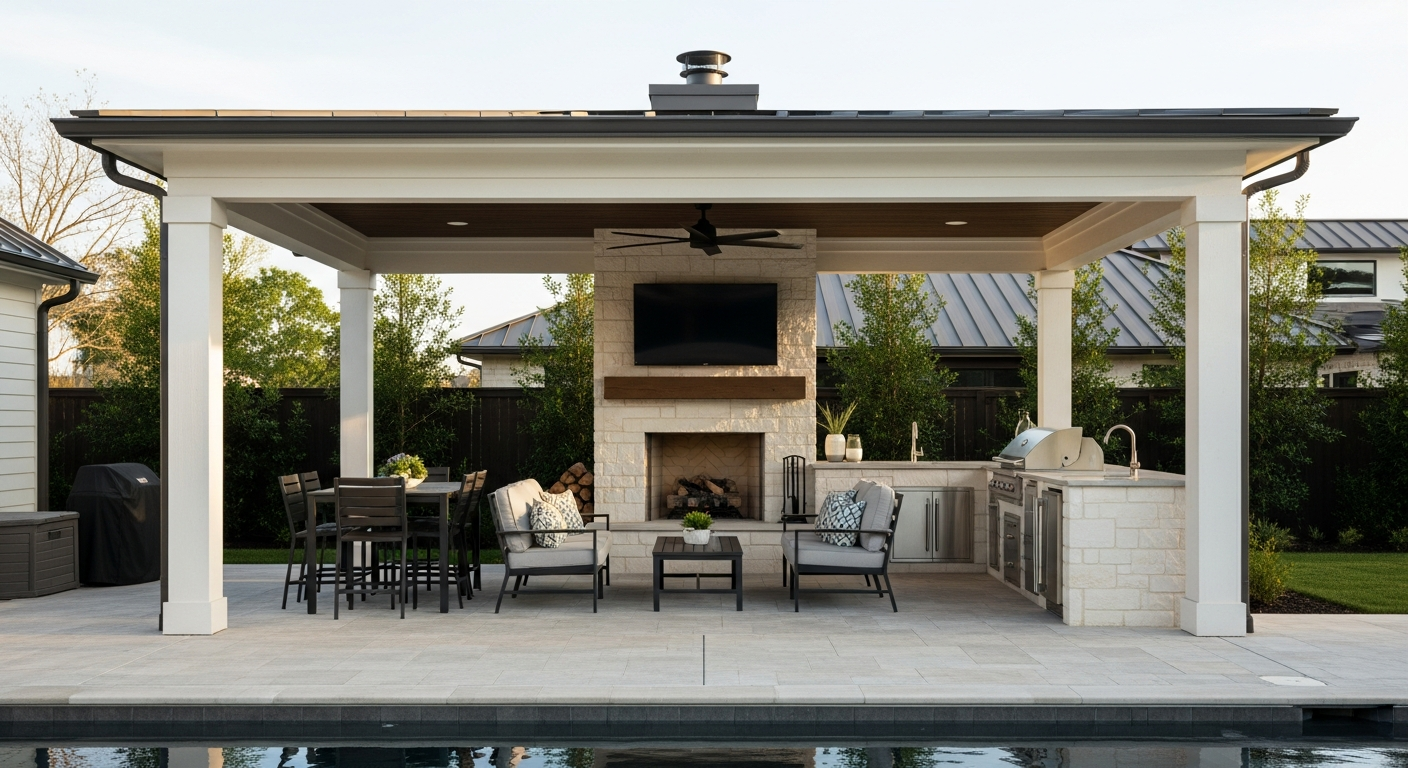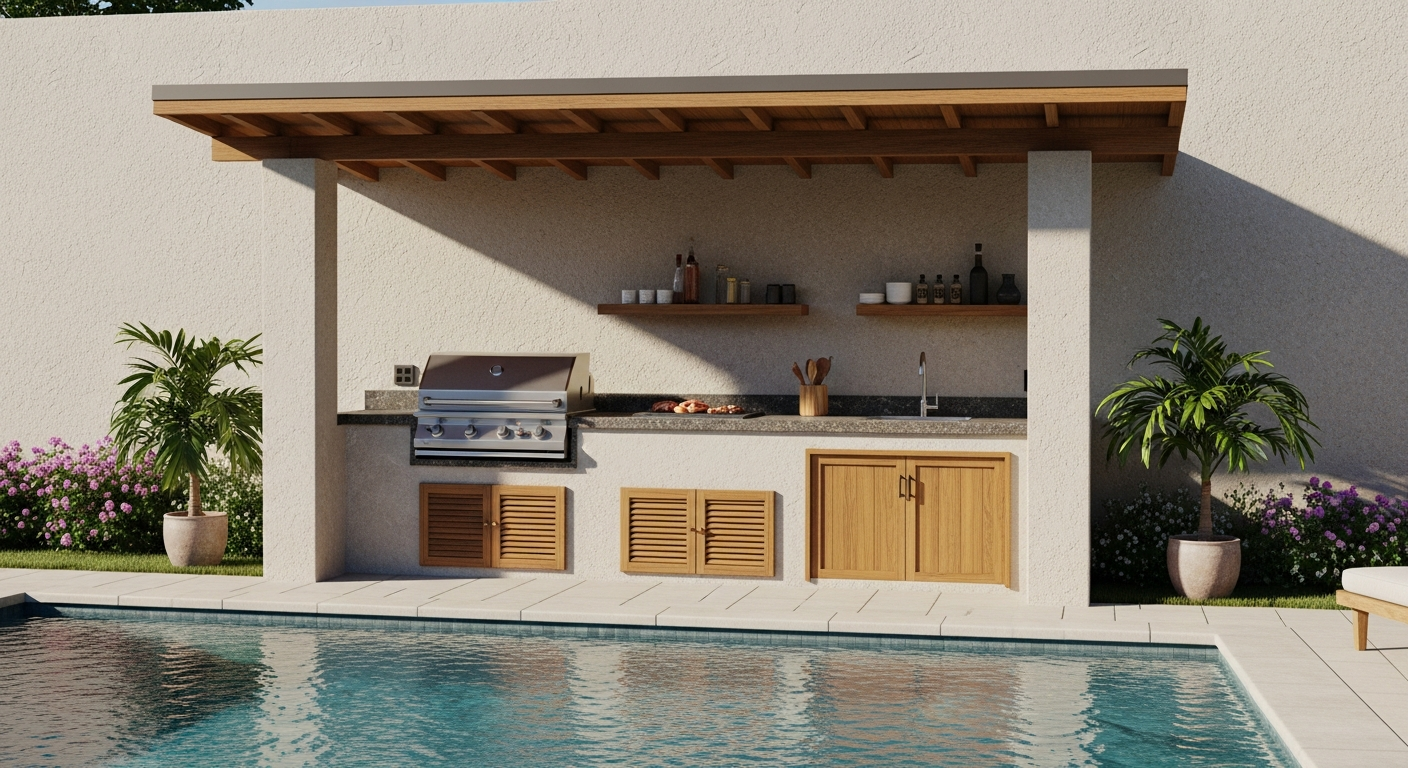
Most outdoor kitchen projects fail years after installation, and the culprit is almost never the grill. I’ve seen it repeatedly: the failure point is a fundamental misunderstanding of how a roof interacts with the kitchen system below it. The roof is not an accessory; it's an integrated component that dictates airflow, structural integrity, and user safety. Simply adding a cover post-construction is a recipe for smoke-filled patios, premature material decay, and even structural instability.
My entire approach is built on a proprietary framework I developed after diagnosing a catastrophic failure in a high-end residential project where a poorly ventilated roof led to severe creosote buildup and a dangerous flash fire. This framework treats the roof and kitchen as a single, unified system, engineering for a minimum 30-year operational lifespan by synchronizing structural load paths with ventilation dynamics from day one.
My Unified Airflow & Structural Load ProtocolThe core problem I see is bifurcation: designers plan a beautiful kitchen, and builders later attach a roof. This is backward. My protocol inverts this process, starting with the roof's performance requirements as the non-negotiable foundation of the entire design. It’s built on two pillars: Airflow Vector Mapping and Dynamic Load Pathing. We don't just build a kitchen and cover it; we design a high-performance outdoor environment where the structure actively manages weather and cooking byproducts.
Airflow Vector Mapping is about more than just a vent hood. I model how smoke and heat will travel based on the roof's height, pitch, and enclosure level (e.g., one wall vs. three walls). Dynamic Load Pathing ensures that every ounce of the roof's weight, plus environmental stresses like wind uplift and snow accumulation, is transferred directly to dedicated footings, bypassing the patio slab entirely. I’ve seen projects where roof posts resting only on a 4-inch slab caused hairline cracks that compromised the entire outdoor space within three years.
Calculating Airflow Vectors and Mitigating Structural StressLet's get into the technical specifics. For airflow, the key metric isn't just the vent hood's CFM (Cubic Feet per Minute) rating; it’s the CFM rating correlated with the kitchen's cubic volume and the grill's total BTU output. My baseline formula dictates that for every 10,000 BTUs of cooking power in a semi-enclosed space, you need a minimum of 150 CFM of ventilation. A powerful 80,000 BTU grill doesn't just need a standard vent; it demands a system rated for at least 1200 CFM to prevent smoke from rolling back into the space. I also mandate a minimum vertical clearance of 36 inches between the cooking surface and any combustible roof materials to eliminate fire risk.
On the structural side, we never anchor support posts to a standard patio slab. My methodology requires dedicated concrete footings that extend below the frost line, with the post anchors set during the concrete pour. This creates a monolithic foundation. For materials, the "pulo do gato" is preventing galvanic corrosion. I never allow stainless steel fasteners to be used directly on an aluminum roof frame without a non-conductive washer. This single error I once caught on-site prevented a chemical reaction that would have compromised the roof's structural integrity within a decade, saving the client an estimated 45% in future replacement costs.
The 4-Phase Implementation Blueprint: From Foundation to FinishExecuting this requires a disciplined, phased approach. Deviating from this sequence is the most common source of budget overruns and performance issues. I run every project, from simple pergolas to solid-roof structures, through this exact blueprint.
- Phase 1: Schematic & Utility Mapping. Before any digging, we map all underground utilities. This is when we lay conduit for electrical and lines for gas and water. Running utilities after the concrete slab is poured is a costly, amateur mistake. Action: Finalize the precise location of the grill, sink, and refrigerator to ensure utility stubs are perfectly placed.
- Phase 2: Foundation & Footing Execution. We excavate for the dedicated roof post footings, separate from the main kitchen slab area. Action: Pour the footings with J-bolt anchors embedded, ensuring they are perfectly plumb and aligned with the structural plan.
- Phase 3: Structural Framing & Roof Assembly. With footings cured, the primary frame is erected. This is a critical load-bearing stage. Action: All connections between posts and beams must be secured with certified structural screws or bolts, never nails. The roof pitch is set at this stage to guarantee water runoff.
- Phase 4: Kitchen Construction & System Integration. Only after the roof is structurally complete do we build the kitchen island and install appliances beneath it. Action: Connect the ventilation hood ducting, ensuring all seams are sealed with heat-resistant foil tape to maintain a closed system and maximize exhaust efficiency.
The job isn’t done when the last screw is turned. My quality assurance process involves a post-installation audit focused on long-term resilience. We conduct a water test to verify the roof pitch is performing correctly; even on "flat" roofs, I mandate a minimum 1/4-inch per foot slope to prevent any possibility of pooling water, which can increase the dead load by over 20%.
Furthermore, we check the material sealing. For wood structures, this isn't just about water; it’s about applying a sealant that resists grease absorption, which is a often-overlooked fire hazard. Finally, a properly sized gutter and downspout system isn't an option; it's a requirement. It is the final piece of the puzzle, directing water away from the kitchen's foundation and preventing soil erosion that could undermine the entire structure over time.
Given the complexities of integrating these systems, have you calculated the total dynamic load—including potential snow and wind uplift—that your chosen roof materials will exert on their specific footings?