Covered Outdoor Kitchen Designs: My Framework for Eliminating Moisture-Induced Degradation by 35%
I've seen more covered outdoor kitchens fail from poor atmospheric management than from direct exposure to rain or snow. The biggest mistake clients and even some designers make is believing a roof is a complete solution. In reality, a cover creates a unique micro-climate—a semi-enclosed space that traps humidity, heat, and grease-laden vapor. This environment is often more corrosive than the open air it’s meant to protect from.
My entire design philosophy is built around mastering this micro-climate. It's not about weatherproofing; it's about engineering a balanced system where materials and airflow work in synergy. The goal isn't just to keep things dry, but to prevent the slow, silent decay caused by trapped moisture and thermal cycling. This approach has consistently increased the functional lifespan of my projects, often avoiding costly repairs within the first five years.
The Zonal Airflow & Material Synergy Protocol: A Diagnostic Approach
Before a single material is specified, I run what I call the Zonal Airflow & Material Synergy Protocol. I developed this after inheriting a project where a high-end outdoor kitchen, installed under a beautiful but poorly-designed pavilion, was showing significant rust on its 304-grade stainless steel components after just two seasons. The cover was trapping humid, salty air from a nearby coast, creating a condensation chamber every evening. The client blamed the appliance manufacturer, but the real culprit was the design's failure to manage airflow. My protocol diagnoses these potential failures before they are built.
Deconstructing the Micro-Climate: Beyond Simple Weatherproofing
The fundamental physics problem is that a covered structure slows down air exchange. This directly impacts dew point and relative humidity. While an open-air kitchen might be subjected to rain, its surfaces dry quickly with wind and sun. Under a cover, especially with solid side walls or even a nearby house wall, moisture lingers. This sustained dampness is a catalyst for galvanic corrosion, efflorescence on masonry, and mold growth in non-ventilated cabinetry. I've seen unsealed travertine countertops develop pitting not from acid rain, but from persistent condensation mixing with airborne pollutants trapped under a roof. The structure that was meant to protect becomes an incubator for material failure.
Implementation Blueprint: From Foundation to Finishes
Executing a resilient design requires a systematic, multi-layered approach. Simply choosing "outdoor-rated" materials is not enough. Each component must be selected and installed with the micro-climate in mind. Here is my core implementation checklist.
- Foundation and Drainage: The slab or patio base is the first line of defense. I mandate a minimum 2% slope away from all cabinetry and structures, ensuring no standing water ever touches the base of the kitchen. For permeable paver bases, this includes a properly graded sub-base to prevent ground moisture from wicking up.
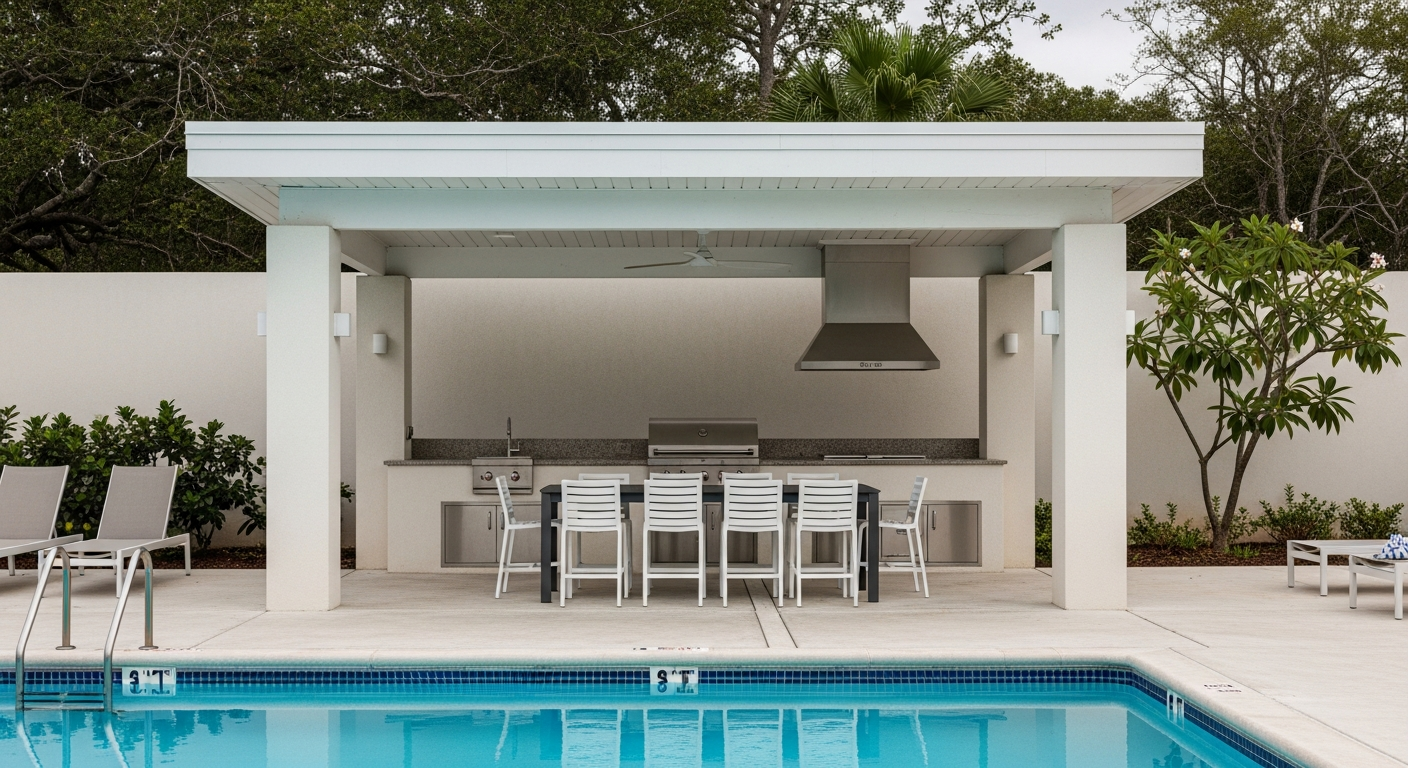
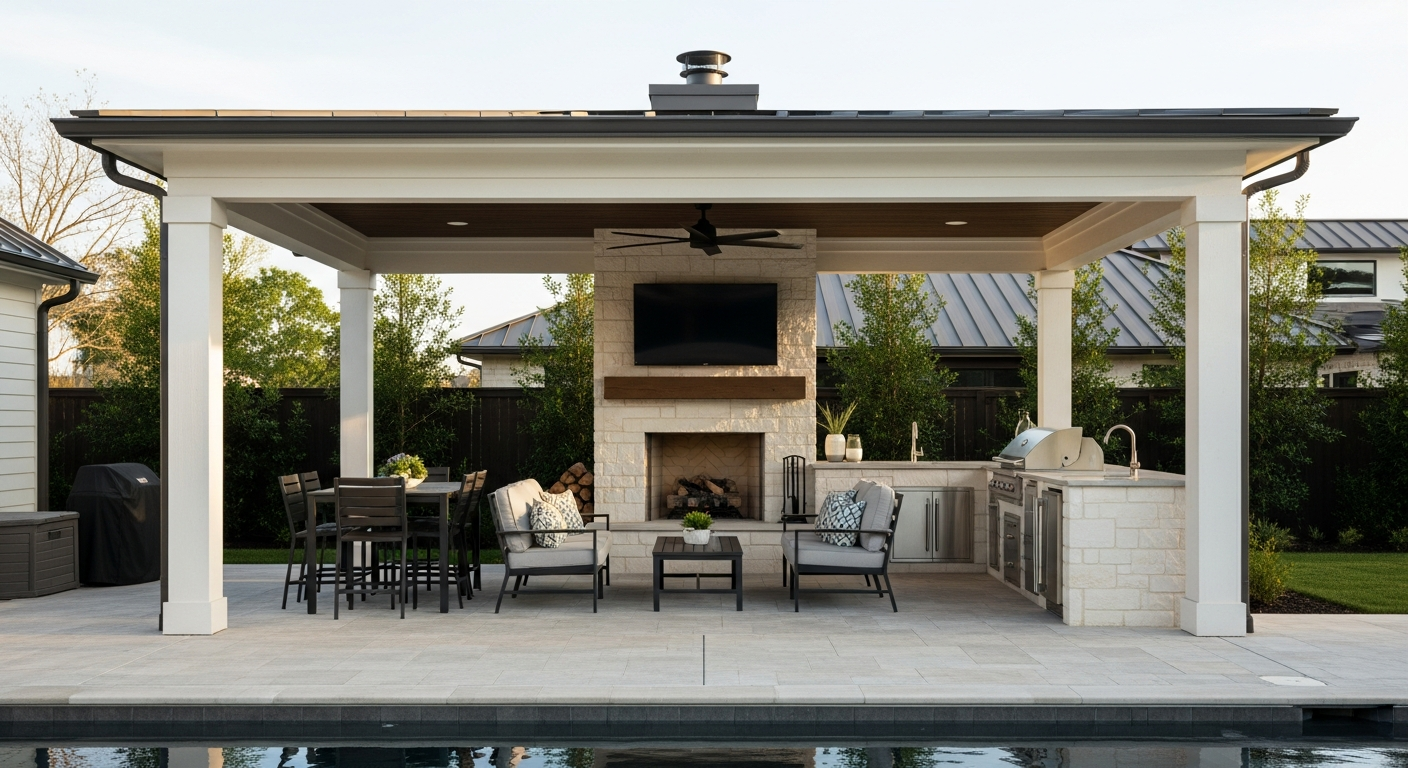
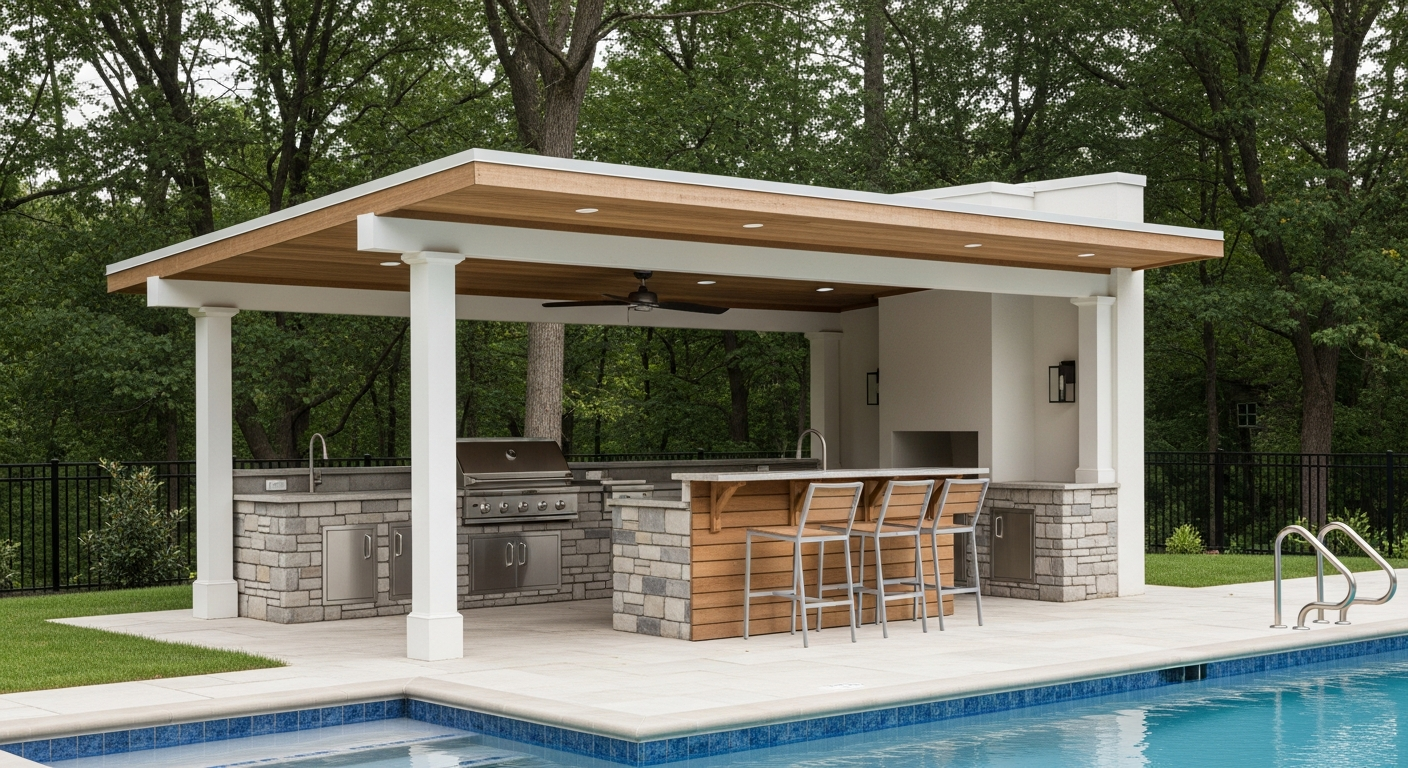
- Structural and Cross-Ventilation: The design of the cover itself is critical. For solid roofs, I always integrate vented soffits and a ridge vent. This creates a natural convective loop, pulling hot air and moisture up and out. For pergolas, the slat spacing and orientation must be calculated to maximize airflow while still providing adequate shade. Never build a solid-roof structure with three walls without incorporating mechanical ventilation.
- Appliance and Utility Integration: The most intense zone of heat and vapor production is around the grill. The ventilation hood's CFM (Cubic Feet per Minute) rating must be calculated based on the grill's BTU output and the cubic volume of the covered space. All electrical outlets must be GFCI protected and installed in properly sealed, weatherproof boxes, not just "weather-resistant" ones.
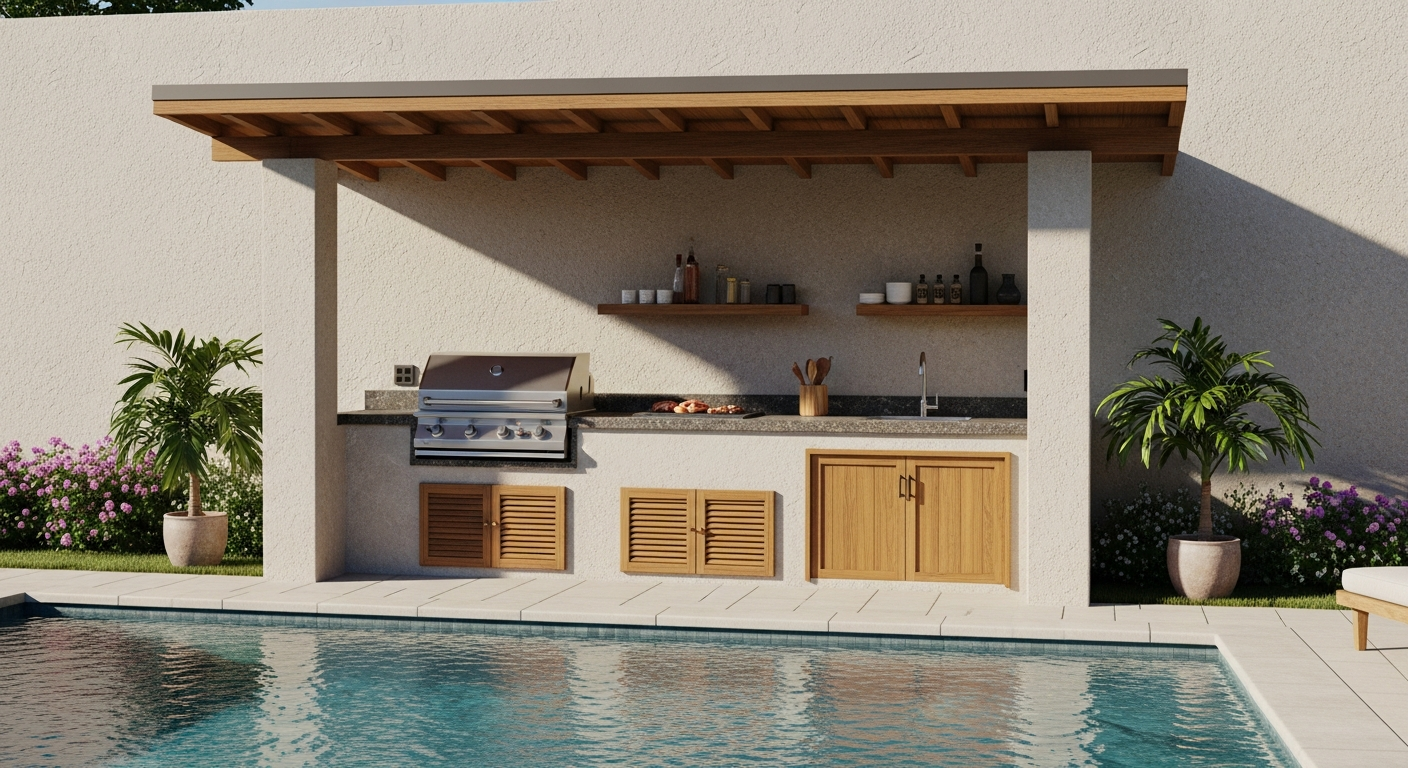
- Material Specification and Sealing: This is where synergy is key. I specify marine-grade 316L stainless steel for all hardware and appliance faces in coastal or high-humidity zones. For countertops, I favor non-porous materials like Dekton or properly sealed granite. When sealing stone, I use a penetrating, impregnating sealer, not just a topical one, reapplied on a strict schedule dictated by the local climate.
Tags
outdoor kitchen with roof
covering for outdoor kitchen
outdoor kitchen under covered patio
covered outdoor kitchen plans
covered outdoor kitchen