External Kitchen Design: My Framework for a 30-Year Lifespan and 50% Workflow Efficiency Gain
Most external kitchens I'm called in to fix fail within a decade, not from spectacular events, but from a slow, creeping death of mismatched materials and illogical workflow. The common approach of simply moving an indoor kitchen's layout outside ignores the brutal realities of thermal cycling, UV degradation, and moisture ingress. My entire philosophy is built on preventing these failures before a single stone is laid.
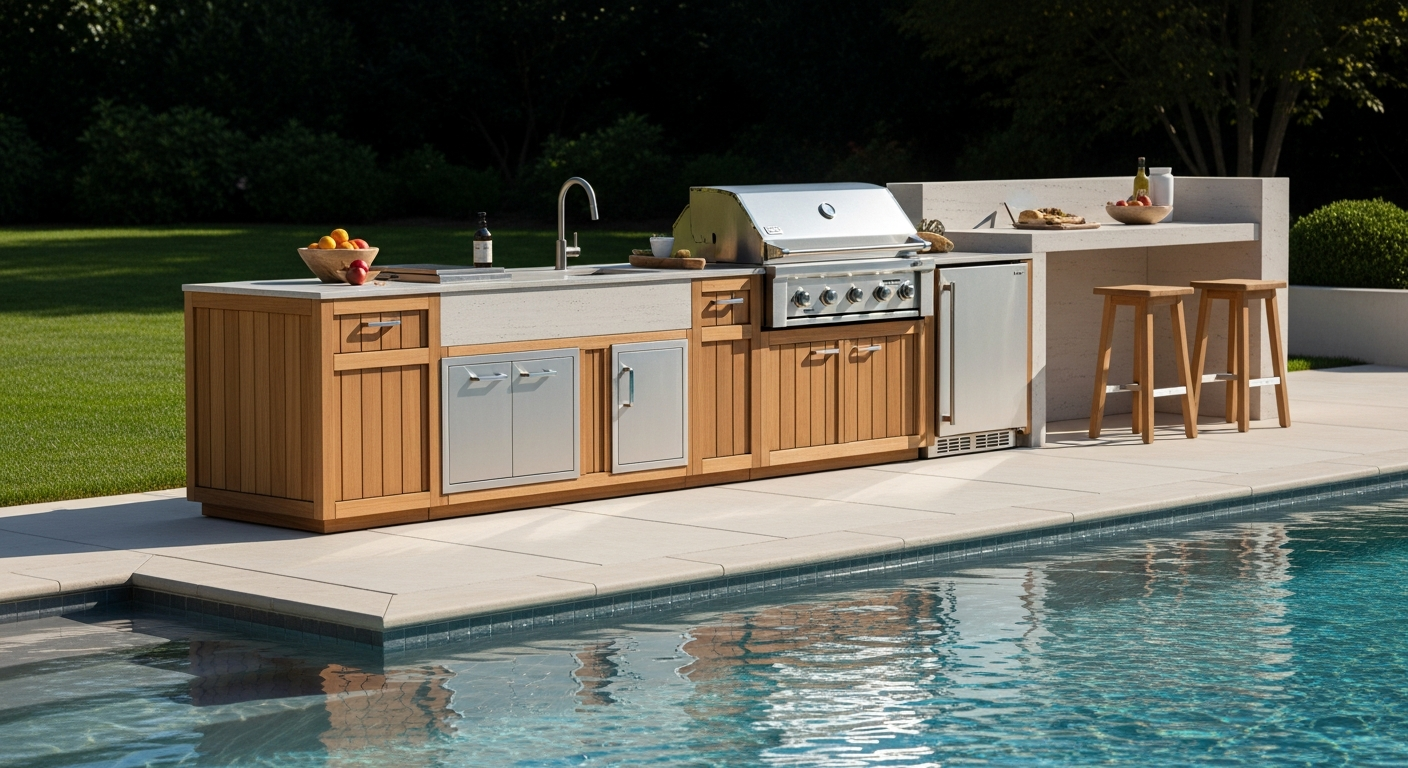
I bypass these common and costly pitfalls by deploying a two-part system: a Material Compatibility Matrix that dictates which materials can touch and which can't, and a Zonal Workflow Protocol designed for outdoor entertaining, not indoor meal prep. This framework ensures your investment is not just aesthetically pleasing but is an engineered system built for decades of high performance.
Diagnosing the Failure Triad: Weather, Workflow, and Wear
After auditing dozens of deteriorating outdoor kitchens, from high-end residential projects to commercial patio setups, I identified a consistent pattern of failure. I call it the "Failure Triad," and my entire methodology is designed to dismantle it. It’s not about buying the most expensive grill; it’s about the science of the surrounding system.
The first element is Weather. This goes far beyond simple rain. I’m talking about the thermal expansion coefficient of a quartz countertop versus the concrete base it's set on, a mismatch that inevitably leads to stress fractures. Or the galvanic corrosion I often see when stainless steel fasteners are used on an aluminum frame without nylon insulators, creating a battery that eats away at the metal. The second is Workflow. The classic indoor "work triangle" is dangerously inefficient outdoors. It creates bottlenecks when multiple people are using the space. My Zonal Workflow Protocol—separating Hot, Cold, and Prep/Wash zones—eliminates this entirely. The third is Wear. I focus on high-contact points. A common mistake is using 304-grade stainless steel in all applications. In a coastal project with salt in the air, I found this grade showing pitting in under 24 months. My standard is to mandate 316 marine-grade stainless for all hardware and surfaces within 50 miles of the coast, a small upfront cost that prevents a premature, five-figure replacement.
The Material Compatibility Matrix: Beyond Stainless Steel
Let's get granular on materials, because this is where a project's lifespan is truly defined. My Material Compatibility Matrix is a proprietary document I developed after a large-scale project experienced catastrophic delamination of its countertops. The architect specified a beautiful, porous natural stone sealed with a topical agent. The first freeze-thaw cycle popped the sealer, allowed moisture in, and cracked the slab in half. A $20,000 mistake.
My matrix prioritizes materials with low porosity and high thermal shock resistance. Sintered stone (like Dekton or Neolith) is my top recommendation for countertops. Unlike granite or even quartz, its near-zero porosity means water cannot penetrate, and it can handle a hot pan being placed directly on it without risk of cracking. For framing, I avoid wood entirely. Even treated wood will eventually fail. My standard is welded aluminum or galvanized steel frames, but the key is how you clad them. Using a cement board with a properly specified vapor barrier like a liquid-applied membrane is non-negotiable. This single step prevents the moisture that gets behind the cladding from ever touching the metal frame, which is the primary accelerator of corrosion.
The Zonal Implementation Protocol: A Step-by-Step Breakdown
Executing the design requires a rigid, sequential process. Deviating from this order is the most common error I see DIYers and even some contractors make, leading to costly re-work when they realize a gas line needs to cross a newly laid water pipe. Here is my exact implementation sequence.
- Step 1: Map the Utility Core. Before any excavation, you must pinpoint the termination points for gas, water, and electrical. I always specify running an oversized 2-inch PVC conduit for electrical. This allows for the addition of future circuits for lighting or a motorized awning without trenching the patio again. This is your project's central nervous system.
- Step 2: Establish the Hot Zone. This area contains the grill, side burners, and any specialty cookers like a pizza oven. The critical factor here is non-combustible clearance. I mandate a minimum of 18 inches between the side of a grill and any vinyl siding or wood structure, a value often greater than the manufacturer's minimum, because I've seen siding warp and melt at lesser distances.
- Step 3: Define the Cold Zone. This houses the outdoor-rated refrigerator and ice maker. The single most important factor for the longevity of these appliances is ventilation. I design a convection-based ventilation channel with a low intake and a high exhaust vent hidden in the structure. This passive system reduces compressor runtime by an estimated 25% and drastically extends its life.
- Step 4: Structure the Prep & Wash Zone. This zone contains the sink, pull-out trash, and primary countertop workspace. The key technical detail here is the plumbing. All water lines must have a dedicated indoor shut-off valve and a low-point drain for winterization. Forgetting this step is the number one cause of burst pipes in colder climates.
Tags
modern outdoor bbq
outdoor modular kitchen units
custom outdoor grill
modern outdoor kitchen
contemporary outdoor kitchen