
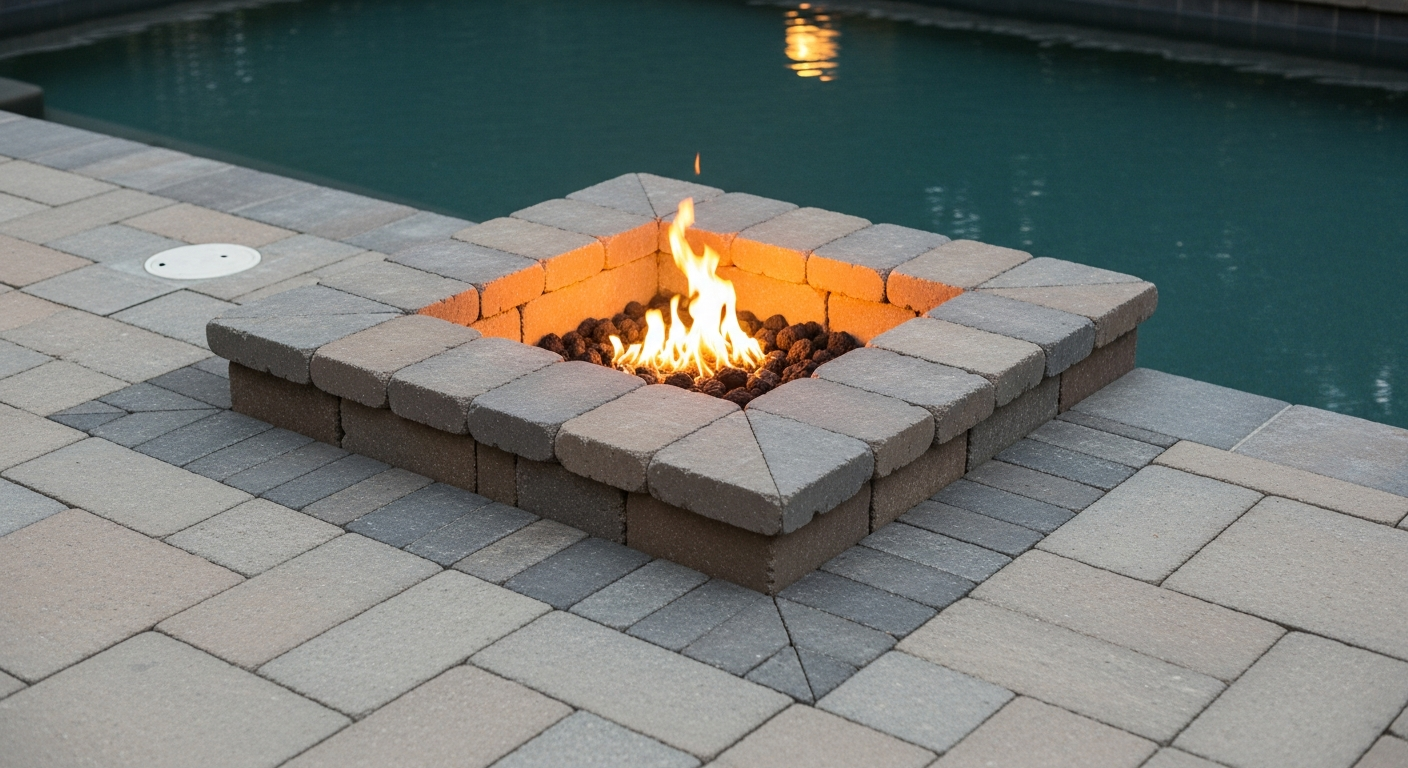
Building a Sarasota Paver Fire Pit for 20-Year Durability Against Salt Air
Most paver fire pits built in Sarasota fail prematurely, and the reason is almost always the same: an improper base that can’t handle our sandy soil and high humidity. I’ve been called to fix projects from Lakewood Ranch to Siesta Key where the pavers have shifted or cracked within three years, all because the installer used a generic, one-size-fits-all method. The intense summer rain creates significant hydrostatic pressure that undermines shallow bases, and the coastal salt air accelerates the degradation of low-quality materials. My approach isn't about just stacking stones; it's an engineering process designed specifically for the Gulf Coast environment. It centers on creating a foundation that is functionally a miniature roadbed and selecting materials rated for marine exposure. This methodology directly counters the two primary failure points I see in local projects: base liquefaction during the wet season and spalling caused by moisture and salt penetrating the pavers.My Diagnostic Framework for Sarasota's Unique Soil and Climate
Before a single paver is laid, my first step is a site-specific analysis. A project in the sandy, salt-sprayed environment of Lido Key requires a fundamentally different approach than one in the more stable, clay-heavy soil inland toward Fruitville. I learned this the hard way on an early project where a standard 6-inch gravel base, which would be sufficient elsewhere, shifted after one heavy hurricane season. My diagnostic protocol now involves two critical checks. First, a soil assessment to determine the sand-to-clay ratio, which dictates the necessary depth of the aggregate base. Second, I evaluate the site’s drainage, as poor water runoff is the primary enemy of any hardscape installation in Florida. A lanai-adjacent fire pit, for instance, needs a discreet French drain system integrated into its base to prevent water from pooling against the home’s foundation.Technical Deep Dive: The G-R-A-D-E Base System and Material Selection
Over the years, I've developed a proprietary base construction method I call the G-R-A-D-E System (Geotextile, Reinforced, Aggregate, Drainage, Encapsulation). This isn't just a sequence of layers; it's an integrated system designed to create a monolithic, water-resistant foundation.- Geotextile Fabric: This is the non-negotiable first layer. It separates the sandy native soil from the aggregate base, preventing the stone from sinking over time. I use a non-woven fabric with a high percolation rate.
- Reinforced Aggregate: I specify a base of at least 10 inches of DOT-certified road base, compacted in 3-inch lifts using a vibratory plate compactor. The goal is to achieve 98% compaction, creating a solid, interlocking slab of stone.
- Drainage: The base must have a minimum 1-degree slope away from any structures.
- ASTM C936 Pavers: I only use pavers that meet this standard, which ensures low water absorption rates. For coastal homes, I strongly recommend high-density travertine or sealed concrete pavers to combat salt degradation.
- Encapsulation: The final lock-in involves using polymeric sand in the joints and a two-part, UV-resistant sealant over the entire structure. This creates a water-repellent shell.
The Implementation Protocol: From Groundbreaking to First Burn
Executing the G-R-A-D-E system requires precision. A mistake in any step can compromise the entire structure. My on-site workflow is a strict, quality-controlled process.- Excavation and Sizing: Excavate a minimum of 14 inches deep. The diameter of the excavation must be 24 inches wider than the final fire pit’s outer diameter to create a stable "shoulder" for the base.
- Geotextile and First Lift: Lay the geotextile fabric, ensuring a 12-inch overlap at any seams. Add the first 3-inch lift of aggregate and compact it for a full 5 minutes with the plate compactor.
- Repeat Compaction: Repeat the process for each 3-inch lift until the final base height is achieved. Check for level and slope constantly.
- Adhesive Application: Use a high-temperature construction adhesive (rated to 500°F) between each course of pavers. A common error I fix is the use of standard landscape adhesive, which fails after a few fires.
- Insert Installation: A 304-grade stainless steel fire ring insert is mandatory, especially near the coast. Galvanized steel will rust out within two seasons. Ensure a 1-inch air gap between the insert and the pavers for thermal expansion.
Precision Tuning for Longevity: The Final 5% That Prevents 90% of Failures
The difference between a good build and a great one is in the final details. For Sarasota fire pits, this means focusing on ventilation and sealing. I mandate the installation of small, unobtrusive vent blocks in the first course of pavers. This allows air to be drawn in, feeding the fire for a cleaner, hotter burn and, more importantly, it allows any moisture trapped in the base to evaporate. Without these vents, steam can build up and fracture the paver blocks from the inside out. Finally, the sealant application is critical. It must be applied only after the polymeric sand has cured for at least 48 hours in our humid climate, and a second coat is necessary to achieve a fully waterproof finish that can withstand the intense Florida sun. Now that your structure is built to withstand a hurricane, have you properly calculated the thermal mass of your chosen paver material to ensure it doesn't create an unsafe radiant heat zone on your lanai deck?Written by

Tags
pavers around fire pit
pavers around a firepit
paver patio designs with fire pit
building a fire pit with pavers
making a fire pit with pavers


