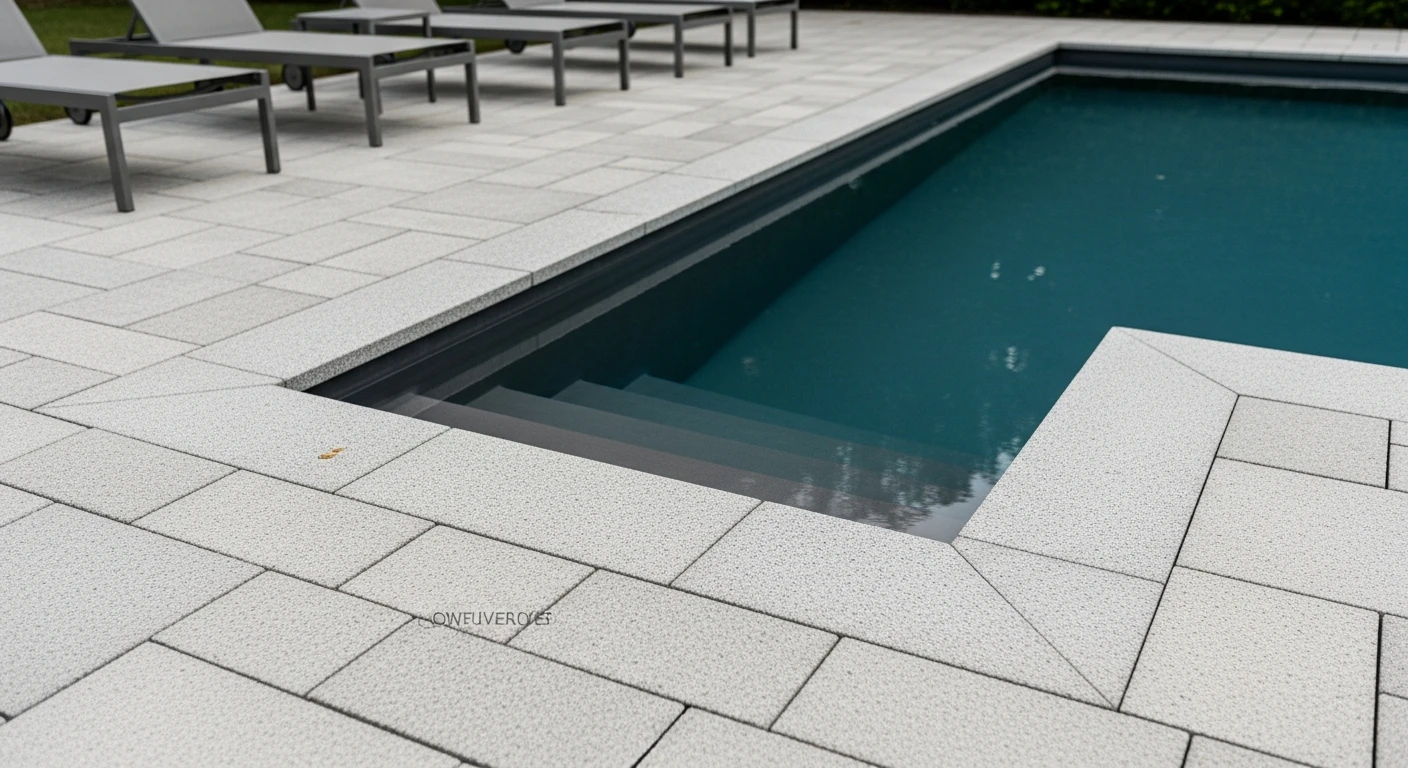
Granite Patio Pavers in Sarasota: My Protocol for Eliminating Sub-grade Failure in Sandy Soil
Most granite paver installations in Sarasota fail not because of the stone, but due to an inadequate sub-grade base that simply cannot handle our subtropical rainfall and porous, sandy soil. After correcting dozens of sunken and shifted patios from Longboat Key to Palmer Ranch, I realized the standard industry approach is fundamentally flawed for our specific coastal environment. The key isn't just the granite itself, but engineering a base that actively manages water and resists displacement. My entire methodology is built around creating a stable foundation that anticipates the hydrostatic pressure from summer downpours and the constant humidity. This involves a multi-layer, mechanically compacted base, but the real differentiator is the mandatory inclusion of a non-woven geotextile fabric. This component separates the native sandy soil from the aggregate base, preventing the fine sand from migrating upwards and compromising the entire structure, a problem I've seen derail projects in less than three years.The Critical Flaw in Standard Paver Installation for Sarasota's Climate
When I first started installing hardscapes here, I followed the book. But the "book" was written for climates with clay-based, stable soils, not the shifting sands we have. A typical failure I diagnosed on a waterfront property on Bird Key was a beautiful silver granite patio that had developed severe undulations. The installer used a standard 4-inch gravel base directly on top of the compacted sand. During the first rainy season, water forced the fine sand up into the gravel, creating voids below and causing the pavers to sink. It's a silent, progressive failure. The combination of intense UV exposure, high humidity, and salt spray in neighborhoods west of the Tamiami Trail demands a more robust material specification. Granite is an excellent choice for its density and resistance to fading, but the system holding it in place must be equally resilient. I learned the hard way that skimping on base preparation to save 10% on initial costs leads to a 100% replacement cost within five years.Granite Selection and Base Compaction: A Non-Negotiable Technical Specification
Not all granite is created equal, especially for poolside applications common in Sarasota homes. I prioritize granite with a low water absorption rate (below 0.4%) and a high coefficient of friction to ensure slip resistance when wet. Once the right stone is selected, my focus shifts entirely to the base. My non-negotiable specification is a minimum 6-inch base of DOT-certified #57 stone, laid over the geotextile fabric. The compaction is where most projects go wrong. I mandate a minimum of three passes with a plate compactor delivering at least 3,000 pounds-force (lbf). Each pass is perpendicular to the last to achieve optimal particle lock. I personally check the density with a simple steel probe; if it penetrates more than half an inch with moderate pressure, the base requires another compaction pass. This meticulous process is the only way to guarantee zero settling.Executing the 5-Layer Sarasota-Proof Paver System
After refining my process on countless projects, I've standardized a five-layer system that has proven to be incredibly effective against our local environmental challenges. Following these steps precisely is critical for achieving a 25+ year lifespan for your granite patio.- Excavation and Sub-grade Compaction: I excavate to a depth of 8-9 inches. The native sandy soil is then graded with a 1/4 inch per foot slope away from any structures and compacted. This is the foundational step for all future water management.
- Geotextile Fabric Installation: The non-woven geotextile fabric is laid down, overlapping seams by at least 12 inches. This is the barrier that prevents soil migration and is the single most important element for long-term stability in Sarasota.
- Aggregate Base Installation: The 6-inch layer of #57 stone is added in two separate 3-inch lifts. Each lift is individually moistened and compacted three times. This layered approach ensures uniform density throughout the entire base.
- Bedding Sand Application: I use a 1-inch screeded layer of washed concrete sand. This is not playground sand; it must be angular to create interlock for the pavers.
- Paver Laying and Joint Stabilization: The granite pavers are set in place, and a high-quality, UV-stabilized polymeric sand is swept into the joints. This type of sand resists washing out during heavy rains and inhibits weed and algae growth, a persistent issue in our humid climate.
Joint Stabilization and Sealing for Coastal Humidity
The final step is what preserves the installation. After the polymeric sand has cured, I apply a sealer. Many contractors use topical, acrylic-based sealers that form a film. I have found these to be a disaster in Sarasota. They trap moisture, become extremely slippery when wet, and can peel under the intense sun. My standard is to use a penetrating silane-siloxane sealer. This type of sealer soaks into the granite and the polymeric sand without forming a surface film. It provides excellent water repellency and stain resistance while maintaining the natural texture and slip resistance of the stone. This single choice can increase the effective lifespan of the jointing material by over 50% and prevents the common algae buildup seen on so many local patios. Instead of asking about the cost per square foot, are you evaluating your contractor's soil compaction and water drainage strategy?Written by

Tags
granite pavers near me
granite cobblestone pavers
granite pool pavers
granite pavers for sale
granite driveway pavers