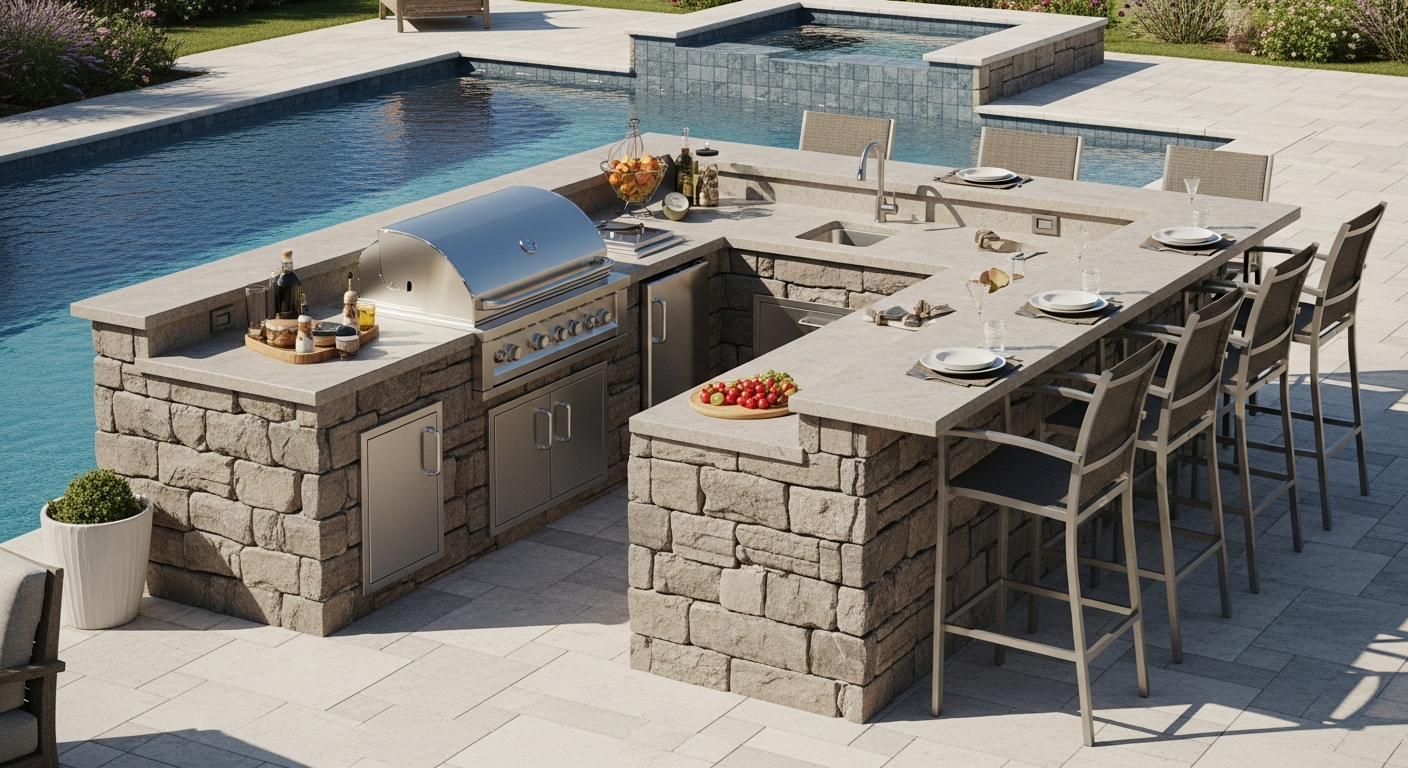
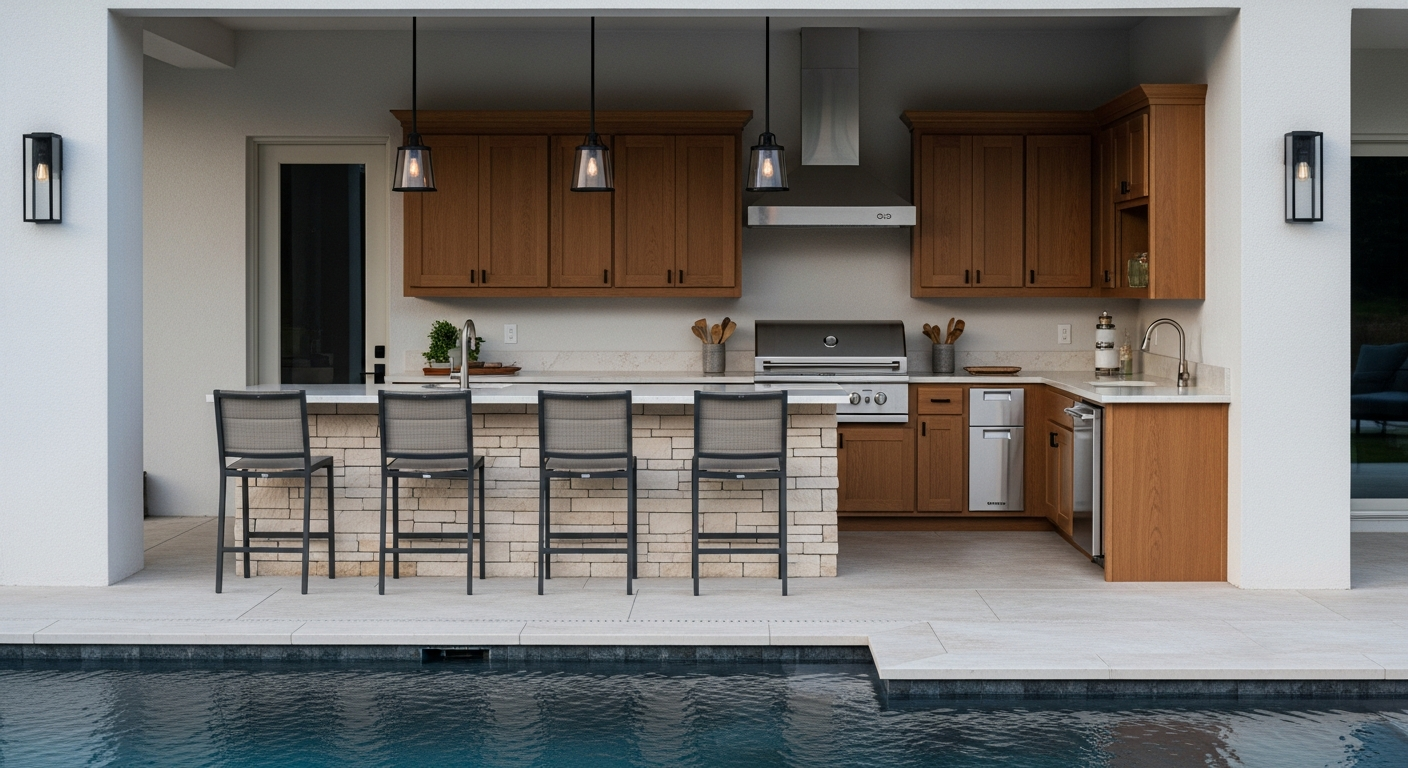
Grill Island with Bar: My TWI Framework for a 30-Year Lifespan and Zero-Smoke Blowback
Most custom grill islands I'm called to repair fail within a decade. The cause is almost never the grill itself. It's the catastrophic oversight of two invisible forces: thermal stress fractures from improper material zoning and negative pressure zones that cause smoke to choke the chef instead of venting properly. After years of deconstructing these expensive failures, I developed a methodology to prevent them from ever happening.
My Thermal Workflow Integration (TWI) framework is a system-based approach that treats the grill island not as a piece of furniture, but as a high-performance engine. It ensures every component, from the steel studs to the countertop sealant, works in harmony to manage extreme heat, airflow, and user ergonomics. This isn't about aesthetics; it's about the physics of creating an outdoor kitchen that performs flawlessly and endures for decades.
Diagnosing Structural Failure: My Thermal Workflow Integration (TWI) Methodology
I once had to dismantle a $30,000 grill island that had literally cracked in half after just two winters. The owner was baffled, but for me, the diagnosis was immediate. The builder used a single concrete backer board type for the entire structure, failing to account for the intense, localized heat from the grill. This is the core problem my TWI methodology solves. It’s based on three pillars I use for every single project, from residential patios to commercial rooftop bars.
The pillars are:
- Material Load Analysis: Selecting materials based not on looks, but on their specific coefficient of thermal expansion and heat tolerance for their exact placement within the island.
- Ventilation Dynamics: Engineering a passive airflow system that uses the grill’s own heat to create a natural draft, pulling cool air in and pushing hot air and smoke out and away from the user.
- Utility Pathway Mapping: Designing the electrical, gas, and plumbing lines to be fully insulated and accessible, preventing heat degradation and simplifying future maintenance without demolition.
- Map the Utility Core: Before a single frame is cut, I lay out the exact pathways for gas lines (using black iron pipe, never flexible hoses for in-wall runs), waterproof electrical conduits for outlets and lighting, and a sloped PVC line for the sink drain. This utility-first approach is critical.
- Frame with Non-Combustibles: I exclusively use 20-gauge steel studs for the entire structure. They are lightweight, perfectly straight, and completely immune to the heat, moisture, and pests that destroy wood-framed islands.
- Install the Ventilation Matrix: Based on the 1:1.5 ratio, I cut and install the vent boxes. The placement is critical: intakes must be positioned to capture prevailing breezes, and exhausts must be directly behind the grill unit, as high as possible without interfering with the countertop.
- Clad According to Heat Zones: I install the specified backers for each zone (e.g., PermaBase for ambient areas, firebrick for the grill cavity). This is the physical execution of the Material Load Analysis.
- Set the Countertop with an Expansion Gap: The countertop is never directly mortared to the frame. I use a high-temperature silicone adhesive and mandate a 1/8-inch silicone-filled expansion joint where the countertop meets the stone or stucco veneer. This allows the top to expand and contract without cracking the entire structure.
Tags
exterior kitchen
outdoor kitchen and bbq
outdoor kitchen bbq area
outdoor grill and bar island
complete outdoor kitchen