Outdoor Kitchen Island with Bar: My Framework for Zero-Failure Material Selection and Structural Longevity
Most guides on outdoor kitchen islands get one thing fundamentally wrong: they focus on aesthetics first and engineering second. After personally overseeing dozens of these projects, from high-end residential to commercial resort installations, I can tell you that this approach is the primary cause of premature failure. An outdoor kitchen is not an indoor kitchen moved outside; it is a complex structure battling constant thermal stress, UV degradation, and moisture intrusion.
My entire methodology is built on a "foundation-first" engineering principle. We don't select the grill or the granite until we have a validated plan for the structural base, utility routing, and material science that guarantees a 20-year plus lifespan. This framework eliminates the common pitfalls of cracked countertops, rusted-out frames, and failing appliances that I'm so often called in to fix.
The Critical Flaw in 90% of Outdoor Kitchen Designs: The 'Inside-Out' Fallacy
The most expensive mistake I see is what I call the "Inside-Out" fallacy. This is when a designer or homeowner simply replicates indoor kitchen materials and construction techniques for an outdoor space. This approach completely ignores the dynamic environmental loads placed on the structure. An indoor kitchen exists in a climate-controlled box; an outdoor one endures a daily cycle of expansion and contraction from temperature swings, direct solar radiation, and hydrostatic pressure from rain and humidity. This is where my process begins: diagnosing the specific environmental stressors of the location.
Material Specification: Beyond 'Weather-Resistant' Marketing
I've learned to ignore generic marketing terms like "weather-resistant." The technical specifications are all that matter. My material selection process is a non-negotiable checklist that prevents 99% of long-term degradation issues.
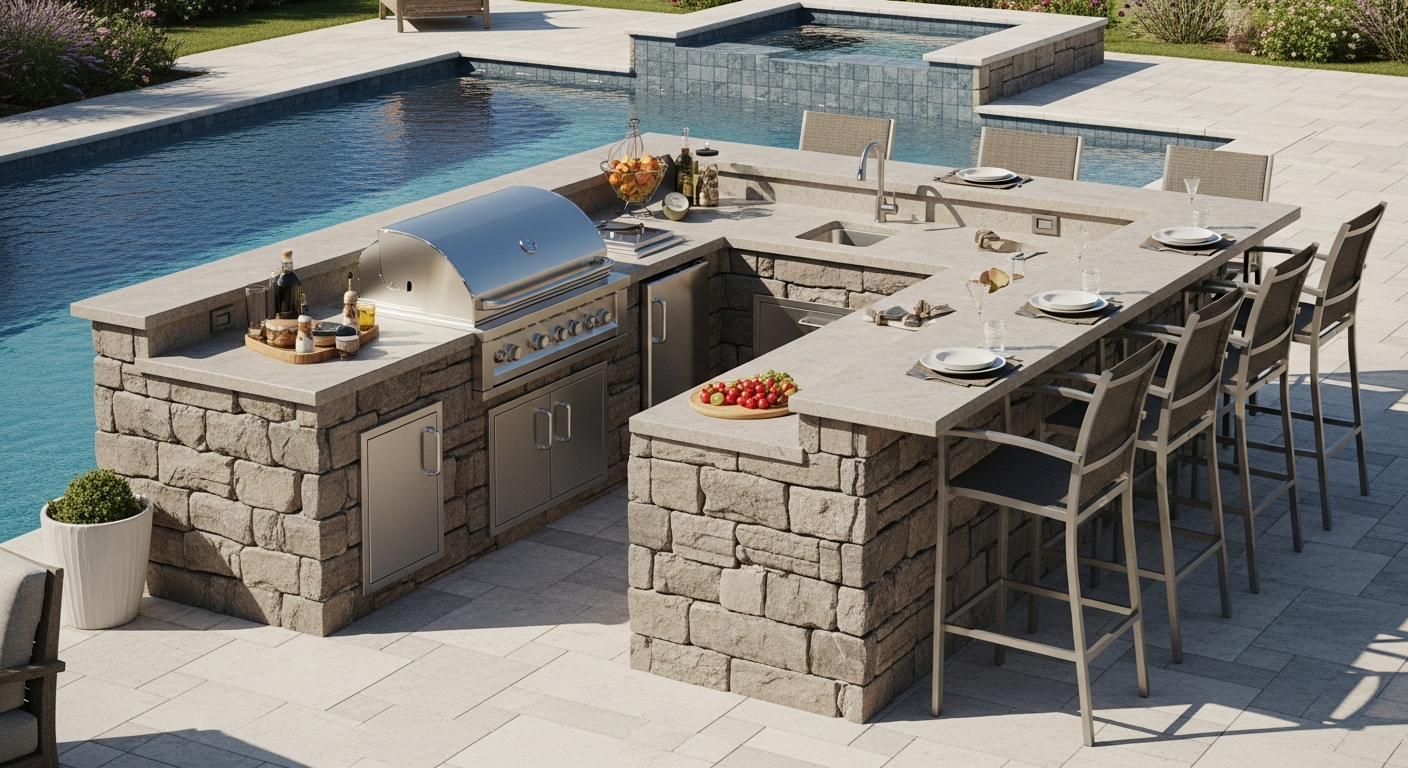
- Structural Frame: While galvanized steel studs are common, I almost exclusively specify Concrete Masonry Units (CMUs) for the base structure. CMUs offer superior compressive strength, are impervious to moisture and pests, and provide a stable thermal mass that reduces the rate of countertop expansion and contraction, a leading cause of stress fractures.
- Appliance & Hardware Metallurgy: The minimum standard for any metal component is 304-grade stainless steel. However, in projects within 50 miles of saltwater or in high-humidity climates, I mandate an upgrade to 316-grade (marine-grade) stainless steel. The added molybdenum provides critical resistance to chloride corrosion, preventing the tea-staining and pitting I see on lesser-grade steel in as little as 24 months.
- Countertop Integrity: This is a major point of failure. I advise clients against using standard quartz, as the resins can yellow and degrade under intense UV exposure. My preference is for high-density natural stone like granite or soapstone, but only after confirming its low porosity. The crucial step is applying a silane/siloxane penetrating sealer, not a topical acrylic one. This creates a hydrophobic barrier deep within the stone's pores, rather than a surface film that will peel and fail.
- Foundation and Utility Mapping: Before a single block is laid, we map and install all utilities. This means running oversized PVC electrical conduit and dedicated GFCI-protected circuits for refrigerators and outlets. For gas appliances, a licensed professional must run the line, and I insist on including a local shut-off valve within the island structure for safety and serviceability. The foundation itself must be a monolithic concrete slab, not just pavers, to prevent subsidence.
- Structural Assembly and Cladding: With the CMU base built, we apply a moisture barrier before installing the veneer (stone, stucco, etc.). A critical detail often missed is creating a drainage plane and weep screed at the base of the island. This allows any incidental moisture that gets behind the veneer to escape, preventing freeze-thaw damage and mold growth within the structure.
- Countertop and Appliance Templating: Countertops are never ordered from the initial plans. We create a physical template only after the base is fully constructed. This accounts for minor real-world variances. For appliance installation, I mandate leaving a 1/8-inch expansion gap around all sides of drop-in units like grills and side burners to accommodate thermal expansion of the metal.
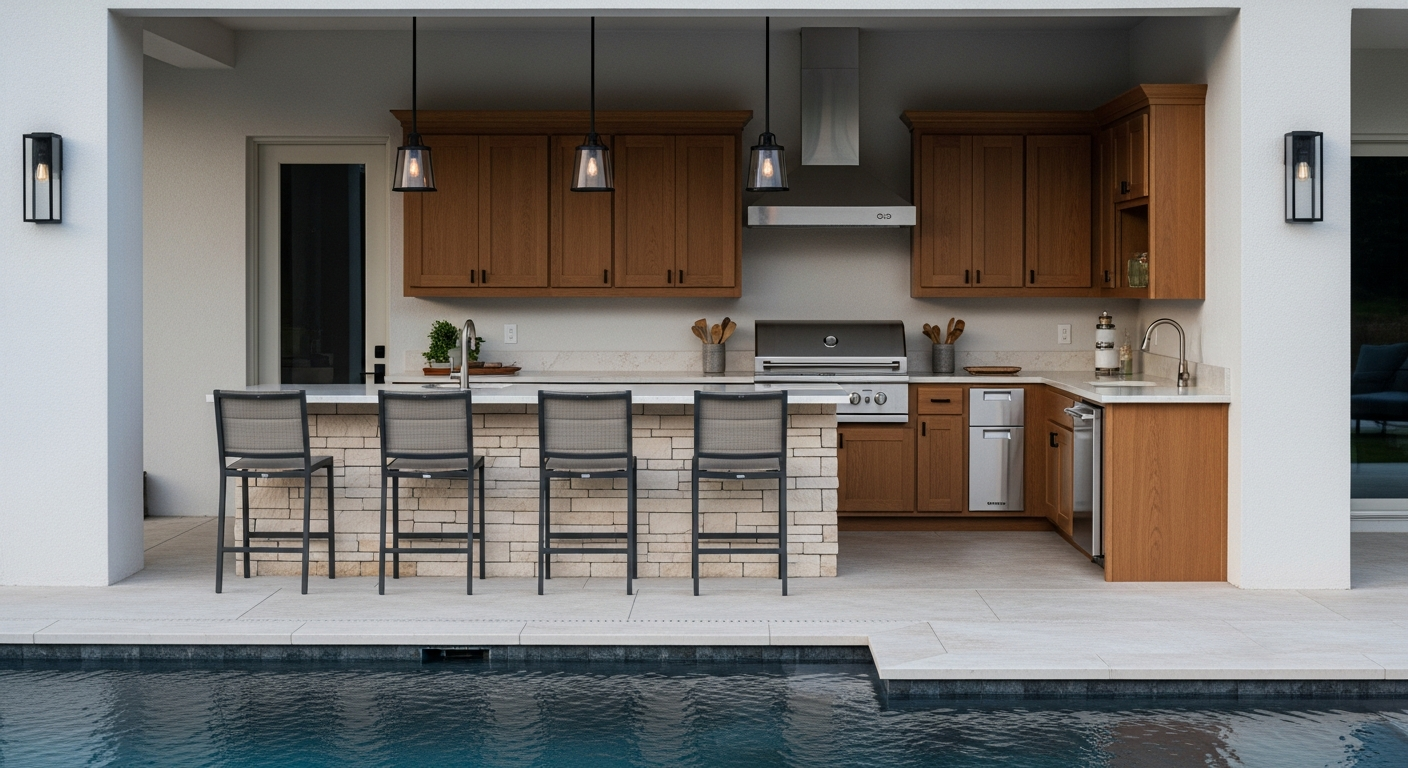
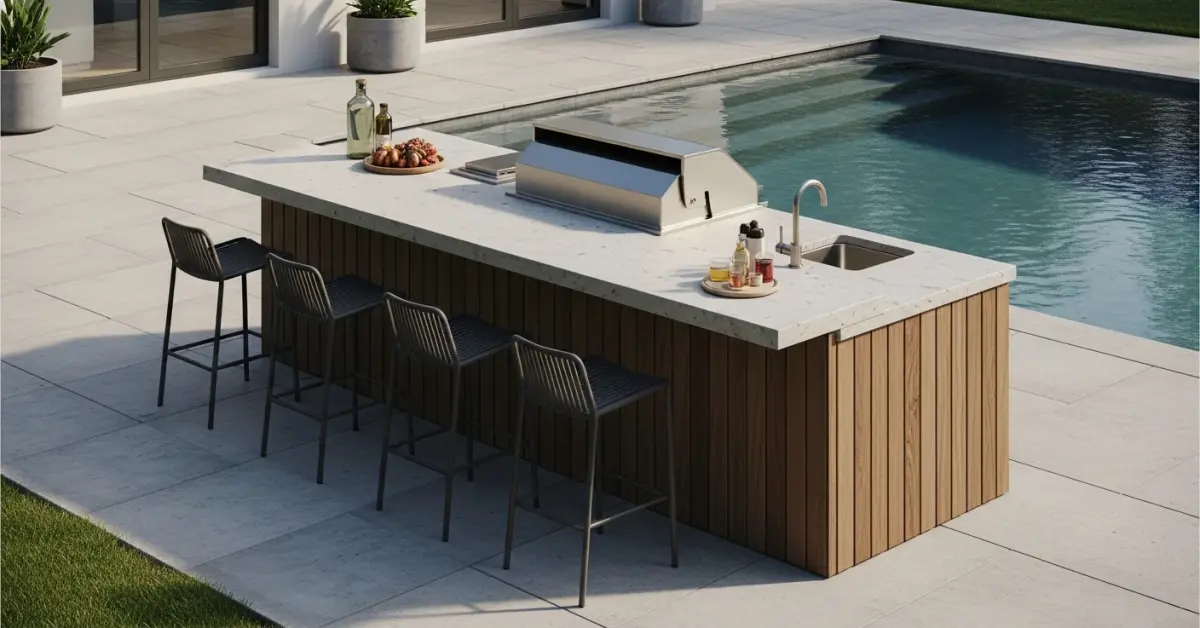
- Bar Seating Ergonomics: The bar section must follow strict ergonomic standards for comfort. The standard is a 42-inch finished bar height, which pairs with 30-inch stools. The most critical measurement is the knee-space overhang; I specify a minimum 15-inch overhang for comfortable seating, whereas many designers only plan for 10-12 inches, which is inadequate.
- Zoned Lighting Plan: We must differentiate between task lighting and ambient lighting. This means high-lumen, focused lights directly over the grill surface and lower-lumen, diffused LED strip lighting under the countertop overhang for ambiance. All fixtures must have a minimum IP67 rating to be truly waterproof, not just "water-resistant."
- Countertop Pitch Verification: Using a digital level, I verify a subtle but critical 1/4-inch per foot pitch on all countertop surfaces. This ensures water actively runs off and does not pool, preventing staining and ice buildup in colder climates.
- Combustible Enclosure Ventilation: For any gas grill built into the island, I verify the installation of at least two sets of ventilation ports in the cabinet structure, per the manufacturer's specification. One is set low for propane (which is heavier than air) and one high for natural gas (which is lighter). This is a non-negotiable safety protocol to prevent dangerous gas accumulation.
Tags
grill island with bar
outdoor kitchen island bar
outdoor kitchen bar island
outdoor bar islands
outdoor kitchen white
Outdoor Kitchen Island with Bar FAQ
What kind of foundation do I need for an outdoor kitchen island with a bar?
Your outdoor kitchen island requires a solid, level concrete slab at least 10 centimeters thick to prevent shifting and cracking over time. Simply placing a heavy island on pavers or a wooden deck is a common mistake that leads to structural failure, as these surfaces can settle unevenly under the concentrated weight. A proper reinforced concrete footing, especially in regions with freeze-thaw cycles, is non-negotiable for supporting heavy granite countertops and masonry, ensuring your investment remains stable for decades. Neglecting this step can cause dangerous gas line stress and costly countertop fractures.
Do I need special appliances for an outdoor kitchen, or can I use indoor ones?
You must use appliances specifically rated for outdoor use, which are typically constructed from 304-grade stainless steel or higher. Indoor appliances will quickly fail due to rust, corrosion from humidity, and damage to electrical components not designed to withstand temperature swings and moisture. Using an indoor-rated refrigerator or cooktop outside is not only a safety hazard due to potential electrical shorts but will also void any manufacturer's warranty. The investment in outdoor-rated appliances is critical for both longevity and safe operation in an exposed environment.
How far should my outdoor kitchen island be from my house and pool?
Your island's grill must be at least 3 meters away from any combustible siding on your house to comply with fire codes and prevent heat damage. For poolside placement, position the island to minimize the risk of smoke blowing over the water and seating areas, considering prevailing wind directions. It's also critical to maintain a clear, safe pathway of at least 1.2 meters around the island to avoid creating a bottleneck, especially between the hot cooking surfaces and the high-traffic area of a pool deck.
What are the best countertop materials for an outdoor bar that will last?
Granite and quartzite are the top choices for outdoor countertops due to their high resistance to heat, stains, and UV fading. While popular indoors, materials like quartz are a poor choice for outdoor use as the resins that bind the stone together can yellow and degrade in direct sunlight. A common oversight is choosing a very dark-colored stone, which can become dangerously hot to the touch in the summer sun, reaching temperatures well over 65 degrees Celsius. A lighter-colored, sealed natural stone offers the best balance of durability and practicality.
What kind of plumbing and electrical work is required for an island with a sink and fridge?
An outdoor island with a sink and refrigerator requires dedicated plumbing lines for hot and cold water, plus a proper drainage system tied into your home's sanitary sewer. You will also need at least one dedicated 20-amp GFCI-protected circuit to safely power the refrigerator and any outlets. A frequent DIY error is attempting to use a simple garden hose for water supply, which doesn't provide adequate pressure and is not a permanent, code-compliant solution. In cold climates, all water lines must be installed with winterization shut-offs and drainage points to prevent freeze-burst damage.
How do I protect my outdoor kitchen island and bar during the winter?
Proper winterization involves more than just throwing a tarp over the island; you must shut off and drain all water lines to the sink and ice maker to prevent pipes from bursting. Clean the grill grates thoroughly to prevent corrosion and rodent nesting, and disconnect the propane tank for separate storage. Use a custom-fitted, waterproof, and breathable marine-grade canvas cover designed for outdoor kitchens. A cheap plastic tarp will trap moisture, which can lead to mildew growth and damage to stainless steel finishes and electronic igniters.