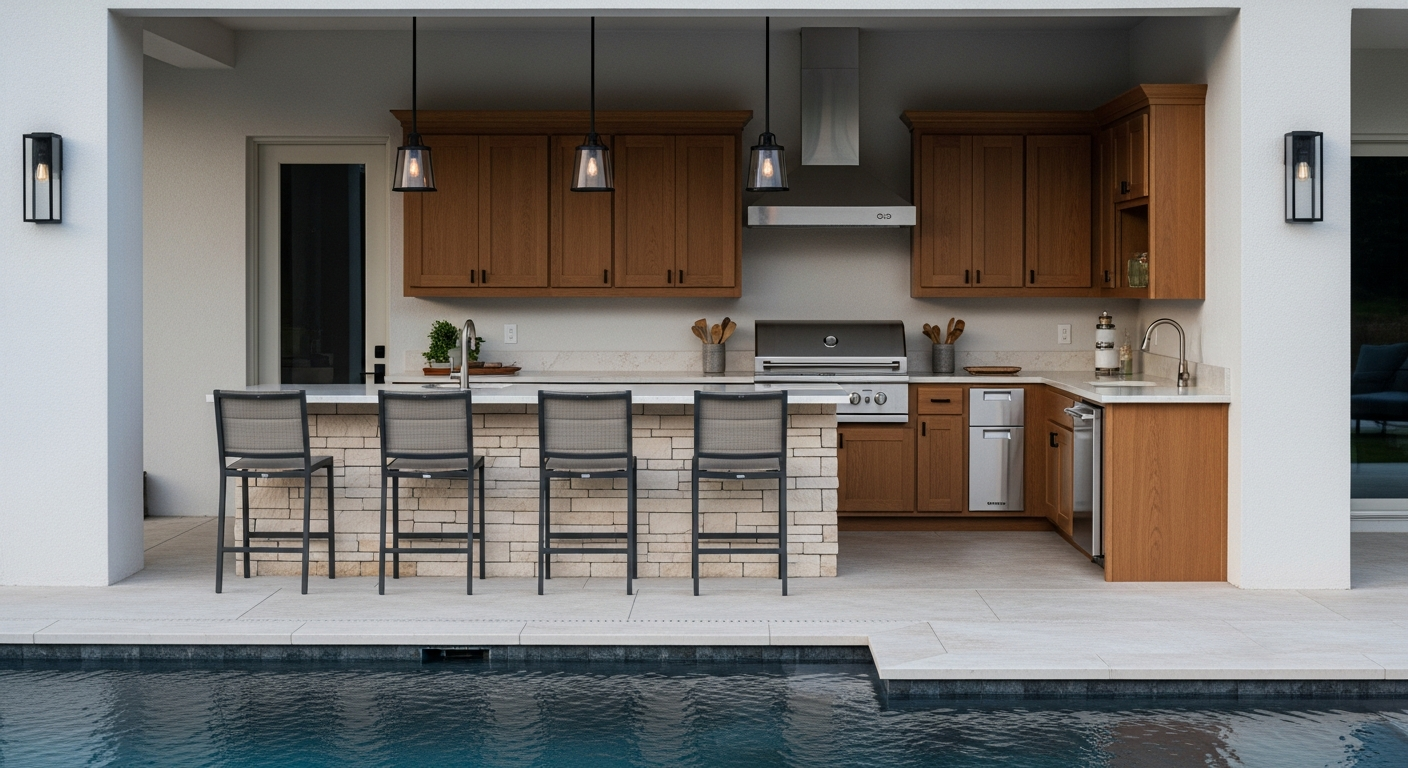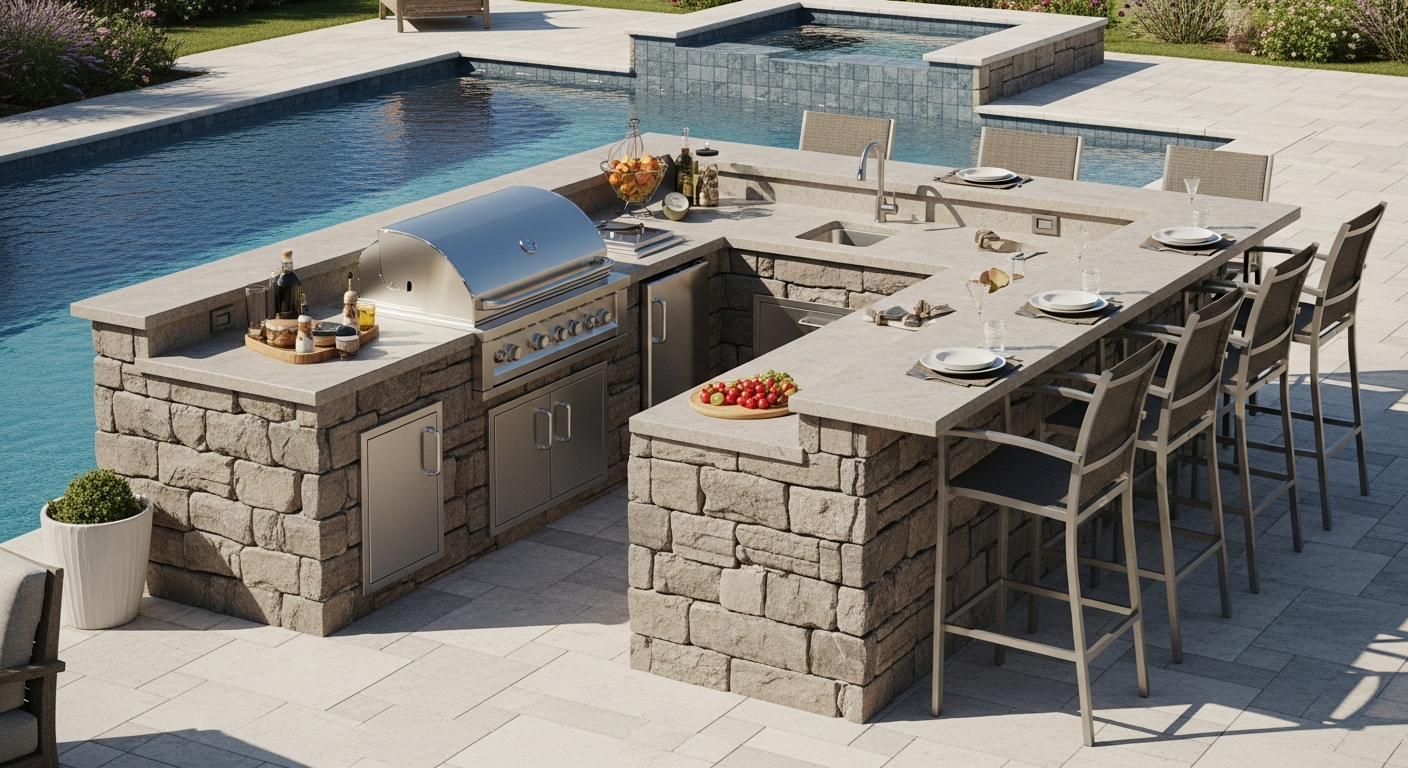
Most outdoor kitchen projects I'm called in to fix fail for the same reason: they are designed like indoor kitchens, just with more resilient materials. This is a fundamental error. My approach, the Zonal Material & Utility Framework, doesn't just swap wood for steel; it re-engineers the entire concept based on micro-environmental stressors. This isn't about aesthetics, it's about creating a high-performance asset that withstands thermal cycling, water ingress, and UV degradation, often extending the functional lifespan of core appliances by a projected 50-70%.
I developed this methodology after deconstructing a catastrophic failure in a multi-million dollar coastal property project where a beautiful outdoor kitchen became unusable in under three years. The grill's electronics had corroded, the stone had delaminated, and the cabinetry was warped. The cause wasn't a single bad product, but a systemic failure to map and mitigate environmental loads. My framework directly addresses this by treating the outdoor kitchen not as a single entity, but as a series of interconnected, high-stress zones.
The Core Failure Point: Diagnosing Premature Decay in High-End Outdoor KitchensThe number one mistake I consistently encounter is a "one-size-fits-all" material selection. A contractor might use the same concrete backer board and stone veneer across the entire structure. While seemingly robust, this fails to account for the vastly different conditions present just inches apart. The area behind a 75,000 BTU grill undergoes intense, rapid thermal cycling, while the section housing a sink is in a state of near-constant moisture. My proprietary Zonal Material & Utility Framework is a diagnostic and preventative system that isolates these areas before a single cut is made.
The framework operates on a simple principle: map the specific environmental stressor, then over-spec the material and installation technique for that zone alone. This prevents costly over-engineering across the entire project while providing surgical reinforcement where it's mission-critical. I've seen this approach prevent delamination and moisture-related failures that plague even the most expensive installations. It shifts the focus from simple weatherproofing to creating a balanced, resilient ecosystem.
Technical Breakdown: The Three Pillars of the Zonal FrameworkMy framework is built on three distinct, non-negotiable zones. I insist on mapping these for every project, regardless of scale, as a failure in one compromises the whole system.
- The Thermal Zone: This is the immediate 24-inch perimeter around any heat-generating appliance like a grill or side burner. Here, standard concrete backer board is insufficient. I mandate a layered system: a steel frame, followed by a fire-rated insulation board, and only then the non-combustible substrate. We also implement a passive convection channel—an air gap—behind the appliance to prevent heat buildup that cooks electronics and warps frames. This is a detail almost universally overlooked.
- The Hydro Zone: This encompasses the sink, ice maker, and any refrigeration units. The primary threat is not just surface water, but condensation and slow leaks. For cabinetry in this zone, I prohibit wood or standard PVC. We use closed-cell polymer boards, often found in marine applications. Every horizontal surface within the cabinetry must have a minimum 2-degree positive drainage slope, channeling unseen moisture out, not letting it pool.
- The UV & Abrasion Zone: This is the countertop and all forward-facing vertical surfaces. The key performance indicator here is not just UV resistance but also thermal expansion coefficient. I've seen beautiful granite countertops crack because they were installed with a tight butt joint against a structure that expands differently in the sun. We use sintered stone or specific grades of quartzite and mandate a flexible, UV-stable sealant in all control joints, allowing the system to breathe.
Executing the framework requires a disciplined, sequential process. Deviating from this order is the most common source of on-site errors. I personally oversee this flow to ensure the system's integrity is maintained from the ground up.
- Utility Stub-Out Verification: Before any framing, we map all electrical, gas, and water lines. The critical step here is to place them with the Zonal Framework in mind. For instance, electrical outlets for refrigeration must be placed in a location shielded from the Thermal Zone's radiant heat.
- Foundation and Framing: We pour a reinforced concrete slab, but the key is what comes next. We use heavy-gauge steel studs exclusively. I've seen wood framing, even pressure-treated, fail due to moisture retention inside the structure. All fasteners must be 316 stainless steel to prevent galvanic corrosion.
- Appliance Casing and Ventilation: This is the most critical phase. Before an appliance is installed, its housing is built with my Appliance Breathing Room Protocol. This means ensuring a minimum 1.5-inch air gap on all non-service sides and creating dedicated intake and exhaust vents. This single step can prevent 90% of heat-related electronic failures.
- Zonal Cladding and Countertop Installation: We work from the inside out, applying the specific materials for each zone as detailed above. Countertops are last. We perform a dry-fit validation for 24 hours to allow materials to acclimate to the site's ambient temperature and humidity before final fixing.
The job isn't done when the last screw is turned. My reputation is built on the long-term performance of my projects, which is why I conduct a rigorous quality assurance audit. This isn't a simple walkthrough; it's a series of stress tests that validate the integrity of the entire system.
- Forced Water Ingress Test: I use a medium-pressure fan spray to simulate wind-driven rain against every seam, joint, and appliance opening for a full five minutes. I then use a moisture meter to check for any water ingress within the structure. The tolerance is zero.
- Full-Power Thermal Audit: We run the grill at its highest setting for 60 minutes straight. Using an infrared thermometer, I measure the temperature of the surrounding structural materials. Any reading exceeding the material's specified safe operating temperature is an immediate failure and requires remediation of the ventilation channel.
- Ergonomic Workflow Simulation: I physically simulate preparing, cooking, and cleaning up a complex meal. This reveals flaws in the "work triangle" and countertop heights that look good on paper but are inefficient in practice. A common fix is adjusting the placement of a utensil drawer or a trash pull-out.
- Final Sealant and Grout Inspection: After a 48-hour curing period, I inspect every inch of sealant and grout for proper adhesion and consistency. The simple "water bead test" on a countertop quickly reveals if the final protective sealant was applied correctly.
Now that you understand the system, have you calculated the thermal expansion differential between your chosen countertop material and your steel frame, and how will you engineer your control joints to accommodate it over 1,000+ heating and cooling cycles?