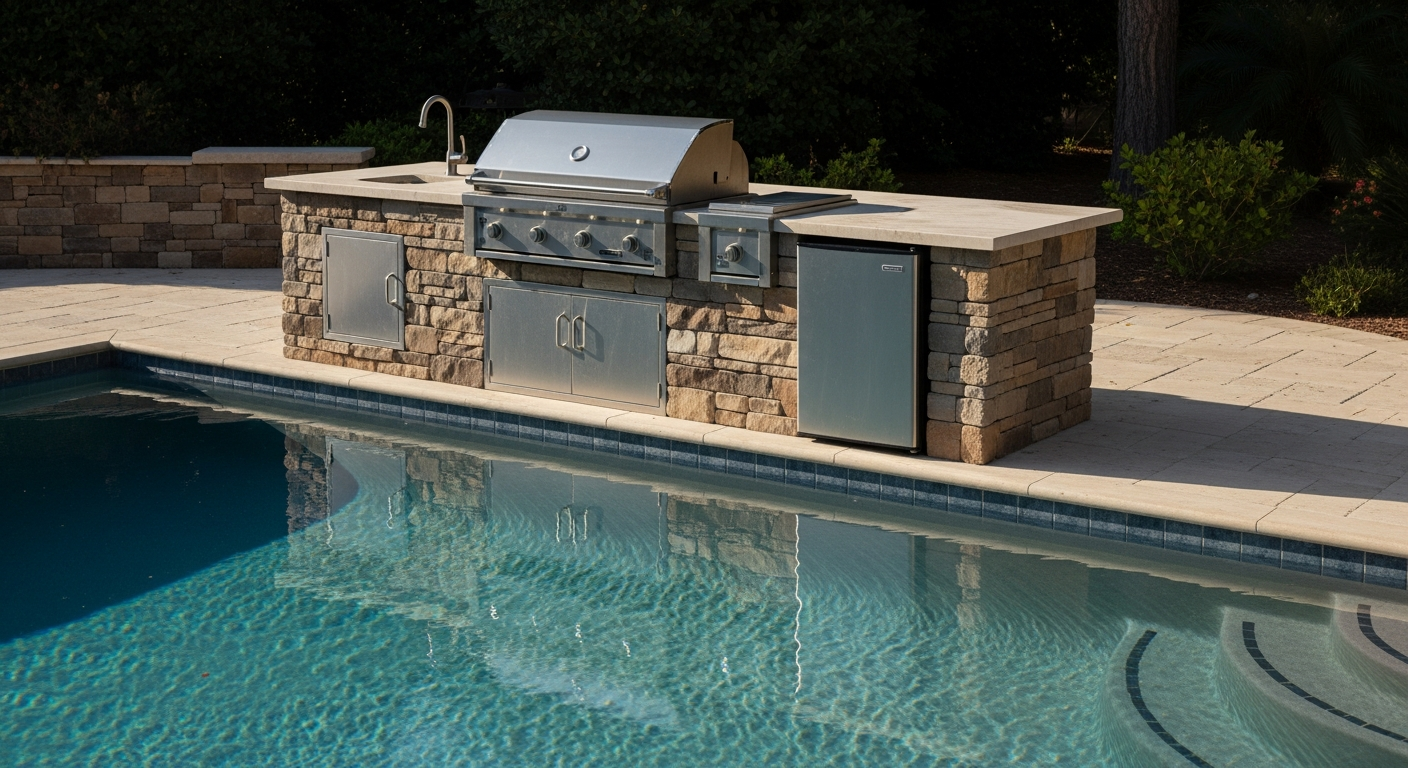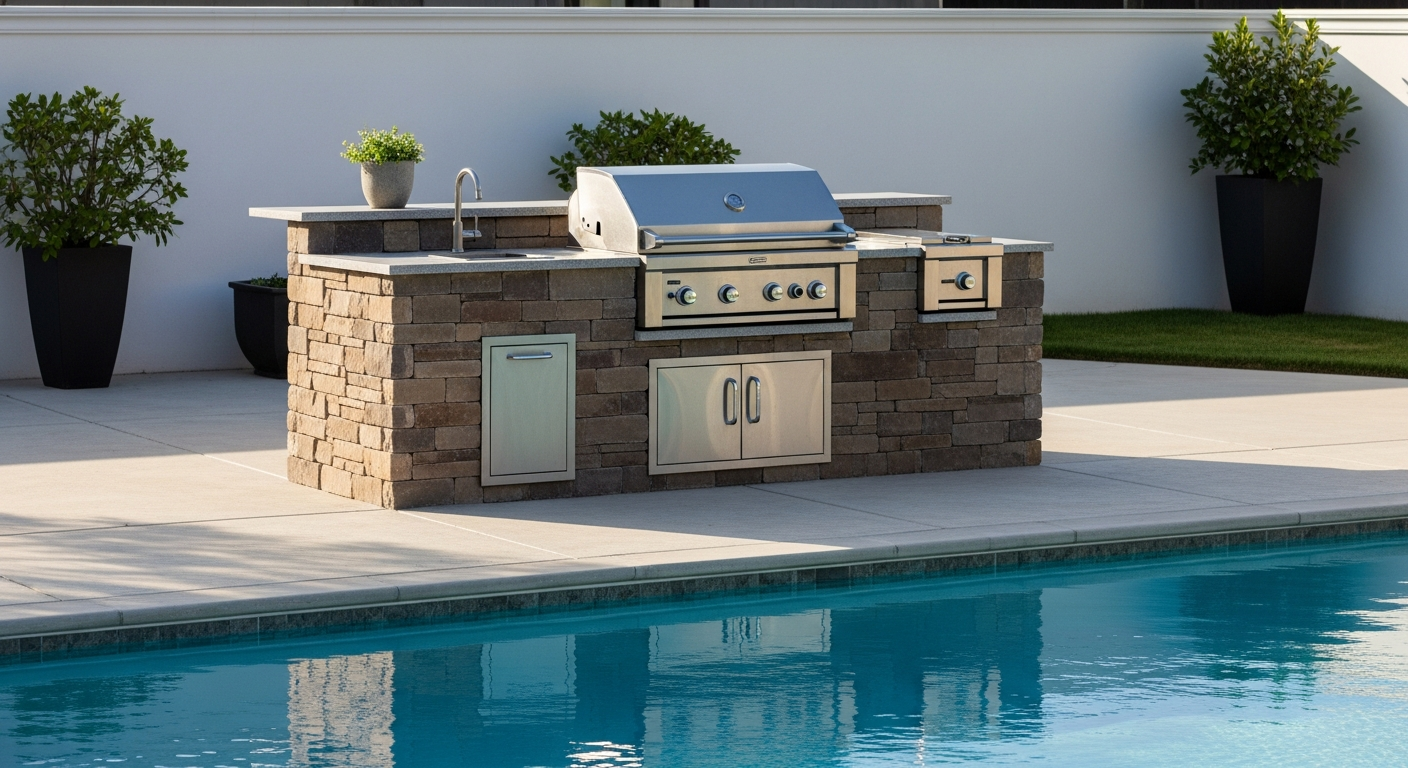
Grill Islands for Sale: A Framework for Avoiding 75% of Common Post-Installation Failures
As a consultant specializing in high-performance outdoor living spaces, I've seen countless grill island projects go wrong. The most common mistake isn't choosing the wrong grill or the wrong stone finish; it's a fundamental failure in pre-purchase planning. Clients often select a beautiful, pre-fabricated unit or a custom design based on aesthetics, only to discover that their patio slab can't support the weight, or that utility runs for gas and electric will require thousands of dollars in destructive trenching.
My approach flips the script entirely. Before you even look at a single product listing for "grill islands for sale," you must perform what I call a Functional Footprint Analysis. This methodology, which I developed after a large-scale residential project required a complete tear-down due to miscalculated gas line pressures, prioritizes the non-negotiable infrastructure. It ensures the island you buy is not just an appliance holder, but a fully integrated and failure-proof component of your home's ecosystem.
The Diagnostic: Why Most Grill Island Investments Underperform
The core issue I consistently diagnose is a focus on the "what" (the island itself) before the "where" and "how" (the site and its services). A stunning grill island with a commercial-grade cooktop is useless if it causes your patio to crack or if the electrical outlet for the rotisserie is an afterthought. My Functional Footprint Analysis is a diagnostic tool designed to preempt these costly errors by mapping the project's foundational constraints first. I don't start with a catalog; I start with a tape measure, a pressure gauge, and a structural assessment.
Technical Deep Dive: Core Tenets of the Functional Footprint Analysis
My analysis is built on three technical pillars that are almost always overlooked in online buying guides.
- Substrate Load-Bearing Capacity: Most concrete patios are poured to a standard 2500 PSI, which is often insufficient for a heavy, stone-clad island. I've seen hairline fractures develop within six months. We must verify the slab's thickness and PSI rating. If it's inadequate, the plan must include either a new footing or a lighter island construction, such as a galvanized steel frame with a cement board finish instead of a solid block structure.
- Utility Triangulation & Pressure Drop: This is critical. You must map the optimal paths for gas, electrical, and potentially water/drainage. For gas lines, it's not just about distance. I calculate the BTU load of all appliances (grill, side burners) to ensure the pipe diameter can supply adequate volume without a significant pressure drop, which would starve the burners of fuel and reduce performance.
- Material Thermal Coefficient Matching: In climates with wide temperature swings, materials expand and contract at different rates. A common failure I've repaired is a granite countertop cracking because it was bonded directly to a steel frame without an appropriate uncoupling membrane. The differential movement creates immense shear stress. My material specifications always account for this thermal behavior.
- Step 1: Conduct a Site & Utility Audit.
- Measure the exact footprint on your patio.
- Locate the nearest gas stub and electrical source.
- Confirm your patio slab's structural integrity. A simple core sample or consultation with the original builder can provide this.
- Document the total BTU load required and verify your gas line's capacity.
- Step 2: Vet the Frame Material.
- For longevity, insist on a frame made of galvanized steel or aluminum. I've had to replace wood-framed islands that rotted from the inside out within three years.
- Check the gauge of the steel; 18-20 gauge is the minimum standard for a durable structure.
- Step 3: Scrutinize Cladding & Countertop Specifications.
- Demand to know how the countertop is joined to the frame. Look for mentions of a flexible, high-temperature adhesive and uncoupling layers.
- For stone or brick veneer, ensure the manufacturer specifies a high-quality polymer-modified mortar, not a generic mix.
- Step 4: Perform an Appliance Integration Review.
- Ensure the island's cutouts match the exact rough-in dimensions of your chosen appliances.
- Verify the design includes adequate passive ventilation ports to prevent gas buildup—a critical safety feature.
- Confirm there is a planned access panel for servicing utility connections. This is a massive oversight I see in 90% of pre-fabricated models.
Tags
outdoor kitchen with pizza oven and grill
outdoor kitchen natural gas grill
outdoor kitchen with smoker and grill
outdoor kitchen with flat top grill
outdoor grill with fridge