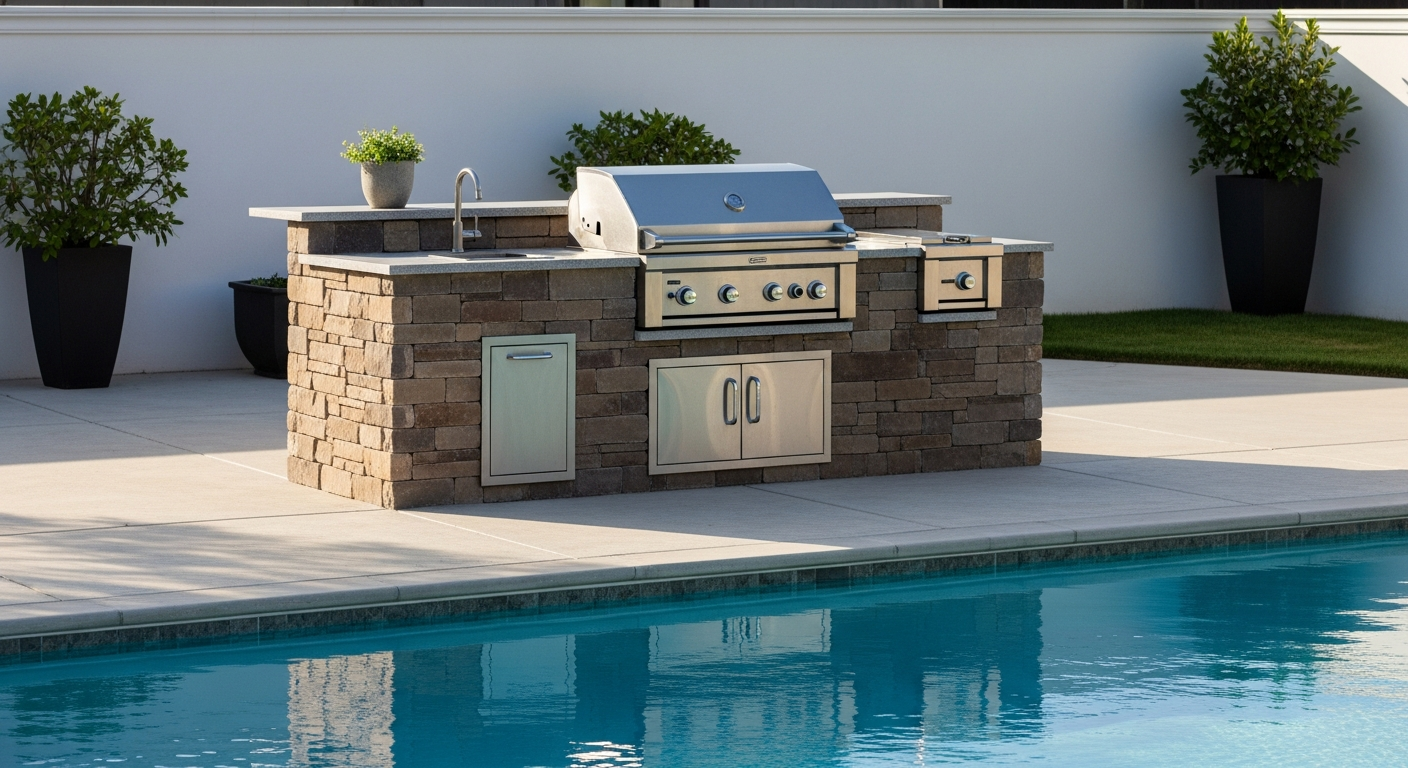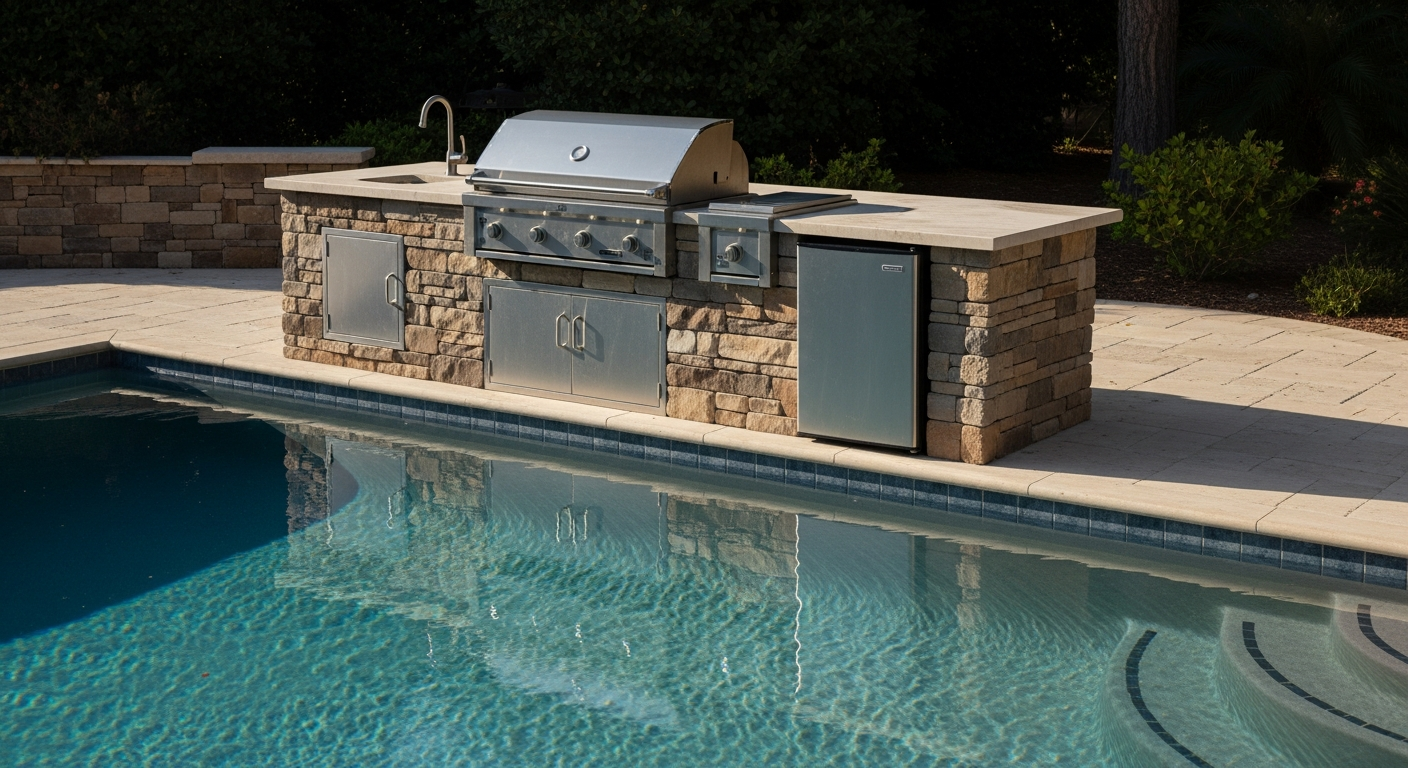
Natural Gas BBQ Island: My Framework for Flawless Ignition and a 20-Year Lifespan
Building a natural gas BBQ island that performs flawlessly from day one is not about the brand of the grill; it's about mastering the physics of gas delivery and thermal management. I've seen countless high-end projects fail because of a single, overlooked detail: an undersized gas line causing pressure drop, leading to weak flames and ignition problems. My entire approach is built around preventing this and other critical errors before the first stone is ever laid.
This isn't just about connecting a pipe. It's a system I've refined over a decade of designing and troubleshooting custom outdoor kitchens. The goal is to create an island that not only looks stunning but also delivers consistent, powerful heat for decades, with a structural integrity that withstands the elements. We're engineering a permanent outdoor appliance, and it demands a higher standard of planning.
The Gas Flow Triad: My Blueprint for Peak BBQ Performance
After analyzing dozens of underperforming installations, I developed what I call the Gas Flow Triad. This proprietary methodology addresses the three core pillars that dictate 90% of an island's performance and safety. Ignoring any one of these pillars is the primary reason why many expensive grills feel underpowered. Most builders focus solely on the aesthetic enclosure, but the real engineering happens within the frame. The Triad consists of: Gas Line Sizing, Regulator & Valve Placement, and Cross-Ventilation Architecture. It's a system that forces you to plan the infrastructure with the same care as the visible finishes.
Mastering BTU Load and Pressure Drop Calculations
The most common mistake I correct is the "one-size-fits-all" half-inch gas line. This is a critical failure point. You must calculate the Total BTU Load of all appliances in the island—the main grill, side burners, and any other gas-powered features. A 100,000 BTU system has vastly different requirements than a 50,000 BTU one. My rule is to calculate the total load and then factor in the distance from the gas meter. For every 50 feet of pipe, you can expect a measurable pressure drop. I often specify a 3/4-inch line as the primary run, even for shorter distances, to guarantee maximum volume and pressure at the appliance. This ensures a 30% faster pre-heat time and consistent flame height, even when all burners are on high.
The Zero-Failure Installation Protocol: A Step-by-Step Guide
Executing the plan requires precision. I’ve built a checklist that my team and I follow religiously to eliminate variables and ensure predictable outcomes. This isn't just a sequence of tasks; it's a quality control system designed to catch errors before they become permanent.
- Calculate the Total BTU Demand: Sum the BTU ratings of every gas appliance you plan to install. Don't guess. This number dictates everything that follows.
- Map Your Gas Run: Measure the exact distance from the meter to the island termination point. Use this measurement, along with your BTU total, to select the correct pipe diameter using a standard pipe sizing chart. When in doubt, go one size up.
- Install the Emergency Shut-Off Valve: This is a non-negotiable safety requirement. The valve must be installed by a licensed professional and be located outside the island structure for immediate and easy access. I’ve seen them buried inside, which is a massive safety hazard.
- Construct a Vented Enclosure: A natural gas island is a potential bomb if not vented correctly. I mandate a minimum of two vents, placed on opposite sides of the island, one low and one high, to create a natural cross-ventilation path. This prevents gas from pooling in the event of a small leak.
- Perform a Two-Stage Leak Test: The first test happens after the line is run but before the island is clad. Use a manometer to pressure test the line to 1.5 times the working pressure for at least 15 minutes. The second test is a soap-and-water check on all final connections after the grill is installed.
Tags
outdoor kitchen with pizza oven and grill
outdoor kitchen natural gas grill
outdoor kitchen with smoker and grill
outdoor kitchen with flat top grill
outdoor grill with fridge