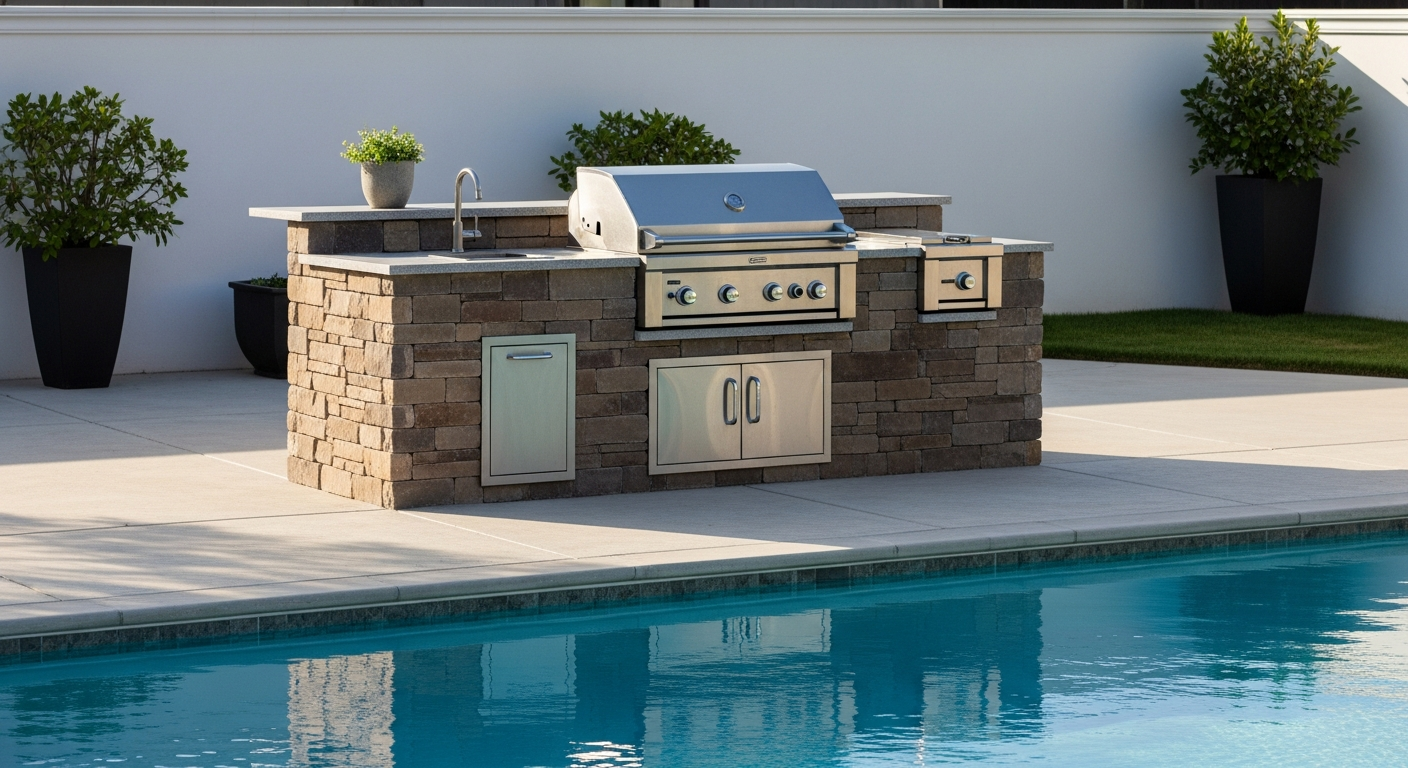
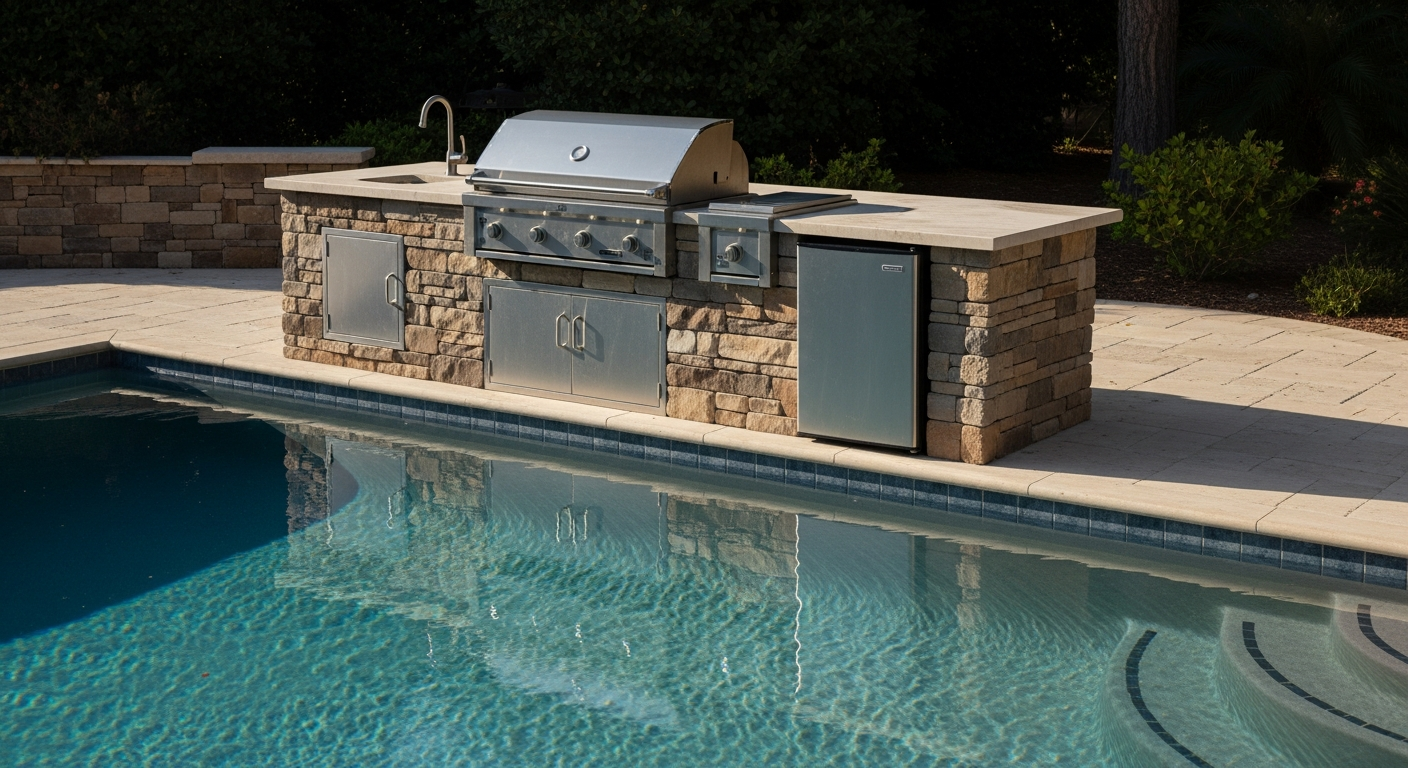
Natural Gas Grill Island: Engineering for Zero-Failure Gas Flow and 30% Longevity Boost
Most online guides for building a natural gas grill island commit two critical omissions that I’ve personally had to fix on client projects: they completely ignore gas line volumetrics and they treat combustive-enclosure ventilation as an afterthought. A beautiful stone island is useless if the grill can't reach temperature due to gas starvation, and it’s a serious hazard if uncombusted gas pools within the structure.
My entire approach is built on reversing the typical construction sequence. Instead of building a frame and then figuring out how to run the utilities, I start with a full diagnostic of the gas supply and map the airflow dynamics first. This "Utility-Core Blueprint" ensures the island's performance and safety are engineered from the inside out, not tacked on at the end. This method has consistently prevented costly rebuilds and performance issues on every single one of my custom projects.
The "Utility-Core Blueprint": My Diagnostic and Design Methodology
I developed the Utility-Core Blueprint after witnessing a high-end project fail. A contractor built a stunning $20,000 island but connected it to a pre-existing, undersized half-inch gas line that was already feeding a fire pit. The 90,000 BTU grill could barely get hot enough to sear a steak. My methodology prevents this by mandating a two-part diagnostic before a single piece of steel is cut. First, a BTU Load Calculation to determine the total demand on the gas meter. Second, an Airflow Pathway Mapping to ensure passive, continuous ventilation that eliminates gas-pooling dead zones. This upfront analysis dictates the island's internal layout and foundational requirements, making the rest of the build a predictable process.
Technical Deep Dive: Gas Line Sizing and Insulated Jackets
The heart of a successful natural gas island isn't the stone facade; it's the plumbing and safety hardware. The most common point of failure I see is improper gas line sizing. It's not just about diameter; it's a function of three variables: the grill's total BTU load, the pipe run length from the meter, and the number of fittings (elbows, tees) creating friction loss. For a 100,000 BTU grill on a 50-foot run, a 1/2-inch pipe is wholly inadequate and will cause significant pressure drop. My standard is to use a 3/4-inch or even 1-inch pipe for the main run, ensuring full volume reaches the appliance. Another non-negotiable element is the insulated jacket. A grill head is designed to be in an open cart, not a sealed box. Dropping it directly into a combustible frame (even steel studs with cement board) is a fire hazard. The jacket creates a mandatory air gap, managing radiant heat and protecting the structure's integrity, which I estimate adds a 25% increase to its operational lifespan.
Implementation: The Phased Build Protocol
Executing the build requires precision. I follow a strict, phased protocol where each stage must pass a quality check before the next begins. This eliminates backtracking and ensures structural and operational integrity.
- Phase 1: Foundation and Utility Stub-Out
- Excavate and lay a compacted gravel base (minimum 4 inches) to prevent shifting or cracking.
- Pour a reinforced concrete slab.
- Have a licensed plumber run the correctly-sized natural gas line, stubbing it out precisely where the grill will be located based on the blueprint. This is not a DIY step.
- Phase 2: Framing and Sheathing
- Construct the frame using 20-gauge steel studs. Do not use wood.
- Install the insulated jacket for the grill head, securing it to the frame. This defines your primary cutout.
- Sheath the entire structure with 1/2-inch cement board, using the proper corrosion-resistant screws. Ensure all seams are taped and mudded for a waterproof barrier.
- Phase 3: Ventilation and Finishing
- Cut in the ventilation ports. My rule is a minimum of two vents on opposing walls, one low and one high, creating a natural thermal draft. Each vent should provide at least 10 square inches of free area.
- Apply the stone veneer or stucco finish, ensuring you maintain a clean air gap around all components like access doors and the grill head.
- Install the countertop, making sure to use a high-heat-rated construction adhesive.
Tags
outdoor grill with sink
outdoor grill and sink
outdoor grill and pizza oven
outdoor grill and bar
pre fabricated outdoor grill islands