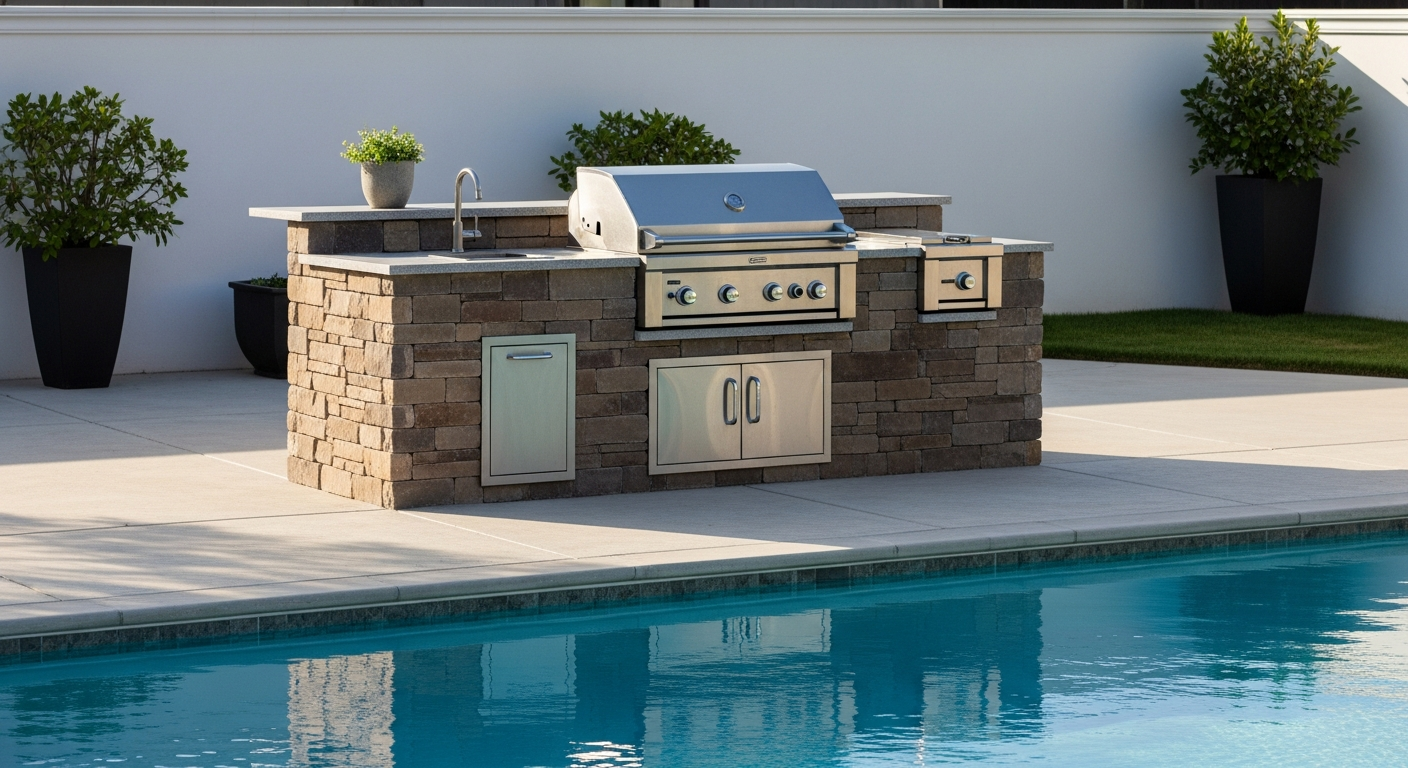
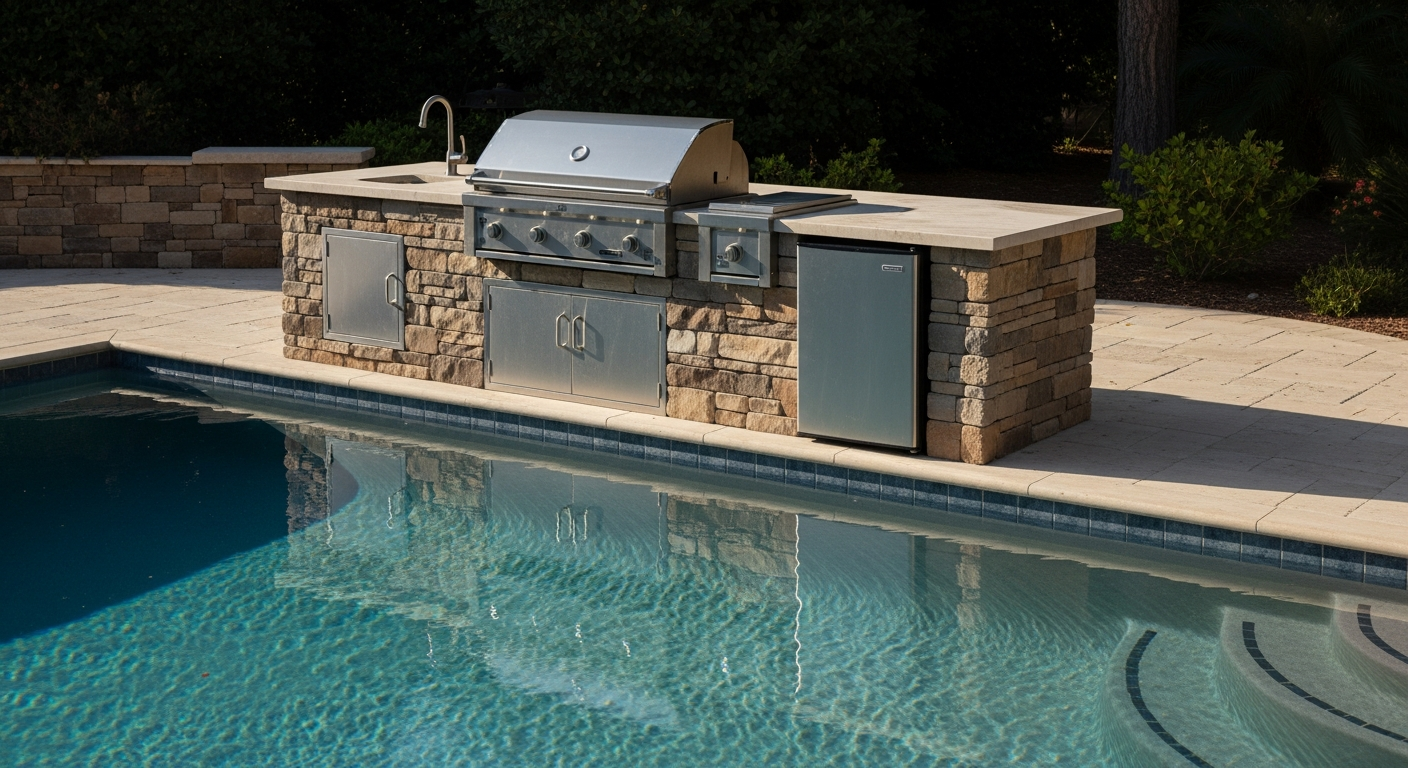
Gas Grill Island Design: The Thermal-Dynamic Framework for a 30% Lifespan Increase
Most gas grill islands I've seen fail prematurely don't have a grill problem; they have an engineering problem. The focus almost always falls on the aesthetic—the stone veneer, the polished granite—while the core principles of thermodynamics and utility management are dangerously overlooked. This oversight leads to cracked countertops, warped frames, and even hazardous gas leaks within a few seasons.
My approach is fundamentally different. After years of deconstructing failed projects, I developed a framework that treats the grill island not as a piece of furniture, but as a high-performance appliance housing. It’s built around two core pillars: managing heat transfer through engineered thermal breaks and creating a predictable convection-driven ventilation system. This methodology consistently extends the structural integrity and operational lifespan of the unit by an estimated 30% or more.
My Diagnostic Protocol for Structural Integrity
Before a single stud is cut, my first step is a diagnostic assessment that most builders skip. I analyze the project through the lens of a single, critical failure point: differential thermal expansion. This is where the intense heat from the grill head (often exceeding 700°F) conducts through the frame and meets the relatively cool countertop and finishing materials. I once consulted on a large commercial project where a beautiful quartzite countertop split in half in its first summer because the designer failed to isolate the grill’s heat from the substructure.
My proprietary methodology, the "Component Isolation Analysis," prevents this by evaluating three key variables upfront:
- Grill Head Thermal Output: We go beyond the advertised BTUs and analyze the manufacturer's spec sheet for required clearances and jacket insulation ratings. A high-BTU sear station requires a completely different isolation strategy than a standard grill.
- Frame Material Conductivity: Steel and aluminum frames, while strong, are excellent heat conductors. My protocol quantifies how much heat will be transferred to the rest of the structure and dictates where non-conductive spacers are required.
- Countertop Material Composition: Natural stone like granite handles heat well. Engineered quartz, however, contains resins that can scorch or yellow starting at temperatures as low as 300°F. We must ensure the surface temperature will never approach this threshold.
- Step 1: Frame Assembly & Leveling. We build the steel or aluminum stud frame on a perfectly level base. Before proceeding, we verify it is perfectly square and plumb, as any deviation will create stress points later.
- Step 2: Install the Insulated Grill Jacket. This is a non-negotiable component specified by the grill manufacturer. I ensure there is a minimum 1/4-inch air gap around the entire jacket, separating it from the frame studs.
- Step 3: Engineer the Thermal Breaks. At all contact points between the jacket's mounting flange and the frame, we install our ceramic or silicone insulators. This is the key isolation step.
- Step 4: Establish the Ventilation Path. We cut the openings for the vents. A minimum of two vents are required, each with at least 20 square inches of free area, placed diagonally opposite from each other (e.g., front-bottom-left and back-top-right).
- Step 5: Run Utility Lines in Conduit. All gas and electrical lines are run through a rigid or flexible conduit. The gas line must have a drip leg and an accessible shut-off valve located inside the island.
- Step 6: Apply Cement Board with Expansion Joints. We sheathe the frame in cement board, leaving a 1/8-inch gap at all seams. This gap is filled with a flexible, high-temperature sealant to accommodate expansion and contraction.
Tags
modern outdoor grill
bbq grill kitchen
outdoor kitchen grill
outdoor kitchen bbq grill
outdoor kitchen and grill