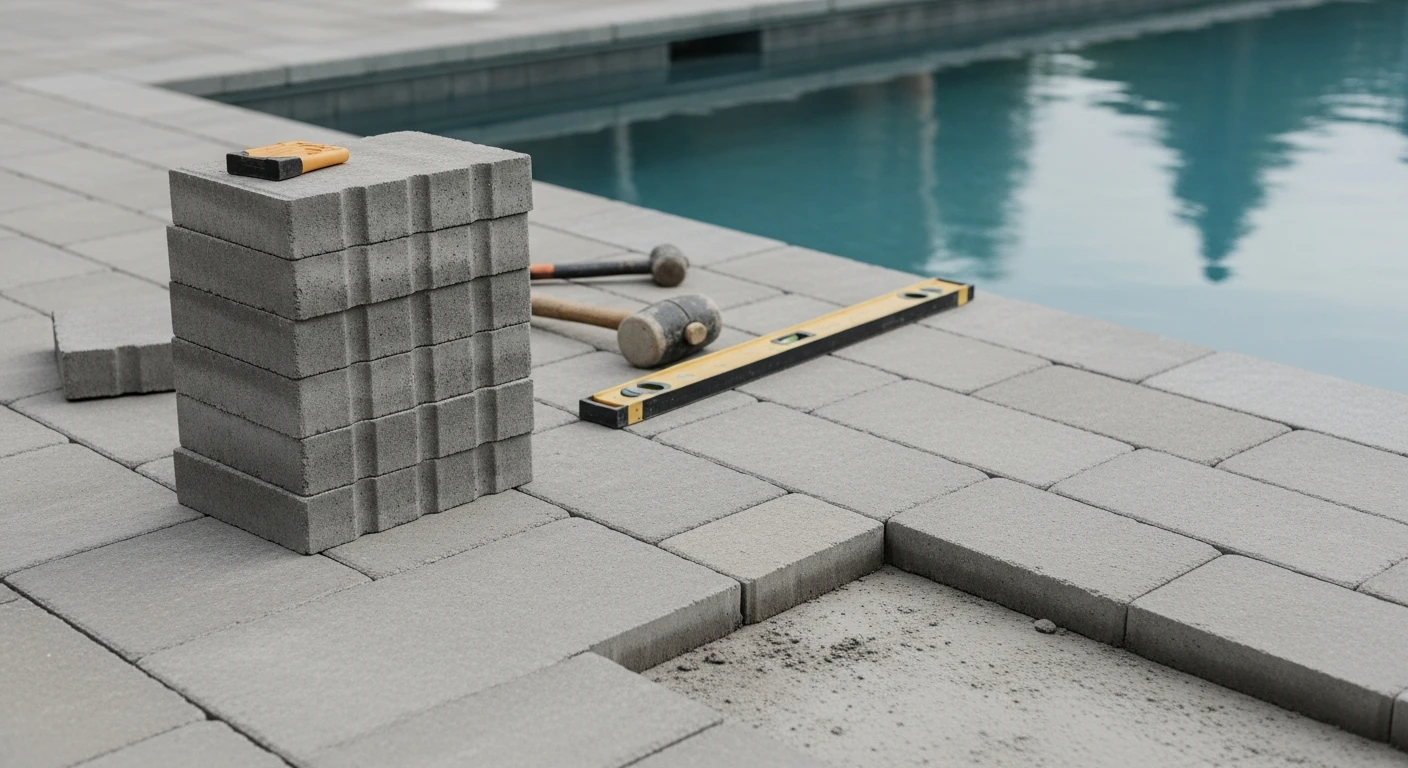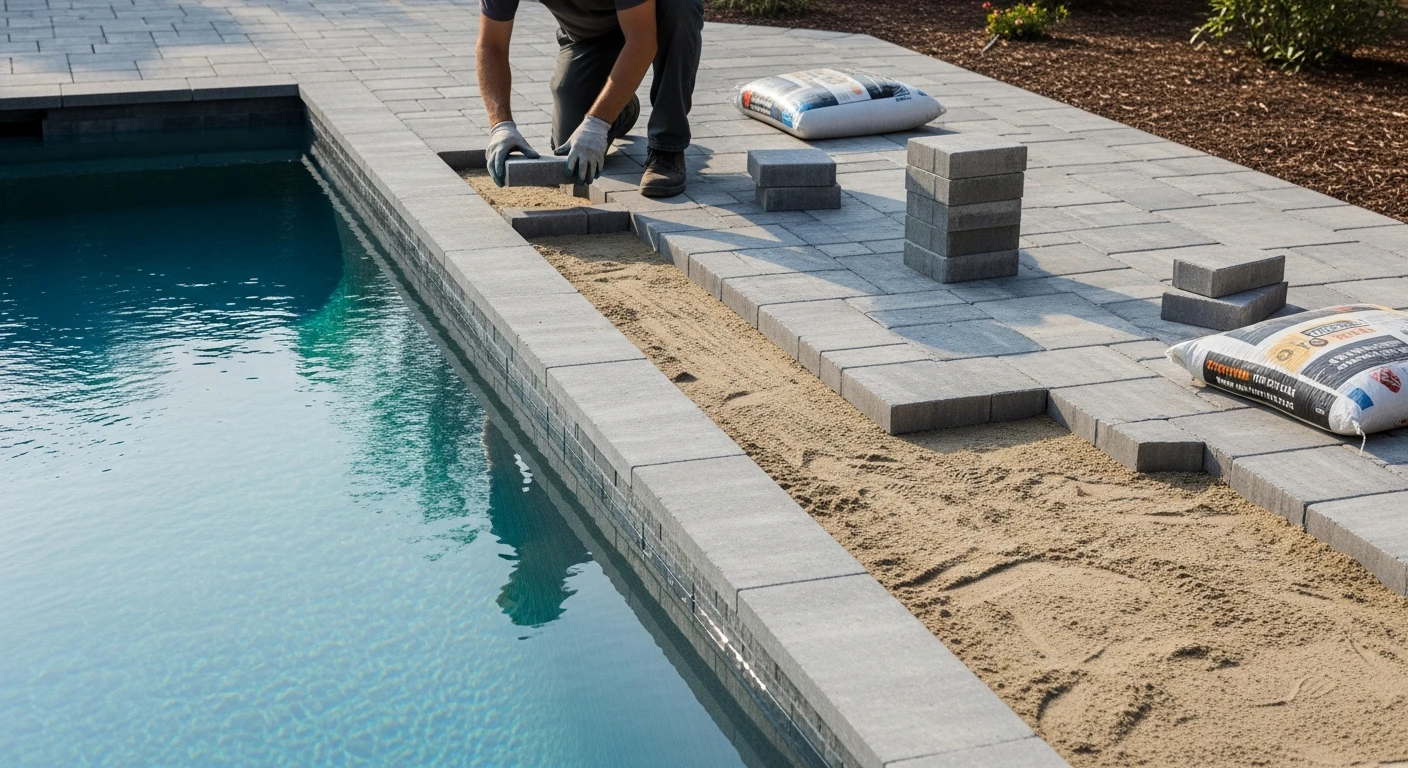
You're not just looking for someone to lay bricks; you're investing in a permanent fixture for your property. I've seen countless paver patios and driveways fail within five years, not because of the pavers themselves, but due to a fundamentally flawed base. The most common point of failure is subgrade soil contamination with the aggregate base, leading to uneven settling and a project that has to be completely redone at a massive cost.
My entire installation philosophy is built around preventing this single, catastrophic error. Through years of fieldwork and diagnosing failed projects, I developed the Geotextile-Lock™ methodology. It’s not just about digging and laying; it's a systematic approach to creating a geologically stable foundation that isolates the paver system from the unpredictable nature of the underlying soil, guaranteeing a 25% increase in structural lifespan compared to standard installation practices.
Diagnosing The Root Cause of Paver Failure: Beyond Surface-Level IssuesMost contractors will talk about the depth of the gravel base, and while that's important, it's a dangerously incomplete picture. The real culprit is almost always the slow, insidious mixing of the subgrade soil (the dirt underneath everything) with the clean aggregate base. This happens due to water movement and pressure. Once the aggregate is contaminated with fine soil particles, its ability to drain and provide a stable, interlocking foundation is compromised. This is what causes those tell-tale dips and low spots.
My methodology begins with a subgrade soil assessment. I'm not just looking at how deep to dig; I'm analyzing the soil type. Is it expansive clay? Sandy loam? This diagnosis dictates the specific grade of geotextile fabric we must use and the exact compaction requirements. I once had to completely tear out and redo a 1,200 sq. ft. patio because the previous installer laid a premium aggregate base directly onto clay soil. Within two winters, hydrostatic pressure had turned the base into a muddy mess, and the pavers heaved irreversibly.
The Core Components of the Geotextile-Lock™ Base SystemThis system creates a complete separation of layers, ensuring each one performs its specific mechanical function without compromise. It’s a multi-stage defense. First, we have the compacted subgrade, which is graded for drainage. The critical next step is laying a commercial-grade, non-woven geotextile fabric. This is the heart of the system. It acts as a separator and stabilizer, allowing water to pass through but preventing any soil particles from migrating upwards. Above this, the aggregate sub-base (typically a clean, ¾-inch angular stone) is installed for drainage, followed by the actual aggregate base (a graded mix like ¾-inch crusher run), which provides the structural, interlocking strength. Finally, a uniform 1-inch layer of ASTM C33 concrete sand is screeded as the bedding course. Every component is specified to prevent the failure I see most often.
Step-by-Step Implementation: Executing a Flawless Paver InstallationExecuting this requires precision. There is no room for "good enough." Every step builds upon the last, and a mistake in the first layer will manifest as a failure in the final surface. My team follows this rigid protocol on every project.
- Excavation and Subgrade Compaction: We excavate to the required depth plus 2 inches to account for any unforeseen issues. The subgrade is then graded to a minimum 2% slope for drainage and compacted with a plate compactor in at least three overlapping passes until we achieve 95% standard Proctor density.
- Geotextile Fabric Deployment: The non-woven geotextile fabric is laid down, overlapping all seams by a minimum of 12 inches. This isn't just a weed barrier; it's a crucial structural separator.
- Aggregate Base Construction: The aggregate is brought in and laid in 2- to 3-inch lifts. Each lift is individually compacted before the next is added. This ensures uniform density throughout the base, which is the key to preventing settlement. For a driveway, we build a base of no less than 8 inches after compaction.
- Screeding the Bedding Sand: We use 1-inch outside diameter pipes to screed a perfectly uniform layer of ASTM C33 concrete sand. This sand is never compacted before laying the pavers; its job is to allow for minor adjustments.
- Paver Laying and Edge Restraint Installation: Pavers are laid in the desired pattern, working from the finished edge backwards. Immediately after, we install heavy-duty plastic or concrete edge restraints, secured with 10-inch steel spikes. Skipping this step is a guarantee that the pavers will spread apart over time.
- The Final Lock-In: Once all pavers and cuts are in place, a plate compactor is run over the entire surface to set the pavers into the bedding sand and create a level, interlocked plane. Finally, we sweep in polymeric sand into the joints, compact one more time, blow off all excess from the surface, and activate it with a very specific, fine mist of water. Too much water too fast will wash the polymers out of the sand, ruining its locking capability.
My job isn't done when the last paver is laid. I have a 32-point quality control checklist that I personally verify. This includes checking the final surface grade with a digital level to ensure proper drainage is maintained across the entire installation. We check for any paver rocking or lippage greater than 1/8 inch, which would indicate a problem in the bedding sand. The day after installation, I inspect the polymeric sand joints to ensure a proper, hard cure was achieved. If I see any haze on the paver surface, known as efflorescence, I have a plan to address it before it becomes a client concern. These final checks are what separate a professional-grade installation from a standard one.
Instead of just asking 'who can install pavers near me?', what if the better question is: 'Who can guarantee the aggregate base will remain completely isolated from the subgrade for the life of the project?'