Paving Stone Installation Near Me: My Sub-Base Integrity Protocol to Guarantee Zero Heaving
When you search for paving stone installation, you're not just looking for someone to lay pretty blocks. You're investing in a functional surface that must withstand weather, weight, and time. After 15 years in this field, I can tell you that over 90% of paver patio and driveway failures—sinking, heaving, and weed-infested gaps—stem from a single source: a fundamentally flawed sub-base. The pavers themselves rarely fail; it's the invisible foundation beneath them.
My entire methodology is built around preventing this catastrophic and costly error from the start. I developed the Sub-Base Integrity Protocol, a system focused on achieving a verifiable compaction density and perfect water management, which virtually eliminates the risk of future repairs. It’s not about working harder; it’s about applying geotechnical principles that most installers ignore for the sake of speed.
My Diagnostic Framework for a Flawless Paver Foundation
Before a single shovel hits the ground, my process begins with a site diagnosis. I analyze soil composition, grade, and water runoff patterns. This isn't just a formality; it dictates the entire project's engineering. I once had to completely excavate and rebuild a two-year-old patio from another contractor. The cause? They used stone dust for the base instead of clean, angular aggregate. This created a silty, water-retaining sponge that heaved and failed after just two freeze-thaw cycles. My diagnostic framework prevents these foundational errors by quantifying the specific requirements for your project’s load and climate. We determine the necessary excavation depth and the exact type of geotextile fabric required to separate the native soil from our engineered aggregate base, ensuring long-term stability.
Deconstructing the 98% Proctor Density Standard
Here is the technical core of my protocol that separates a 20-year installation from a 2-year disaster. The goal is to create a sub-base with a predictable and stable density. We achieve this by targeting a minimum of 98% Standard Proctor Density. This is a geotechnical engineering metric that measures the maximum density achievable for soil or aggregate through compaction. Simply dumping 6 inches of gravel and running a plate compactor over it once is useless; you only compact the top layer. My method involves installing the aggregate base in 2 to 3-inch lifts (layers). Each individual lift is compacted multiple times until it reaches the 98% density target. This meticulous process creates a monolithic, interlocking base that is impenetrable to water and resistant to the immense pressure of frost heave. It is the single most critical factor in a paver system's longevity.
Step-by-Step Implementation of the Integrity Protocol
Executing the protocol requires precision at every stage. There are no shortcuts. Each step builds upon the last, and a mistake in one compromises the entire system. Here is my exact operational sequence:
- Systematic Excavation: We excavate to a precise depth, typically 7-8 inches for pedestrian patios and 12-14 inches for driveways, ensuring the grade slopes away from any structures at a minimum of 1/4 inch per foot for proper drainage.
- Geotextile Fabric Installation: A non-woven geotextile fabric is laid down. Its function is critical: it prevents the native soil from migrating up into the aggregate base, which would contaminate it and compromise its drainage properties.
- Aggregate Base Course (The Lifts): We begin installing the ASTM #57 stone base in controlled 3-inch lifts. Each lift is wetted and compacted with a heavy-duty plate compactor until our density target is met. This is the most labor-intensive part of the job and the one most often rushed by competitors.
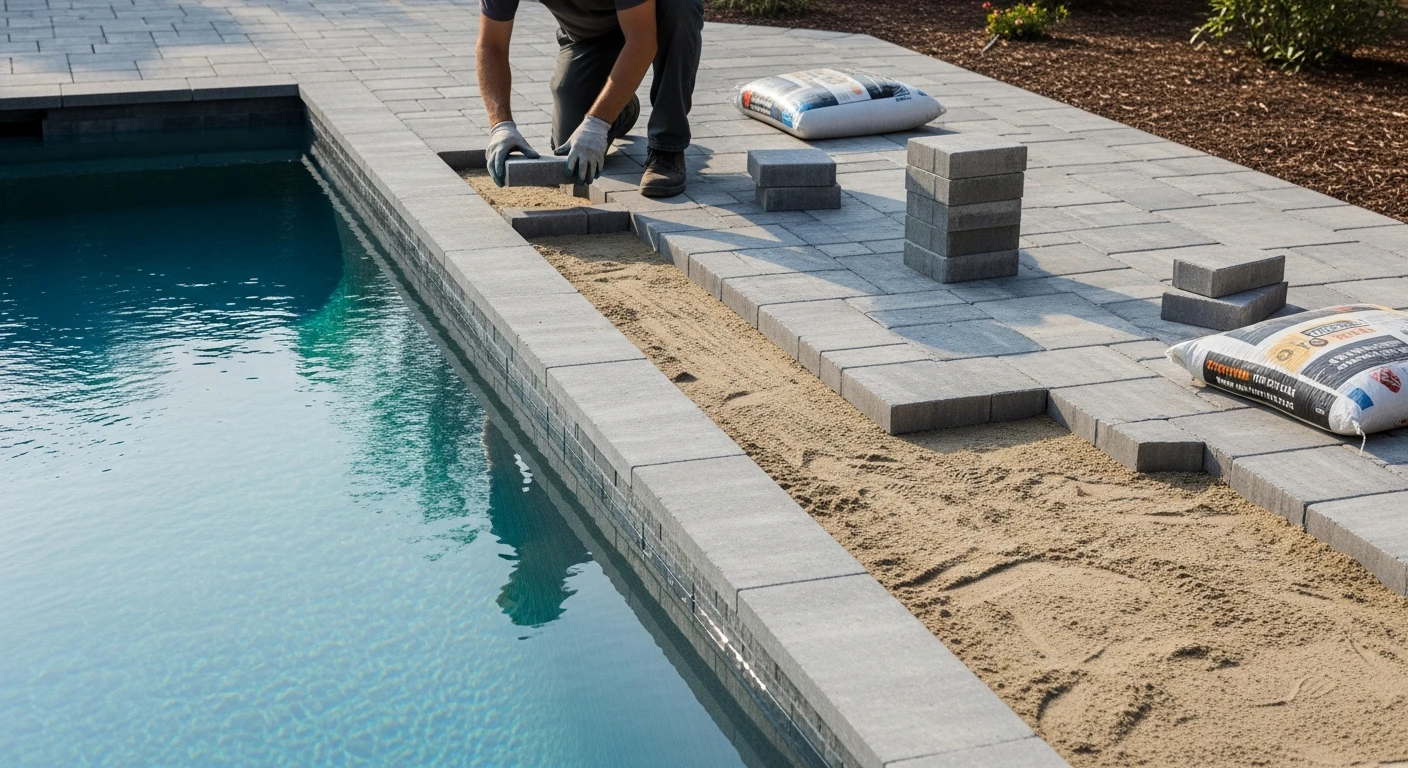
- Bedding Sand Course: Once the base is complete, we screed a 1-inch uniform layer of ASTM C-33 sand. It must be this specific type of coarse, washed sand. Finer sands or stone dust will hold moisture, promoting both heaving and weed growth. This layer provides the final leveling bed for the pavers.
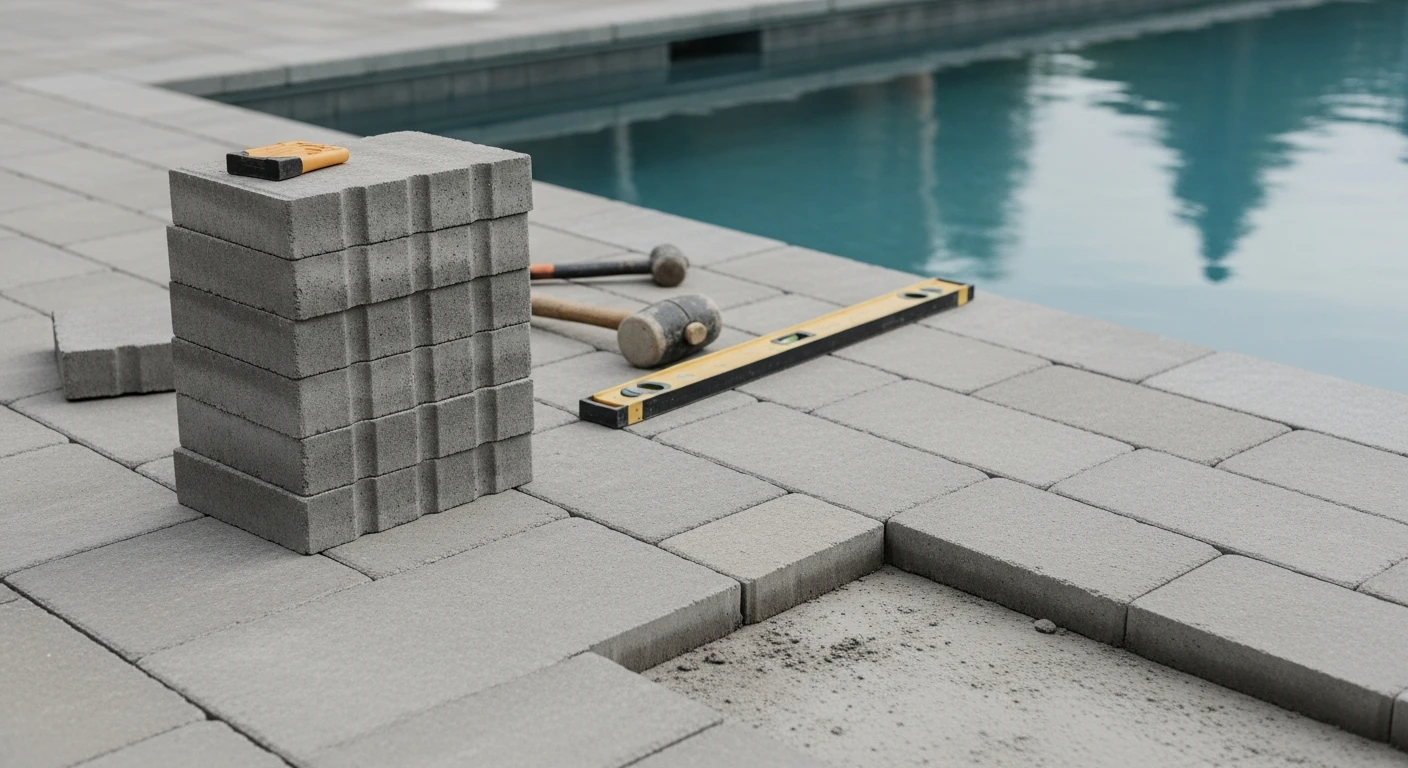
- Paver Laying and Jointing: Pavers are laid in the desired pattern with consistent joint spacing. After setting, we install high-grade polymeric sand into the joints. This sand contains a polymer that, when activated with water, hardens to lock the pavers together and prevent weed growth and insect intrusion.
- Final Lock-Up Compaction: The final, critical step is to run the plate compactor over the finished surface to settle the pavers into the bedding sand and vibrate the polymeric sand deep into the joints, ensuring a complete and total interlock.
Tags
paver walkway installation near me
local paver installers
permeable paver installation near me
landscape paver installers near me
brick paver patio installation near me