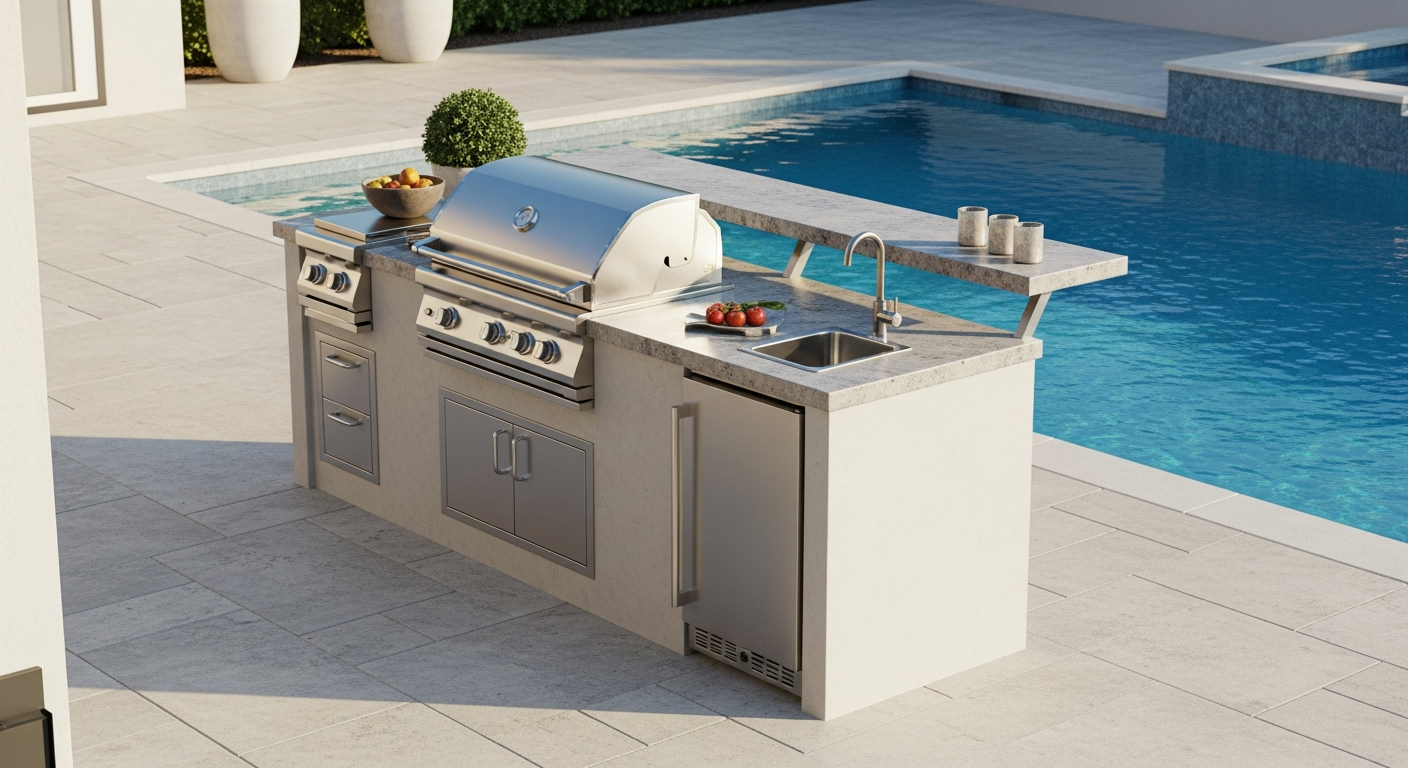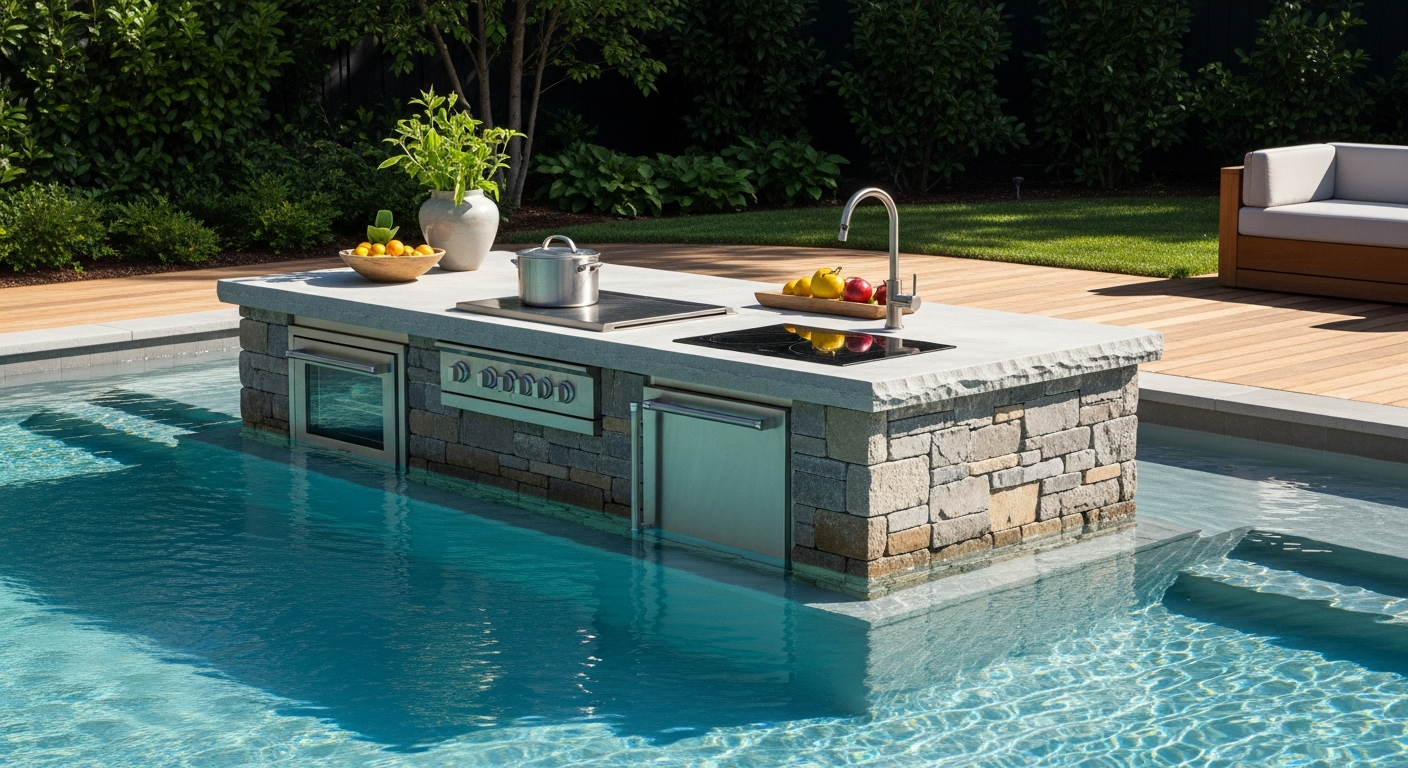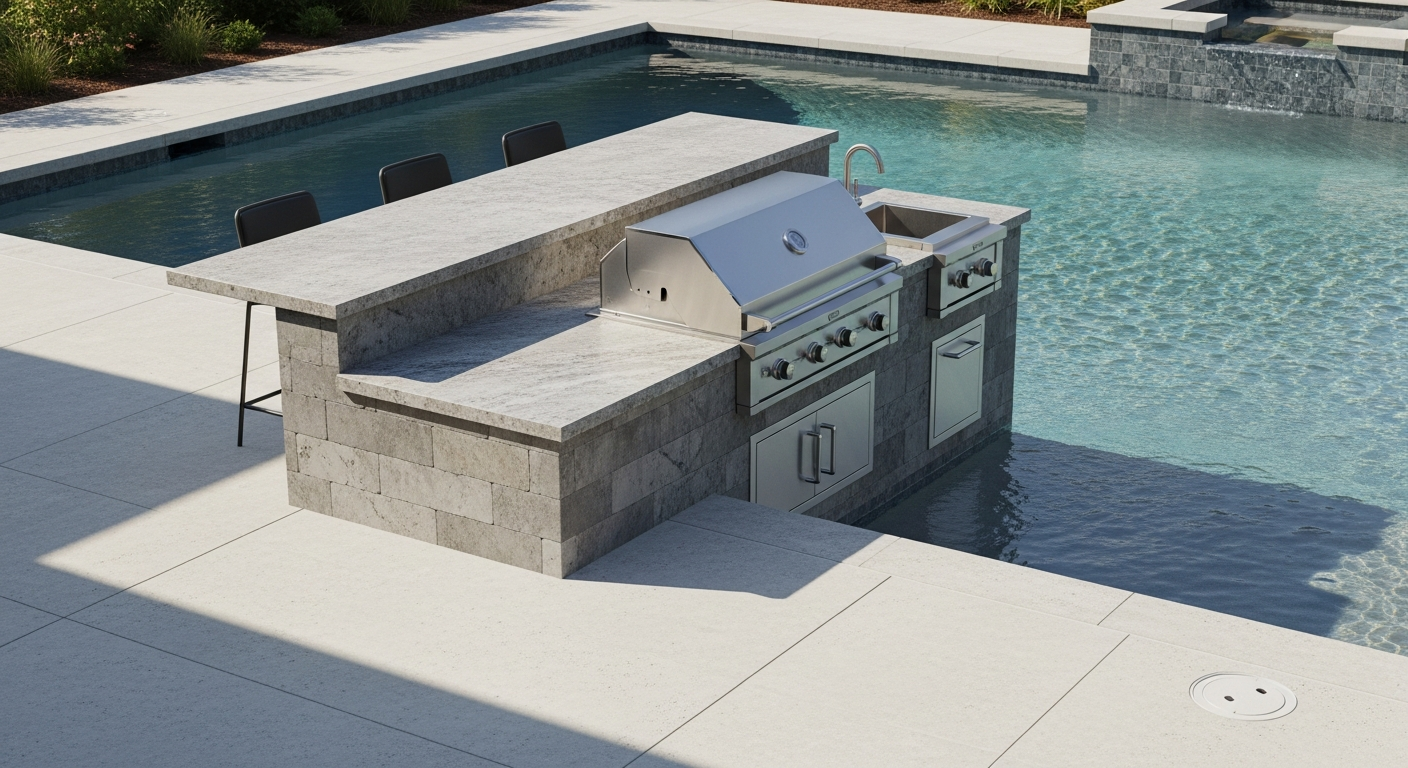
Kitchen Island Grill: A Framework for Zero-Corrosion Installs in Collier County
For years, I’ve seen the same expensive mistake repeated in beautiful homes from Port Royal to Pelican Bay: a stunning outdoor kitchen island, complete with a high-end grill, that begins to show rust and structural decay within 24 months. The issue isn't the grill's brand; it's a fundamental misunderstanding of our unique Collier County coastal environment. The combination of intense humidity, relentless sun, and the corrosive salt air carried in from the Gulf creates a uniquely hostile setting for these installations. My approach was born from deconstructing these failures. I developed a methodology that prioritizes material science and micro-ventilation dynamics over simple aesthetics. The goal isn't just to build a kitchen island with a grill, but to engineer a permanent outdoor appliance fixture that actively resists the specific corrosive agents present in Naples and Marco Island, projecting its useful life by at least 75%.My Diagnostic Protocol for Lanai and Outdoor Spaces
Before any design is drawn, I perform what I call a "Coastal Durability Audit." This isn't a simple site visit. It’s a technical assessment focused on three critical vectors that determine the long-term viability of a kitchen island grill in this climate. I once inherited a project in Grey Oaks where the previous builder used standard exterior-grade materials, leading to complete structural failure in three years. My audit would have flagged these issues on day one. The audit centers on Material Corrosivity Potential (MCP), Thermal Stress Mapping (TSM), and Moisture Ingress Pathways (MIP). I analyze the property's proximity to saltwater, the lanai's airflow patterns, and the existing substrate's composition. This data dictates the entire build strategy, from the type of concrete block used for the structure to the grade of stainless steel for every single component.Material Specification: Beyond Standard 304 Stainless Steel
The most common point of failure I see is the use of 304-grade stainless steel. While it's marketed as "outdoor-grade," it lacks sufficient molybdenum content to resist the chloride-rich salt air of Collier County. It's a critical error. My non-negotiable standard is 316L marine-grade stainless steel for the grill body, access doors, and all hardware. The "L" signifies low carbon content, which further enhances its resistance to corrosion after welding. For the island's structure, I moved away from standard Concrete Masonry Units (CMUs). They are porous and retain moisture, which is a disaster in our humidity. My proprietary builds use aerated autoclaved concrete (AAC) blocks. They offer superior thermal insulation, protecting internal components, and are significantly more resistant to moisture absorption. For countertops, I've seen granite crack under the thermal shock from a hot grill and a sudden Florida downpour. I now specify sintered stone or Dekton exclusively. Its near-zero porosity and high thermal-shock resistance make it virtually indestructible in this application.Step-by-Step Implementation for a Zero-Failure Grill Island
Executing the build requires a level of precision that goes far beyond typical construction. Every step is a control point designed to eliminate a potential future failure. This is the exact sequence I follow for every project.- Foundation and Substrate Prep: The concrete slab is treated with a silane-siloxane penetrating sealer to create a hydrophobic barrier, preventing ground moisture from wicking up into the island structure.
- Structural Framing: The island is built with the aforementioned AAC blocks, joined with a polymer-modified thin-set mortar, which adds flexibility and water resistance, unlike traditional mortar.
- Utility Installation: All electrical wiring is run through liquid-tight flexible metal conduit (LFMC), and all gas lines are Schedule 40 steel with a double wrap of corrosion-resistant coating. Every penetration is sealed with marine-grade silicone.
- Grill Housing: The grill itself is never allowed to touch the block structure. It must be installed within a manufacturer-specified insulated jacket. This creates a critical air gap, preventing heat transfer that can damage the structure and utilities.
- Venting and Airflow: Proper ventilation is the most overlooked aspect. A minimum of two passive vents must be installed—one low on one side for air intake, and another high on the opposite side for exhaust. This prevents gas buildup and promotes cooling.
Precision Tuning for Ventilation and Longevity
The final 10% of the work is what ensures a 20-year lifespan instead of a 5-year one. For covered lanais, a vent hood is not an option; it's a requirement. I calculate the necessary airflow based on the grill's BTU output and the lanai's cubic volume, typically specifying a unit with a minimum 1200 CFM rating. The last step, and one that almost every installer skips, is the final cleaning and passivation of all stainless steel surfaces. After installation, construction debris can compromise the steel's passive chromium oxide layer. I use a citric acid-based solution to remove any free iron particles from the surface and restore this protective layer, effectively "supercharging" its corrosion resistance from day one. Before you finalize your outdoor kitchen plans, have you confirmed the specific grade of every stainless steel component and calculated the ventilation requirements to prevent both hazardous gas accumulation and premature material failure?Written by

Tags
outdoor grill with fridge
modern outdoor grill
bbq grill kitchen
outdoor kitchen grill
outdoor kitchen bbq grill