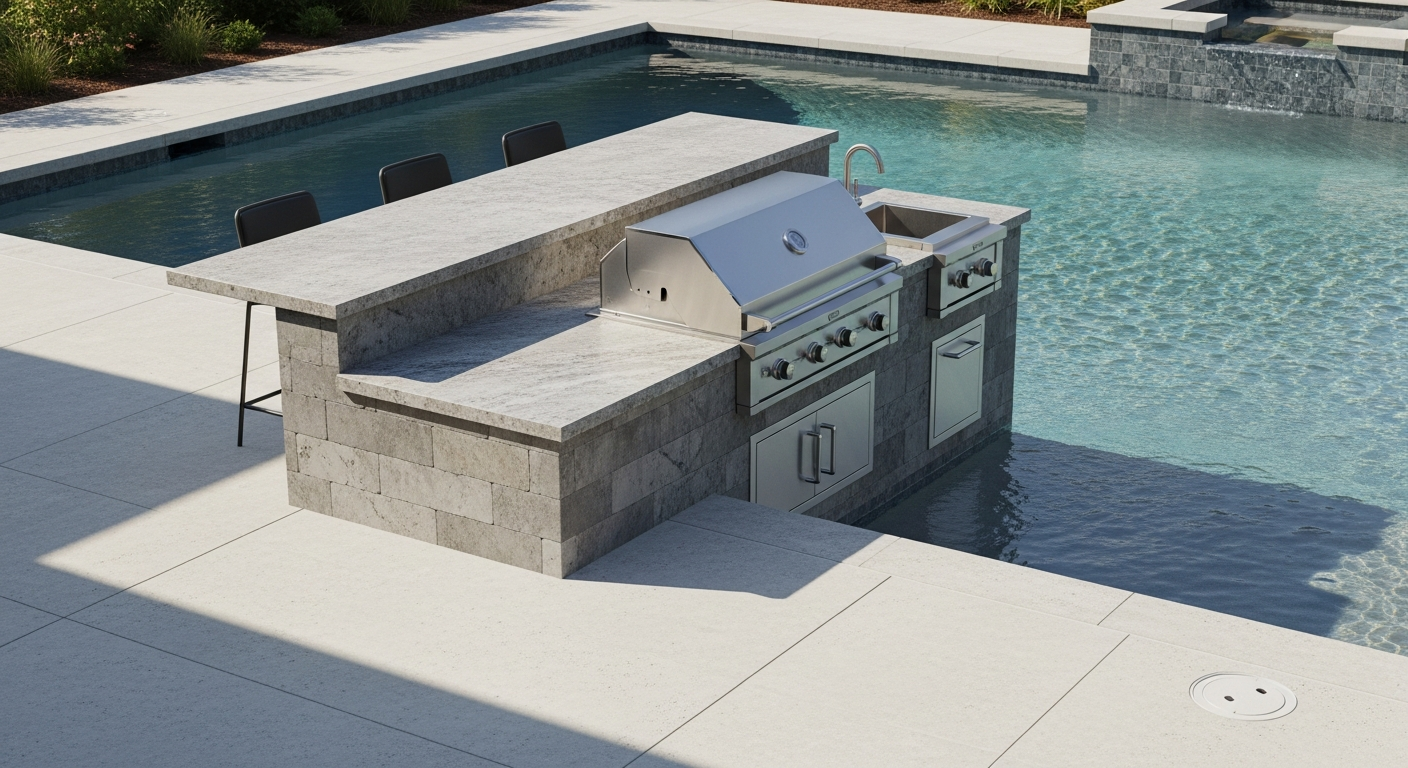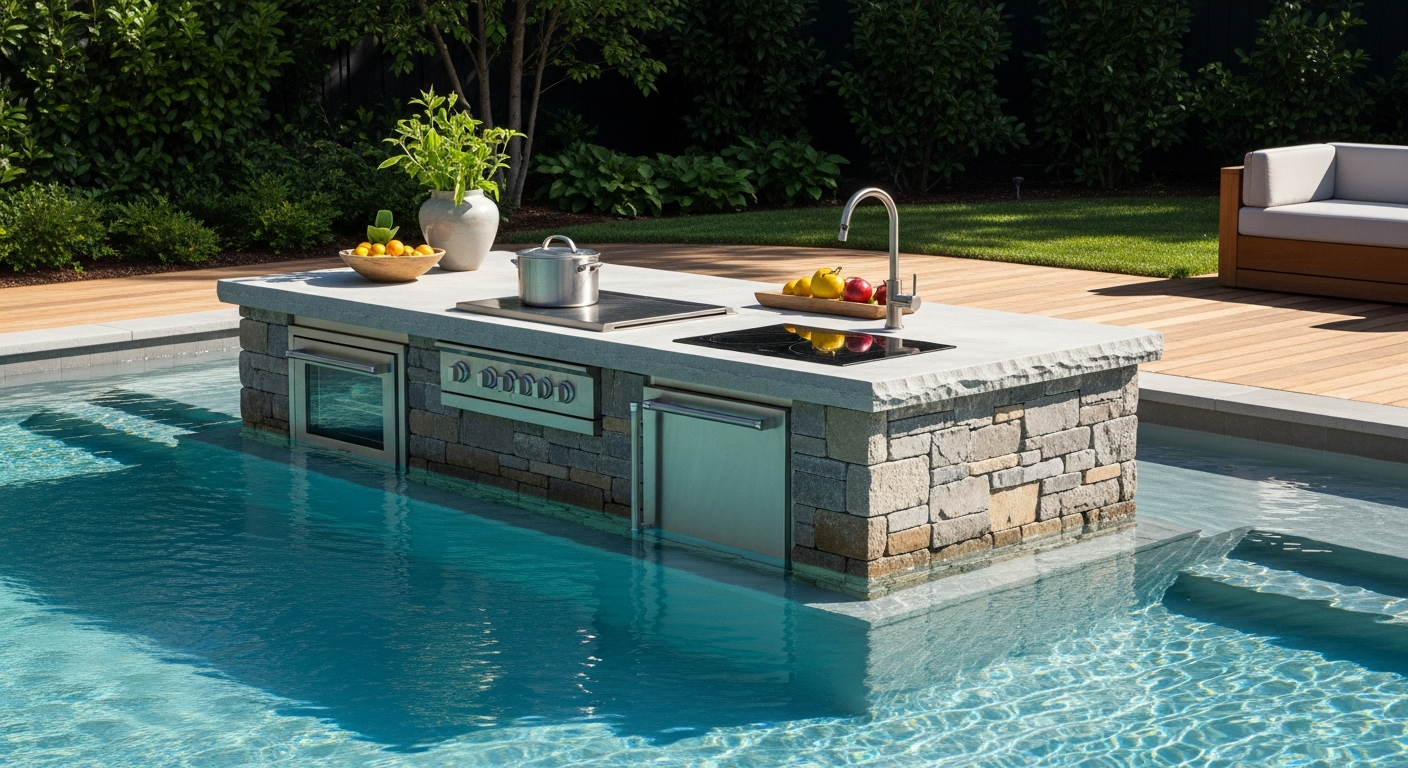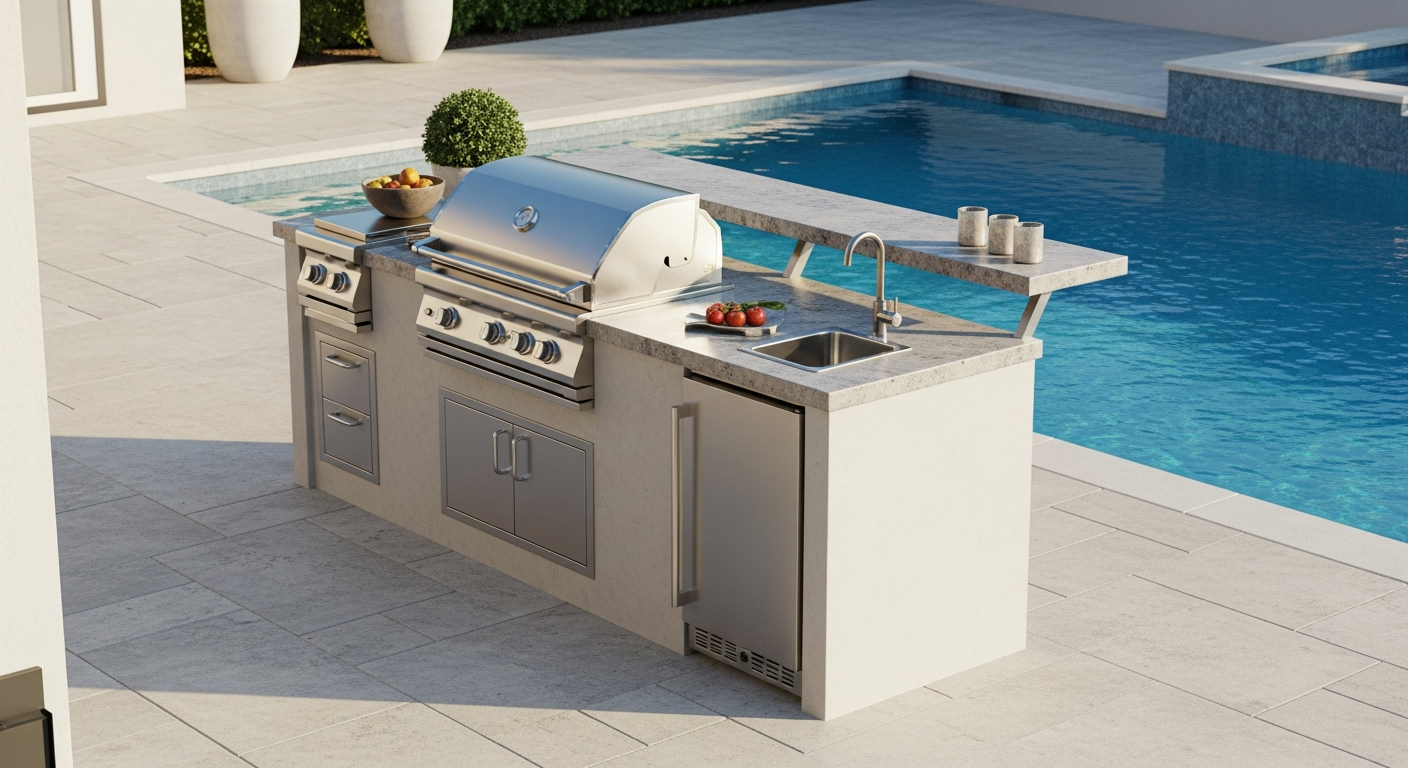
Patio Kitchen Island Design: My Protocol for 30-Year Durability in Collier County's Climate
In my years designing and building high-end outdoor spaces, the most frequent and costly failure I see in Collier County is the patio kitchen island. Many homeowners in Naples and Marco Island invest in beautiful setups that begin to degrade in as little as 24 months. The core issue isn't aesthetics; it's a fundamental misunderstanding of how our specific coastal environment—with its high salinity, intense UV exposure, and relentless humidity—aggressively attacks standard building materials.
My entire approach is built on a principle I call Material Immunity. It's not about weather-proofing; it's about selecting materials and using construction techniques that are inherently inert to our local corrosive elements from day one. This shifts the focus from temporary protection to permanent structural integrity, often increasing the functional lifespan of the island by over 300% compared to typical installations I'm called in to replace.
My Diagnostic Framework: The Coastal Degradation Audit
Before I even sketch a design, I perform what I call a Coastal Degradation Audit. This is a non-negotiable first step. I've seen projects in Port Royal fail because the designer chose a beautiful but porous quartzite countertop that became permanently stained by mildew growth fueled by the humidity. Conversely, a project in Golden Gate Estates might face less salt spray but more intense, direct sun, requiring a different UV-resistance profile. My audit analyzes three critical environmental stressors specific to the property's micro-location.
Deep Dive into Material Science and Structural Integrity
My audit directly informs my proprietary material selection matrix. Here's a look under the hood at the technical choices that prevent the most common failures:
- Structural Frame: I exclusively use either 316L stainless steel or welded, marine-grade aluminum tubing. The "L" in 316L denotes low carbon, which significantly improves weldability and corrosion resistance. Standard 304 stainless steel, often passed off as sufficient, will develop pitting and rust when exposed to the consistent salt air on a lanai in Vanderbilt Beach. This is a non-starter.
- Cabinetry and Cladding: My go-to is marine-grade HDPE (High-Density Polyethylene). It's color-stable, impervious to moisture, and won't delaminate like some composite materials I've had to tear out. For clients wanting a metallic look, powder-coated aluminum is viable, but the powder coating process must have a minimum thickness of 3 mils and pass a 3,000-hour salt spray test (ASTM B117).
- Countertop Selection: The key performance indicator here is porosity. I steer clients toward sintered stone (like Dekton or Neolith) because its near-zero porosity prevents moisture and bacteria from penetrating. This is a crucial "pulo do gato" for Collier County, as it stops mildew from ever gaining a foothold within the material itself.
Field-Tested Implementation Sequence for Maximum Longevity
A perfect design with poor execution is a guaranteed failure. My installation process follows a strict sequence honed over dozens of local projects, from initial site prep to final commissioning. It's designed to eliminate weak points before they ever form.
- Foundation and Airflow: The concrete footing must be properly sealed. More importantly, I design the island base with integrated passive ventilation channels. This allows ambient air to circulate, preventing the buildup of stagnant, humid air inside the cabinet cavities—a primary cause of mold growth and premature appliance failure.
- Fastener Protocol: Every single screw, hinge, and drawer slide must be 316 stainless steel. I once troubleshot a beautiful island where the entire structure was sound, but the cabinet doors were failing because the contractor used cheaper 304 stainless hinges that had seized from corrosion. This is a detail that cannot be overlooked.
- Appliance Gasketing: I install a custom EPDM rubber gasket around every appliance cutout (grill, refrigerator, etc.). This creates a compression seal that prevents salt-laden moisture from wicking into the island's interior structure, protecting both the frame and the appliance electronics.
- Electrical System Integrity: All electrical runs are housed in a sealed conduit. I mandate the use of marine-grade, weatherproof junction boxes and GFCI outlets with "in-use" covers. This isn't just a code requirement; it's a critical safety and durability measure against our frequent and intense rainstorms.
Precision Tuning for a Flawless Finish
The final 5% of the work is what ensures a 30-year lifespan. After the main installation, my quality control process involves a series of checks. I verify that all cabinetry has a minimum 1/8-inch gap to allow for thermal expansion during peak summer heat. I also perform a "simulated downpour" test with a hose to check my sealing and gasketing work for any water ingress. It's this level of obsessive detail that separates a standard patio kitchen from a permanent outdoor feature that genuinely adds long-term value to a Collier County home.
Before you finalize your patio kitchen island materials, have you calculated the galvanic corrosion potential between your selected fasteners and the structural frame alloy?