
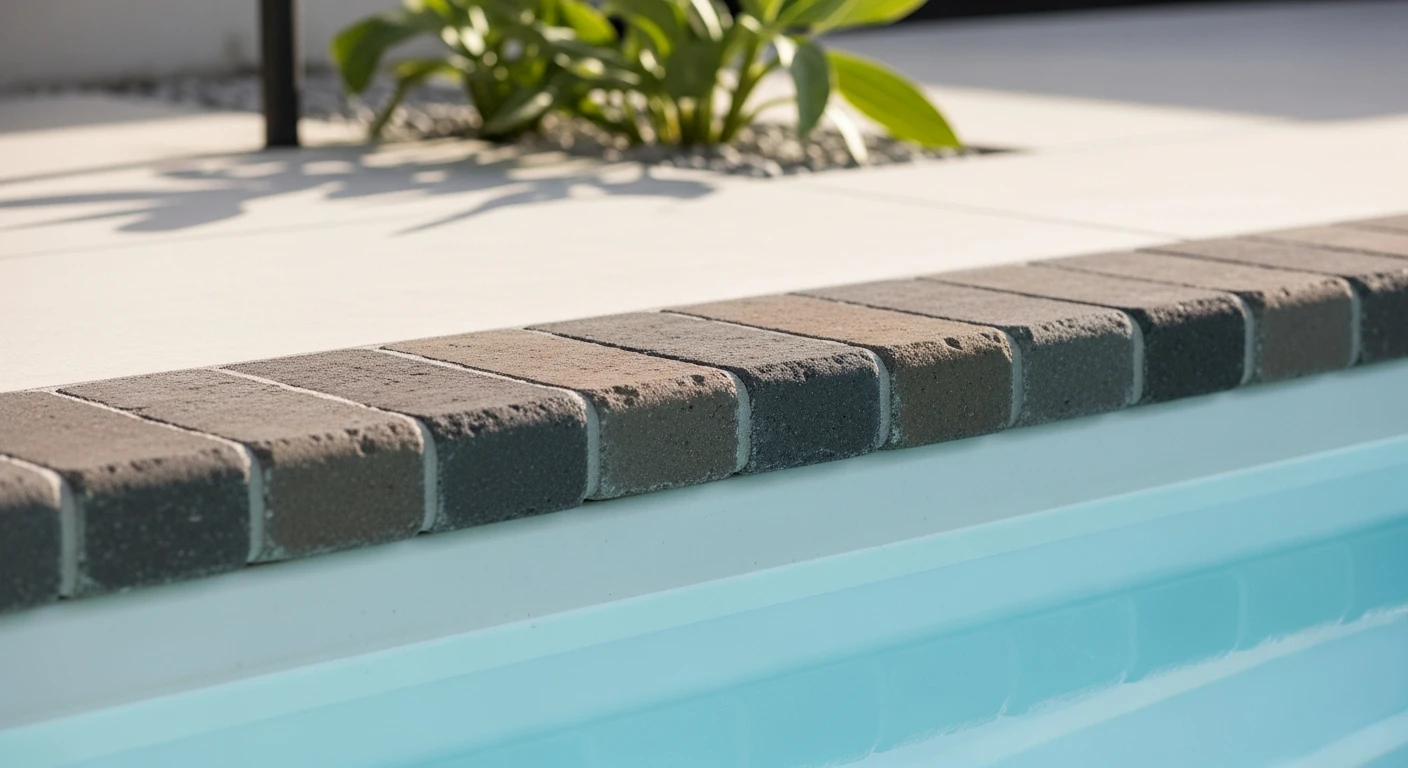
Sarasota Landscaping Bricks: My Method for a 30-Year Lifespan Despite Humidity and Salt Air
When I'm called to inspect a failing paver patio in a Siesta Key or Palmer Ranch property, the root cause is almost never the bricks themselves. The failure is invisible, buried under the surface. The standard installation method, often copied from drier, more stable climates, simply cannot withstand Sarasota's combination of shifting sandy soil, intense hydrostatic pressure from summer downpours, and corrosive salt air. A beautiful walkway can begin to show undulations and separation in as little as 24 months. My entire approach is built on a counter-intuitive principle: the longevity of your landscaping bricks has less to do with the brick and more to do with creating a water-permeable, stabilized sub-base that performs like a single, monolithic slab. This methodology focuses on an aggressive water management strategy from the ground up, which I’ve refined over dozens of projects from historic downtown bungalows to sprawling Lakewood Ranch estates. This is how I ensure a paver installation remains static and stable for decades, not just a few seasons.Diagnosing Sub-Base Failure: My Sarasota-Proof Foundation Method
The fundamental error I see is treating our local sandy soil as a stable medium. It's not. During a heavy rain, it becomes a fluid-like mass. My Sarasota-Proof Foundation Method is designed to isolate the paver system from this soil volatility. It revolves around three core components: aggressive excavation, the use of a non-woven geotextile fabric, and a specific aggregate base composition that promotes rapid vertical drainage. Standard installations often skip the geotextile fabric, leading to the sub-base aggregate mixing with the sand over time, which I identified as the primary failure point in a large-scale community project in Venice. The entire system loses its structural integrity from the bottom up.Technical Deep Dive: Material and Base Composition Analysis
The success of the foundation hinges on precise material selection. For brick pavers, especially near the coast, I only specify materials with an ASTM C902 for severe weathering (SW) classification. This ensures the brick can handle moisture saturation and salt exposure without spalling. For the sub-base, I’ve found a minimum 6-inch compacted depth of #57 stone (an angular crushed stone) provides the ideal balance of load-bearing capacity and drainage. This is significantly deeper than the 4-inch standard. The crucial, non-negotiable element is the geotextile separator fabric laid directly on the compacted native sand. This fabric prevents the #57 stone from sinking into the sand, maintaining the base's integrity indefinitely. For jointing, I exclusively use high-quality polymeric sand, but its application in our humidity is a craft in itself. Applying it incorrectly can lead to "poly-haze," a permanent clouding on the brick surface.Executing the High-Performance Paver Installation
A perfect design means nothing without flawless execution. I follow a strict sequence of operations that ensures every layer performs its function correctly. There are no shortcuts here; a single missed step can compromise the entire system and reduce its functional lifespan by over 50%.- Excavation and Grading: I mandate an excavation depth of 8-9 inches to accommodate the deeper sub-base and bedding sand. The area is graded with a minimum 1/4-inch per foot slope away from any structures. This is a critical first step for surface water management.
- Sub-Base Installation: After compacting the native sandy soil, the geotextile fabric is laid down with overlapping seams. The #57 stone is then added in 3-inch lifts, with each lift being compacted with a plate compactor until it is fully consolidated.
- Bedding Sand and Paver Setting: A 1-inch layer of clean, coarse sand (often called screed sand) is laid and leveled. The bricks are then set in the desired pattern. I use a string line every few rows to maintain perfectly straight lines, a detail that is surprisingly easy to get wrong.
- Edge Restraint Installation: This is a major failure point. I use heavy-duty composite or aluminum restraints secured with 10-inch steel spikes. Flimsy plastic restraints will warp in the Sarasota sun and fail to hold the pavers in place.
- Joint Sanding and Final Compaction: The polymeric sand is swept into the joints, the excess is blown off with a leaf blower, and the entire surface is compacted once more to lock the bricks together. The final step is a very light misting of water to activate the polymers in the sand, a process that must be done carefully to avoid washing it out.
Post-Installation Audits: Mitigating Common Sarasota Failures
Once the installation is complete, my quality check focuses on the most common local failure points. I double-check the grade with a level to ensure there are no low spots where water can pool, which is a breeding ground for mildew in our climate. I also check that the polymeric sand has cured properly, forming a firm yet flexible joint that resists both weed growth and the persistent ant colonies common in Florida. Finally, I advise clients on sealing. A common mistake is using a film-forming sealer, which can trap moisture. I recommend only a high-quality, breathable silane/siloxane sealer, which penetrates the brick and protects it from salt and stains without creating a slippery surface film. Have you accounted for the hydrostatic pressure coefficient of your sub-base during Sarasota’s rainy season?Written by

Tags
paver landscaping near me
landscapers and pavers near me
pavers and landscaping near me
pavers patio installation near me
pavers and landscaping


