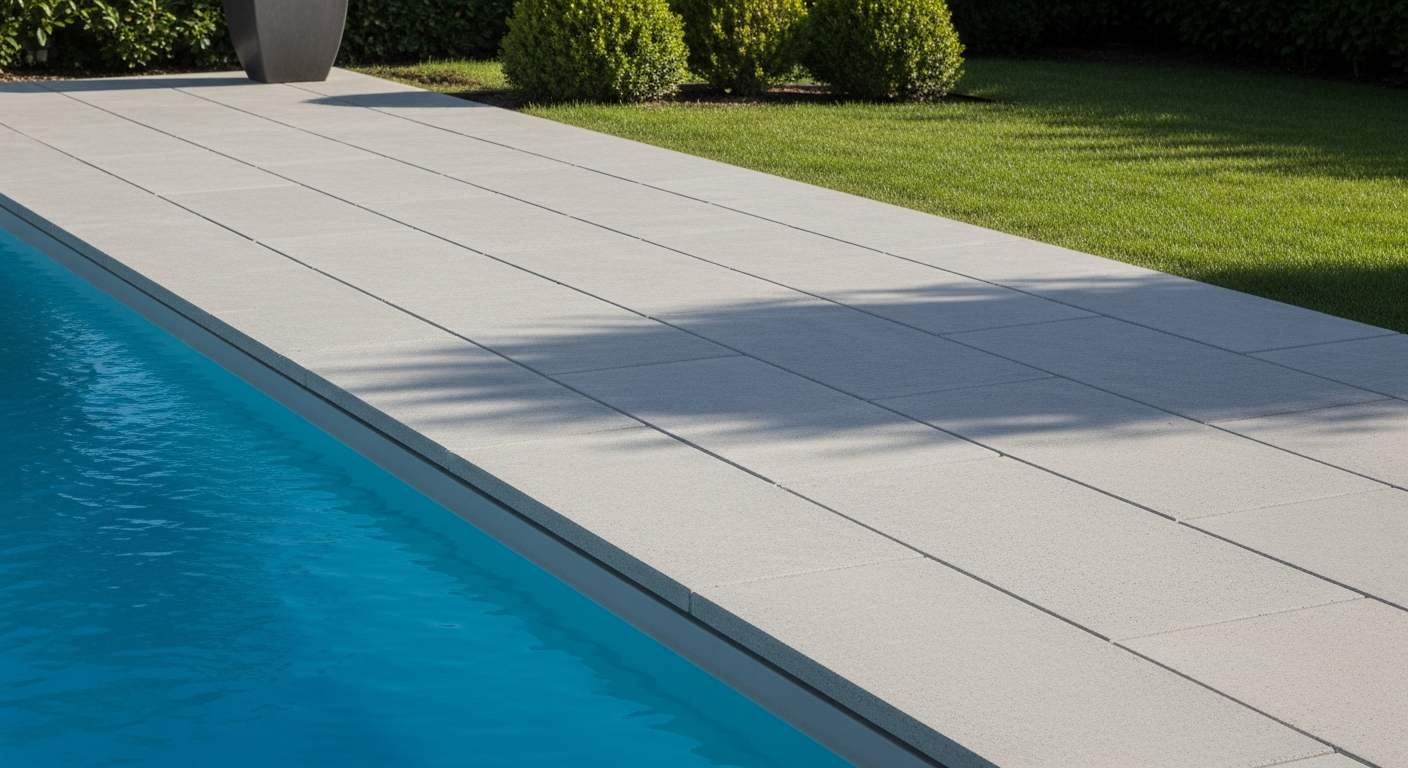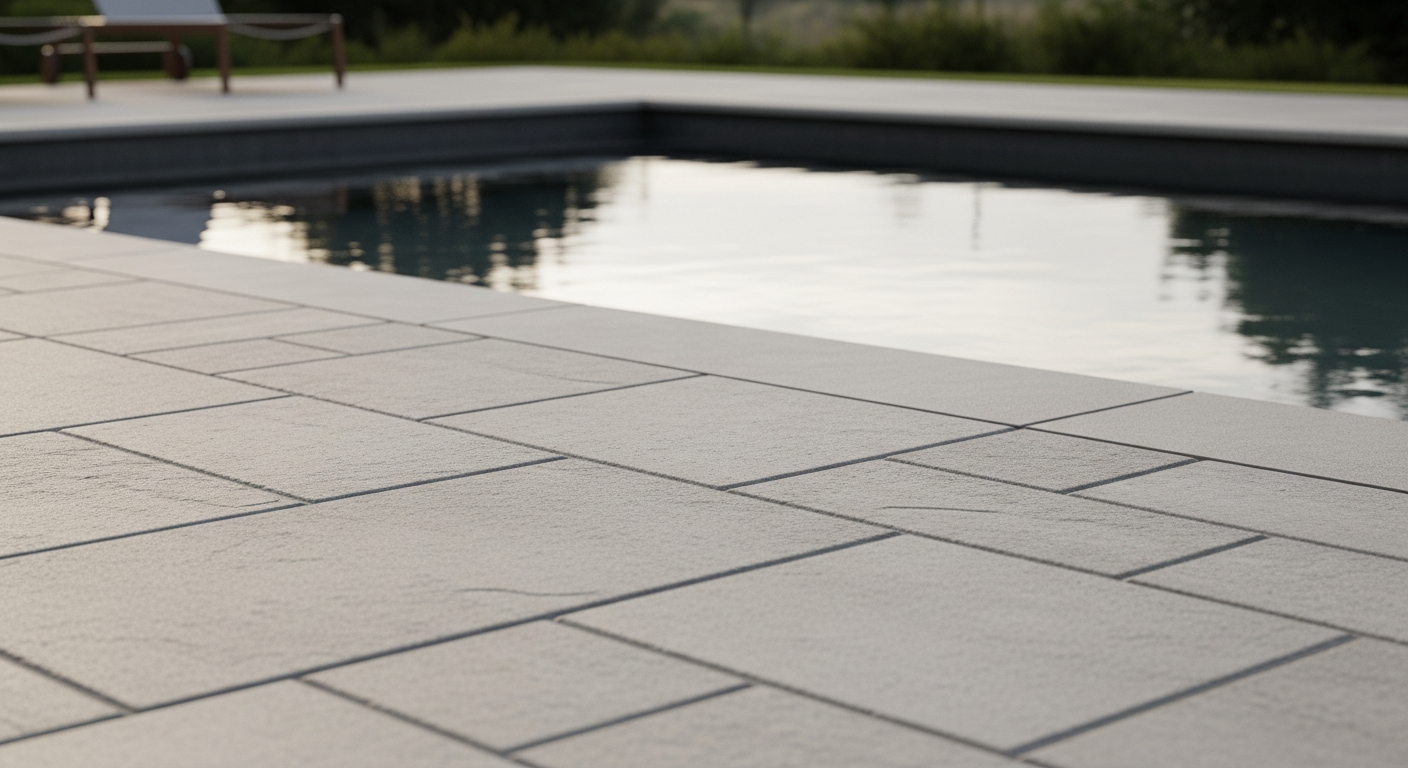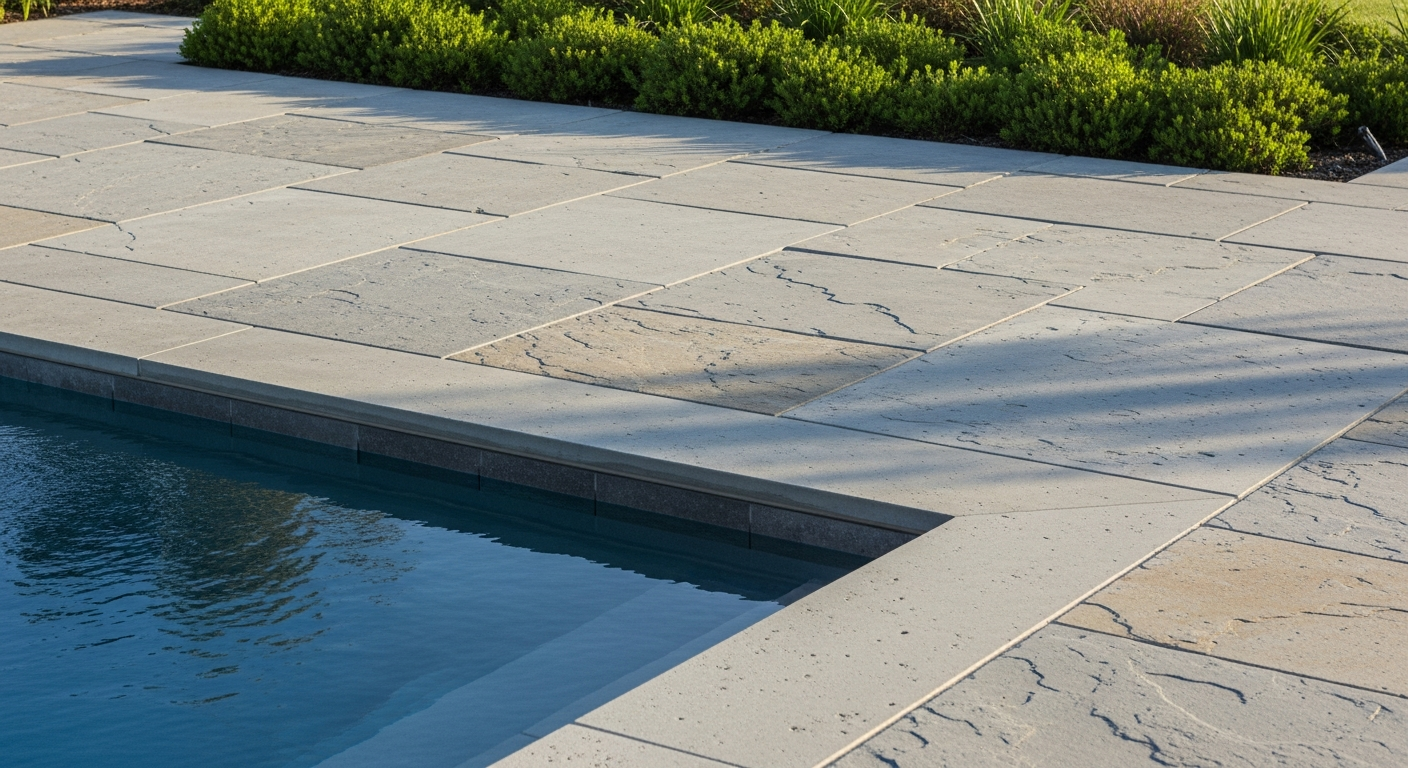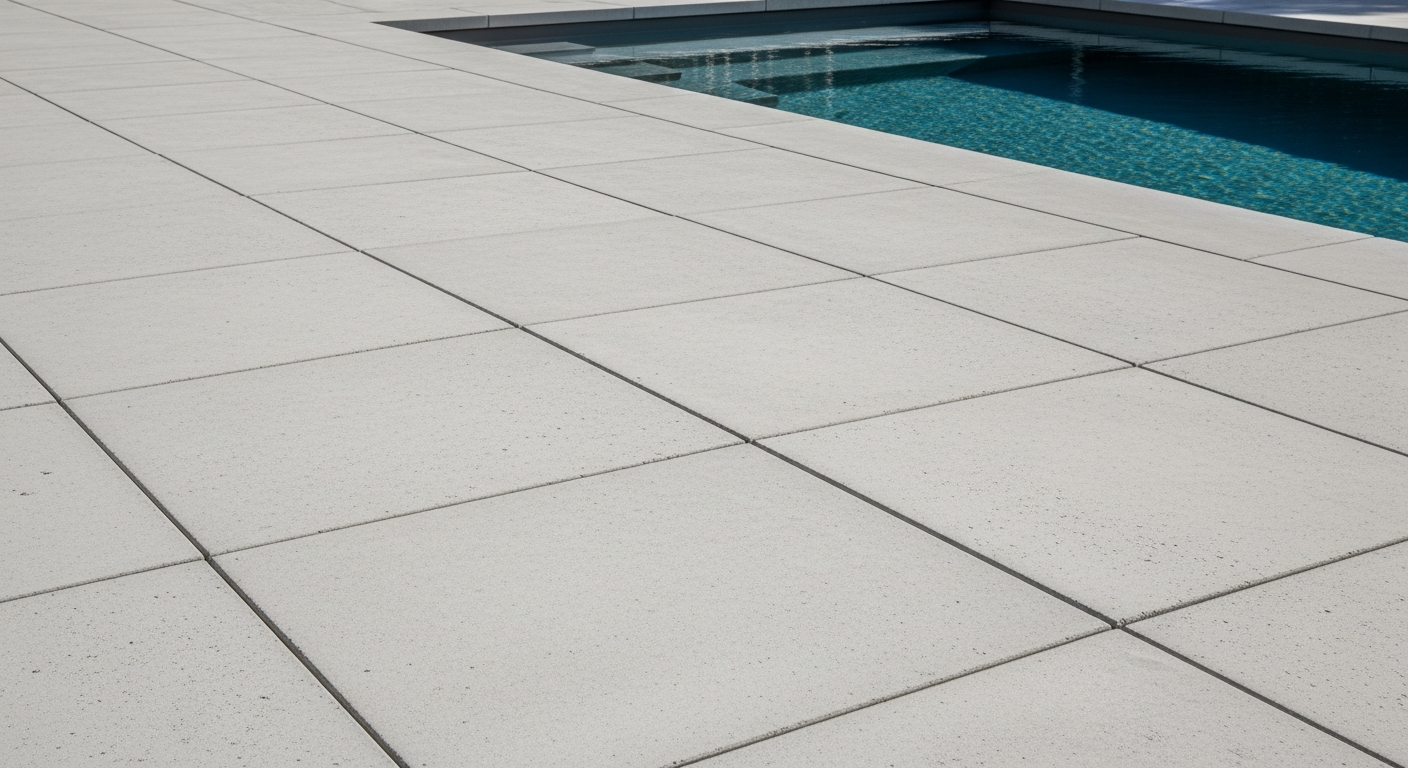
Large Concrete Pavers in Hillsborough County: My Method for a Zero-Shift Installation on Sandy Soil
I've seen the same story play out on properties from South Tampa to the newer developments in Riverview: a beautiful large format paver patio that looks stunning for six months, and then the tell-tale signs of failure begin. You see uneven surfaces, wide joints filled with weeds, and pavers that rock when you walk on them. The root cause is almost never the paver itself; it’s a fundamental misunderstanding of how to build a stable foundation on Hillsborough County’s notoriously sandy and shifting soil. Standard installation practices simply don't hold up to our combination of sandy substrate and intense rainy seasons. My entire approach is built on sub-base engineering, not just surface-level aesthetics. For large concrete pavers, which are less forgiving of an unstable base due to their size and fewer joint lines, achieving a zero-shift installation is not an upgrade; it's a requirement. This is accomplished through a specific methodology I developed after correcting dozens of failed paver projects across the county, which focuses on soil stabilization and a moisture-proof jointing compound strategy.Diagnosing Sub-Base Failure: The Hillsborough Soil Tri-Compaction Method
The most common mistake I see is treating our local soil like it's a stable clay. Contractors excavate, dump a few inches of base rock, and compact it once. This is a recipe for failure. The sand underneath will eventually "swim" or migrate up through the base rock, creating voids and causing the pavers to sink. My proprietary Tri-Compaction Method is designed specifically to counteract this. It creates a separated, interlocking, and deeply stabilized foundation that resists the hydrostatic pressure from our heavy summer rains. This isn't just about digging deeper; it's about building a smarter, multi-layered base. I once had to completely tear out and redo a 1,200 sq ft pool deck in a Carrollwood home where the previous installer skipped the crucial soil separation step. Within a year, the entire deck had developed sags and waves. That project cemented my belief that a proper foundation is non-negotiable.Polymeric Sand vs. Resin-Based Binders: A Humidity-Proof Analysis
After the base, the second point of failure is the jointing material. Standard polymeric sand requires a specific set of dry conditions to cure properly. In Hillsborough's high-humidity environment, especially near the bay, it often doesn't fully harden. The result is a soft, crumbly joint that washes out in the first downpour, creating a perfect home for ants and weeds. This is an expensive error I’ve been called to fix time and again. My field data shows a resin-based binder is overwhelmingly superior for our climate. Unlike polymeric sand that cures with a water mist, a two-part epoxy resin binder cures through a chemical reaction. It creates a rock-solid, non-porous joint that is completely impervious to water washout and weed growth. While the material cost is about 30% higher, it eliminates the annual headache of re-sanding and pressure washing, increasing the project's long-term ROI and reducing maintenance to near zero.Executing the Large Format Paver Laying Pattern for Maximum Load Distribution
With a bulletproof base and the right jointing compound selected, the laying process itself becomes a matter of precision. Large format pavers (e.g., 24x24 or 12x24 inches) demand a meticulous approach. One misplaced paver can throw off the entire pattern and create visual and structural problems. Here is the exact implementation sequence I use on every project:- Set Guide Lines: I run taut, perfectly square string lines to guide the entire installation. I never "eyeball" the first row.
- Screed Bedding Sand: A uniform 1-inch layer of concrete sand is screeded using metal conduit pipes as rails. This guarantees a perfectly flat plane for the pavers to rest on.
- Lay from a 90-Degree Corner: Always begin laying from a hard edge, like the foundation of a house, and work outward. This minimizes cuts and ensures the pattern remains square.
- Use Suction Lifters: I insist on using a vacuum-powered paver lifter for any paver over 50 lbs. This prevents chipping the corners and edges, a common issue when using pry bars.
- Maintain Consistent Gaps: Using 1/8-inch paver spacers is non-negotiable to ensure uniform joints for the resin binder to fill effectively.
- Plate Compactor Final Set: After laying, I run a plate compactor with a protective mat over the entire surface to fully embed the pavers into the bedding sand before applying the jointing compound.
Achieving a <1mm Lippage Tolerance and Post-Installation Sealing Protocols
The mark of a true professional installation is the surface finish. "Lippage" is the technical term for the height difference between adjacent pavers. The industry standard is often a loose 1/8 inch, but I hold my work to a <1mm lippage tolerance. This is achieved by checking every single paver with a 6-foot level and making micro-adjustments with a rubber mallet before the final compaction. A near-zero lippage not only looks better but also prevents trip hazards, especially around pool decks. Finally, sealing is critical to protect the investment from the intense Florida sun and rain. I avoid thick, film-forming acrylic sealers that become slippery and peel over time. My go-to is a penetrating silane-siloxane sealer. This type of sealer soaks into the concrete itself, repelling water from within without creating a glossy, hazardous surface. It provides excellent UV protection and enhances the natural color of the pavers, extending their aesthetic life by at least 40%. Is your contractor calculating the hydrostatic pressure and soil percolation rate for your paver base, or are they just guessing with a standard gravel depth?Written by

Tags
large stone pavers
extra large pavers
large driveway pavers
large rectangle pavers
large pavers for sale