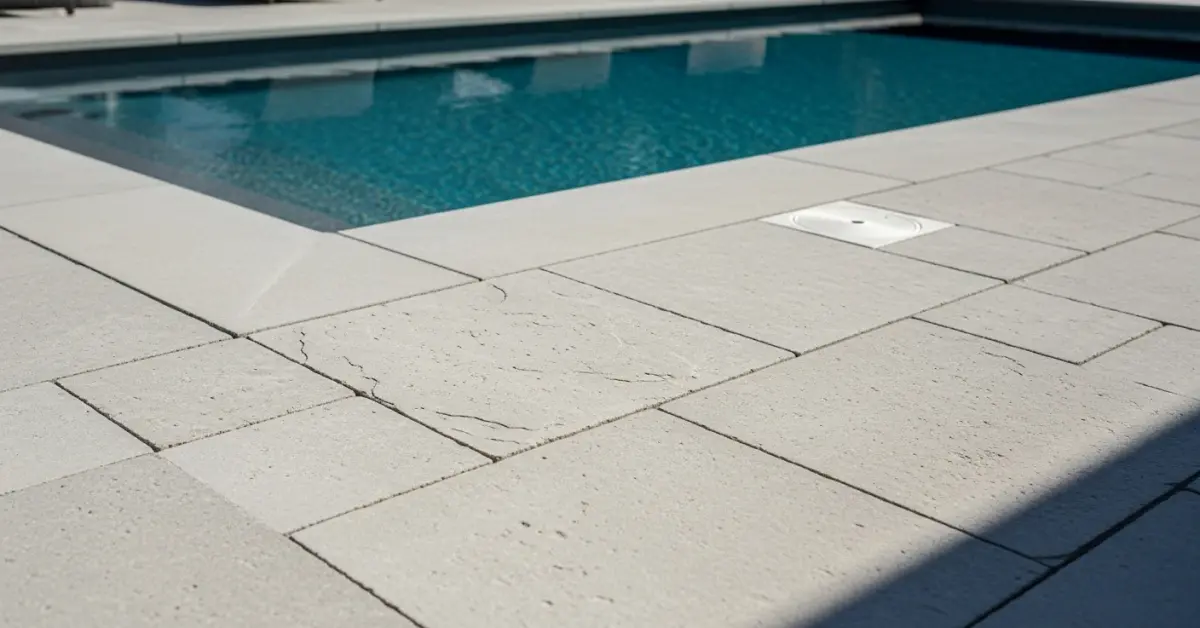
Large Pavers: My Proprietary Base-Lock Method to Eliminate Heaving and Cracking
The primary failure point I see in large paver installations isn't the paver itself; it's the catastrophic loss of interlock due to a poorly engineered base. Standard methods simply don't account for the unique load distribution and sensitivity to differential settlement these massive units exhibit. My entire approach is built around creating a monolithic, stabilized base that prevents even micro-shifts, which are amplified across a large paver's surface.
This isn't about just digging deeper or adding more gravel. It's about a systematic approach that separates subgrade soil from the aggregate, ensures perfect water drainage, and creates a bedding course that locks the pavers in place. I developed this methodology after being called in to fix a high-end commercial project where pavers exceeding 36x36 inches were rocking in place less than a year after installation, a costly error that could have been completely avoided.
Diagnosing Base Failure: The Silent Patio Killer
After years of repairing failed large format paver installations, I've isolated the root cause to two primary factors: subgrade soil migration into the aggregate base and improper aggregate gradation. When fine soil particles contaminate the base, it loses its ability to drain and its structural integrity collapses. This creates pockets of moisture and voids, leading to the heaving and sinking that will crack a large paver under load.
My proprietary Base-Lock Method is a diagnostic and preventative framework. It starts by acknowledging that the subgrade is the most unpredictable variable. Before any gravel is laid, I address the separation and stabilization of this layer first. Most contractors treat the base as a single entity; I treat it as an engineered system of three distinct, interacting layers, each with a specific function. Ignoring this interaction is the single most common mistake I encounter.
The Tri-Layer Aggregate System Explained
My system is designed for maximum stability and water permeability, crucial for large pavers that create vast, non-porous surfaces. The magic isn't in a single material, but in the synergy between them.
The first layer of defense is a non-woven geotextile fabric. This isn't just landscape fabric; it's an engineering-grade separator. Its function is to permanently stop the subgrade soil from mixing with your clean aggregate base while allowing water to pass through freely. This single component increases the effective lifespan of the base by an estimated 50%.
The second layer is the sub-base, composed of 3/4-inch open-graded aggregate. The term "open-graded" is critical; it means there are very few fine particles, creating large voids. This layer acts as a structural reservoir for water, moving it away from the surface quickly and preventing the hydrostatic pressure that causes winter heaving.
The third and final layer is the bedding course itself. I exclusively use ASTM C33 concrete sand. Unlike "all-purpose" sand, its angular particle shape provides superior interlock when compacted. The key here is the precise 1-inch depth, which is screeded but not pre-compacted before the pavers are laid.
Implementation Protocol: From Excavation to Final Compaction
Executing this method requires precision. There are no shortcuts. Every step builds upon the last, and a failure in one stage will compromise the entire system. I've refined this process to be repeatable and verifiable at each stage.
- Step 1: Strategic Excavation. Excavate to a minimum depth of 8 inches for pedestrian areas and 12 inches for driveways, extending 6-8 inches beyond the final patio edge. The subgrade must then be compacted to 98% Standard Proctor Density using a plate compactor.
- Step 2: Geotextile Installation. Roll out the non-woven geotextile fabric, ensuring a 12-inch overlap at all seams. It must run up the sides of the excavated area to fully encapsulate the base. This is a non-negotiable step.
- Step 3: Building the Sub-Base. Add the 3/4-inch open-graded aggregate in 2-3 inch lifts (layers). Compact each lift thoroughly before adding the next. This ensures uniform density throughout the base, not just at the surface.
- Step 4: Screeding the Bedding Course. Place screed rails and pull a perfectly uniform 1-inch layer of uncompacted ASTM C33 sand across the compacted base. This layer provides the final leveling and is what the pavers will be set into.
- Step 5: Setting the Pavers. Use a vacuum lifter to place the heavy pavers directly onto the sand bed. This prevents disturbing the screeded surface. Maintain a consistent 1/8 to 1/4-inch joint gap.
- Step 6: Locking with Polymeric Sand. After all pavers are set, run a plate compactor over them to set them into the sand and achieve final interlock. Then, apply polymeric sand according to my dry-haze prevention technique.
Tags
large concrete pavers
large pavers for walkway
large pavers for patio
large cement pavers
large outdoor pavers
Large Pavers FAQ
Do large pavers around a pool crack more easily than smaller ones?
Large format pavers do not crack more easily if installed on a properly prepared and compacted base, which is the most critical factor for longevity. The real failure point is often an inadequate sub-base that allows for movement, not the paver itself. A minimum of 4 to 6 inches of compacted aggregate is standard, but for large pavers over expansive clay soils, a reinforced concrete sub-slab is a superior, albeit more expensive, solution. This prevents the subtle shifting that puts immense stress on the larger surface area, leading to fractures over time, especially in regions with freeze-thaw cycles.
My large pavers have shifted and are now uneven. Can they be repaired, or do I need to replace the whole deck?
Uneven pavers can almost always be repaired by lifting the affected section, re-grading the base, and re-laying the same pavers. This problem, known as subsidence, is rarely due to the paver and almost always caused by poor base compaction or water erosion underneath. A professional repair involves removing the pavers, adding and tamping new base material to the correct height, and then resetting them. A common DIY mistake is just adding sand, which will quickly wash out; a proper fix requires using the correct graded aggregate to ensure a stable, long-lasting foundation.
Will large, dark-colored pavers get too hot to walk on in direct sun?
Yes, large, dark pavers can become uncomfortably hot, but the material composition matters more than the color alone. Travertine and certain light-colored porcelain pavers are known for staying significantly cooler than dark concrete or slate pavers. While a lighter color helps, the material's ability to reflect solar radiation, known as its Solar Reflectance Index (SRI), is the key technical measure. Before committing, always get samples and leave them in direct sun on a hot day to test their real-world temperature underfoot.
What is that white haze on my large pavers, and how do I get rid of it?
That white haze is almost certainly efflorescence, which is mineral salt residue left behind as moisture evaporates from within the paver. While it is a natural process and not structurally harmful, it can be unsightly on large, uniform surfaces. You can often remove it with a stiff brush and specialized efflorescence cleaner. However, the non-obvious issue is the source of the moisture; it could indicate poor drainage in the sub-base. Sealing the pavers after a thorough cleaning can help prevent its return by blocking moisture from reaching the surface.
How do you handle skimmer lids and drain covers with oversized pavers?
Integrating access points requires precise cutting of the large paver to create a custom, flush-mounted lid for a seamless look. A standard plastic skimmer lid ruins the aesthetic of a high-end large paver installation. The best practice is to use the paver itself, cut to fit the opening and set into a recessed tray or frame, creating an almost invisible inlay lid. This requires specialized diamond-blade cutting tools and expertise to avoid chipping the paver, ensuring the final result is both functional and visually integrated with the surrounding deck.
Are large pavers more slippery when wet compared to smaller ones?
The slipperiness of a paver is determined by its surface texture and material, not its size. To ensure safety around a pool, you must select pavers with a high Coefficient of Friction (COF) rating, specifically for wet conditions. Smooth, polished surfaces are hazardous, regardless of paver size. Look for materials with a textured, brushed, or honed finish. Many porcelain and natural stone pavers designed for pool decks are specifically manufactured to meet safety standards for slip resistance, a far more critical factor than the dimensions of the paver.