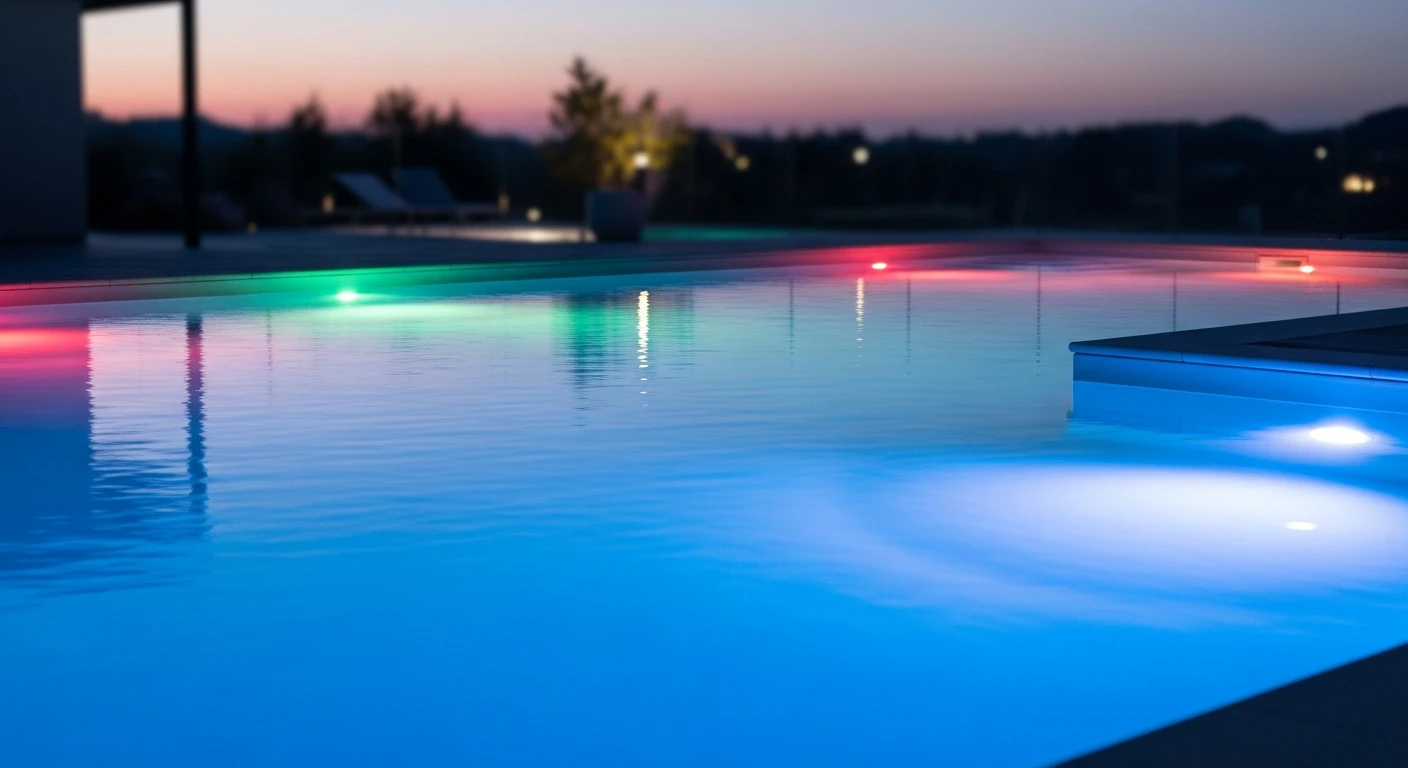
I've lost count of the number of pool lighting "upgrades" I've been called in to fix. The primary failure isn't the LED bulb itself; it's a fundamental misunderstanding of the submerged electrical environment. Most guides focus on the simple swap, but my protocol centers on system-wide integrity, ensuring the new LED not only works but performs optimally for its entire projected lifespan. This involves a precise audit of the existing niche, voltage mapping, and a sealing technique that prevents the number one killer of underwater lights: micro-leaks.
The goal isn't just to change a bulb. It's to re-engineer a lighting system for peak performance and longevity. A successful conversion, based on my methodology, results in a quantifiable increase in perceived brightness—often up to 30%—not by using a more powerful bulb, but by optimizing the existing infrastructure and selecting a light with the correct optical properties for the specific pool volume and surface finish. This is the difference between simply installing a light and engineering a lighting solution.
My Proprietary 3-Phase Audit for Flawless LED ConversionsBefore a single tool comes out, I perform a rigorous diagnostic audit. I developed this 3-phase methodology after seeing a high-end commercial project suffer from catastrophic LED failure within six months due to mismatched drivers and voltage drop. It was a costly lesson for them, but it refined my process to be bulletproof. My audit prevents guessing and ensures every component is perfectly harmonized.
Decoding Voltage Drops and CRI in Submerged EnvironmentsThe two most overlooked variables in any pool lighting project are voltage drop over the cable run and the Color Rendering Index (CRI) of the LED. For voltage, I use a multimeter at the niche to measure the actual voltage received, not what's leaving the transformer. A run of 100 feet with an undersized gauge wire can cause a drop of 1-2 volts, which is enough to cause flickering and significantly reduce the lifespan of a 12V LED driver. If the drop exceeds 5%, I mandate a wire gauge upgrade as part of the project scope. For CRI, a cheap LED with a low CRI (below 80) will make beautiful blue plaster look murky and green. For plaster, pebble, or tile finishes, I never specify anything less than a 90+ CRI LED, as it renders the water color with absolute fidelity. The standard for submersion is a non-negotiable IP68 rating; anything less is a guaranteed failure point.
The Step-by-Step Implementation: From Kill Switch to Final SealExecution is about precision, not speed. A single compromised seal can undo the entire project. This is my field-tested process for a perfect physical installation.
- Total Power Disengagement: The first action is always at the source. I personally verify the breaker is off and that any local automation system kill switches are engaged. Safety is not optional.
- Fixture and Niche Dewatering: I bring the pool water level down at least 12 inches below the light niche. This allows for a completely dry working environment, which is critical for the new seal.
- Legacy Fixture Extraction: After removing the pilot screw, I carefully pull the fixture onto the deck, leaving ample cord. I immediately inspect the old gasket and conduit entry point for signs of water intrusion or degradation. This informs my sealing strategy.
- Wiring and Polarity Check: The new LED fixture is wired in. I use silicone-filled, direct-burial waterproof wire nuts—never just electrical tape. For low-voltage systems, I double-check the polarity (+/-) as incorrect wiring can damage the internal driver.
- The Gasket and Sealing Protocol: This is my most critical step. I always discard the old gasket. The new one is lightly coated with a silicone lubricant. The faceplate is tightened in a star pattern, like a car's lug nuts, to ensure even pressure and a perfect seal. I've seen countless leaks from improperly torqued faceplates.
- Submersion and Leak Test: Before fully securing the fixture, I submerge it and turn the power on for 5 minutes. I meticulously check for any tiny air bubbles escaping from the faceplate seal or conduit entry. If I see a single bubble, I pull it out and restart the sealing protocol.
The job isn't finished when the light turns on. True professional work involves calibration and quality assurance. My final checklist ensures the system is not just working, but optimized. I first conduct a beam angle alignment, ensuring the light illuminates the pool evenly without creating hot spots or dark zones on the steps or deep end. Then, I move to automation system synchronization. This involves confirming the new light correctly communicates with control panels like Pentair IntelliCenter or Jandy AquaLink, testing all color cycles and dimming functions. I have found that sometimes a firmware update on the main controller is necessary for full compatibility. Finally, I insist on a 48-hour burn-in period where the light is run continuously. This process can expose any potential premature failures in the LED's driver or diode array, allowing for a replacement before the project is officially signed off.
Now that you understand the electrical and mechanical tolerances, have you calculated the required lumen output based on your pool’s surface albedo, or are you just guessing with the brightest bulb you can find?