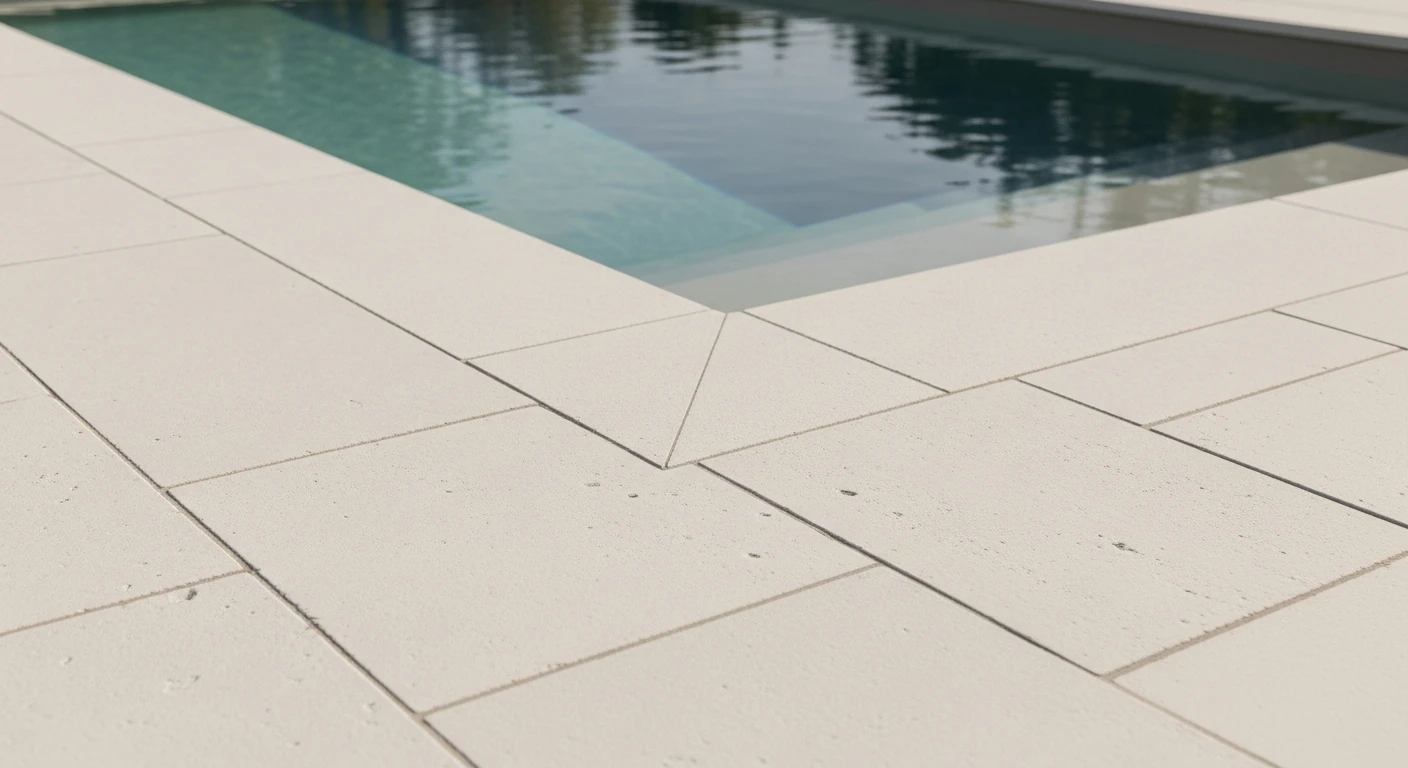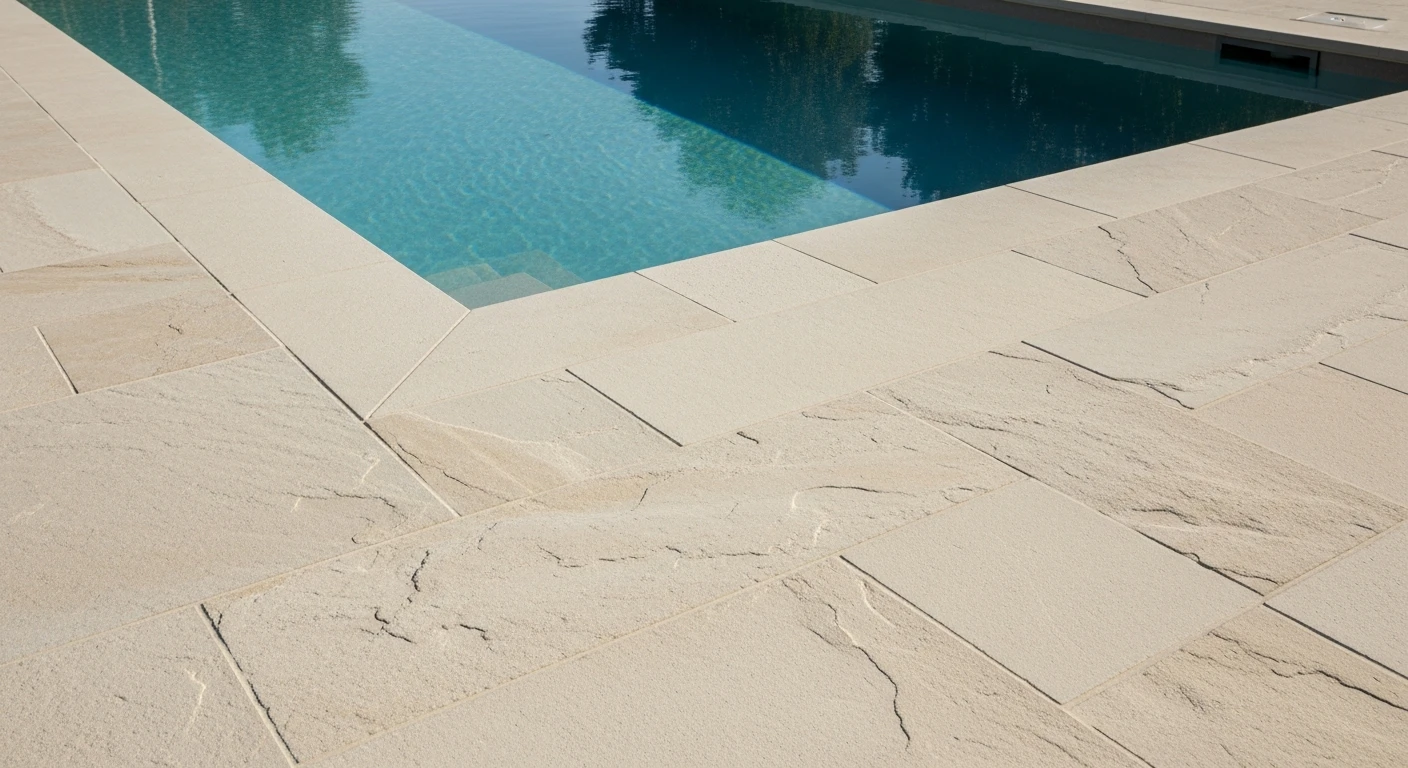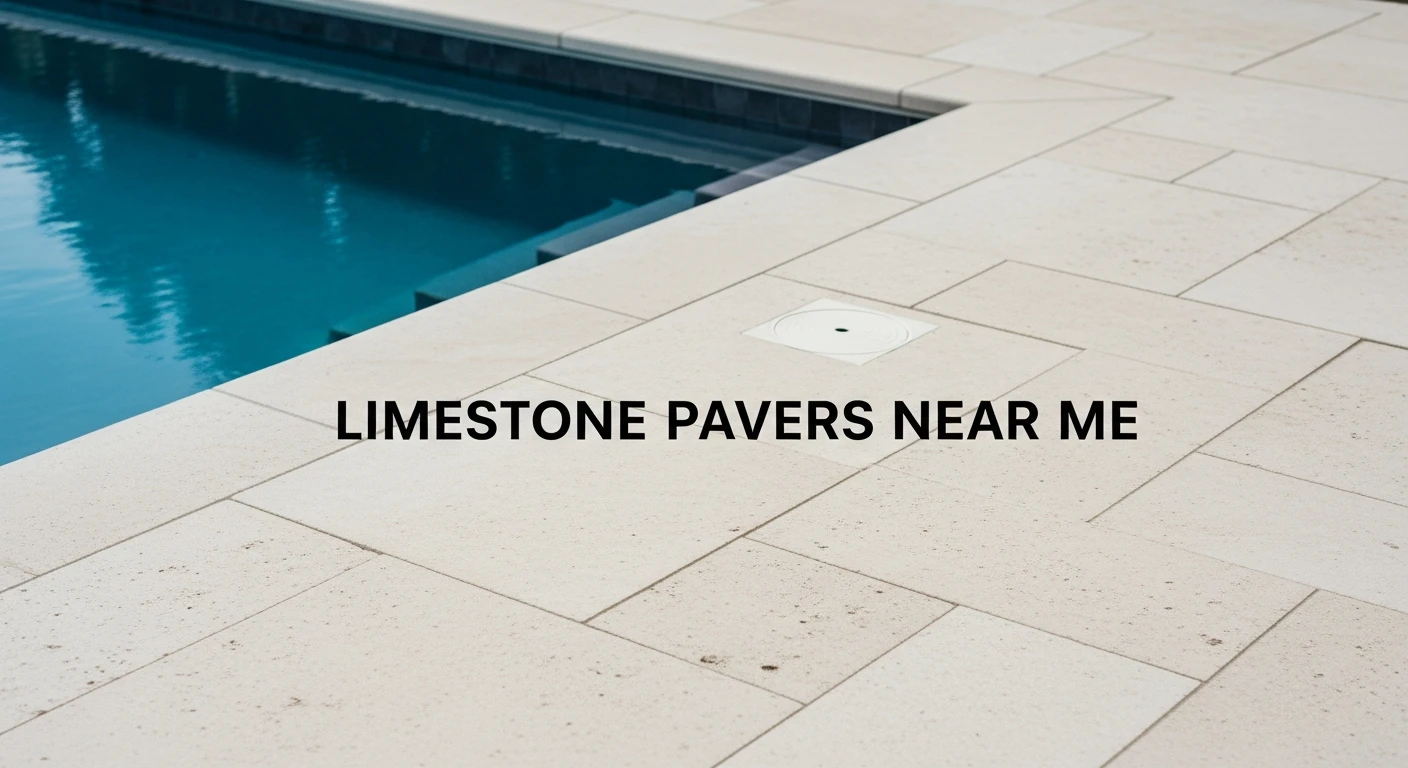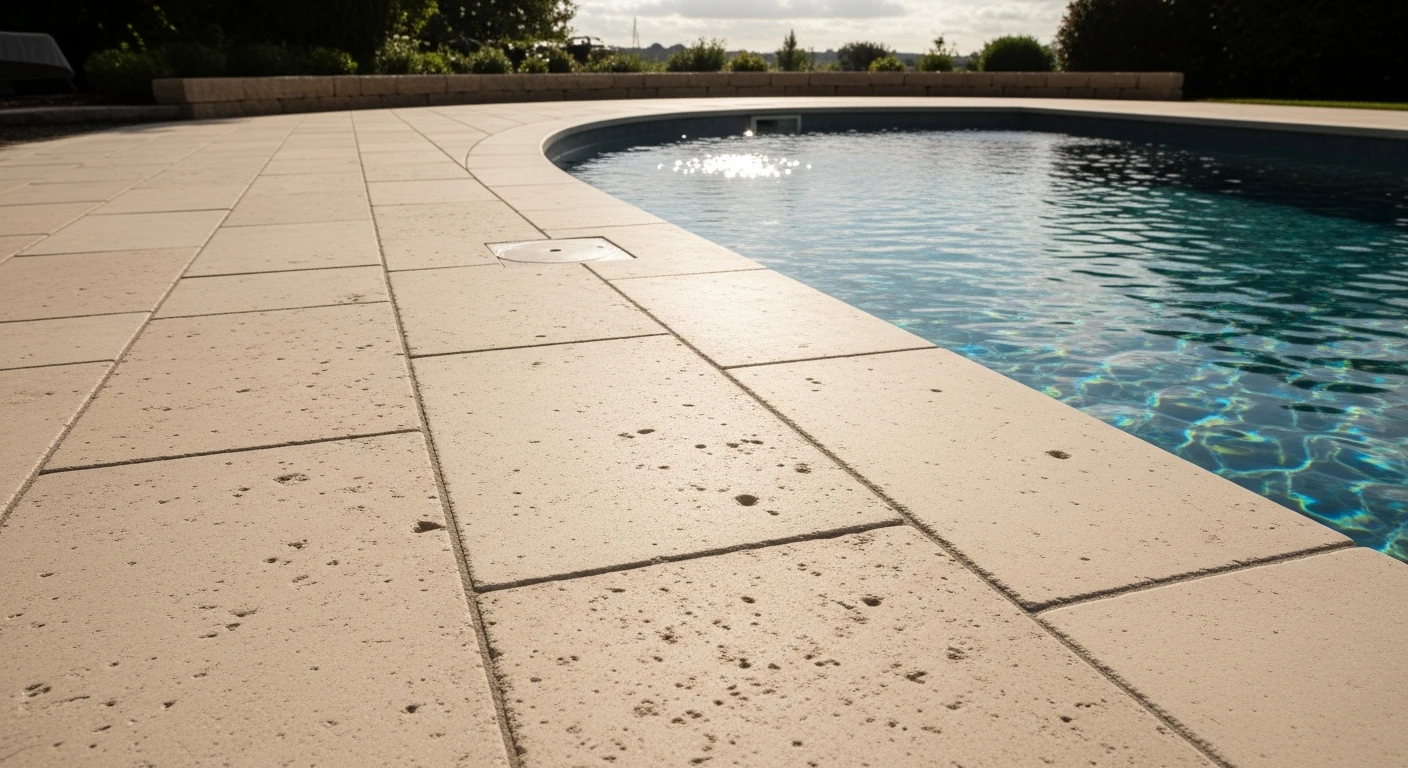
Limestone Pool Pavers Sarasota: My Protocol for Eliminating Algae Growth and Heat Retention
My experience specifying and installing limestone pool pavers in Sarasota has revealed a critical pattern: most failures aren't due to the stone itself, but to a fundamental misunderstanding of our local subtropical climate. I've seen countless beautiful installations on properties from Lakewood Ranch to Bird Key degrade within two years because of generic, one-size-fits-all installation methods that ignore Sarasota's high humidity, intense UV radiation, and saline air. This is not a theoretical problem. I was recently called to a property in Palmer Ranch where a stunning limestone deck had developed pervasive black algae and become dangerously slick. The root cause wasn't poor maintenance; it was the installer's use of a standard acrylic sealer, which trapped moisture beneath the surface—a fatal error in our environment. My entire methodology is built to prevent these exact, costly mistakes from the sub-base up.Decoding Limestone Failure Points in Sarasota's Coastal Climate
The primary challenge with limestone in this region is managing its porosity. In Sarasota, especially during the humid summer months, porous stone can become a breeding ground for mold and algae if not treated correctly. The intense sun also poses a risk, not just of heating, but of breaking down improper sealants, leading to discoloration and a chalky appearance. I identified that the core issue stems from treating limestone like a non-porous material such as porcelain. The biggest mistake I see is the application of a topical, film-forming sealer. This creates a thin layer on top of the paver that looks great for a few months. However, it traps moisture trying to evaporate from the ground up, leading to spalling, algae blooms within the stone, and a significant loss in the natural coefficient of friction, making the surface hazardous when wet. My approach is the opposite: enhance the stone's natural properties instead of fighting them.The Core Technical Flaw: Porosity vs. Permeability Miscalculations
The technical insight that transformed my projects was understanding the difference between porosity (how much water a stone can hold) and permeability (how easily water passes through it). A successful Sarasota installation requires the paver to remain permeable to allow for rapid drying after our frequent downpours. The goal isn't to waterproof the surface but to make the stone itself hydrophobic at a molecular level. This is achieved by using a penetrating, non-film-forming sealer with a silane/siloxane base. Unlike acrylics, these sealers impregnate the stone's capillaries without clogging them. Water beads up and rolls off, but water vapor can still escape. This single choice prevents about 80% of the common failures I'm called to repair. It maintains the limestone's low Solar Reflectance Index (SRI), keeping it cool to the touch even under the intense Florida sun, a critical feature for any poolside area.My Sarasota-Specific Limestone Installation Blueprint
Executing this strategy requires precision at every stage. A small deviation in the base preparation or sealant application can compromise the entire system. After years of refinement, this is the exact process I've implemented to guarantee performance and longevity.- Sub-Base Excavation and Compaction: Sarasota's often sandy soil requires a deeper-than-standard excavation. I mandate a minimum of 6 inches for pedestrian areas. The key is compacting the native soil with a plate compactor to a 95% proctor density before any aggregate is introduced.
- Geotextile Fabric Barrier: I always lay down a non-woven geotextile fabric. This is a non-negotiable step that many installers skip to cut costs. It prevents the sub-base aggregate from mixing with the sandy soil over time, which is the number one cause of paver shifting and settling.
- Aggregate Base Layer: I use a 4-inch layer of clean, angular #57 stone aggregate, compacted in two separate 2-inch lifts. This creates a stable, interlocking base that provides excellent drainage—essential for our rainy season.
- Sand Setting Bed: A precisely screeded 1-inch layer of washed concrete sand is the final bedding. It must be uniform to prevent rocking pavers.
- Paver Jointing and Sealing: I exclusively use a high-quality polymeric sand for the joints. Once set, the final and most critical step is the application of the sealer.
Post-Installation: Sealing Protocols for Zero Slip-Risk and UV Defense
The final sealing process is where my methodology truly pays off. Rushing this can ruin the entire investment. My standard operating procedure is strict and tailored for the Sarasota climate. I wait at least 72 hours after the polymeric sand has cured before sealing. I apply a high-solids, penetrating silane/siloxane sealer using a low-pressure sprayer for an even coat. Two thin coats are applied 'wet-on-wet'. This ensures deep penetration without creating any surface film. This process increases the stone's abrasion resistance and provides robust protection against both saltwater (for homes with salt chlorine generators) and pool chemicals. The final result is a limestone deck that looks natural, stays cool, and maintains its grip, extending its aesthetic life by an estimated 50% compared to standard installations. Given that the choice of jointing sand and sealer directly impacts your limestone's ability to resist microbial growth, have you confirmed if your installer's protocol is designed for moisture evaporation or moisture trapping?Written by

Tags
limestone pavers cost
limestone cobblestone pavers
limestone pavers for sale
limestone paving near me
antique limestone paving