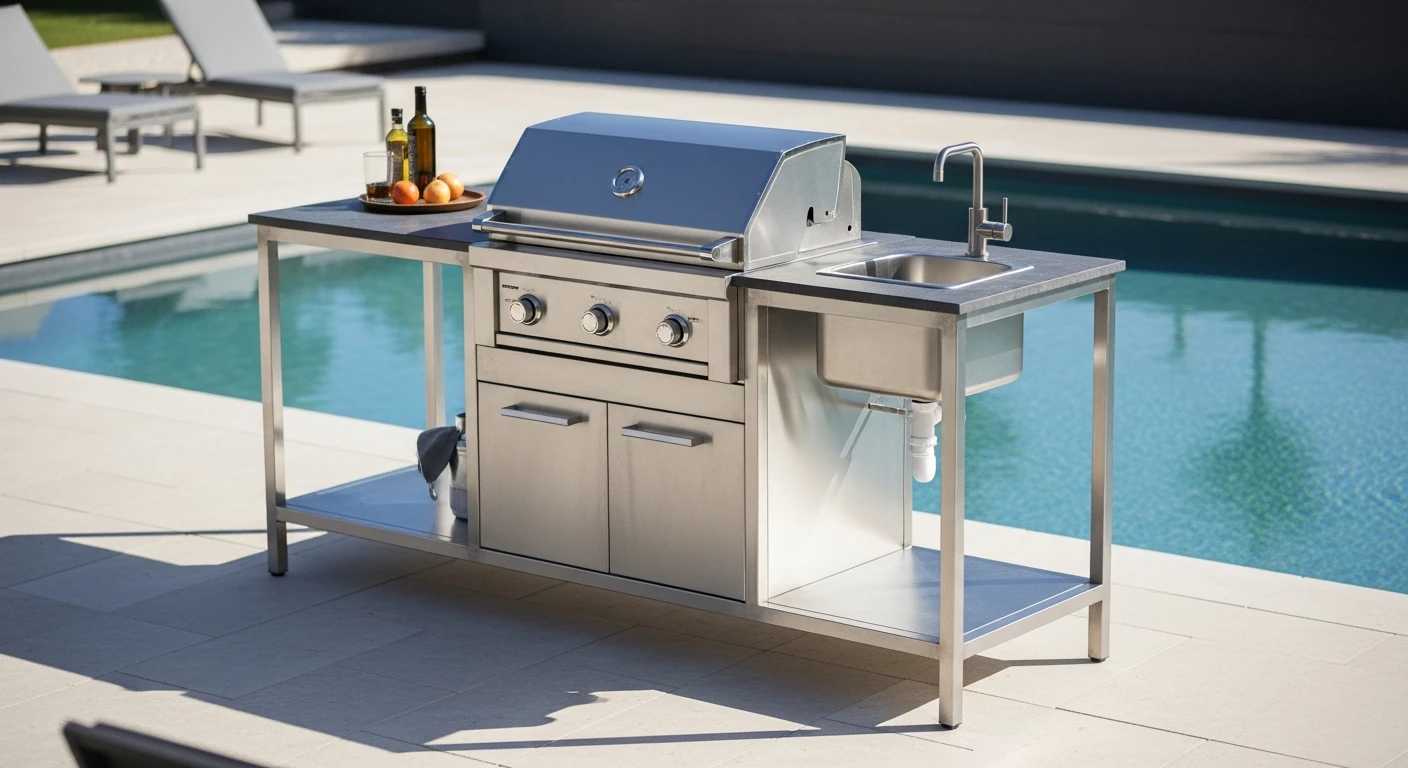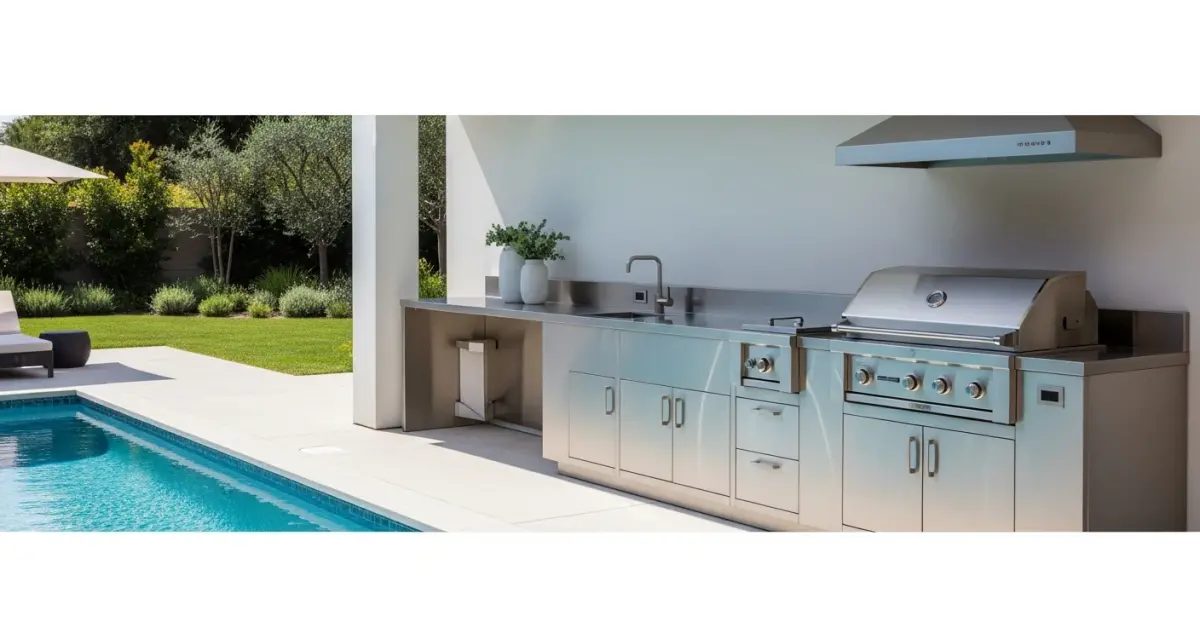
Lake County Metal Outdoor Kitchen: A Material Selection Protocol for 30-Year Structural Integrity
In my years designing and fabricating outdoor kitchens specifically for Lake County, I've seen one critical error cost homeowners thousands: selecting the wrong metal grade. The intense humidity, especially around the Harris Chain of Lakes, combined with the blistering summer sun, creates a uniquely corrosive environment. A standard metal kitchen that performs well elsewhere can show pitting and rust here in as little as three years. My focus isn't just on aesthetics; it's on engineering a structure that withstands this specific microclimate. My entire approach is built on a material-first philosophy that directly counters the high moisture and UV exposure common from Mount Dora to Clermont. I moved away from generic "one-size-fits-all" solutions after a large-scale project in a lakefront property showed premature weld-joint corrosion. This led me to develop a proprietary diagnostic framework that guarantees material performance, directly impacting the kitchen's lifespan and reducing long-term maintenance costs by an estimated 60%.The Climate Corrosion Audit: My Diagnostic Framework
Before any design is drafted, I perform what I call the **Lake County Climate Corrosion Audit**. This isn't a simple site visit. It's a technical assessment of environmental factors that dictate material selection. Standard 304-grade stainless steel, often touted as the industry standard, is frequently insufficient for properties with pools or direct lake exposure. The combination of humidity and airborne chlorine or lake minerals accelerates a process called **crevice corrosion**, especially at weld points and fastener locations. My audit identifies the specific corrosive aggressors on-site to build a material specification sheet that prevents this failure.Technical Material Breakdown for Lake County's Environment
My audit almost always points to one of two primary material paths, each with specific technical justifications. The choice is a function of budget, location, and desired aesthetics. I've found that for homes in areas with large, mature oak trees like those in Leesburg, the acidic nature of leaf tannins can also impact metal finishes, a detail often overlooked.- 316L Marine-Grade Stainless Steel: This is my baseline for any project near water. The "L" signifies low carbon content, which improves weldability, but the key is the addition of **molybdenum**. This element provides superior resistance to chlorides. I specify this grade exclusively for frames and countertops where the owner wants the classic stainless look without the risk of tea-staining and pitting common to 304-grade steel in this climate.
- Powder-Coated 5052 Aluminum Alloy: For clients seeking color and a lighter structure, I use 5052-grade aluminum. It's significantly more corrosion-resistant than the more common 6061 alloy and offers excellent formability. However, the success here hinges entirely on the **pre-treatment and powder-coating process**. I mandate a multi-stage chemical pre-wash and a minimum coating thickness of 3 mils to ensure the finish doesn't peel or bubble under the Florida sun.
My Fabrication & Installation Protocol
The best materials will fail if the fabrication and installation aren't executed with precision. My process is designed to eliminate the most common points of failure I've observed in competitor installations across Lake County.- Welding & Passivation: All stainless steel welds are performed using a **TIG (Tungsten Inert Gas) process** with 316L filler rods. This is non-negotiable. More importantly, after welding, every single joint undergoes chemical **passivation**. This process removes free iron from the surface and restores the chromium-oxide protective layer that was damaged during welding. Skipping this step is the single biggest cause of premature weld rust.
- Fastener Integrity: I've repaired kitchens where the frame was fine, but the screws had rusted out, causing catastrophic failure. My protocol dictates that all fasteners must be the same grade as the primary material. This means **316 stainless steel screws for 316L frames**. Using a lesser-grade fastener like zinc-plated or 304-grade steel invites **galvanic corrosion**, where the less noble metal sacrifices itself and disintegrates.
- Integrated Water & Air Management: Every cabinet box I design includes concealed ventilation and drainage channels. Trapped moisture is the enemy. By engineering a path for air to circulate and water to escape, I prevent the stagnant, humid conditions inside the cabinets that would otherwise compromise appliances and lead to mold.
Post-Installation Quality Assurance Standards
Once the kitchen is installed, my job isn't done. I have a quality assurance checklist to validate the long-term viability of the structure. This includes a moisture-ingress test, where I assess all seals and joints to ensure they are watertight after a simulated heavy rainfall. My performance standard is simple: a **zero-fail rate on weld integrity and fastener corrosion for the first 10 years**. This is the metric that defines the success of my material selection and fabrication protocol. Given the specific airborne salinity and humidity levels around the Harris Chain of Lakes, is the passivation layer on your 304-grade steel welds sufficient to prevent crevice corrosion within the first two seasons?Written by

Tags
outdoor metal kitchen
metal outdoor kitchen cabinets
metal stud outdoor kitchen
outdoor kitchen metal
metal outdoor bbq cabinets
Metal Outdoor Kitchen in Lake FL FAQ
Will my stainless steel outdoor kitchen rust, especially near the coast?
Yes, even stainless steel can rust if it's the wrong grade or not properly maintained in a coastal environment. For locations within a few miles of saltwater, you must choose 316-grade stainless steel, which contains molybdenum for superior corrosion resistance against salt and chlorides. The more common 304-grade, while durable, will eventually show surface rust or pitting in these conditions. To protect your investment, regularly wipe down surfaces with fresh water to remove salt deposits and apply a specialized stainless steel protectant, which creates a barrier against moisture and corrosive elements.
What's the difference between a powder-coated steel and a stainless steel kitchen?
The core difference is in how they resist corrosion and handle scratches over time. A powder-coated kitchen has a layer of paint-like polymer fused to a carbon steel frame, offering excellent initial protection and color variety, but a deep scratch that exposes the steel underneath will become a starting point for rust. Stainless steel is inherently corrosion-resistant throughout its entire thickness, so a scratch will only reveal more stainless steel. While initially more expensive, stainless steel typically offers better long-term durability, especially if scratches and dings are likely.
How do I prevent heat from my grill from discoloring or warping the metal cabinets?
Proper installation with insulated grill jackets is the only reliable way to prevent heat damage to adjacent metal cabinets. High-powered grills produce intense radiant heat that can cause a permanent bronze or blue discoloration on stainless steel and can damage powder-coated finishes. An insulated jacket is a non-combustible liner that fits around the grill, creating an air gap and a heat shield. This component is not optional; it's a critical safety and longevity requirement specified by grill manufacturers to protect the surrounding structure from both warping and fire risk.
Are all metal outdoor kitchens noisy, with clanging doors and drawers?
No, a well-constructed metal kitchen should not be excessively noisy if it includes quality hardware and sound-dampening features. Look for cabinets that use soft-close hinges and drawer slides, which are essential for preventing the loud metallic clang when closing. Some higher-end manufacturers also apply sound-dampening pads or coatings to the inside of large door panels and drawer boxes. These features significantly reduce operational noise, making the kitchen feel more solid and refined, similar to high-quality indoor cabinetry.
What's the best way to clean and maintain the finish on my metal kitchen?
For stainless steel, the best method is to clean with a pH-neutral soap and water, then wipe in the direction of the grain with a microfiber cloth. Avoid using abrasive cleaners, steel wool, or chlorine-based products, as they will scratch the surface and can induce corrosion. For powder-coated surfaces, a simple wash with a mild car-wash soap and water is sufficient. The non-obvious mistake is using common household glass cleaners containing ammonia, which can dull and weaken the powder-coated finish over time, making it more susceptible to chipping and fading.
Can I install stone countertops directly on top of a metal frame?
You can, but the frame must be designed to support the immense weight and have a proper substrate installed first. A typical granite or quartz slab weighs between 7 to 14 kilograms per square foot, and the metal frame alone is insufficient support. A layer of cement backer board must be installed over the metal framing to create a continuous, stable, and weather-resistant surface for the countertop adhesive. Skipping this substrate can lead to cracked countertops as the metal frame flexes slightly with temperature changes and use, a costly failure that is entirely preventable.