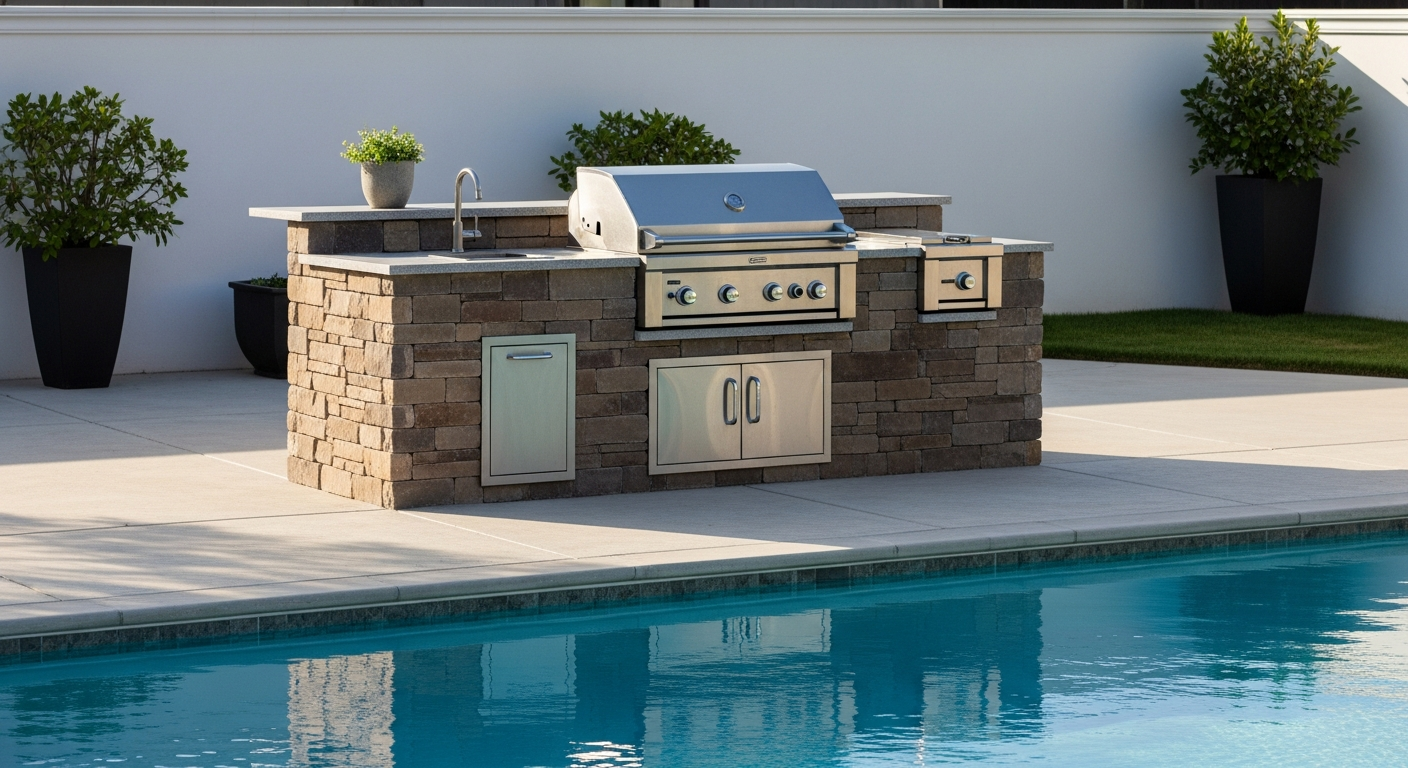
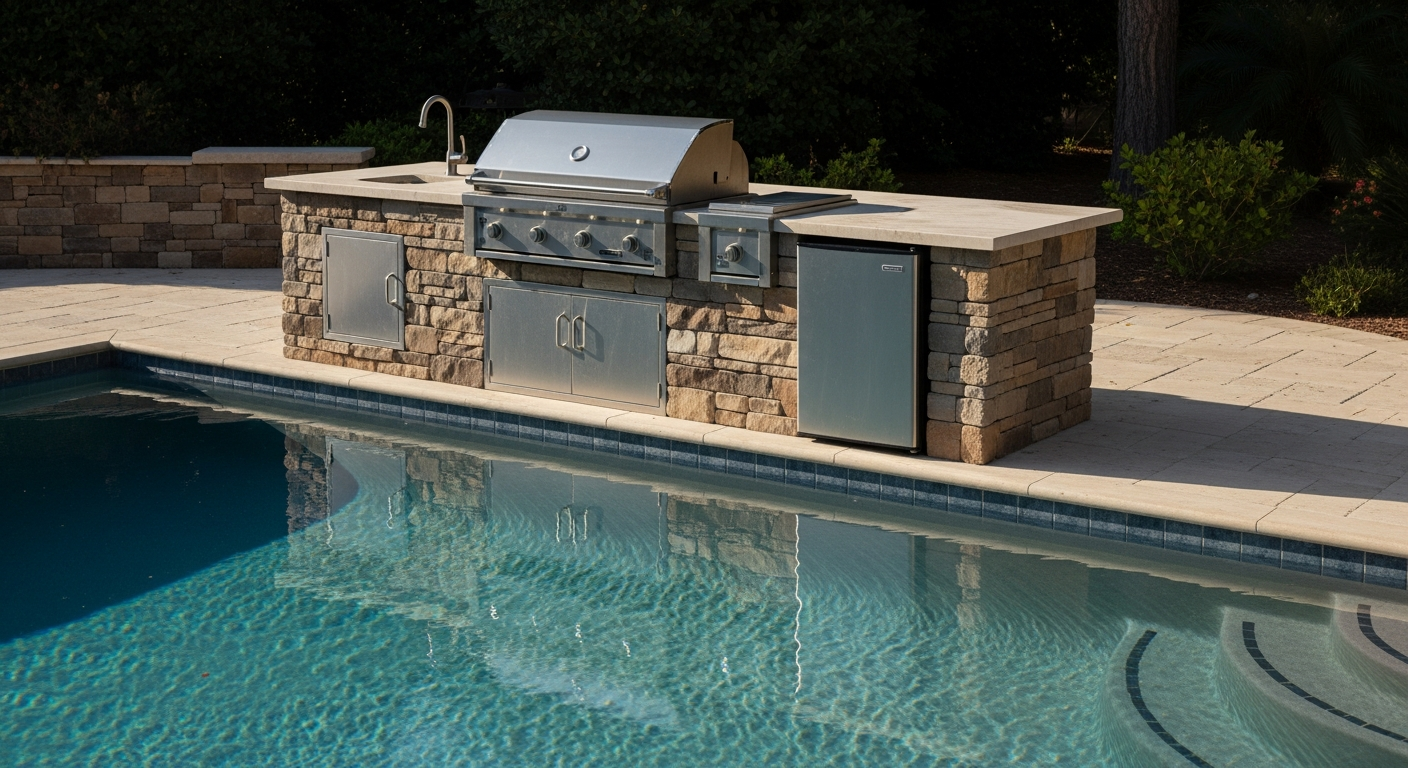
Natural Gas Grill Island Polk County: My Framework to Prevent 90% of Humidity-Related Component Failure
I’ve rebuilt too many high-end grill islands in Lakeland and Winter Haven that failed in under five years. The common denominator wasn't a faulty grill; it was the island’s core structure and gas line integrity succumbing to Polk County's relentless humidity. The salt air from the coast might not reach us here, but our 80-90% summer humidity is a silent killer for outdoor kitchens. My approach bypasses the cosmetic appeal and starts with a humidity-resilience protocol from the foundation up, ensuring your investment doesn't corrode from the inside out. This isn't about picking the shiniest stainless steel. It’s about understanding that the wrong frame, inadequate ventilation, and improperly sealed gas fittings create a condensation trap. I once took apart a beautiful stone island in a Davenport home where the galvanized steel studs had turned to dust, compromising the entire structure. The owner was focused on the granite countertop, not the skeleton holding it up. My methodology ensures the skeleton is invincible.My Diagnostic Protocol for Polk County Outdoor Kitchens
Before a single material is ordered, I perform a site-specific analysis. This isn't a simple measurement of the patio. For a project near the lakes in Winter Haven, my first concern is the high water table and its impact on the concrete footing. For a new construction home in Haines City, it’s about identifying the main gas line's entry point and calculating the total BTU load required for the grill, side burners, and any potential fire features. A miscalculation here is the most common mistake I see, leading to weak flames and poor performance. My protocol focuses on three non-negotiable points: gas flow dynamics, environmental exposure, and structural load.Beyond Stainless Steel: Material Science for Florida's Climate
Everyone asks for stainless steel, but they don't know the right questions to ask. The default choice, 304-grade stainless steel, is sufficient for most components. However, for a home with a saltwater pool, the airborne chlorine accelerates corrosion. In that specific scenario, I mandate 316-grade (marine-grade) stainless steel for all fasteners, access doors, and vent covers. It's a 15-20% material cost increase that adds a decade to the island's lifespan. The frame itself should never be wood or galvanized steel. I exclusively use welded aluminum tubing or structural steel studs with a multi-layer powder coating. For the substrate, I use concrete backer board, never drywall or plywood, which will inevitably swell and grow mold in our climate.The Core Build: A Step-by-Step Implementation Plan
Building a durable natural gas grill island in Polk County is a sequence of precise, deliberate actions. Deviating from this order is where catastrophic failures begin. My process is standardized to mitigate the specific environmental risks we face here.- Foundation and Footing: I start by pouring a reinforced concrete footing that is isolated from the main patio slab. This prevents cracking due to differential expansion and contraction during our intense summer heat. The mix is specifically formulated with a water-reducing admixture to combat our sandy soil's moisture wicking.
- Gas Line Installation and Pressure Testing: The natural gas line is run in a non-corrosive conduit. I always oversize the line by one standard diameter more than the strict code requires. This future-proofs the system for higher BTU appliances and guarantees consistent pressure. Before anything is connected, the line is pressure-tested at 1.5x the working pressure for a minimum of 60 minutes. This is my personal quality standard.
- Framing and Substrate: The aluminum or coated steel frame is assembled, ensuring every joint is perfectly square. All cut ends are treated with a corrosion-inhibiting compound. The concrete backer board is then attached using ceramic-coated screws that won't rust and stain the eventual finish.
- Venting and Airflow Integration: This is the most critical safety step. I install a minimum of two vents on opposite sides of the island, creating cross-ventilation. This prevents heat buildup that can damage internal components and, more importantly, stops dangerous gas accumulation from a minor leak. I saw a stucco finish on a Bartow project completely discolored because of improper heat venting.
- Component Installation and Sealing: Every appliance is installed with a flexible gas connector to absorb minor ground shifts. I meticulously apply a high-temperature, waterproof sealant to every penetration point—gas lines, electrical conduits, and water lines—to create an impermeable barrier against moisture intrusion.
Precision Tuning for Peak Performance and Longevity
The job isn’t finished when the last stone is set. The final 10% of the work is what defines a truly professional installation. I perform an operational check of every burner, adjusting the air shutter to create a perfect blue flame with a yellow tip. This optimizes fuel efficiency and prevents soot from coating the grill's interior. Every single access door and drawer is lubricated with a silicone-based grease that won't wash away in a heavy Florida downpour. Finally, the stone or stucco finish is treated with a high-solids silane-siloxane sealer, which penetrates the pores to repel water and prevent mildew growth, a constant battle in our region. Now that your island is built to withstand our climate, have you properly calculated the thermal expansion gap needed for your specific countertop material to prevent it from cracking during the first major temperature swing?Written by

Tags
outdoor grill with sink
outdoor grill and sink
outdoor grill and pizza oven
outdoor grill and bar
pre fabricated outdoor grill islands