Choosing Your Outdoor BBQ Kitchen Cabinets in Sarasota
In my 15 years designing and building outdoor living spaces here in Sarasota, I've seen a clear pattern: the longevity
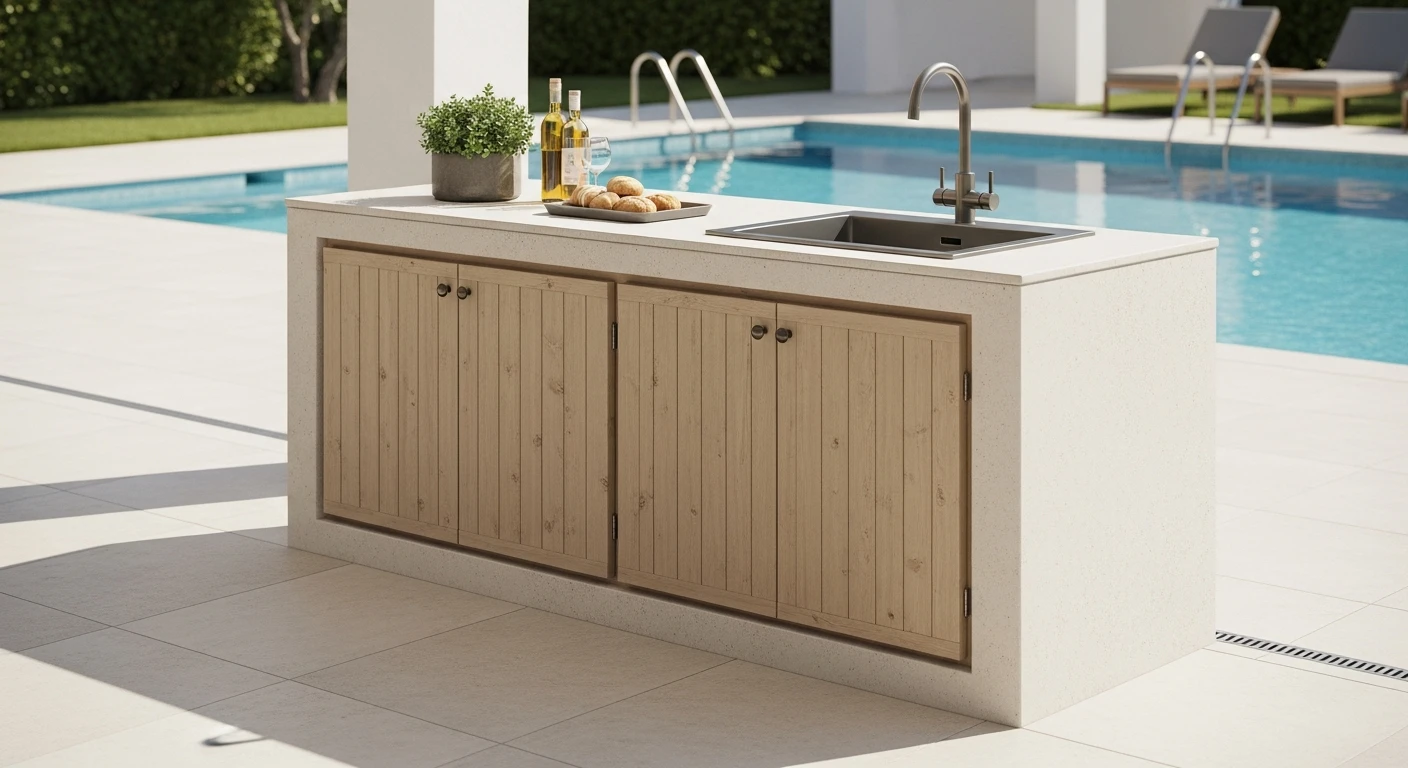
In my 15 years designing and building outdoor living spaces here in Sarasota, I've seen a clear pattern: the longevity of an outdoor kitchen is determined almost entirely by the cabinet material's resilience to our specific coastal climate. Homeowners often focus on the grill or the countertop, but it's the cabinet boxes and doors that face the constant assault of salt air, high humidity, and intense UV radiation. The right choice feels like a significant upfront cost, but the wrong one guarantees a costly replacement project within five to seven years.
- Material is Everything: The primary decision is between marine-grade polymers (HDPE), powder-coated 304 stainless steel, and, for sheltered applications, teak.
- Hardware is a Failure Point: Standard hinges and drawer slides will rust. Specify 316-grade stainless steel hardware for all moving parts.
- Ventilation is a Code Requirement: Any cabinet housing a propane tank or natural gas appliance requires specific ventilation to prevent gas buildup, a critical safety and code compliance issue in Sarasota County.
- HOA Architectural Review is Non-Negotiable: In communities like Palmer Ranch or Lakewood Ranch, cabinet color, style, and placement require pre-approval from the Architectural Review Committee (ARC).
The Planning Failures That Lead to Premature Replacement
The most common failures I see are not from poor installation but from poor material specification at the planning stage. Homeowners are shown beautiful outdoor grill cabinets in a showroom, often made from materials that are simply not suited for an unsheltered lanai a few miles from the Gulf of Mexico. They get sold on aesthetics without a frank discussion about environmental performance.
A popular mistake is opting for wood-look finishes on materials not designed for high UV exposure. These can look fantastic for the first year or two, but the Florida sun is relentless. I've seen finishes peel, delaminate, or fade unevenly, turning a luxury feature into an eyesore. Another critical error is assuming “stainless steel” is a monolithic category. Lower grades will show surface rust, especially around welds and handles, from the constant salt in the air.
The Most Expensive Failure: Ignoring the Foundation
The costliest mistake is building the cabinet base directly onto a paver patio without a proper concrete footing. Pavers shift over time due to our sandy soil and heavy rains. This subtle movement cracks granite countertops and misaligns cabinet doors, leading to thousands in repairs. I was called to a project in The Landings where a beautiful outdoor kitchen island had a hairline fracture running across a massive granite slab. The cause wasn't the granite; it was the unstable paver base that had settled unevenly, putting stress on the entire structure.
The Installation Process in Practice for Sarasota County
Building an outdoor kitchen with integrated cabinets is a multi-stage process that involves more than just assembly. It starts with a proper site plan and, depending on the scope, requires permits from Sarasota County. If you're running new gas or electrical lines, a licensed contractor must be involved, and inspections are mandatory.
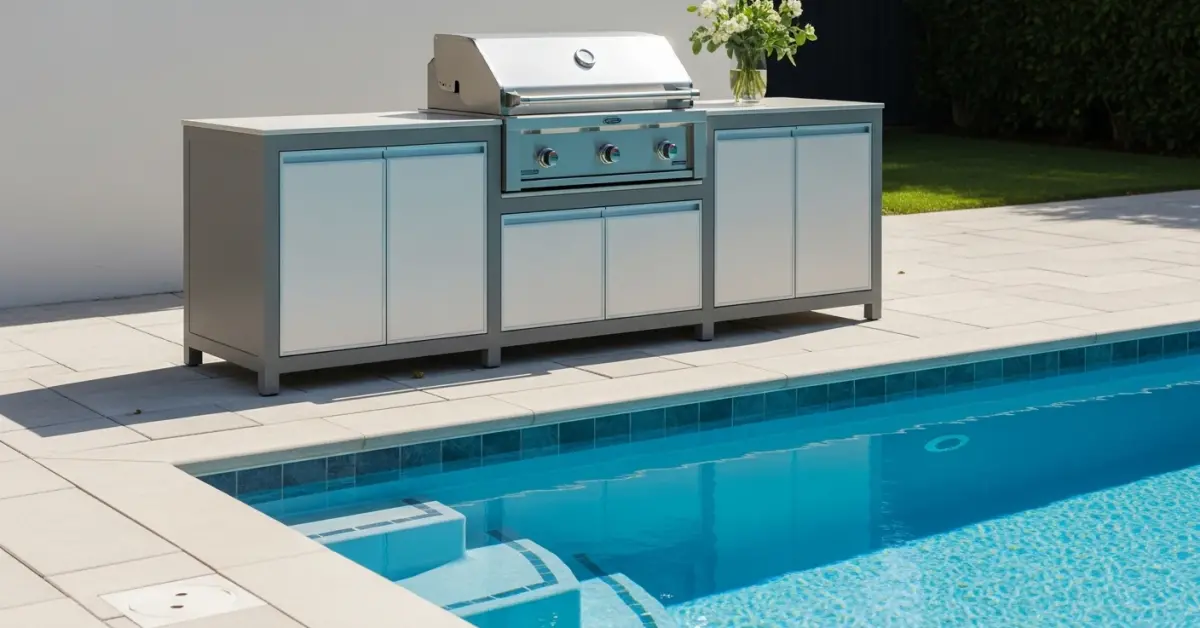
First, we establish the footprint and pour a reinforced concrete footer if the kitchen is on a paver or unstable base. This provides a level and permanent foundation. Next, utilities like gas, water, and electrical conduits are run before the cabinet frames or bbq kitchen cabinets are set. Once the cabinets are installed and leveled, the countertop templating can occur. Only after the countertop is installed are the appliances, like the outdoor grill with cabinet, set in place and connected.
Selection Criteria for Sarasota Homeowners
- Wind Load Compliance: For structures near the coast, especially on barrier islands like Siesta Key or Longboat Key, ensure the overall structure is designed to meet local wind load requirements.
- Material Salt Spray Rating: Ask for material specifications that show resistance to salt spray. This is a standard test for marine-grade products but often overlooked for residential ones.
- HOA Guideline Packet: Before you even get a quote, get the specific outdoor living and construction guidelines from your HOA. This document dictates everything from color palettes to setbacks.
- Contractor Licensing: Verify your contractor holds a valid Florida Certified General, Building, or Residential Contractor license, which you can check on the DBPR website. A simple “handyman” cannot legally run gas or electrical lines.
Comparing Cabinet Materials for the Sarasota Climate
The choice of material for your outdoor kitchen island cabinets directly impacts maintenance, lifespan, and long-term cost. What works in a dry climate like Arizona will fail spectacularly here. The table below compares the most viable options for our region.
| Material | Upfront Cost | Salt Air Resistance | Maintenance Level |
|---|---|---|---|
| Marine-Grade Polymer (HDPE) | High | Excellent | Very Low |
| Powder-Coated 304 Stainless Steel | Very High | Good to Excellent | Low |
| Teak Wood | High | Good (Requires Sealing) | High |
When Outdoor Cabinets Are Not the Right Choice
There are situations where a full cabinet system is overkill. If your primary need is just a standalone grill and a small prep area, a high-quality grill cart might be a more practical and cost-effective solution. For homeowners with a small lanai or those who may move in a few years, the permanence and high cost of built-in outdoor bbq kitchen units may not provide a good return on investment. A modular, non-permanent setup offers flexibility.
A Safe Hiring Checklist for Your Project
Hiring the right team is as important as choosing the right materials. I've been called in to fix projects where unqualified installers created dangerous situations, especially with gas lines. Use this checklist to vet potential contractors in our area.
- Verify their Florida Contractor License: Check the license number on the Florida Department of Business and Professional Regulation (DBPR) portal. Ensure it is active and for the correct trade.
- Request Proof of Liability and Workers' Comp Insurance: A certificate of insurance is non-negotiable. Without it, you could be liable for accidents on your property.
- Ask for a Portfolio of Local, Completed Projects: Don't just look at photos. Ask for addresses of projects they completed over five years ago to see how their work holds up to the Sarasota climate.
- Review the Gas and Electrical Plan: The proposal must explicitly detail who is performing the licensed gas and electrical work and that it will be permitted and inspected by Sarasota County.
- Get a Detailed Materials List: The contract should specify not just “stainless steel” but the exact grade (e.g., 304 stainless steel, 316 stainless hinges). The same goes for polymers or wood species.
- Confirm They Handle HOA Submissions: An experienced local contractor will be familiar with the submission process for major HOAs and will manage it for you.
Decisions That Determine the Long-Term Outcome
The success of your outdoor kitchen hinges on a few key decisions made before a single tool is picked up. The first is committing to a budget that accommodates materials designed for a coastal environment. Trying to save 20% on cabinets by choosing a lesser material will almost certainly lead to a 100% replacement cost in under a decade. It's a financial trap I've seen many well-intentioned homeowners fall into.
Another critical decision is the layout's relationship to the prevailing weather. Where possible, situating the kitchen in a spot that gets some protection from the harshest afternoon sun and driving rain can add years to its life, regardless of the material. It also makes the space more comfortable to use.
The Exact Moment Most Homeowners Get It Wrong
The single moment where projects go wrong is during the design and material selection phase, specifically when a homeowner falls in love with an “indoor look” for their outdoor space. They choose cabinet styles with intricate details, tight seams, and finishes that mimic interior cabinetry. These designs are a nightmare outdoors. Tight seams trap moisture and salt, promoting corrosion and mildew. Intricate trim pieces create points of failure. The best-performing outdoor cabinets have simpler, cleaner lines (like shaker or slab styles) that shed water and are easy to clean.
Practical Answers for Building in Sarasota
Navigating the local requirements is a key part of my job. A beautiful design is useless if it can't be built to code or gets rejected by an HOA. Here are the realities of getting these projects done here.
Navigating Sarasota County Permitting for Outdoor Kitchens
A permit is typically required if you are running new electrical or gas lines, or if the structure itself is substantial. The Sarasota County permitting office plan review can take several weeks. A complete application with clear diagrams for utility runs is essential to avoid delays. A typical permit fee for this scope of work can range from $250 to $600, not including the contractor's time to manage the process.
Meeting HOA Requirements in Planned Communities
Communities like Lakewood Ranch have extensive design review processes. You must submit a package including site plans, material samples, and color swatches to the Architectural Review Committee (ARC). They will review it for compliance with community standards. Approval can take 30 to 60 days. Starting work without this approval can result in stop-work orders and fines.
Understanding Florida's Lien Law
Under Florida law, any contractor or supplier who isn't paid can place a lien on your property. To protect yourself, it's crucial to use a reputable contractor who provides lien releases from their suppliers and subcontractors upon payment. Never make a final payment until you have received a final lien release. This ensures that all parties involved in your project have been compensated.