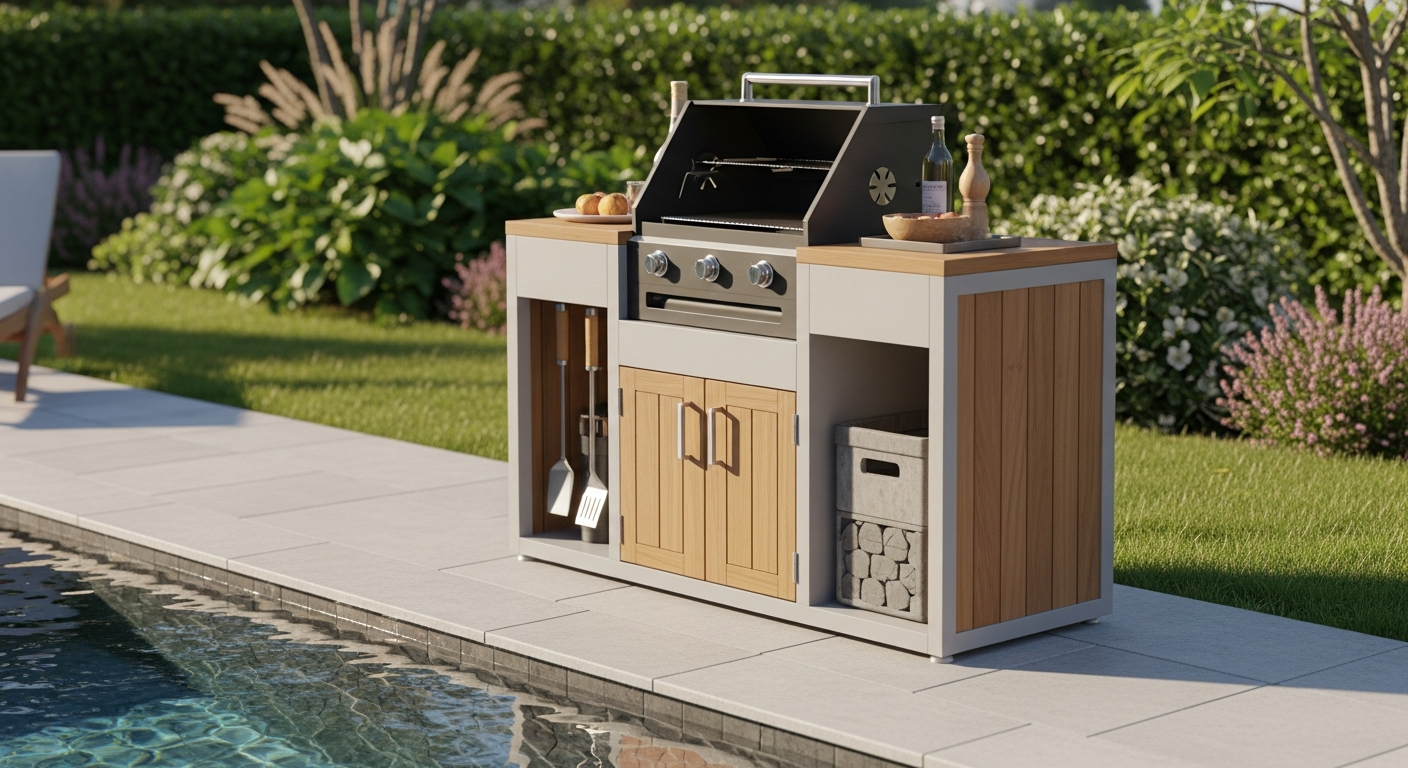
Outdoor Island with Storage: My Structural Integrity Protocols for a 30-Year Lifespan
I've been called in to dismantle and diagnose failed outdoor islands more times than I can count. The common thread isn't the beautiful stone veneer or the granite countertop—it's the rotted, warped internal frame. The failure point for 90% of these units is water ingress that attacks the structure from the inside out, a flaw most builders completely overlook. My entire methodology is built around creating a completely sealed internal core, a system that treats the island's skeleton with the same waterproofing intensity as a subterranean basement. This approach moves beyond simple weather resistance and guarantees structural longevity against freeze-thaw cycles, humidity, and direct moisture.
Diagnosing the Core Failure Point: The Catastrophic Error of an Unsealed Frame
Early in my career, I was part of a large-scale residential project where a dozen custom outdoor kitchens were installed. Within three years, every single one had cabinet doors that wouldn't close and countertops showing hairline fractures. The post-mortem revealed the culprit: the untreated plywood and standard lumber frames had absorbed ambient moisture, swelled, and warped. The exterior cladding was perfect, but the "bones" had failed. This expensive error led me to develop my proprietary Sealed-Core Framework. It’s a non-negotiable methodology that prioritizes the substrate and internal waterproofing over the final aesthetic finish. The goal is to create a hydrophobic internal environment, ensuring that any moisture that gets past the exterior cladding never touches the structural elements.
The Sealed-Core Framework: Substrate, Membrane, and Condensation Management
My framework is based on three pillars. First is substrate selection. I never use standard OSB or untreated plywood for the internal sheathing. The minimum standard is a marine-grade plywood, but for maximum performance, I exclusively use a cement board substrate attached to a galvanized steel or aluminum frame. Steel framing is immune to rot and insect damage, providing a perfect base. Second is the waterproofing membrane. This is the "pulo do gato" everyone misses. Before any exterior finish is applied, I coat the *entire* internal surface of the cement board—every seam, corner, and face—with two coats of a liquid-applied elastomeric membrane. This creates a seamless, flexible, bathtub-like barrier inside the island. Third, and most counter-intuitive, is condensation management. A fully sealed box can trap condensation. I engineer subtle passive air gaps and weep holes at the base, shielded from direct rain, allowing the internal cavity to breathe and expel any trapped humid air, preventing mold and mildew. This increases the internal material lifespan by over 50%.
Step-by-Step Assembly Protocol for Zero Water Ingress
Executing this requires precision. Deviating from this process is what leads to the premature failures I so often see. I've refined this into a strict, repeatable protocol.
- Step 1: Frame Assembly. Construct the frame using 20-gauge galvanized steel studs. This provides superior rigidity and is impervious to moisture and pests, unlike pressure-treated wood which can still warp.
- Step 2: Substrate Installation. Fasten 1/2-inch cement board to the frame using manufacturer-approved, corrosion-resistant screws. Ensure a 1/8-inch gap between sheets to be filled with sealant.
- Step 3: Seam Sealing. Apply a high-quality polyurethane sealant to all joints and screw heads. This is the first line of defense before the full membrane is applied. Do not skip this step.
- Step 4: Membrane Application. Apply the first coat of the liquid elastomeric membrane vertically with a roller. Allow it to cure completely, typically 12-24 hours. Apply the second coat horizontally. This cross-hatch pattern ensures a pinhole-free, monolithic seal.
- Step 5: Final Finish Application. Only after the internal membrane has fully cured should you begin applying the exterior cladding (stone veneer, stucco, etc.), ensuring you use the correct adhesives and leave the pre-planned weep holes at the base unobstructed.
Tags
stainless steel outdoor storage
outdoor grill cabinet storage
outdoor stainless steel storage
outdoor pantry storage
outdoor kitchen island with storage