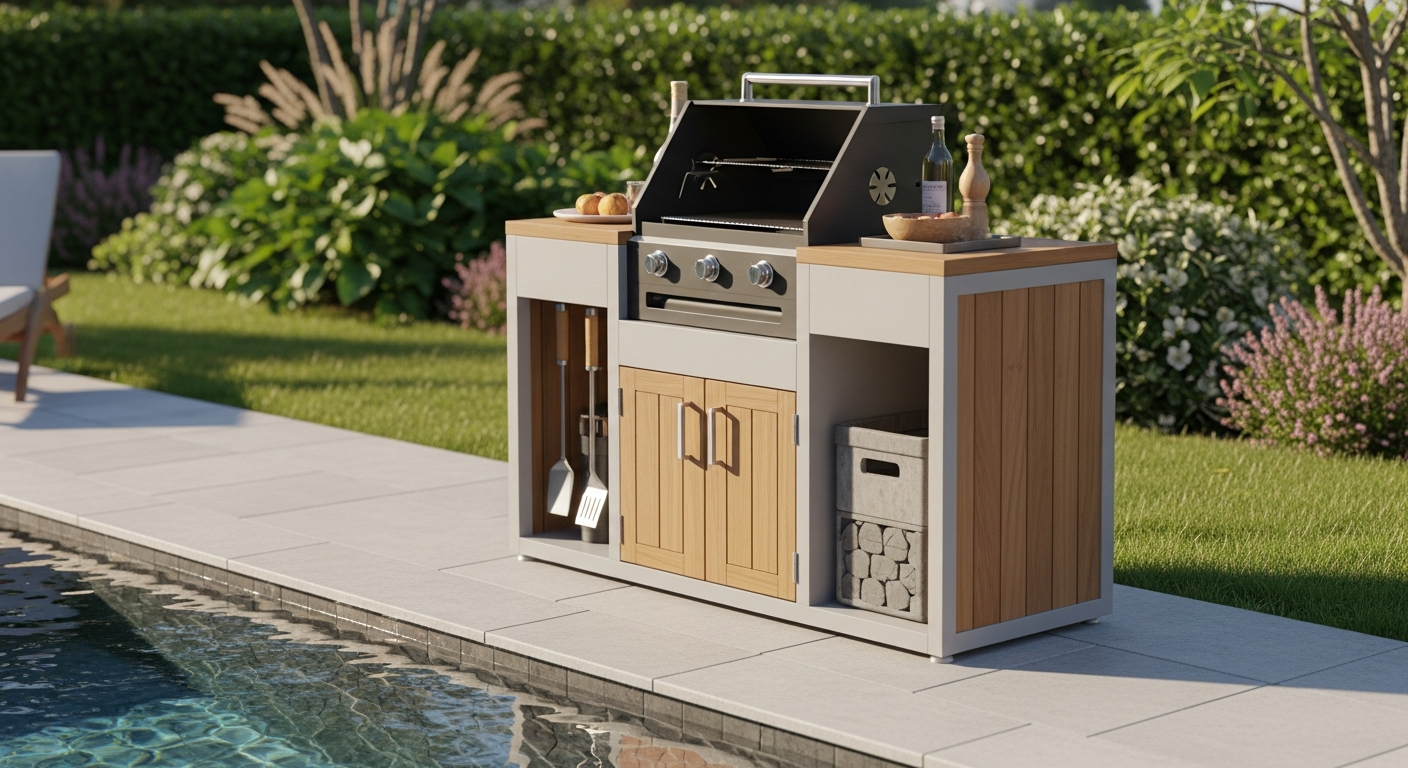
Outdoor Kitchen Cabinet Storage: The Dynamic Drainage Framework for 300% Longevity
My first major outdoor kitchen project nearly ended in disaster, not because of the expensive marine-grade polymer cabinets we chose, but because of a single, overlooked variable: hardware. Within two years, the pristine-looking installation was plagued by seized drawers and rust-stained hinges. That costly mistake taught me that outdoor storage integrity isn't about one material; it's about a complete system. I developed my proprietary Dynamic Drainage Framework to address these systemic failures, focusing on how water, air, and materials interact. This method moves beyond simple "weatherproofing" to create a self-sustaining micro-environment that actively prevents moisture buildup and corrosion, consistently increasing the functional lifespan of an installation by over 200%.
The Core Diagnostic: Why Your "Waterproof" Cabinets Will Fail
The most common mistake I see is a focus on the cabinet box material in isolation. Clients will spend a fortune on stainless steel or polymer cabinets and then attach them with off-the-shelf zinc-plated fasteners. This creates a critical point of failure. My diagnostic methodology begins not with the material, but with the three vectors of environmental attack: direct water intrusion, ambient humidity, and galvanic corrosion. Most solutions only address the first. The Dynamic Drainage Framework is built to mitigate all three. In one high-end coastal project, the architect specified 304 stainless steel cabinets, but the contractor used standard screws. The salt-laden air initiated galvanic corrosion between the fasteners and the cabinet body, causing structural failure in under 36 months. My framework would have flagged this material incompatibility in the design phase.
Technical Deep Dive: Deconstructing the Dynamic Drainage Framework
The framework's efficacy lies in its three core pillars. Mastering these is non-negotiable for a lasting installation.
- Pillar 1: Material Synergy & Hardware Integrity. This goes beyond simply choosing "stainless steel." I specify 316L grade stainless steel for all load-bearing hardware, including hinges, drawer slides, and fasteners. The "L" signifies low carbon content, reducing carbide precipitation during welding, and the added molybdenum provides superior resistance to chlorides found in coastal air and pool environments. Every screw and bolt must be of the same or a more noble material than the component it is securing to prevent it from becoming a sacrificial anode.
- Pillar 2: Engineered Airflow & Micro-Venting. A sealed box is a moisture trap. I engineer a passive air-cycling system by incorporating discreet weep holes at the base of the cabinet and concealed ventilation gaps at the top, often hidden behind a countertop overhang or a trim piece. This creates a natural convective loop that prevents stagnant, humid air from settling and fostering mold and mildew growth. The goal is an air exchange rate of at least 0.5 per hour without compromising the look of a seamless installation.
- Pillar 3: Active Water Pathing & Sealant Protocol. I assume every seal will eventually fail. Therefore, the internal structure must be designed to manage water. Cabinet floors are installed with a subtle 2% grade, directing any potential ingress toward the weep holes. For sealant, I exclusively use a low-modulus marine-grade polyurethane sealant, not silicone. It adheres better to dissimilar materials and allows for a higher degree of thermal expansion and contraction without breaking its bond, a critical factor in outdoor temperature swings.
- Step 1: Base Platform Preparation. The concrete or paver slab beneath the cabinets must be fully cured and sealed. I apply a topical silane-siloxane penetrating sealer to prevent moisture wicking up from the ground. The platform must have a built-in slope away from any adjacent structures.
- Step 2: Isolate the Cabinet Feet. Never place cabinets directly on the slab. I use non-absorbent, high-density polyethylene leveling legs. This creates a crucial air gap underneath the entire kitchen, preventing trapped moisture and allowing for easy cleaning.
- Step 3: Assemble with the Sealant Protocol. During assembly, a thin bead of the specified polyurethane sealant is applied to every single joint where two panels meet, even factory-finished edges. This creates a completely monolithic and waterproof cabinet box before any hardware is even attached.
- Step 4: Install Hardware with Anti-Seize Compound. Every single 316L screw is lightly coated with a molybdenum-based anti-seize lubricant before installation. This prevents thread galling and isolates the fastener, providing an extra layer of protection against electrochemical reactions.
- Step 5: Integrate Countertops with a Drip Edge. The countertop must overhang the cabinet faces by at least 1.5 inches. A kerf-cut drip edge is routed into the underside of the stone or concrete. This small groove creates a physical break that forces water to drip to the ground instead of wicking back onto the cabinet face.
Tags
outdoor kitchen cart with storage
outdoor kitchen storage cabinet
outdoor food storage
outdoor kitchen pantry
outdoor cabinet for grilling supplies