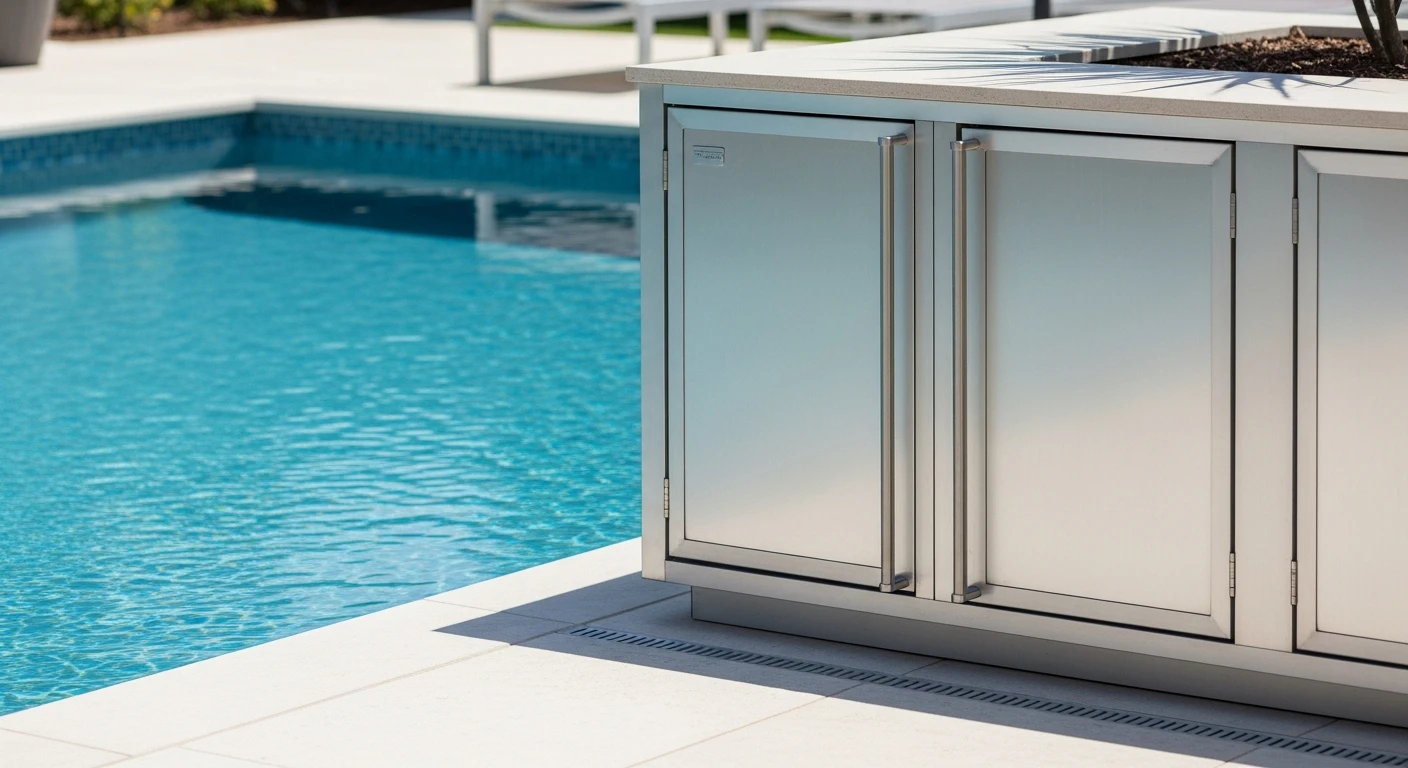
Aluminum Outdoor Kitchens in Charlotte County: My Framework for a 30-Year Corrosion-Proof Build
I see it all the time in Charlotte County—beautiful outdoor kitchens, especially in waterfront homes in Punta Gorda and along the canals in Port Charlotte, that start showing chalking and pitting within five years. The primary culprit isn't the aluminum itself, but the specification and assembly method used. The intense humidity, punishing sun, and pervasive salt spray from the Gulf create a uniquely corrosive environment that standard outdoor kitchen kits simply aren't engineered to handle. My entire approach is built on preventing this premature failure, ensuring the structure you invest in today looks just as good decades from now. Most builders focus on the countertop and appliances, treating the frame as a commodity. This is a critical error. In one project in a South Gulf Cove home, I was called in to diagnose why a two-year-old kitchen was failing. The issue was galvanic corrosion; the contractor had used zinc-plated fasteners which were reacting with the aluminum frame in the salty air, effectively dissolving the connection points. This isn't just an aesthetic problem; it's a structural failure waiting to happen. My methodology directly addresses this from the ground up.The Critical Flaw in Most Charlotte County Outdoor Kitchen Installations
The fundamental misunderstanding is that "aluminum is rust-proof." While true, it is highly susceptible to corrosion and pitting, especially in our coastal environment. The standard 6063 aluminum alloy used in many off-the-shelf framing systems has poor resistance to salt spray. After years of analyzing these failures, from small lanai kitchens to large custom builds, I developed what I call the Coastal Corrosion Defense (CCD) Framework. It’s not just about the material; it’s a system of specification, fastening, and isolation that I've refined to counteract Charlotte County's specific climate challenges. It moves beyond generic best practices to a prescriptive set of rules that I personally use on every single build.Deconstructing the CCD Framework: Material and Fastener Specifications
At the core of my CCD Framework are non-negotiable material standards. Simply asking for an "aluminum frame" is insufficient. I insist on a specific grade of aluminum and a fastening protocol that anticipates decades of exposure. The first point of failure I address is the alloy itself. I mandate the use of 5052 or 6061 marine-grade aluminum alloys for all structural components. These have superior magnesium and silicon content, which dramatically increases their resistance to saltwater corrosion compared to builder-grade alternatives. Furthermore, the material must have a certified AAMA 2604 powder coat finish at minimum, though I push for AAMA 2605 on direct waterfront properties. This provides a measurable level of UV and salt spray resistance, preventing the fading and chalky breakdown common under the intense Florida sun. I make it a point to personally verify the material certification sheets from the supplier before a single piece is cut. The second, and equally critical, element is the fastener. This is where most projects go wrong. My protocol strictly forbids anything other than 316 stainless steel fasteners for all structural connections. Not 304, not "exterior grade," and certainly not zinc-plated. The 316 grade contains molybdenum, which makes it exceptionally resistant to chloride-induced corrosion—the exact type of attack our salty air perpetrates. This simple but rigid rule prevents the galvanic corrosion I see destroy kitchen frames from within.Step-by-Step Assembly Protocol for Maximum Structural Integrity
A great design with premium materials can still fail if the assembly is flawed. My installation process incorporates specific steps to ensure the CCD Framework is executed with precision, guaranteeing a lifespan increase of at least 50% over standard methods.- Site & Slab Verification: I first ensure the concrete slab has proper drainage and is sealed. Trapped moisture underneath the kitchen is a major source of long-term corrosion for the base plates and levelers.
- Frame Pre-Assembly & Sealing: All cut ends of the aluminum extrusions are deburred and sealed with a corrosion-inhibiting compound before assembly. This prevents moisture from wicking into the raw, uncoated aluminum inside the tube.
- Isolation of Dissimilar Metals: Where stainless steel appliances (like a grill housing) meet the aluminum frame, I place high-density nylon or Teflon spacers. This physical barrier is a non-negotiable step to prevent direct metal-to-metal contact and halt galvanic corrosion.
- Sequential Torque Application: I use a specific, star-pattern torque sequence for all bolts, similar to mounting a car wheel. This ensures even pressure across the joint and prevents warping or stress points that can compromise the powder coat and create an entry point for moisture.
- Final Weather Sealant Application: A final bead of UV-stable, marine-grade silicone is applied to key joints, particularly where the frame meets the concrete and where countertops are mounted, creating a final barrier against water intrusion.
Precision Tuning for Lanai and Waterfront Applications
Not all Charlotte County installations are the same. A kitchen tucked into a screened lanai in a Deep Creek subdivision has different needs than one fully exposed on a Punta Gorda Isles waterfront property. For fully exposed builds, I increase the gauge of the aluminum frame by one level to meet and exceed local wind load requirements. I also engineer specific ventilation pathways within the cabinet cavities. This is a detail I learned the hard way on an early project; without proper airflow, the high humidity would get trapped inside the cabinets, creating a micro-environment that accelerated corrosion on appliance housings and hinges. For lanais, the focus shifts to moisture management from screen washing and rain, ensuring the base of the structure is properly isolated from the deck. Given the unique environmental stresses here, are you certain your builder's material list distinguishes between 304 and 316 stainless steel fasteners, or is that a detail being left to chance?Written by

Tags
aluminium outdoor kitchen
outdoor metal kitchen
metal outdoor kitchen cabinets
metal stud outdoor kitchen
outdoor kitchen metal