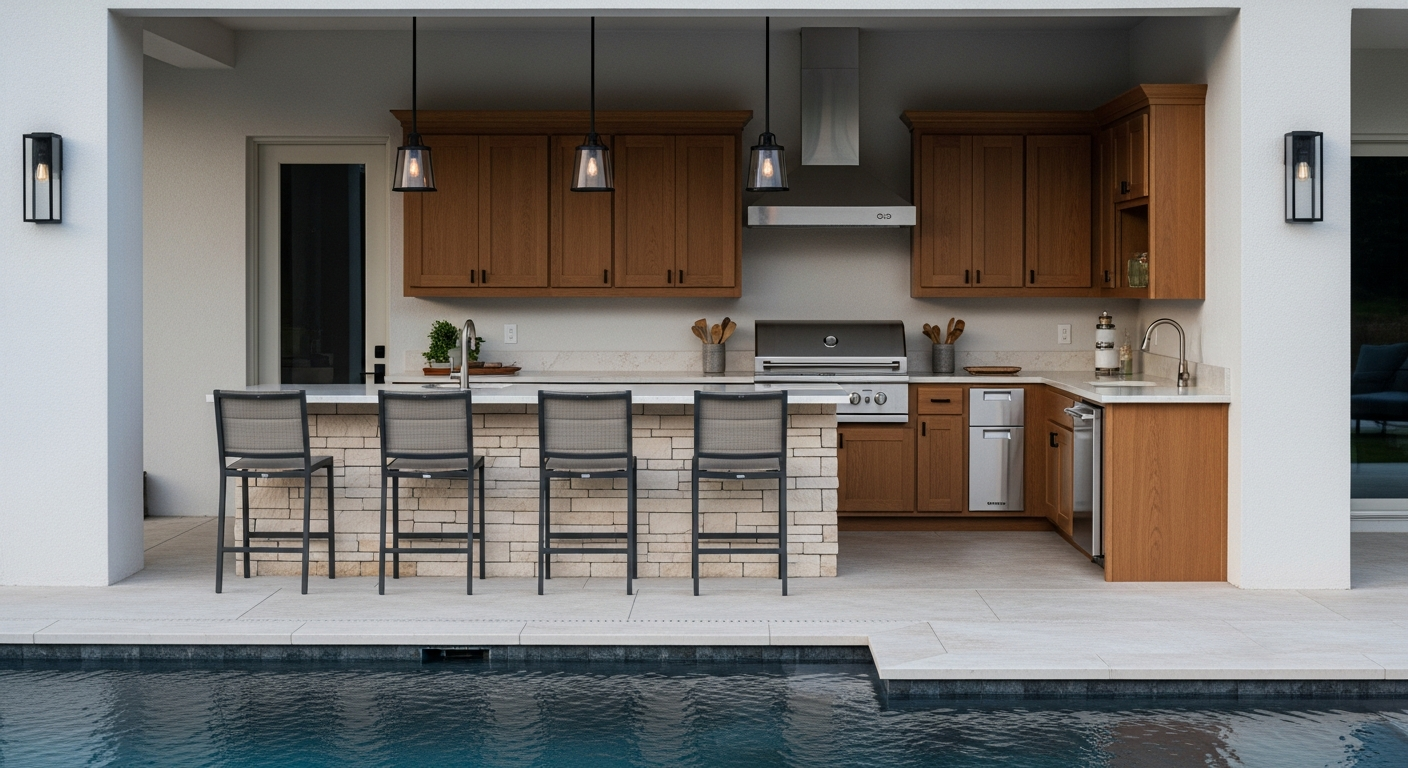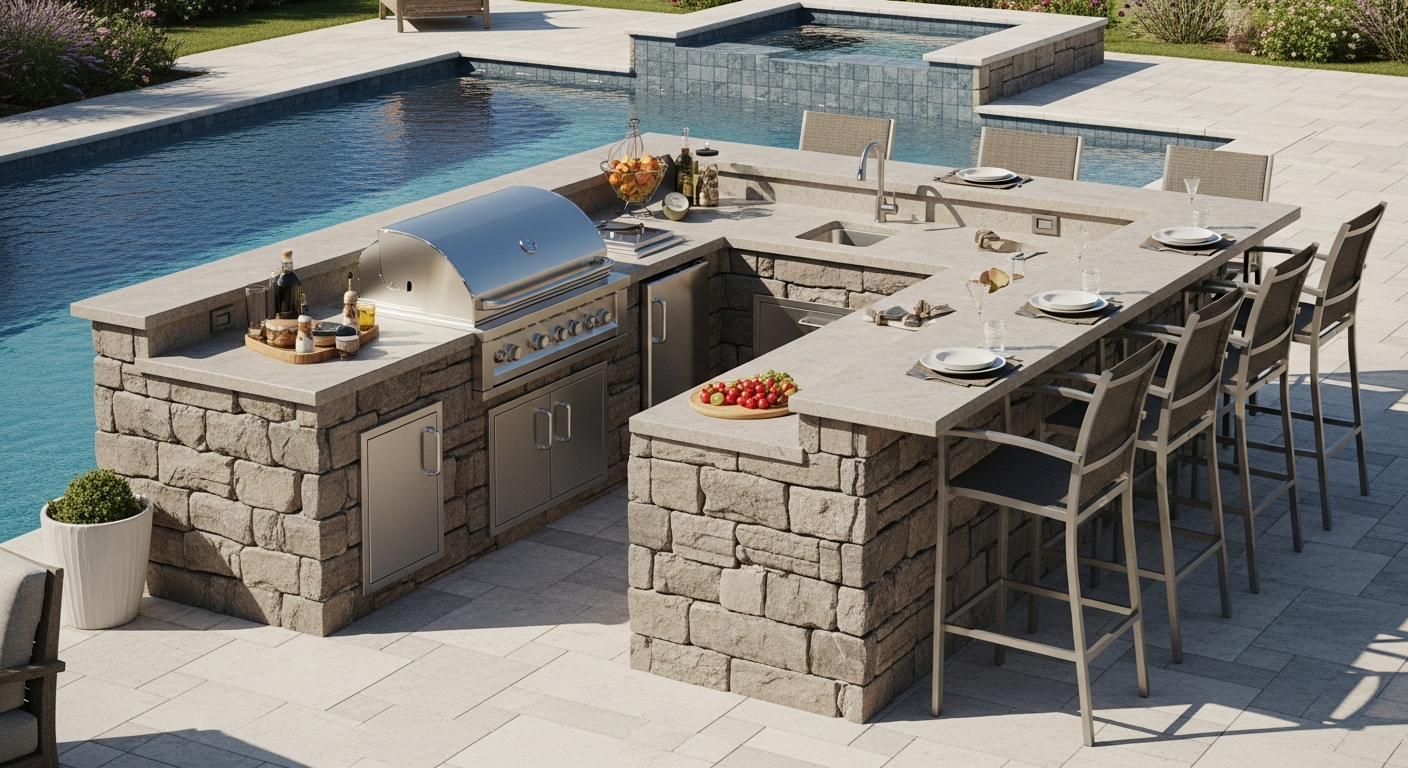
Outdoor Kitchen and Bar in Charlotte County: My Framework for a 30-Year Corrosion-Proof Build
After a decade designing and troubleshooting high-end outdoor living spaces, I can tell you the single biggest point of failure for projects in Charlotte County isn't the design or the appliances—it's material ignorance. I’ve seen beautiful, expensive outdoor kitchens in Punta Gorda Isles begin to show catastrophic rust and delamination in under five years, simply because the materials chosen were not specified for our unique coastal, high-humidity environment. The salty air drifting from Charlotte Harbor is relentless, and standard "outdoor-rated" products often don't stand a chance. My approach isn't about just picking materials; it's about a system I developed called the Coastal Durability Matrix. This framework moves beyond generic labels and forces a granular analysis of each component against specific local stressors: salt spray exposure, UV-index degradation, and hydrostatic pressure from our torrential summer rains. This is the difference between an outdoor bar that looks great for a season and one that becomes a permanent, valuable asset to your home, whether you're in a canal-front property in Port Charlotte or a larger estate inland.Diagnosing Premature Failure: My Coastal Durability Matrix Methodology
The core principle of my matrix is simple: materials are not equal, and their performance is dictated by their specific environment. A material that works perfectly in a dry climate will fail spectacularly here. I developed this methodology after a large-scale project in Englewood went south; the contractor used 304-grade stainless steel for all cabinets and grills, which is a common industry standard. Within two years, pitting and rust stains were rampant. That expensive lesson led to my three-pillar system for pre-emptive material specification. It forces a critical evaluation before a single dollar is spent on fabrication.Technical Deep Dive: The Three Pillars of Material Selection
My matrix assesses every component against three non-negotiable environmental resilience factors.- Pillar 1: Chloride Corrosion Resistance. This is the most critical factor for Charlotte County. I mandate the use of 316L grade stainless steel for all metallic components, from grill housings to cabinet pulls. The "L" signifies low carbon, and the key is its molybdenum content, which provides superior resistance to chlorides found in salt air. I flat-out reject any specifications that list the more common 304 stainless steel, as it lacks this crucial element and will inevitably fail.
- Pillar 2: UV & Moisture Impermeability. Many outdoor kitchens use natural stone like granite or wood for aesthetics. This is a fatal flaw in our climate. Granite is porous and will absorb moisture, leading to mildew growth. Wood warps and rots. My specification always calls for non-porous materials like Dekton for countertops and marine-grade high-density polyethylene (HDPE) for cabinetry. These materials are solid-color-through, UV-stable, and completely waterproof.
- Pillar 3: Integrated Ventilation & Drainage. An appliance in a tightly sealed enclosure will cook itself and trap moisture, accelerating corrosion by at least 50%. I design every appliance cabinet with a mandatory passive ventilation system, incorporating discreet, water-resistant vents at the top and bottom to create a natural airflow channel. Furthermore, every horizontal surface is engineered with a minimum 1/4-inch per foot drainage slope to prevent standing water during our heavy downpours.
Implementation: The Phased Build Protocol for Longevity
Executing a project that adheres to these standards requires a rigid, phased approach. Deviating from this sequence is how mistakes happen, and I've been called in to fix projects where steps were skipped to save time, only to cost the homeowner double in remediation.- Site & Utility Verification: Before any design is finalized, I perform a full audit of the lanai or proposed site. This involves mapping existing plumbing, electrical, and potential gas lines. We must confirm that any new electrical work includes dedicated circuits with GFCI (Ground Fault Circuit Interrupter) protection for all outlets—a non-negotiable safety standard for wet areas.
- Framing & Substrate Assembly: The structural skeleton of the kitchen must be as resilient as its exterior. I exclusively use welded 6061-T6 aluminum tubing for framing. Unlike steel, it will not rust; unlike wood, it will not rot or be consumed by termites. The substrate for countertops and cladding is always a cement board, never drywall or plywood.
- Appliance & Component Integration: All appliances are installed *after* the frame is complete. This is crucial. I ensure that every appliance is properly isolated from the aluminum frame with polymer washers and that all electrical connections are housed in NEMA 3R rated weatherproof enclosures.
- Cladding, Countertop, & Sealant Application: The final step is installing the HDPE cabinetry and Dekton countertops. The critical detail here is the sealant. I specify a polyurethane-based marine adhesive sealant, not common silicone, for all joints and gaps. This provides a flexible, waterproof bond that can withstand the thermal expansion and contraction caused by the intense Florida sun.
Precision Tuning & Hurricane-Ready Standards
Beyond the core build, I implement final adjustments for our specific regional challenges. If the outdoor kitchen includes any overhead structure, like a pergola over the bar, it must be engineered to meet local wind load requirements, with footers and fasteners designed to withstand hurricane-force gusts. Every cabinet door and drawer is fitted with heavy-duty magnetic catches to prevent them from flying open during a severe storm. These small details are what separate a standard installation from a truly resilient, Charlotte County-proof outdoor kitchen. Before you approve your outdoor kitchen design, are you asking the contractor to certify the specific grade and alloy composition of their proposed metals?Written by

Tags
grill island with bar
outdoor kitchen island with bar
outdoor kitchen bar island
outdoor bar islands
outdoor kitchen white