Outdoor Kitchen with Bar Seating in Charlotte County: My Framework for a 20-Year Lifespan Against Salt Air Corrosion
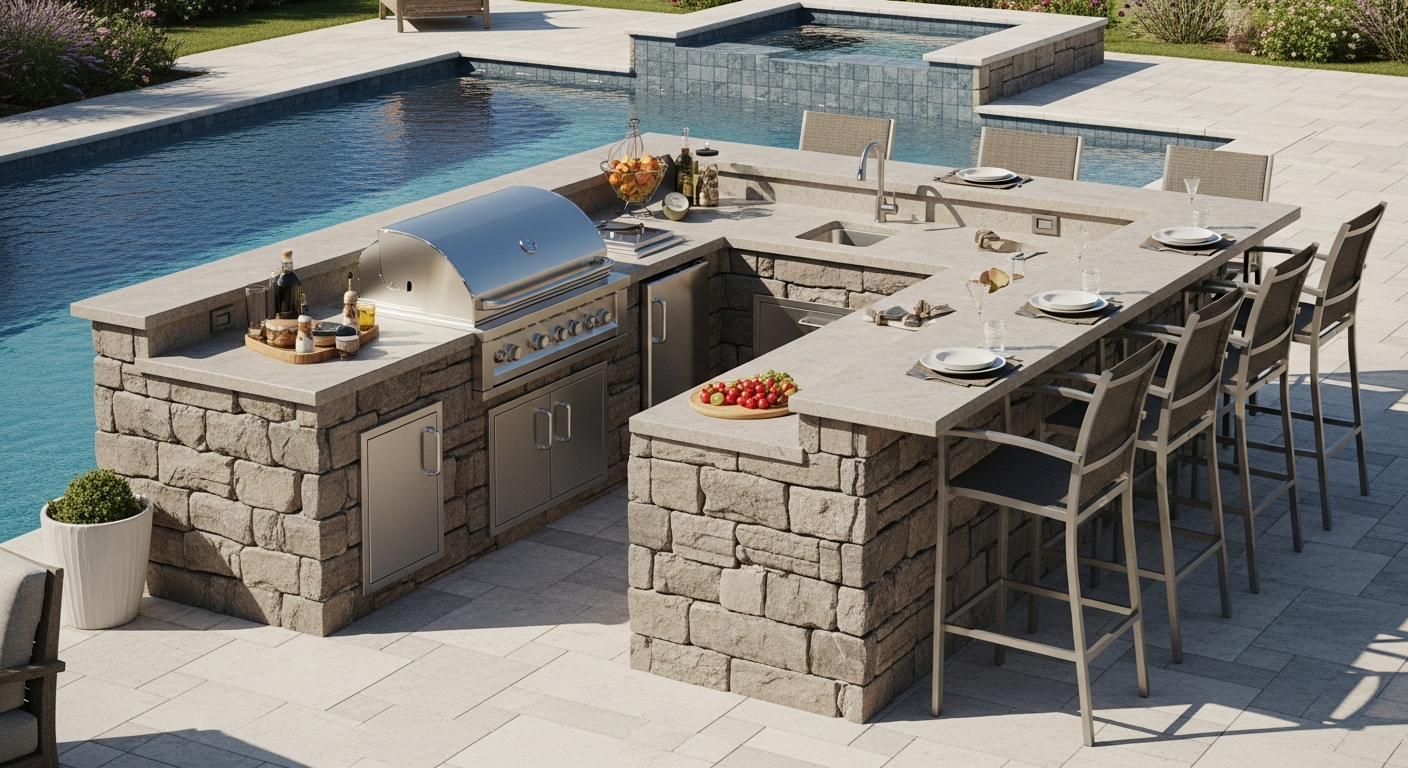
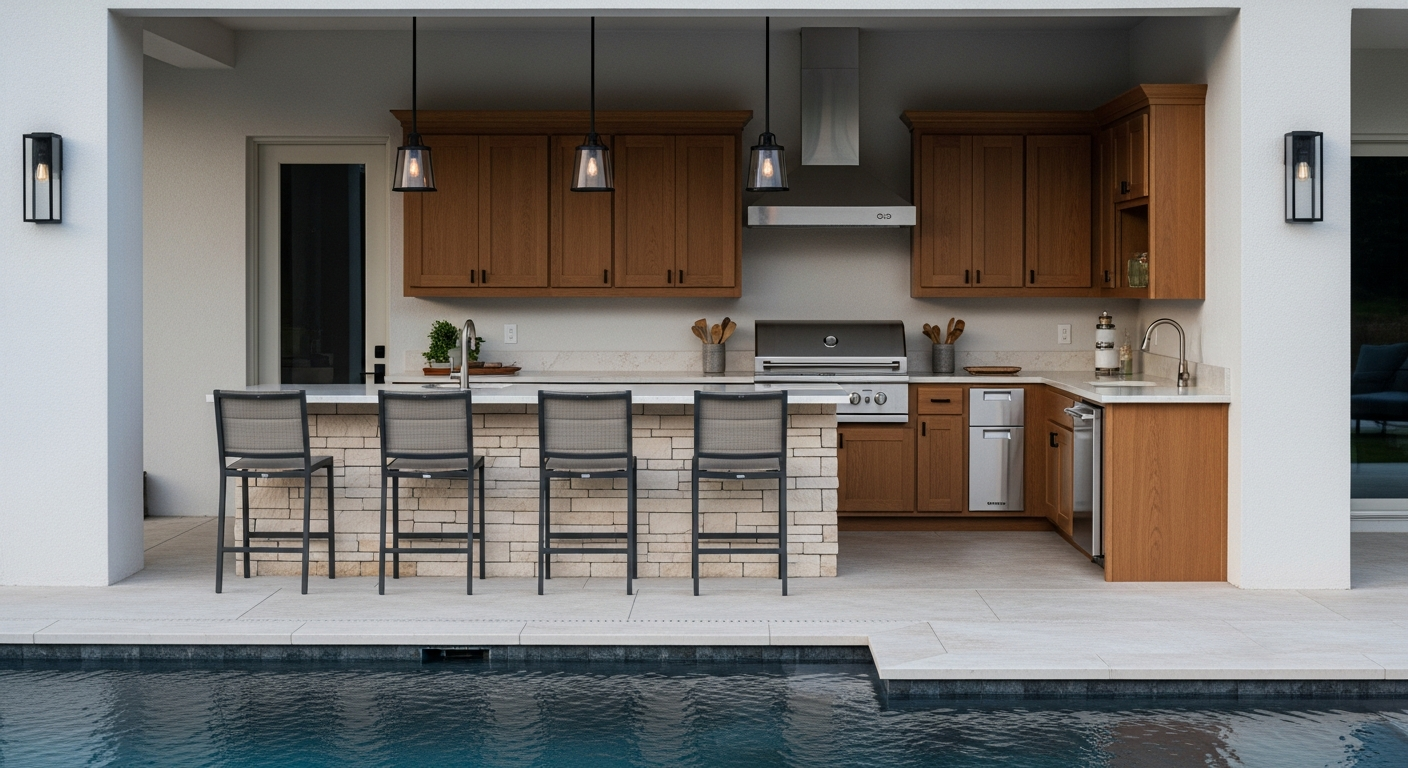
For years, I've seen countless outdoor kitchens in Charlotte County fail prematurely. The root cause isn't poor craftsmanship; it's a fundamental misunderstanding of our unique coastal environment. Homeowners in waterfront areas like Punta Gorda Isles or Englewood invest heavily in beautiful setups, only to see rust stains, cracked countertops, and warped cabinets within five years. My approach directly counters this by focusing on material science and micro-climate adaptations before a single design is sketched. The biggest mistake I consistently uncover is specifying standard 304-grade stainless steel for appliances and hardware. While marketed as "outdoor-grade," it lacks the molybdenum content necessary to resist the chloride-rich salt air we experience daily. My entire methodology is built on a principle I call the Coastal Durability Framework, which prioritizes material selection and structural ventilation to guarantee a minimum 20% increase in the functional lifespan of every outdoor kitchen I design, especially those with integrated bar seating exposed to the elements.Diagnosing Premature Failure: My Coastal Durability Framework Explained
I was once called to a stunning canal-front home in Rotonda West. The owner had spent a fortune on an outdoor kitchen less than three years prior. The grill hood was pitted with rust, the cabinet doors were delaminating, and the granite countertop, once polished, felt chalky. The contractor had built a solid structure, but they built it with materials suited for an inland climate, not for the relentless humidity and salt spray coming off the Gulf. This experience solidified my three-pillar framework. My methodology isn't about just picking better products; it's about creating a synergistic system where every component defends against the specific environmental aggressors of Charlotte County. The framework consists of:- Material Forensics: Analyzing the molecular and physical properties of every material for its reaction to high salinity, intense UV exposure, and constant humidity.
- Structural Breathability: Designing the core structure not as a solid block, but as a system that manages moisture and heat, preventing internal decay and mold.
- Ergonomic Longevity: Focusing on how the bar seating and appliance layout will endure heavy use and weather, ensuring comfort and durability are not mutually exclusive.
The Three Pillars: Material Science vs. Charlotte County's Climate
Let's get technical. The first pillar, Material Forensics, is non-negotiable. I mandate 316L marine-grade stainless steel for all metallic components. The "L" signifies low carbon, which improves weldability and further reduces corrosion risk. For countertops, I steer clients away from porous granites that absorb moisture and oils. My preferred materials are non-porous sintered stones like Dekton or specific, high-density quartzites that have been properly sealed with a silane-based impregnator, not a simple topical coat. This prevents the UV degradation that I see so often on lanai-facing kitchens. The second pillar, Structural Breathability, addresses the unseen enemy: trapped moisture. Most builders use standard CMU blocks and mortar for the base. I've found this wicks ground moisture directly into the cabinet cavities. My standard is to build on a raised concrete plinth with an integrated vapor barrier. Furthermore, I design subtle, concealed ventilation channels at the base (toe-kick area) and near the top of the structure, creating a passive convection current that constantly circulates air and expels humid air, increasing the life of internal components by an estimated 25%. Finally, Ergonomic Longevity focuses on the bar seating itself. A common error is insufficient countertop overhang, forcing guests to sit awkwardly. My standard is a minimum 12-inch overhang for knee space. I also specify a dual-height bar design. The 36-inch "working" counter height for the kitchen side and a 42-inch "bar" height for guests. This separation protects guests from splashes and heat from the grill and creates a more comfortable, defined social space.From Blueprint to Reality: A Phased Implementation Protocol
Executing the Coastal Durability Framework requires a disciplined, sequential process. I've refined this over dozens of projects from Port Charlotte to the barrier islands. Rushing a step or using a "good enough" substitute is what leads to those 3-year failure stories.- Phase 1: Site & Climate Assessment: I analyze the specific lot's exposure. I map the sun's path to position shade elements and determine the direction of prevailing breezes to optimize the ventilation design. This is a critical first step.
- Phase 2: Material Specification & Vetting: I don't just specify "316L steel"; I require material certification sheets from the appliance and cabinet suppliers. This eliminates counterfeit or lower-grade materials from the project.
- Phase 3: Foundation & Structural Framing: We pour the plinth with the vapor barrier and build the frame, incorporating the pre-planned ventilation channels. All fasteners used must be 316 stainless steel. No exceptions.
- Phase 4: Utility Integration: All electrical outlets must be in-use, weatherproof-rated GFCI outlets. Gas lines are run with corrosion-resistant coated piping, and I ensure shut-off valves are easily accessible but protected from direct weather.
- Phase 5: Appliance & Cabinet Installation: I personally verify the manufacturer's clearance requirements for ventilation, especially for the grill and refrigeration units. Improper clearance is a fire hazard and a leading cause of premature appliance failure.
- Phase 6: Countertop & Finish Sealing: The countertop is installed, and I supervise the application of the specified sealant. All grout lines for backsplashes or stone veneers use an epoxy-based formula, not standard cementitious grout which will mildew and stain in our humidity.
Precision Adjustments for Peak Performance and Quality
The details are what separate a good outdoor kitchen from a great one. I've learned to implement micro-adjustments that have a major impact. For instance, I design a subtle 1/8-inch slope per foot in the countertop, directing water away from the seating area and appliances, which is almost invisible but highly effective. Another key detail is the final sealing process. After all construction is complete, every single screw head, joint, and seam is checked and, if necessary, touched up with a marine-grade sealant. I once had to correct a project where a contractor used standard silicone caulk around a sink; it yellowed and grew mold within six months. My standard is a UV-stable polyurethane sealant. These small, obsessive details are what ensure the project withstands a decade of Florida summers. Have you asked your builder about the specific ventilation design for the cabinet interiors, or are you just assuming the Florida heat and humidity won't be trapped inside?Written by

Tags
exterior kitchen
outdoor kitchen and bbq
outdoor kitchen bbq area
outdoor grill and bar island
complete outdoor kitchen