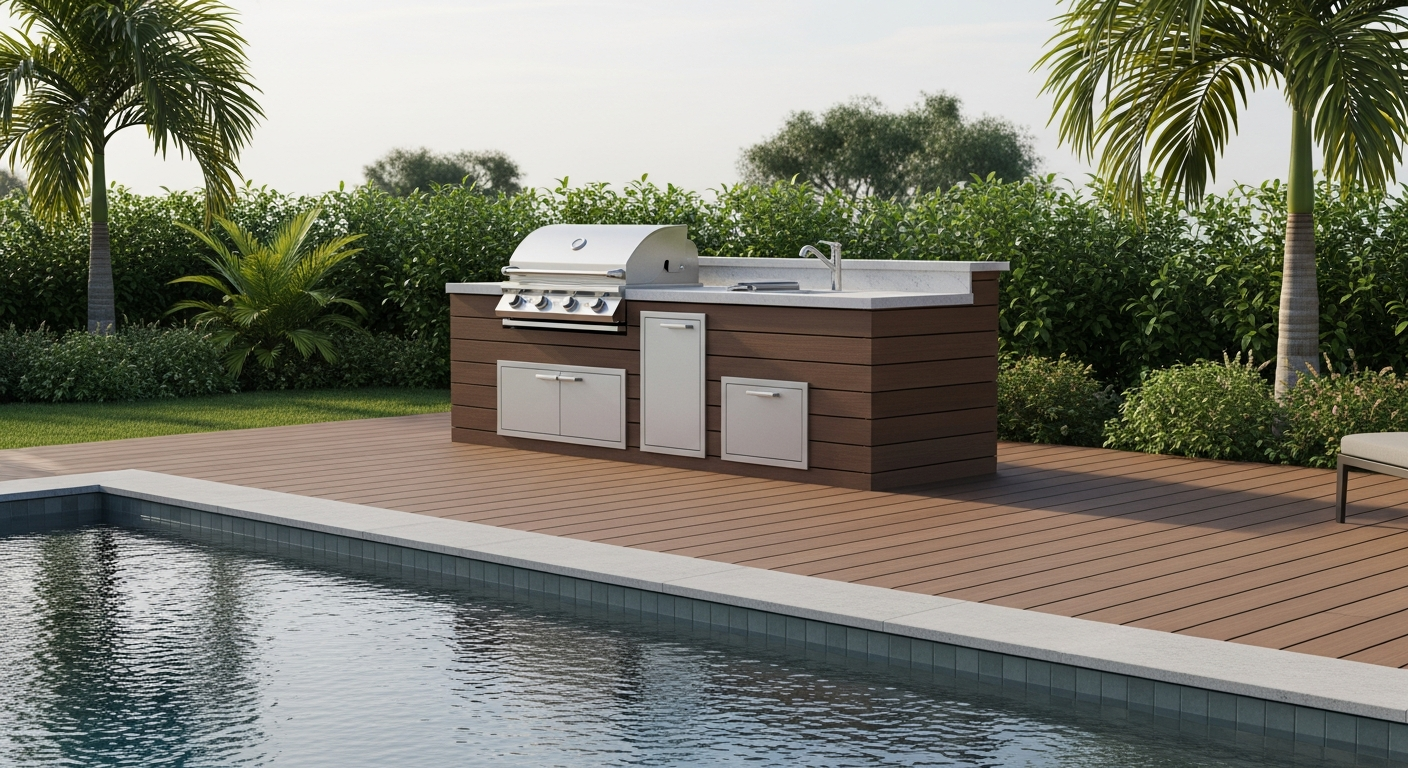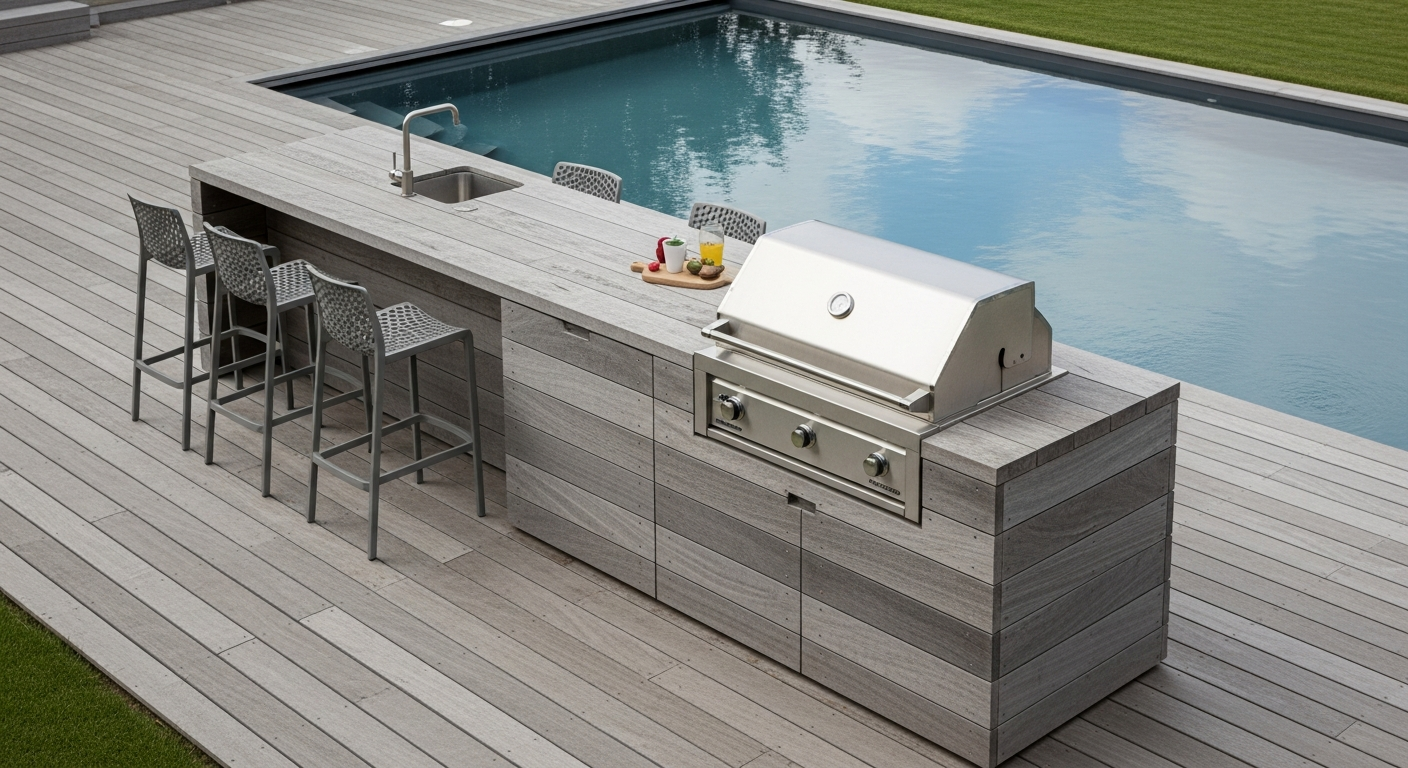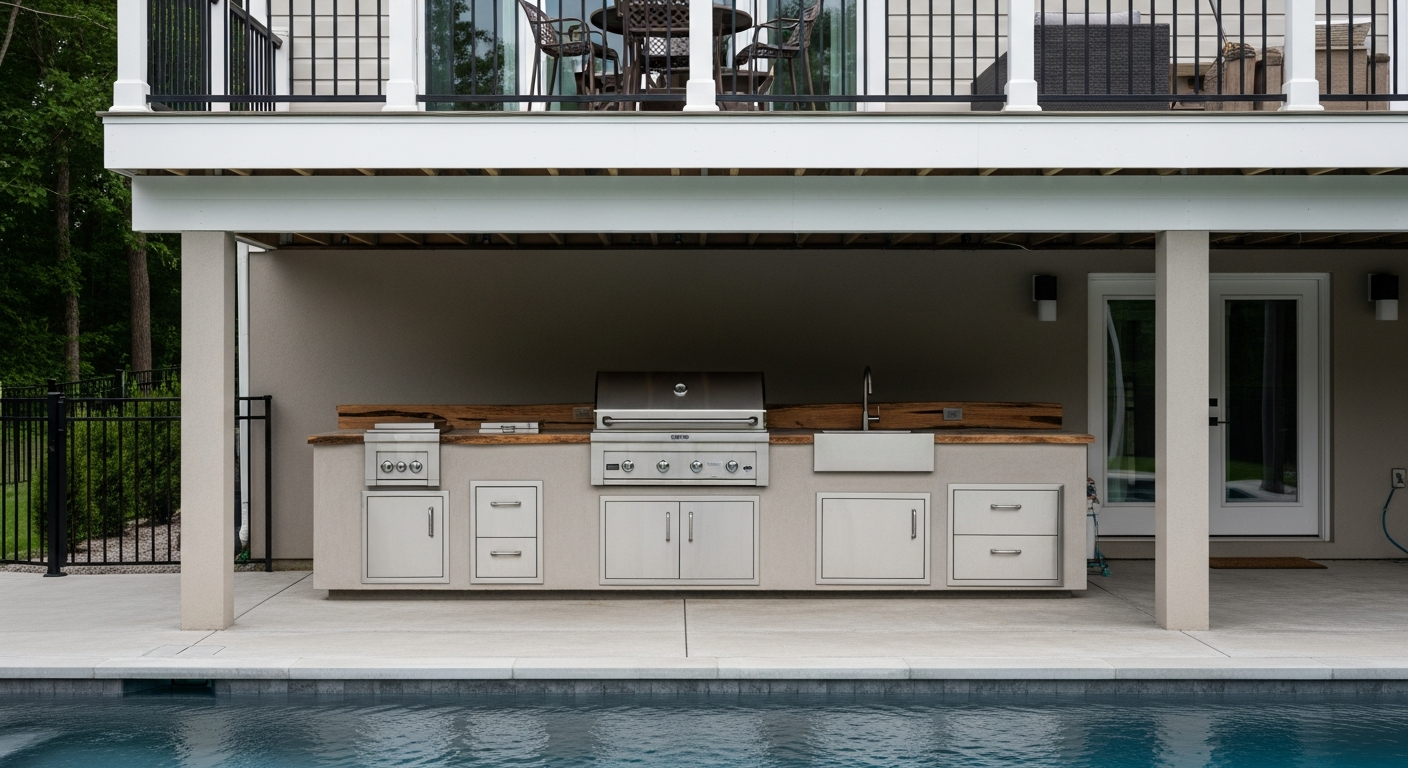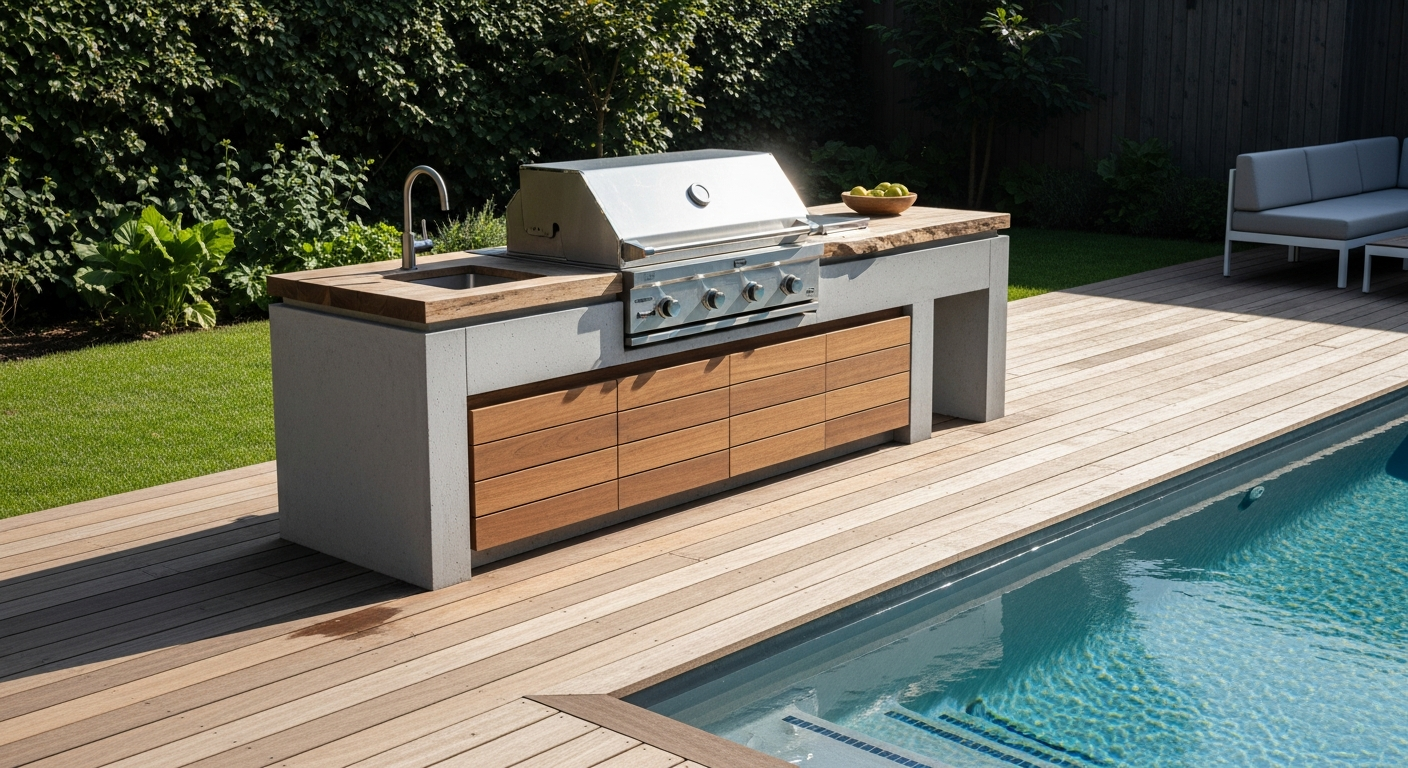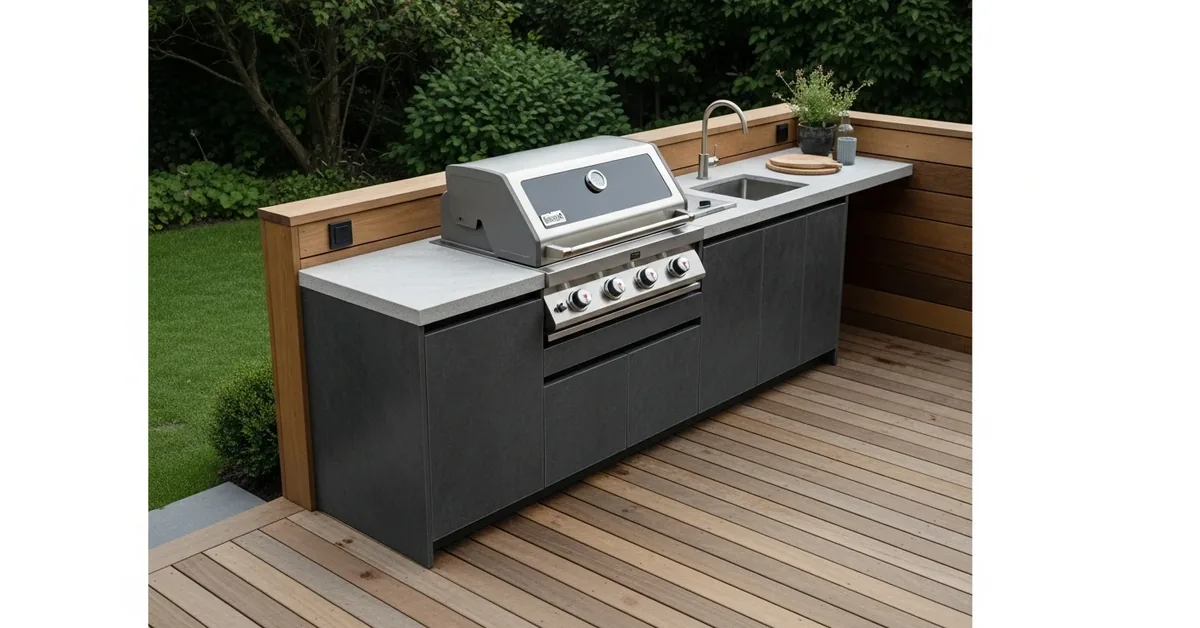
Outdoor Kitchen for Deck: My Pasco County Framework for 30-Year Structural Integrity
The single biggest point of failure I see in outdoor kitchen projects on decks across Pasco County isn't the grill or the countertop material; it's the deck itself. I’ve been called to consult on projects in deed-restricted communities in Trinity and on waterfront properties in New Port Richey where a beautiful, brand-new outdoor kitchen has caused the deck to sag, sometimes by as much as two inches. A standard residential deck is almost never built to handle the **dead load** of a granite slab, concrete-board framing, and heavy appliances, which can easily exceed 2,000 pounds. My entire approach is built on a "structure-first" principle, specifically engineered for the unique environmental stresses of Pasco County. This involves a deep analysis of the existing deck's joist spacing, footing depth, and material composition before a single cabinet is even designed. This preemptive structural audit is what separates a kitchen that lasts three decades from one that requires costly repairs within three years, especially with our high humidity and seasonal torrential rains.The Deck Load-Bearing Fallacy: My Proprietary Structural Assessment
Most builders will simply look at a deck and say, "It looks sturdy." That's not an engineering assessment; it's a guess. My methodology is a quantitative analysis. The first thing I do on-site, whether it’s a newer build in Wesley Chapel or an older home in Holiday, is to assess the deck's maximum load capacity. A typical deck is designed for a **live load** of about 40 pounds per square foot (PSF). An outdoor kitchen can impose a **dead load** of 150 PSF or more in a concentrated area. The math simply doesn't work without reinforcement. My proprietary assessment consists of three critical checks:- Joist & Beam Span Analysis: I measure the distance between supports and the size of the lumber (e.g., 2x8s vs. 2x10s). For the weight of an outdoor kitchen, I often find that joists need to be sistered (doubled up) or that an intermediate beam with new footings is required directly under the planned kitchen footprint.
- Footing Verification: I inspect the existing concrete footings. In Pasco's sandy soil, undersized or shallow footings are a common shortcut. A proper footing for this application must go below the frost line (less of an issue here) and be wide enough to distribute the concentrated load without sinking over time.
- Material Compatibility Matrix: I evaluate how the proposed kitchen materials will interact with the existing deck, especially considering the salt air near the coast. Using the wrong fasteners, for instance, can lead to galvanic corrosion and premature failure.
Material Science for Pasco’s Climate: Beyond Stainless Steel
Everyone recommends stainless steel, but in coastal Pasco County, that's dangerously vague advice. I identified a major project near Hudson where rust streaks began appearing on a brand-new kitchen within six months. The problem? They used 304-grade stainless steel, which is fine for inland areas. For any location within a few miles of the Gulf, I mandate the use of 316-grade (marine-grade) stainless steel for all appliances, doors, and fasteners. It has a higher molybdenum content, offering vastly superior corrosion resistance to the salt in the air. For cabinetry, I steer clients away from wood, which inevitably warps in our relentless humidity. My preferred material is High-Density Polyethylene (HDPE), a polymer that is 100% waterproof, won't delaminate, and is easy to clean. For countertops, I advise against porous granites that can harbor mold. A better choice is a sintered stone like Dekton or a non-porous quartzite, which can withstand the intense Florida sun without fading and resist mildew growth.From Footings to First Sear: My Non-Negotiable Build Sequence
Executing the build in the correct order is critical to avoid rework and ensure safety. I have a strict, non-negotiable sequence that I've refined over dozens of Pasco County projects. This process ensures that structural, electrical, and plumbing elements are perfectly integrated.- Execute All Structural Reinforcements: Before anything else, the deck's foundation is fortified. This means installing new concrete footings and support posts, or sistering existing joists directly beneath the kitchen's footprint. This is the most important step.
- Run Utility Rough-ins: All electrical conduit, water lines, and natural gas or propane lines are run under the deck. A critical detail for Pasco County code is that all outdoor electrical outlets must be GFCI protected and housed in weatherproof "in-use" covers.
- Install the Cabinet Framing & Leveling: The kitchen's frame is built and meticulously leveled. We secure it directly to the reinforced section of the deck's frame, not just the deck boards.
- Template and Install Countertops: A professional template is made only *after* the cabinets are permanently fixed. This guarantees a perfect fit. The countertop is then installed and sealed.
- Set Appliances and Final Connections: The grill, refrigerator, and any other components are installed. All utility connections are finalized and leak-tested. This is the final step before the client can use their kitchen.
The Post-Installation Audit: Preventing 90% of Common Failures
My job isn't done when the last appliance is installed. I perform a post-installation audit to catch the small issues that become big problems. This is my final quality control check.- Water Management Check: I ensure all surfaces are properly caulked with a high-grade, UV-resistant silicone. The countertop should have a microscopic slope away from the wall to prevent water from pooling against the house during our heavy summer downpours.
- Ventilation Clearance Verification: I measure the clearance between the grill and any combustible materials. Improper ventilation is a major fire hazard that I see overlooked in DIY projects. A minimum of 18-24 inches is often required.
- Fastener Integrity Review: I do a final check to confirm that every single screw, nut, and bolt exposed to the elements is the correct grade of stainless steel to prevent rust streaks from staining the deck and patio.
Written by

Tags
outdoor kitchen on deck
decks and outdoor kitchens
outdoor kitchen and deck
deck kitchen ideas
outdoor kitchen on deck ideas
Outdoor Kitchen for Deck in Pasco FL FAQ
Can my existing deck actually support the weight of a full outdoor kitchen?
Most standard decks are not built to support the concentrated weight of an outdoor kitchen with stone counters and heavy appliances. Your deck's structure must be assessed for its load-bearing capacity, which is typically measured in pounds per square foot (PSF). A standard deck is often rated for 40-50 PSF, while a kitchen area may impose loads exceeding 100 PSF. Before any installation, a structural engineer or qualified builder must inspect the joist size, spacing, and footing depth. Often, this requires adding support posts and reinforcing the frame directly beneath the planned kitchen footprint to prevent a catastrophic collapse.
What are the fire safety requirements for putting a grill on a wooden deck?
You must use a non-combustible base under the grill and ensure adequate clearance from flammable materials. The grill must be placed on an insulating pad or a structure made of steel studs and cement board, never directly on the wood decking. National fire codes often require a minimum clearance of 36 inches from the grill to any combustible siding or deck railings. A critical but often overlooked detail is the ventilation hood; if placed under a roof or pergola, it must be rated for outdoor use and positioned correctly to prevent heat and grease buildup, which is a significant fire hazard.
How do I run gas, water, and electricity to a kitchen on an elevated deck?
Utilities must be run by licensed professionals and protected from weather, pests, and physical damage. Gas lines, typically rigid black iron pipe, must be properly supported and have a dedicated shut-off valve on the deck. All electrical wiring must be run through outdoor-rated conduit, and outlets must be GFCI-protected (Ground Fault Circuit Interrupter) to prevent shock in wet conditions. Water lines require freeze protection, often involving heat trace cables and insulation, especially in climates with harsh winters. Simply running a garden hose or extension cord creates serious, long-term safety risks.
What materials are best for outdoor kitchen cabinets and countertops on a deck?
Choose materials specifically engineered for full weather exposure, as standard indoor options will fail within a year or two. For cabinets, marine-grade polymers (HDPE) or stainless steel offer the best durability against moisture and temperature swings. For countertops, sintered stone or granite are superior choices over more porous materials like concrete or tile, which can crack from freeze-thaw cycles. A common mistake is using a beautiful but soft wood like cedar for countertops; it will inevitably rot and stain without constant, high-maintenance sealing, making it impractical for a true food-prep surface.
Do I need a permit to build an outdoor kitchen on my deck?
Yes, a permit is almost always required because the project involves structural modifications and utility connections. Your local building department will require plans detailing the deck reinforcement, the location of the kitchen, and schematics for the electrical, plumbing, and gas lines. Building without a permit can lead to significant fines, orders to dismantle the entire structure, and may void your homeowner's insurance policy, especially if a fire or structural failure occurs. The permit process ensures the project complies with safety codes from the start.
How can I prevent water damage to my deck's structure from a sink and refrigerator?
Proper drainage and waterproofing beneath the kitchen area are essential to protect the deck's wooden frame. Install a dedicated drainage system for the sink that ties directly into your home's wastewater lines, not one that simply drains onto or under the deck. For appliances like refrigerators and ice makers, place them on a heavy-duty drip pan connected to a drain line. Most importantly, install a waterproofing membrane over the joists in the kitchen area before the decking boards are laid to prevent slow leaks and spills from causing wood rot in the structural frame below.