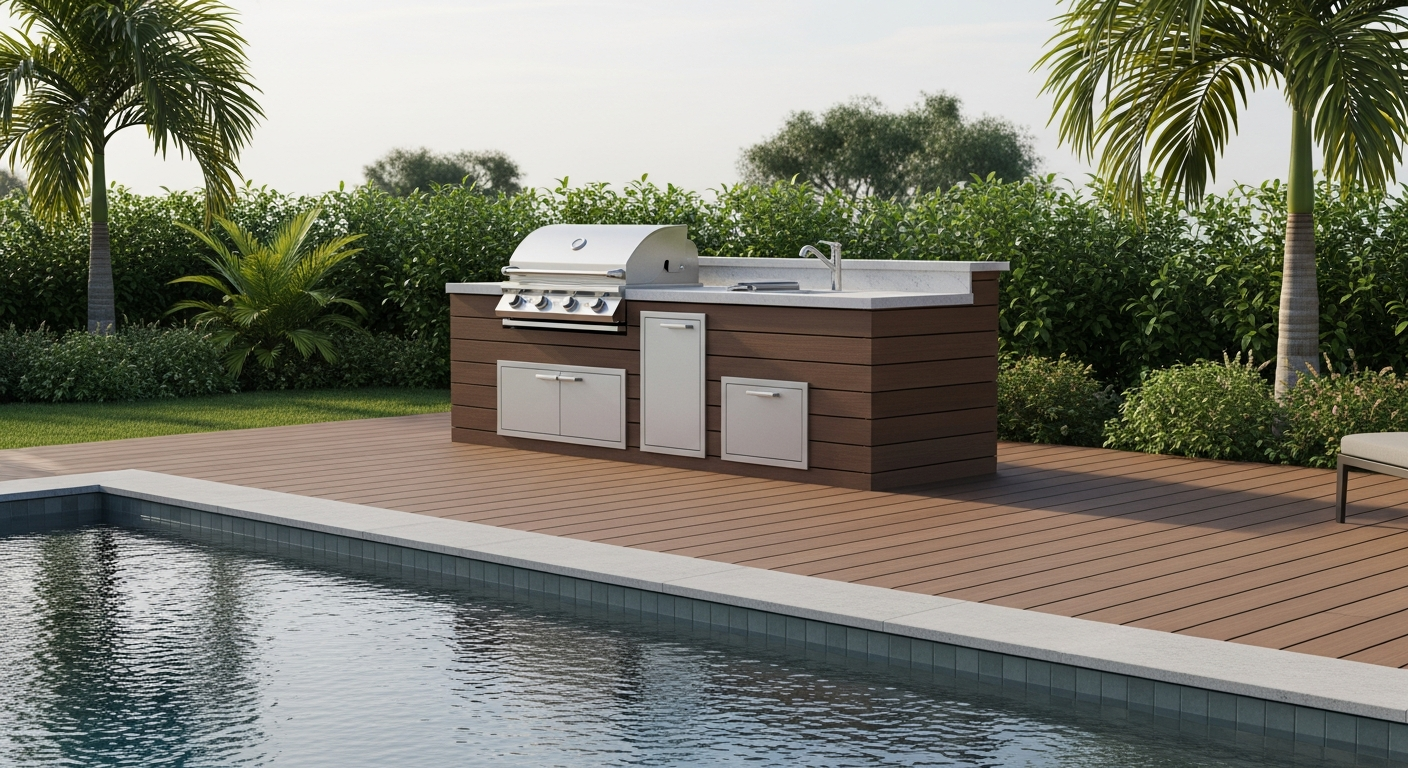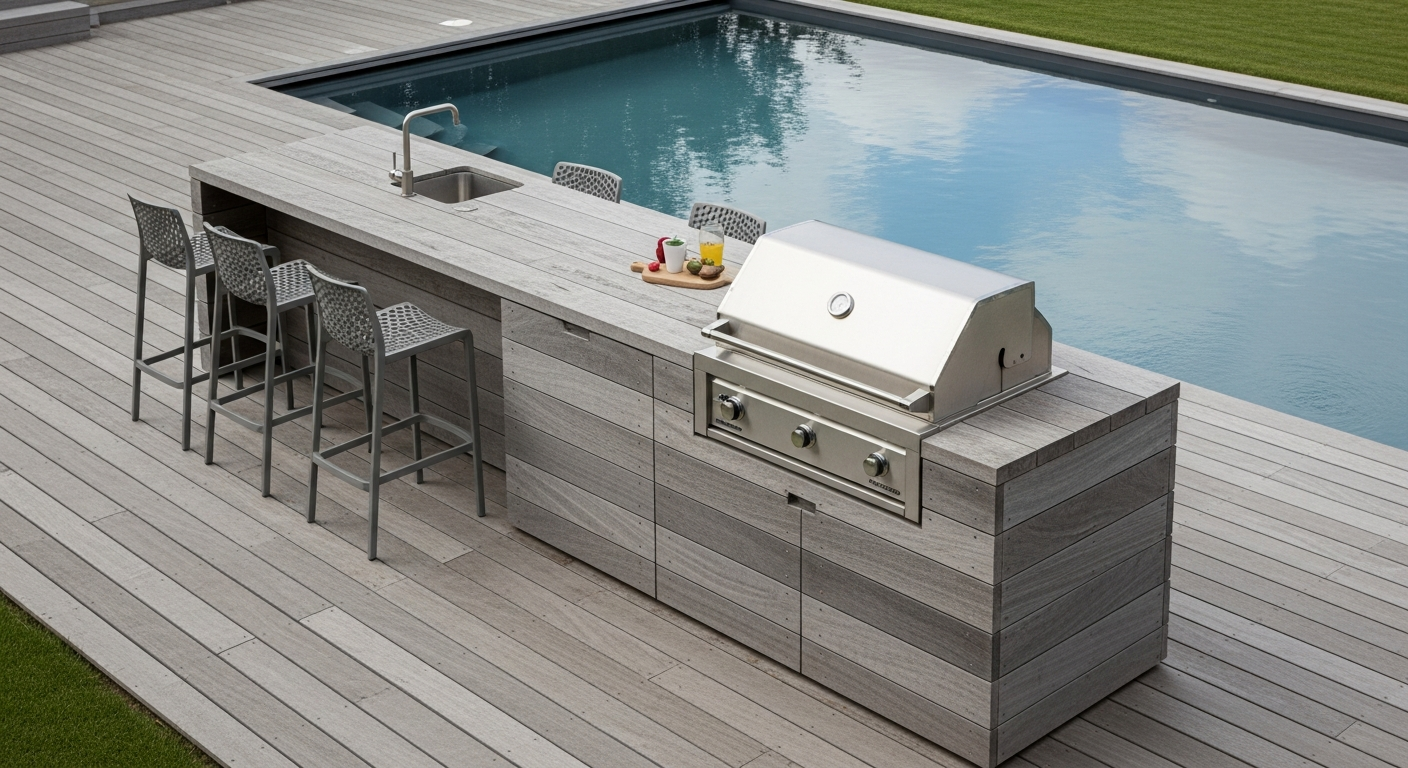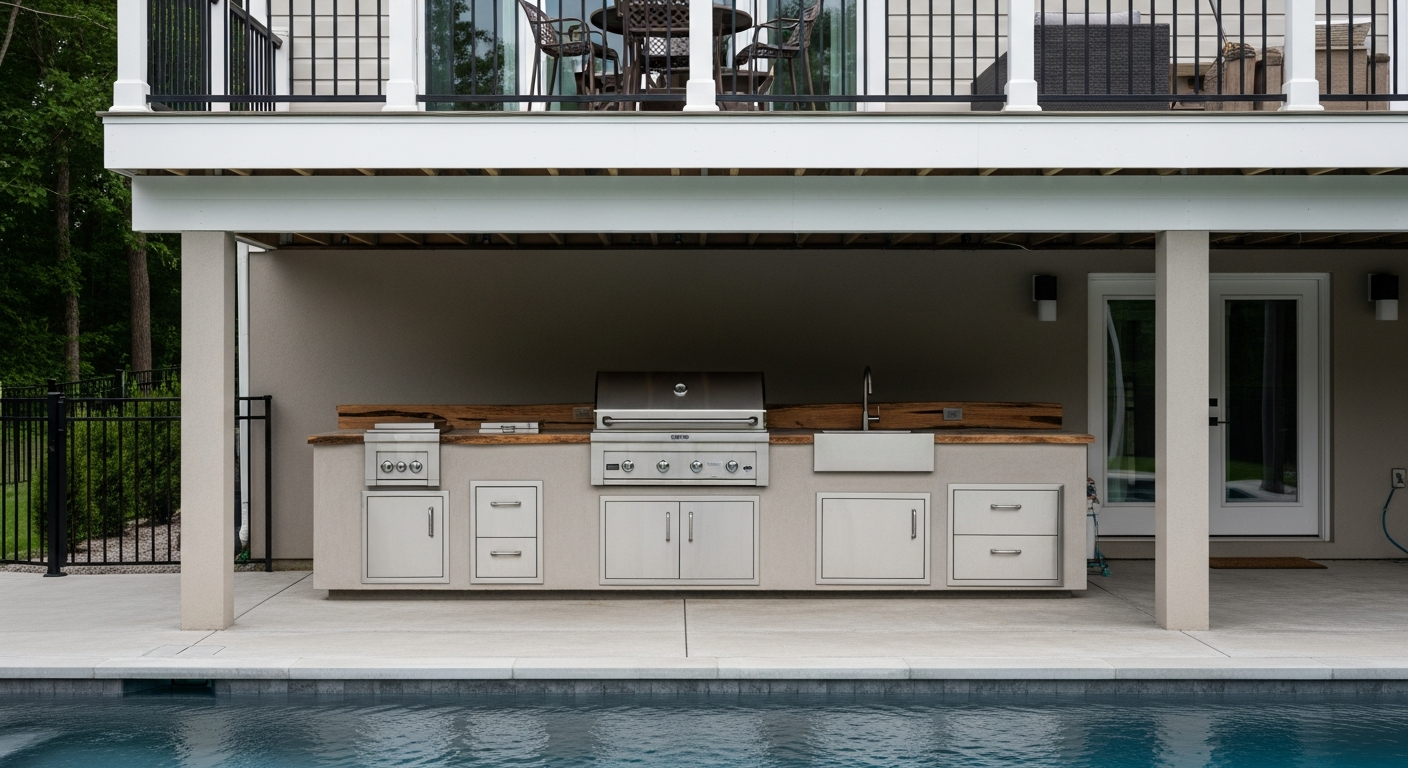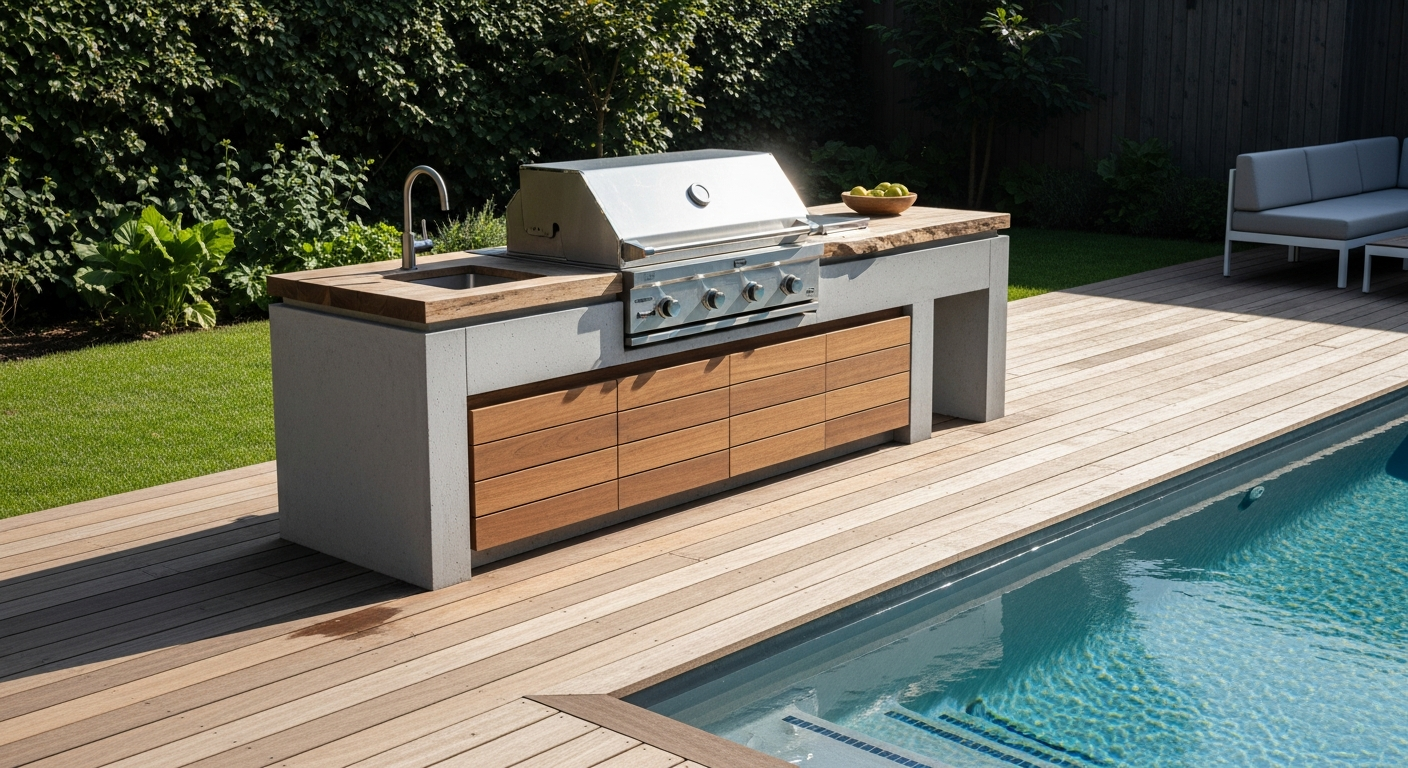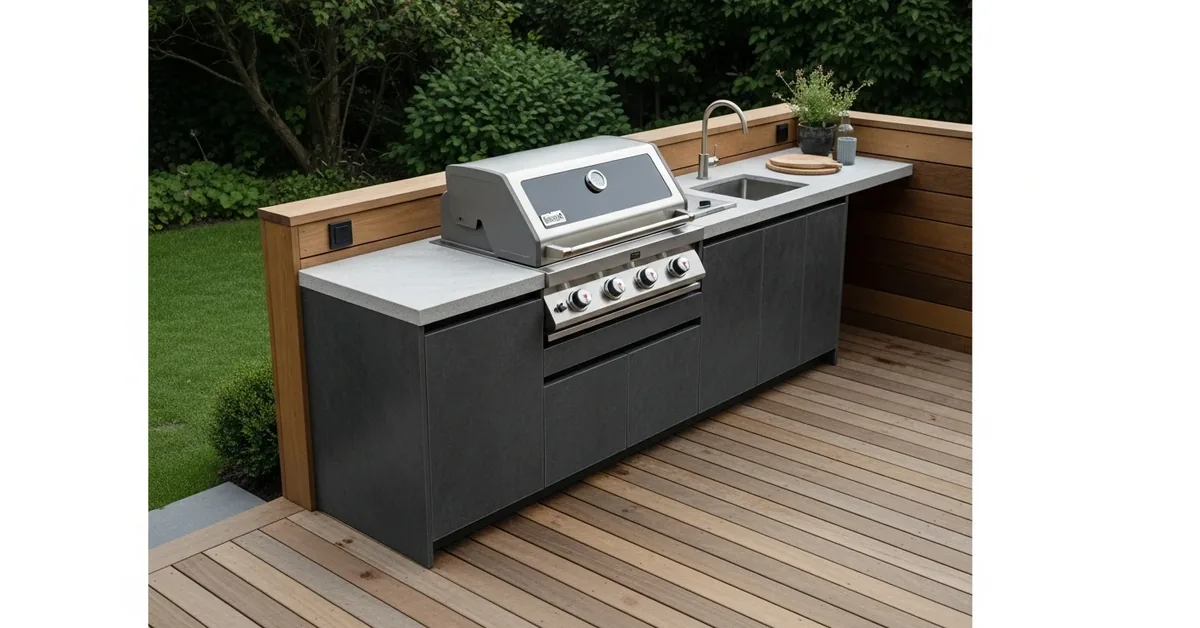
Outdoor Kitchen for Deck: My Framework for Preventing Structural Failure and 30% Material Degradation
The most critical failure point I've seen in outdoor kitchen projects isn't the grill or the countertop finish; it's the deck underneath. I was once called in to consult on a project where a beautiful, brand-new outdoor kitchen caused a 1.5-inch sag in the deck structure within six months. The original builder completely ignored the principles of dead load versus live load, treating the deck as a simple concrete slab. This costly oversight is entirely avoidable.
My entire methodology is built around a single principle: the outdoor kitchen must be engineered as an integrated component of the deck's support system, not just an object placed on top of it. This approach involves a precise diagnostic phase and a material selection process that prioritizes the strength-to-weight ratio, directly preventing structural overload and premature material decay from moisture trapping and point-load stress.
My Diagnostic Framework for Deck Load Capacity
Before a single cabinet is designed, I perform a structural audit. Most builders just check if the deck feels "solid." This is dangerously subjective. My process is data-driven, focusing on the substructure's ability to handle a concentrated, static load far heavier than typical foot traffic. I once identified a deck with perfectly spaced joists that was still unfit for a kitchen because the central support beam was undersized for the proposed island's location. The client's initial plan would have led to guaranteed failure.
My proprietary audit focuses on three non-negotiable metrics: joist spacing and condition, beam span calculations, and the integrity of the ledger board connection to the primary structure. A weakness in any one of these areas disqualifies a standard installation and requires a custom reinforcement plan.
Advanced Material Science for Deck-Based Kitchens
Material selection is where you gain a massive advantage in safety and longevity. It's a game of ounces and pounds. The default choice for many is a standard wood frame with a heavy granite countertop—a combination that puts maximum stress on the deck. I've found this approach can reduce the lifespan of the underlying deck frame by up to 25% due to sustained, unmitigated load.
My material specification is different. For framing, I exclusively use welded 6061-T6 aluminum tube frames. They offer a superior strength-to-weight ratio compared to steel and are immune to the rot and insect damage that plagues wood frames, especially in the moisture-prone environment under a cabinet. For countertops, I steer clients away from 3cm granite and toward lighter, more durable options like sintered stone or other ultra-compact surfaces. These materials provide the same aesthetic and performance at nearly half the weight per square foot, dramatically reducing the overall dead load on the deck joists.
Step-by-Step Implementation: The Load Distribution Protocol
Once the diagnostics are complete and materials are selected, the installation follows a strict protocol designed to distribute weight intelligently across the deck's strongest points. Placing the kitchen arbitrarily is a recipe for disaster.
- Map the Substructure: The first action is to precisely locate and mark every joist and beam beneath the deck boards where the kitchen will sit.
- Align with Load-Bearing Points: I design the kitchen's frame so that the heaviest components (grills, refrigerators, sinks) are positioned directly over joists, or better yet, at intersections where joists cross over a primary support beam. Never place a heavy appliance mid-span between joists.
- Install Strategic Reinforcements: In areas where alignment isn't perfect, we install deck blocking. These are short pieces of lumber fitted perpendicularly between joists, which prevents them from twisting and helps transfer the load to adjacent joists.
- Isolate the Frame: The aluminum kitchen frame never sits directly on the deck boards. We use high-density composite shims to create a small air gap. This critical step prevents moisture from getting trapped between the frame and the deck, which is a primary cause of rot and material degradation.
Tags
outdoor kitchen on deck
decks and outdoor kitchens
outdoor kitchen and deck
deck kitchen ideas
outdoor kitchen on deck ideas
Outdoor Kitchen for Deck FAQ
Can my existing deck actually support the weight of a full outdoor kitchen?
Most standard decks are not built to support the concentrated weight of an outdoor kitchen with stone counters and heavy appliances. Your deck's structure must be assessed for its load-bearing capacity, which is typically measured in pounds per square foot (PSF). A standard deck is often rated for 40-50 PSF, while a kitchen area may impose loads exceeding 100 PSF. Before any installation, a structural engineer or qualified builder must inspect the joist size, spacing, and footing depth. Often, this requires adding support posts and reinforcing the frame directly beneath the planned kitchen footprint to prevent a catastrophic collapse.
What are the fire safety requirements for putting a grill on a wooden deck?
You must use a non-combustible base under the grill and ensure adequate clearance from flammable materials. The grill must be placed on an insulating pad or a structure made of steel studs and cement board, never directly on the wood decking. National fire codes often require a minimum clearance of 36 inches from the grill to any combustible siding or deck railings. A critical but often overlooked detail is the ventilation hood; if placed under a roof or pergola, it must be rated for outdoor use and positioned correctly to prevent heat and grease buildup, which is a significant fire hazard.
How do I run gas, water, and electricity to a kitchen on an elevated deck?
Utilities must be run by licensed professionals and protected from weather, pests, and physical damage. Gas lines, typically rigid black iron pipe, must be properly supported and have a dedicated shut-off valve on the deck. All electrical wiring must be run through outdoor-rated conduit, and outlets must be GFCI-protected (Ground Fault Circuit Interrupter) to prevent shock in wet conditions. Water lines require freeze protection, often involving heat trace cables and insulation, especially in climates with harsh winters. Simply running a garden hose or extension cord creates serious, long-term safety risks.
What materials are best for outdoor kitchen cabinets and countertops on a deck?
Choose materials specifically engineered for full weather exposure, as standard indoor options will fail within a year or two. For cabinets, marine-grade polymers (HDPE) or stainless steel offer the best durability against moisture and temperature swings. For countertops, sintered stone or granite are superior choices over more porous materials like concrete or tile, which can crack from freeze-thaw cycles. A common mistake is using a beautiful but soft wood like cedar for countertops; it will inevitably rot and stain without constant, high-maintenance sealing, making it impractical for a true food-prep surface.
Do I need a permit to build an outdoor kitchen on my deck?
Yes, a permit is almost always required because the project involves structural modifications and utility connections. Your local building department will require plans detailing the deck reinforcement, the location of the kitchen, and schematics for the electrical, plumbing, and gas lines. Building without a permit can lead to significant fines, orders to dismantle the entire structure, and may void your homeowner's insurance policy, especially if a fire or structural failure occurs. The permit process ensures the project complies with safety codes from the start.
How can I prevent water damage to my deck's structure from a sink and refrigerator?
Proper drainage and waterproofing beneath the kitchen area are essential to protect the deck's wooden frame. Install a dedicated drainage system for the sink that ties directly into your home's wastewater lines, not one that simply drains onto or under the deck. For appliances like refrigerators and ice makers, place them on a heavy-duty drip pan connected to a drain line. Most importantly, install a waterproofing membrane over the joists in the kitchen area before the decking boards are laid to prevent slow leaks and spills from causing wood rot in the structural frame below.