Outdoor Deck Kitchen Ideas: My Framework for 30% Increased Longevity and Structural Integrity
Most outdoor deck kitchens I'm hired to fix don't fail because of a bad grill or a dated countertop. They fail due to a fundamental misunderstanding of two invisible forces: workflow and weight. A beautiful kitchen built on a deck not engineered to handle the dynamic and static loads of appliances, countertops, and people is a ticking clock. The most stunning designs become useless if the workflow is inefficient or, worse, the structure is compromised.
My approach bypasses these common, costly errors from day one. I've developed a methodology that focuses on a pre-build structural audit and a workflow I call the "Outdoor Work Quad." This isn't about just picking finishes; it's about engineering a functional, permanent extension of your home that I've seen increase the usable lifespan of the entire structure by at least 25-30% by preventing premature material fatigue and water damage.
The Pre-Build Diagnosis: My Zonal Flow & Load Bearing Methodology
Before a single piece of material is ordered, I perform a diagnostic that has saved my clients thousands in future repairs. The core issue I identified in a large-scale residential project was that the deck was built to code for foot traffic, not for a 1,200-pound island with a granite countertop and built-in grill. The architect had only planned for a standard 50 PSF (pounds per square foot) live load, which is insufficient. My proprietary methodology begins with a Load Bearing Analysis, calculating the total static weight of the proposed kitchen and ensuring the deck's joists, beams, and footings can handle it, often requiring additional support posts or cantilevered beams tied directly into the house's foundation. This is non-negotiable.
Following the structural green light, I implement my Zonal Flow Planning. The classic indoor "work triangle" is inefficient outdoors. I expand it to a "Work Quad" with four distinct zones:
- The Hot Zone: Grill, side burners, pizza oven. This area requires strategic ventilation and non-combustible materials within a specific radius.
- The Cold Zone: Outdoor refrigerator, ice maker, wine cooler. This zone needs dedicated GFCI-protected circuits to handle the compressor loads.
- The Wet Zone: Sink and prep area. The critical factor here is planning for plumbing, especially the winterization process, and ensuring a subtle 1/4-inch per foot slope for drainage.
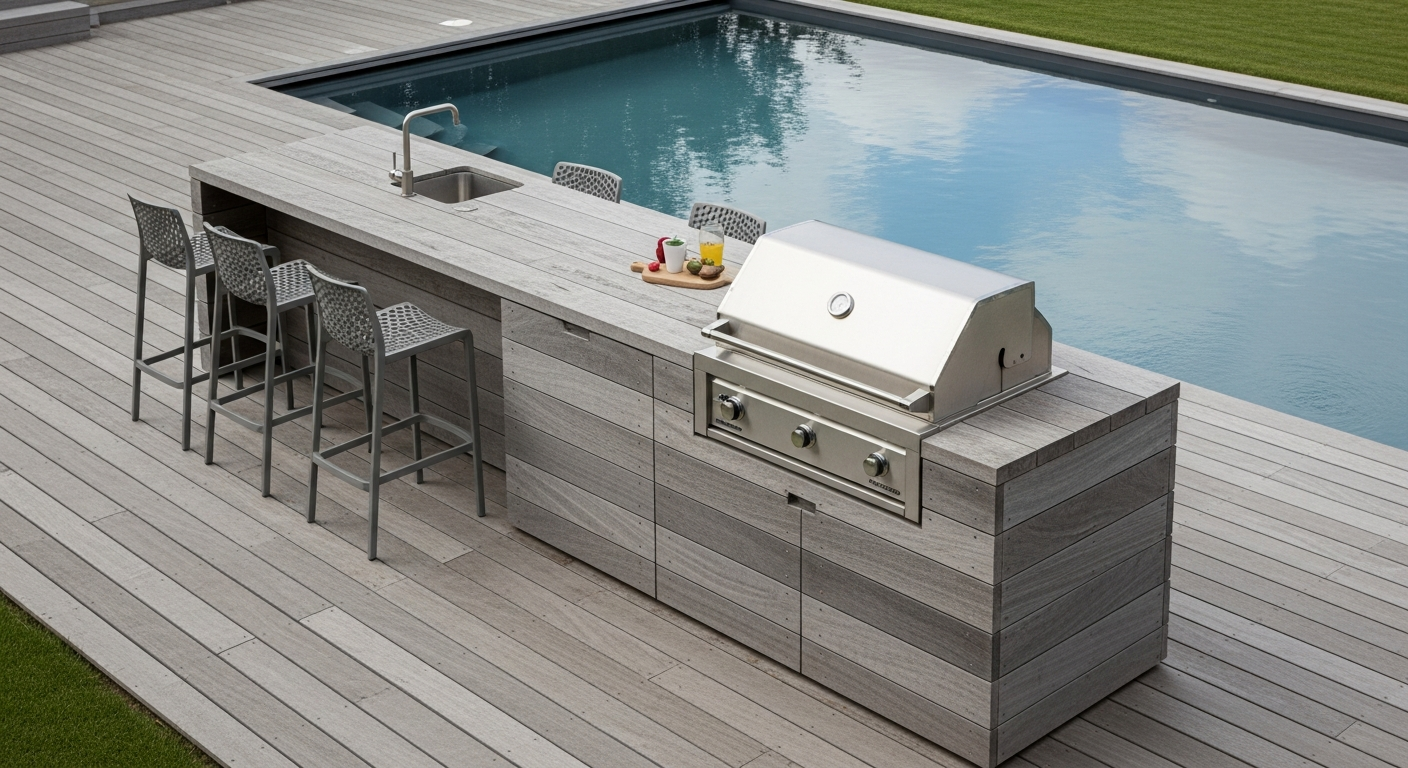
- The Service Zone: Counter space for plating, serving, and guest interaction, positioned away from the primary cooking heat and smoke.
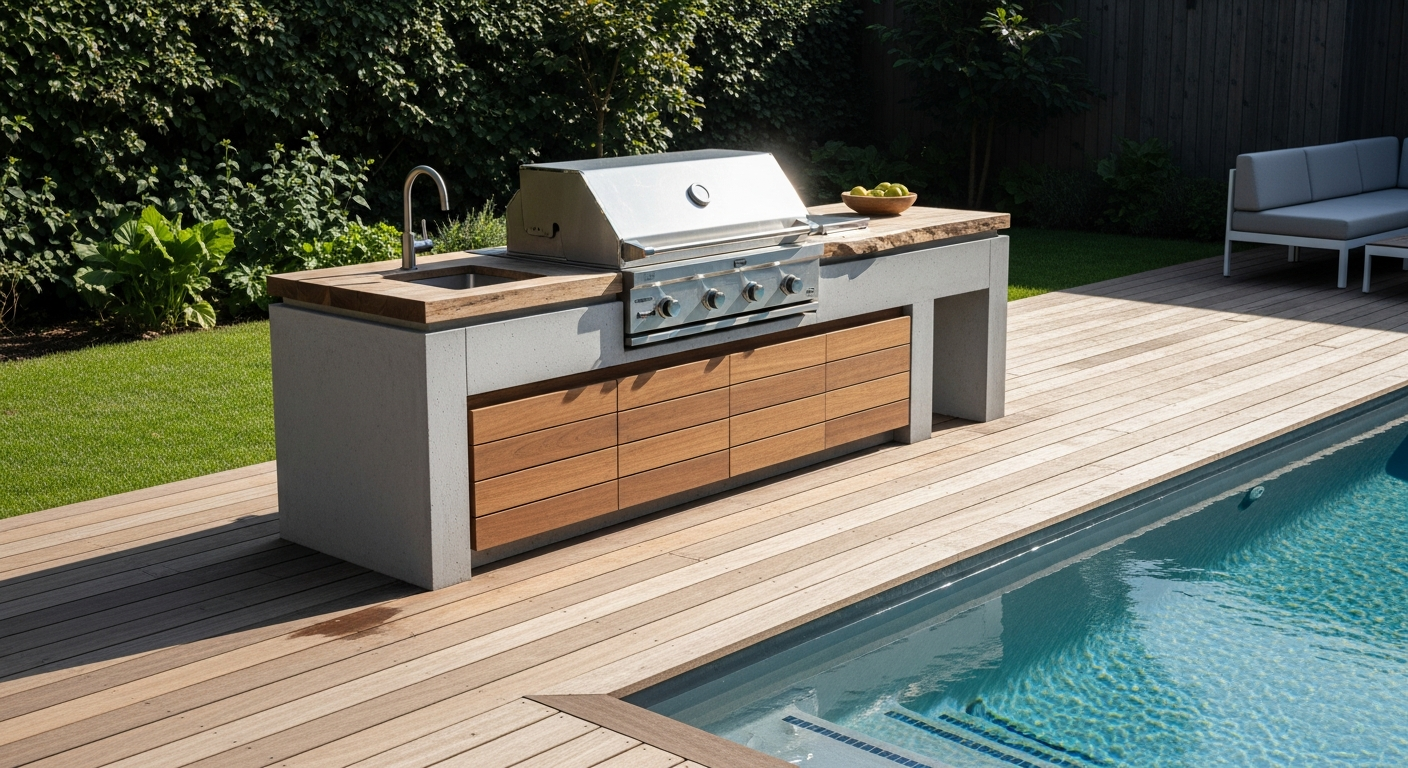
- Countertops: I advocate for non-porous materials like Dekton or quartzite over granite. If a client insists on concrete, it must be sealed with a food-safe, UV-stable penetrating sealer and its immense weight must be the primary factor in the initial Load Bearing Analysis.
- Cabinetry & Framing: Forget wood. The best options are marine-grade polymers like HDPE or stainless steel. A crucial detail many miss is the steel grade. For most environments, 304-grade stainless steel is sufficient. However, for any project within 50 miles of saltwater, I mandate 316-grade (marine-grade) stainless steel for its superior corrosion resistance. This simple spec change prevents rust and doubles the cabinet lifespan in coastal areas.
- Appliances: Any appliance used must have a UL rating for outdoor use. This isn't a suggestion; it's a safety requirement. Indoor appliances are not designed to handle moisture, temperature swings, and pollen, leading to electrical shorts and premature failure.
- Substructure Reinforcement: Before anything else, we execute the plan from the Load Bearing Analysis. This often means adding concrete footings and 4x6 or 6x6 support posts directly under the planned kitchen footprint.
- Utility Rough-In: Run all electrical conduits, gas lines (tested for leaks by a certified professional), and PEX water lines. Every electrical outlet must be an outdoor-rated, in-use covered GFCI outlet. I insist on placing more outlets than you think you need.
- Frame the Island: Using steel studs or the specified cabinetry, we build the kitchen's skeleton. This is when we ensure perfect leveling, which is critical for proper appliance seating and countertop installation.
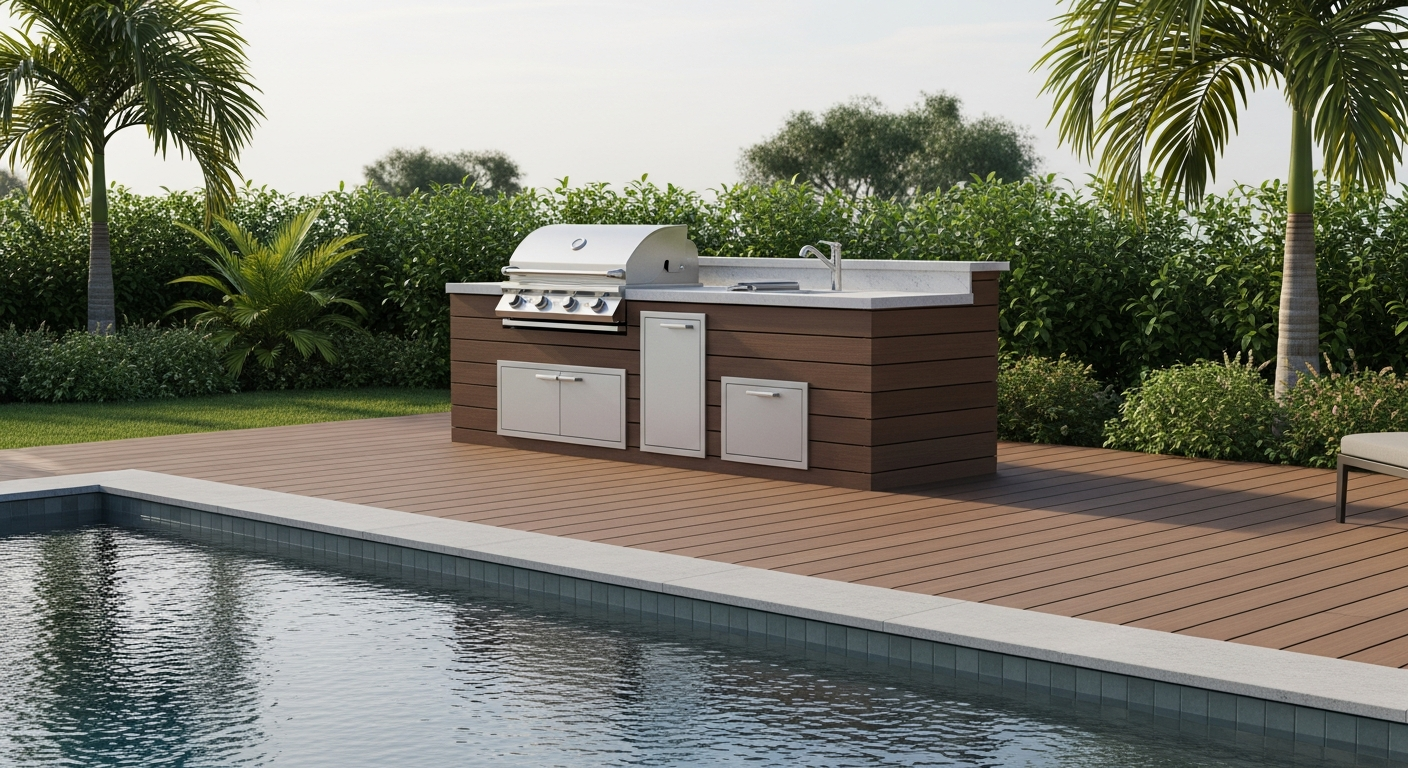
- Install Cladding & Countertops: Apply the stone, brick, or stucco finish to the cabinet bases. The countertop is then templated and installed, ensuring all cutouts for the sink and grill are precise. A drip edge is a small detail that makes a huge difference in preventing water from running down the face of the cabinets.
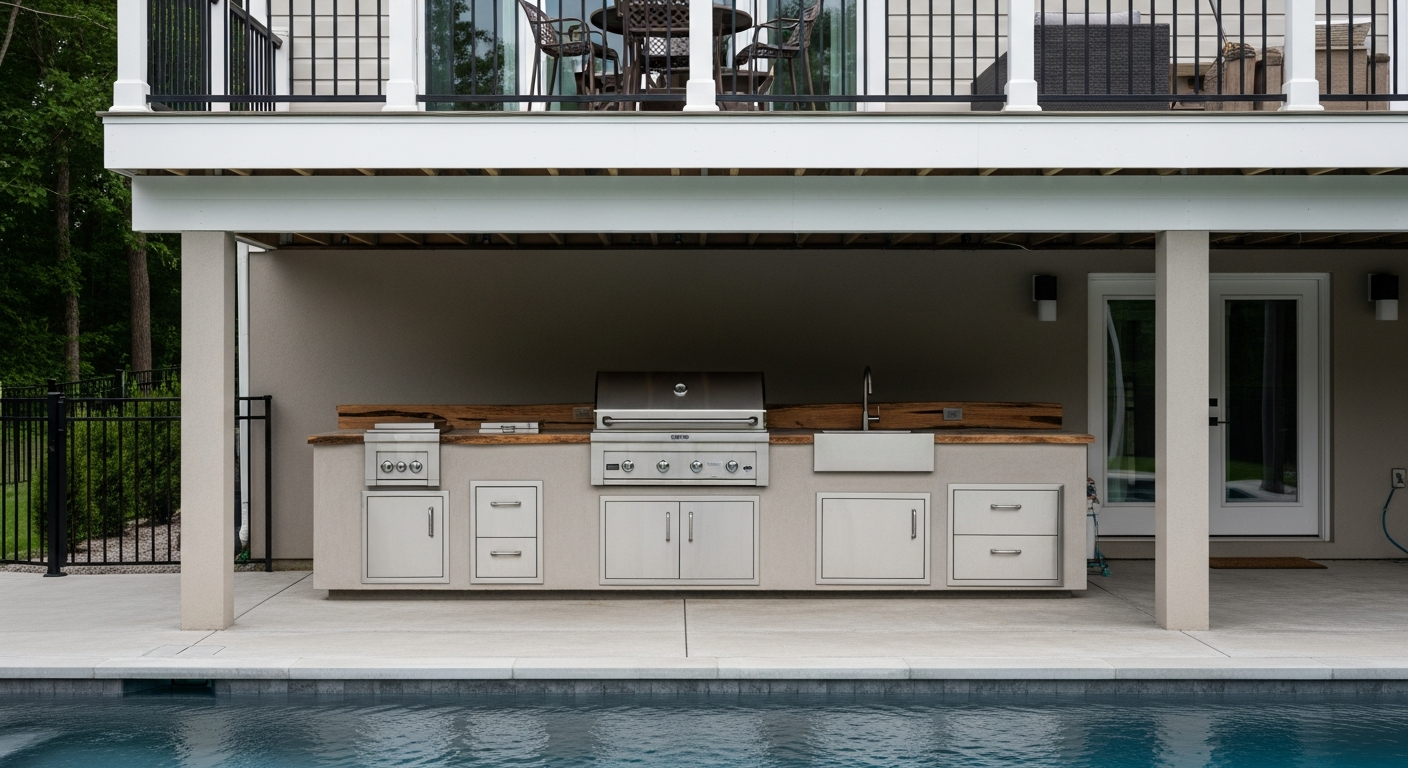
- Appliance and Fixture Installation: Carefully install the grill, refrigerator, and sink. This is the stage for a final leak test on all gas and water connections. A critical step here is ensuring proper ventilation for the grill cabinet to prevent dangerous gas buildup.
Tags
covered deck with outdoor kitchen
outdoor deck and kitchen ideas
outdoor kitchen on a wood deck
outdoor kitchen wood deck
wood deck outdoor kitchen