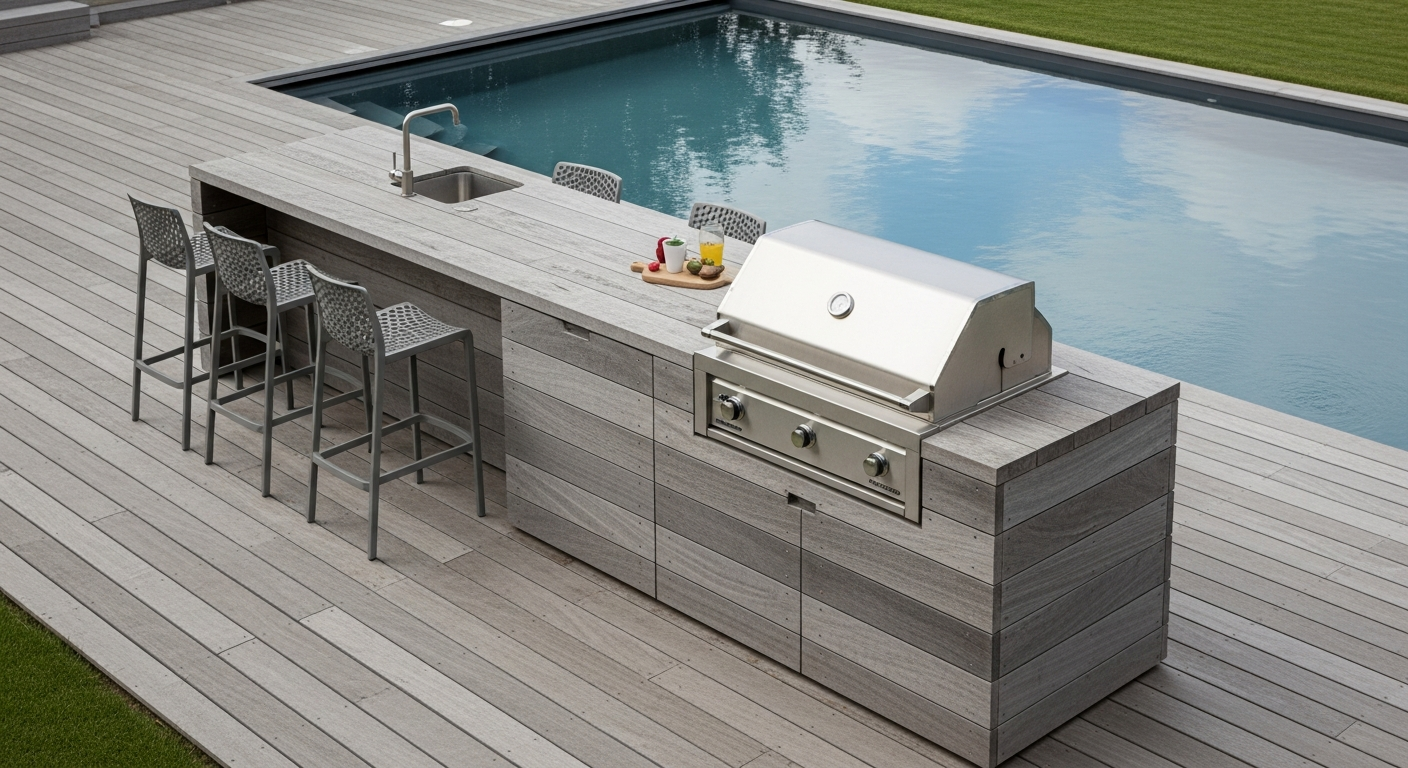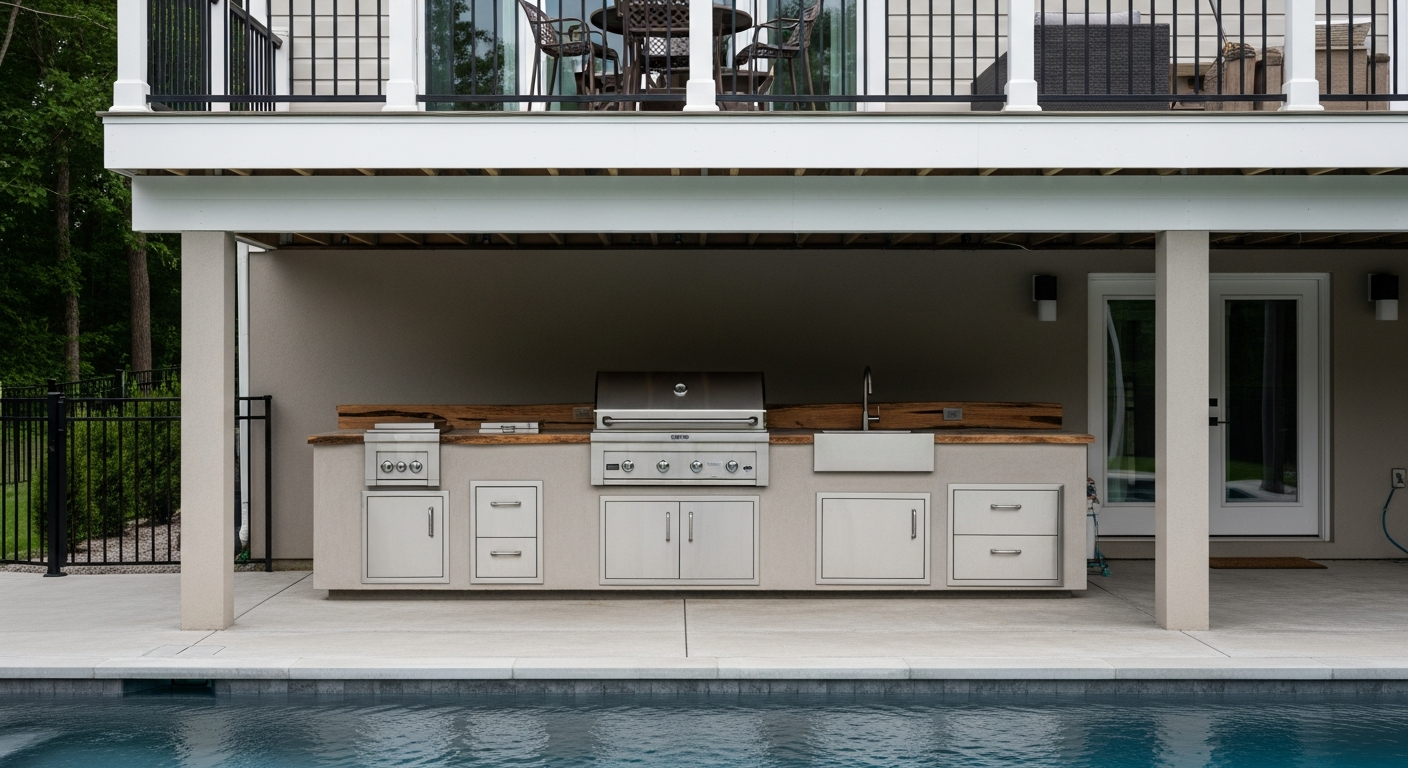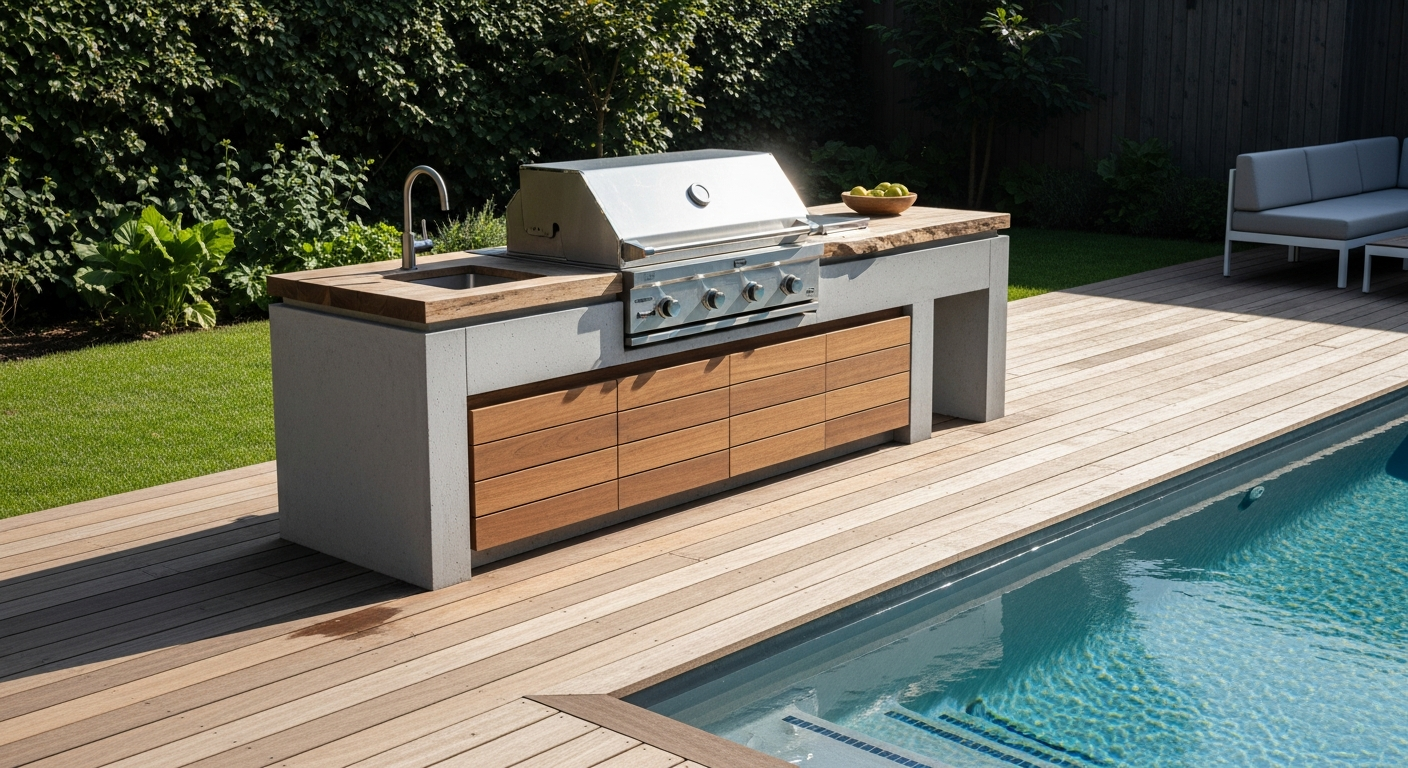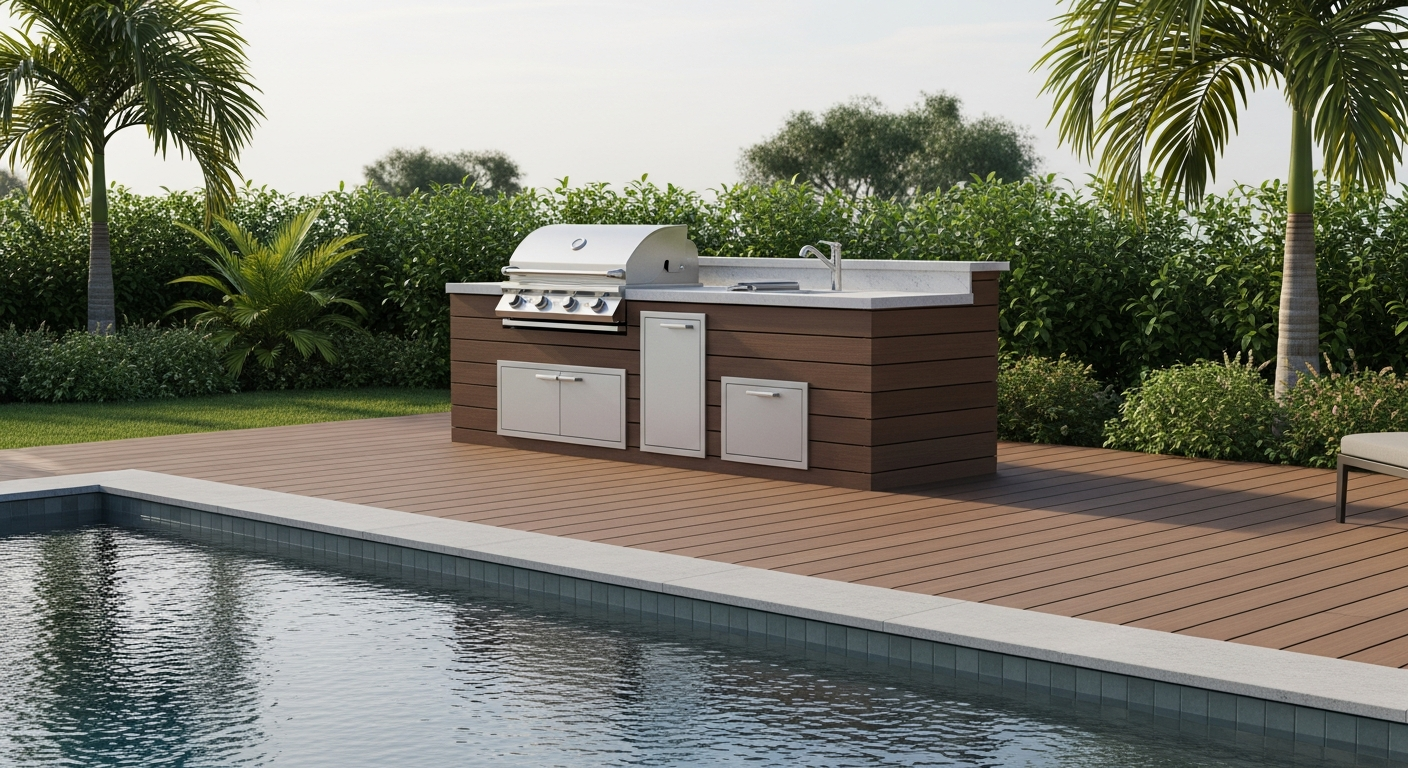
Outdoor Kitchen On Deck: The Load-Bearing Protocol to Prevent Structural Failure
An outdoor kitchen on a deck isn't an appliance installation; it's a structural engineering project. The single most catastrophic error I've seen in my career is treating it as the former. Standard decks are engineered for a uniform **live load**—people walking around—at roughly 40-50 pounds per square foot (PSF). A compact outdoor kitchen with a granite countertop, grill insert, and storage can easily create a **static point load** exceeding 1,000 pounds, concentrated over a mere 20-30 square feet. This oversight doesn't just lead to sagging; it leads to collapse.
My entire approach is built around reversing the planning process. We don't start with the grill; we start with a **structural load path analysis**. This ensures the deck's substructure—the joists, beams, and footings—can safely transfer the immense, concentrated weight of the kitchen directly to the ground. This isn't just about code compliance; it's about preventing a disaster I've personally been called in to fix after the fact.
The Critical Flaw in Standard Deck Kitchens: My DLBC Protocol
The fundamental misunderstanding is the difference between a distributed load (people) and a concentrated dead load (a kitchen island). Your deck joists might be perfectly fine for a party, but they are not designed for a permanent, heavy structure sitting in one spot forever. Over time, this leads to material fatigue, joist deflection (sagging), and eventual failure at the ledger board or posts. To combat this, I developed what I call the **Deck Load Bearing Capacity (DLBC) Protocol**. It's not just a checklist; it's a diagnostic framework to assess and fortify a deck *before* a single cabinet is ordered. The protocol focuses on identifying the weakest points in the load path from the kitchen's footprint down to the concrete footings.
Deconstructing Load Paths and Material Stress
The DLBC Protocol is a deep dive into the physics of your deck. First, we map the proposed kitchen's footprint directly onto the joist layout below. This immediately reveals which specific joists will bear the brunt of the load. My analysis focuses on three core elements:
- Joist Span and Reinforcement: A joist's strength decreases exponentially as its span increases. For the area under the kitchen, we often must **reduce the effective span**. This is achieved by adding a new drop beam directly beneath the kitchen area, supported by new posts and footings. We also **sister existing joists** by bolting new boards alongside them, effectively doubling their thickness and load capacity.
- Beam and Ledger Board Integrity: The beams that support the joists are the next critical link. We verify their size and condition, ensuring they can handle the new point loads from the kitchen area without flexing. The **ledger board**—where the deck attaches to the house—is a notorious failure point. We ensure it has the correct number and type of structural screws or lag bolts, not just nails.
- Footing and Post Calculations: The entire load must terminate in the ground. The existing deck posts and footings were likely calculated for a simple uniform load. My protocol requires calculating the new, concentrated load from the kitchen and ensuring the posts and, critically, the **concrete footings** are sized appropriately to prevent sinking. In 90% of retrofit projects, this means pouring new, larger footings.
- Phase 1: The Structural Audit: Before anything else, we perform a complete structural audit based on the **DLBC Protocol**. This involves a licensed structural engineer. We measure joist spacing, spans, and material dimensions. We inspect for any signs of rot or weakness. This audit produces a non-negotiable **reinforcement plan**.
- Phase 2: Substructure Fortification: This is the most critical hands-on phase. We execute the reinforcement plan. This typically involves adding new footings, installing 6x6 posts, and building new beams directly under the planned kitchen. We then **add blocking** between the joists to prevent them from twisting under the heavy load.
- Phase 3: Utility Rough-In: With the structure solidified, we run the necessary utilities. All outdoor electrical work must use **GFCI-protected circuits** to prevent shock. Gas lines must be installed by a licensed professional, including a dedicated **shut-off valve** at the kitchen unit. We also plan for water supply and drainage, ensuring a proper slope to avoid standing water.
- Phase 4: Frame and Material Selection: The kitchen's frame itself must be considered. While pressure-treated wood is an option, I strongly advocate for **light-gauge steel framing**. It's non-combustible, impervious to rot, and significantly lighter than a block-and-mortar island, reducing the overall load on the deck structure. For countertops, materials like cast concrete or granite alternatives can offer the look without the extreme weight of a thick granite slab.
Tags
covered deck with outdoor kitchen
outdoor deck and kitchen ideas
outdoor kitchen on a wood deck
outdoor kitchen wood deck
wood deck outdoor kitchen