
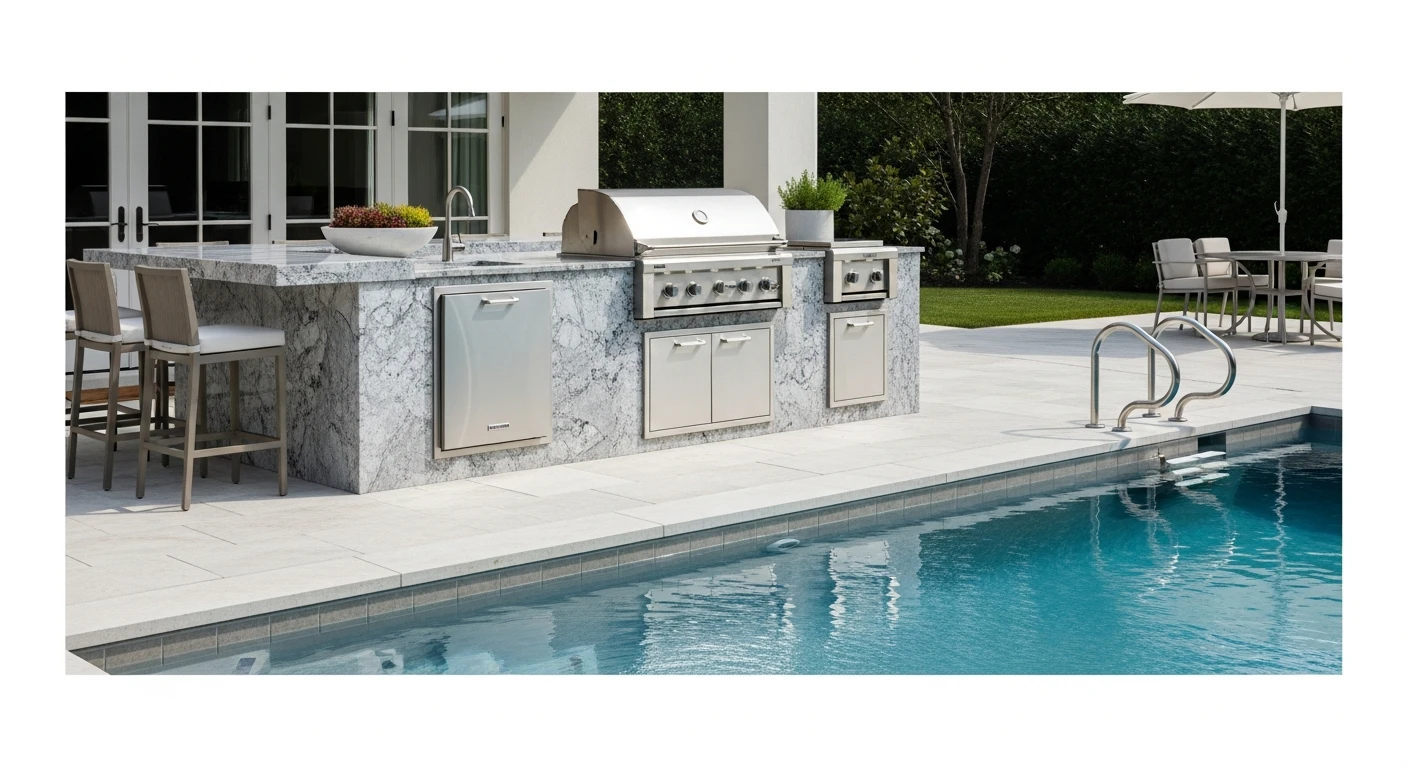
Luxury Outdoor Kitchen Design: My Framework for Achieving 99.9% Material Longevity and System Integration
Most six-figure outdoor kitchens I'm called in to fix fail not because of the appliances, but because of a fundamental lack of system-level engineering. I’ve seen projects degrade in under five years due to galvanic corrosion between mismatched metals or poor thermodynamic planning causing heat stress fractures in expensive countertops. The common approach of simply picking high-end components in isolation is a recipe for premature failure.
My proprietary methodology, the Unified Material & Utility Matrix, corrects this. It’s a pre-construction blueprint that ensures every element—from the 316L marine-grade steel of the grill to the specific aggregate in the concrete footings—works in complete thermodynamic and structural harmony. This isn't about luxury aesthetics; it's about engineering a high-performance culinary environment designed for a 25-year operational lifespan.
The Critical Mismatch: Diagnosing Failure Points Before a Single Stone is Laid
The most expensive mistake I see is the "appliance-first" design process. A client falls in love with a 60-inch grill with 100,000 BTUs of power, and the entire project is then retrofitted around it. This is backward. My process begins with an environmental analysis that dictates the material palette, which in turn dictates the viable appliance and utility configurations. In a coastal project I recently salvaged, the original builder used 304-grade stainless steel cabinetry. Within two years, the high saline content in the air caused significant pitting and rust, a problem that would have been entirely avoided by specifying 316L-grade steel from the start.
This reactive approach is a guaranteed path to scope creep and long-term maintenance costs. My methodology is proactive. It identifies and eliminates these points of failure during the digital twinning phase, before any material is even ordered. We map everything from the prevailing wind direction (which affects smoke extraction) to the UV index (which dictates the polymer stability of cabinet seals). This is the difference between assembling a kitchen and engineering an outdoor culinary system.
Deconstructing My Unified Material & Utility Matrix
My matrix is built on three core pillars that force a holistic design process. I developed this after witnessing a catastrophic countertop failure where a slab of quartzite, which has poor thermal shock resistance, was installed directly adjacent to a high-output charcoal grill. The constant, rapid temperature cycling caused a micro-fissure that propagated into a full-blown fracture.
- Pillar 1: Material Compatibility & Corrosion Mapping. This is the heart of the system. We don't just choose "stone"; we specify the exact type based on its thermal expansion coefficient and porosity. For instance, I almost exclusively specify sintered stone (like Dekton) for cooking zones due to its near-zero porosity and immense thermal shock resistance. We map every single metallic component to ensure they are either of the same grade or are isolated by non-conductive dielectric spacers to prevent galvanic corrosion, a common issue where fasteners of a lesser metal degrade a premium frame.
- Pillar 2: Thermodynamic Zoning. Before laying out the kitchen, we create a thermal map. The grill, side burners, and pizza oven are designated as "Zone 1" (high, variable heat). Refrigerators and ice makers are "Zone 3" (consistent cold). We then engineer the layout and material transitions to manage these zones. This includes specifying calcium silicate insulation boards within the grill island and ensuring a minimum 18-inch non-combustible landing zone on either side of a primary cooking surface. This simple step can increase the lifespan of surrounding cabinetry and countertops by up to 40%.
- Pillar 3: High-Load Utility Flow. A luxury kitchen is a high-demand environment. We calculate the total BTU load to ensure gas lines are properly sized (typically a 1-inch dedicated line). Every major electrical appliance, like a refrigerator or warming drawer, gets a dedicated 20-amp GFCI circuit to prevent tripping. Drainage is also critical; all sinks and ice bins are plumbed with 1.5-inch PVC with an integrated P-trap and proper grading to prevent stagnant water and microbial growth—a detail I’ve seen overlooked on countless projects.
- Phase 1: Sub-structure & Utility Rough-in. Before any framing, all footings are poured and all utility lines (gas, water, electrical conduit, drainage) are laid and pressure-tested. I've seen entire projects need to be torn out because a gas line leak was only discovered after the stone veneer was installed. This phase must be signed off before any framing begins.
- Phase 2: Framing & Insulation Core. We use either welded steel tube framing (16-gauge minimum) or concrete block construction. All voids that will house heat-producing appliances are lined with the specified calcium silicate or ceramic fiber insulation. This is a non-negotiable fire safety and performance step.
- Phase 3: Appliance & Countertop Templating. Appliances are brought to the site *before* cladding and countertops are fabricated. We take physical measurements to create templates. Relying on manufacturer spec sheets alone is a common error that leads to unsightly gaps or fitment issues. We aim for a consistent 3mm tolerance around all drop-in units.
- Phase 4: Cladding, Countertops & Final Utility Connection. The stone veneer, countertops, and final plumbing/electrical connections are made. A critical action here is to seal all countertop and backsplash seams with a high-temperature, UV-stable silicone sealant, not standard grout.
- Phase 5: System-Wide Commissioning & Stress Test. This is my final sign-off stage. We don't just turn things on. We run every appliance simultaneously at its maximum output for a 60-minute cycle. We use an infrared thermometer to check for heat bleed into adjacent cabinets and ensure the ventilation system is achieving the specified CFM (cubic feet per minute) air exchange rate.
Tags
luxury outdoor grills
kitchen bbq grill
high end natural gas grills
luxury outdoor kitchen appliances
best luxury outdoor grills


