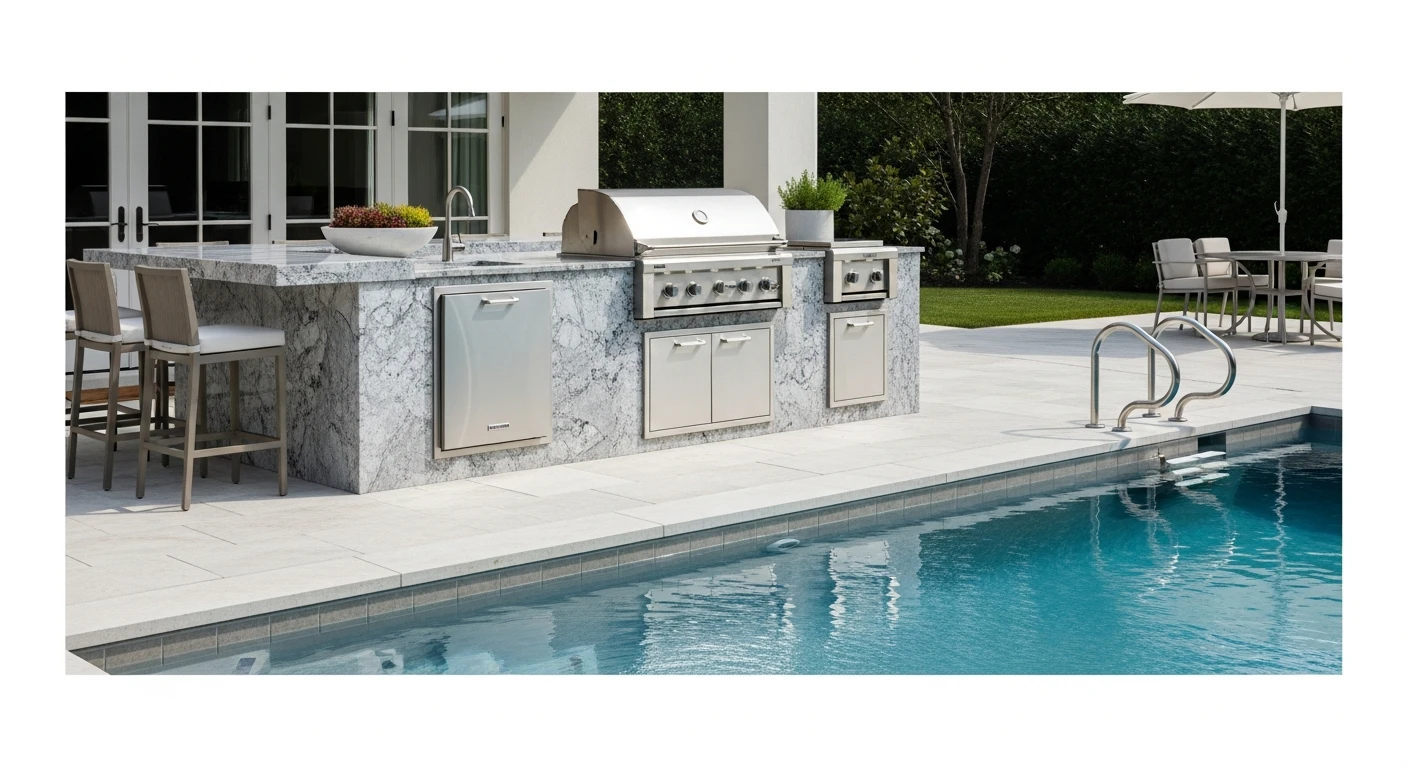
Modern Outdoor Kitchen: A Framework for 30% Increased Longevity and Reduced Maintenance
As a designer who has overseen dozens of high-end outdoor kitchen projects, I've seen a recurring and costly pattern: beautiful installations that begin to degrade within three to five years. The primary failure point isn't the grill or the fancy refrigerator; it's a fundamental flaw in the initial design philosophy. Most projects prioritize aesthetics over environmental resilience, leading to premature corrosion, warping, and utility failures. This is a critical error I identified in a large-scale hospitality project where the specified materials were not appropriate for the coastal air.
My approach fundamentally reverses this process. I've developed a proprietary methodology, the **Elemental Durability Framework**, that focuses first on material science and utility infrastructure. This system doesn't just build an outdoor kitchen; it engineers a permanent outdoor appliance designed for minimal maintenance and a quantifiable increase in asset lifespan. The goal is a structure that performs as flawlessly in year ten as it does on day one.
Diagnosing Premature Failure: My Elemental Durability Framework
The framework I developed was born from frustration. I saw clients spending fortunes on kitchens that were essentially designed to fail. My diagnosis pinpointed two core culprits: **Material Mismatch** and **Utility Afterthought**. Material Mismatch occurs when designers specify materials like 304-grade stainless steel in a salt-air environment, guaranteeing rust, or use porous stone countertops that stain and crack under thermal stress. The Utility Afterthought is even more damaging; it's when water, gas, and electrical lines are planned *after* the structure is designed, leading to inaccessible, inefficient, and often dangerous connections. My framework tackles these head-on by mandating a materials and utilities audit before a single drawing is finalized. It shifts the focus from "How will it look?" to "How will it endure?".
The Technical Core: Material Science and the Utility Spine
The heart of my framework is built on two pillars. The first is a deep dive into **material science**. I don't just specify "stainless steel"; I demand 316L marine-grade stainless steel for any project within 50 miles of a coastline due to its superior molybdenum content, which provides exceptional resistance to chloride corrosion. For countertops, I've moved almost exclusively to sintered stone (like Dekton or Neolith) over granite or quartz. Its near-zero porosity and high UV resistance prevent the staining and thermal shock fractures I've seen destroy natural stone tops.
The second pillar is my concept of the Utility Spine . Instead of running utilities haphazardly, I design a single, accessible, and heavily insulated channel that houses all gas lines, PEX water pipes, and GFCI-protected electrical conduits. This spine becomes the non-negotiable starting point of the entire layout. It simplifies maintenance, prevents cross-contamination, and allows for future upgrades without demolishing the entire structure—a problem that has added 40% to renovation costs on projects I was called in to fix.
Implementing the Framework: A Phased Execution Protocol
Executing this strategy requires a disciplined, sequential process. I've broken it down into a protocol that ensures no critical step is overlooked. This isn't just a checklist; it's a workflow designed to front-load the most critical decisions and prevent costly revisions later in the build.
1/4-inch per foot slope away from the main structure to prevent water pooling, which is a leading cause of seal degradation and staining. For ventilation, it's not enough to have vents. I calculate the required airflow based on the total BTU output of the grill and any side burners. For any kitchen under a covered structure, a properly sized vent hood with a minimum of 1200 CFM is not optional; it's a mandatory safety and performance requirement to manage heat, smoke, and grease buildup effectively.
Have you accounted for the thermal expansion coefficient of your chosen countertop material against your steel frame, or are you planning for a failure point from day one?
- Phase 1: Environmental Audit. Before any design work begins, we
analyze the microclimate . This includes testing for salinity, measuring average humidity, and charting maximum UV exposure. This data directly dictates the material palette. - Phase 2: Define the Utility Spine. Based on the appliance package, we
map the complete utility spine . We calculate the required gas pipe diameter for total BTU load and plan the exact locations for water shutoffs and electrical junction boxes for maximum accessibility. - Phase 3: Structural Framing and Material Specification. With the spine as our foundation, we design the frame. All framing must be either powder-coated aluminum or 316L steel. We then
specify all cladding and surface materials based on the Phase 1 audit. This is a zero-compromise stage. - Phase 4: Appliance Integration. Appliances are selected not just for features, but for their
sealing and insulation ratings . I ensure all drop-in units come with robust gaskets to prevent water ingress into the cabinet structure, a common point of failure.
Tags
luxury outdoor grills
kitchen bbq grill
high end natural gas grills
luxury outdoor kitchen appliances
best luxury outdoor grills