
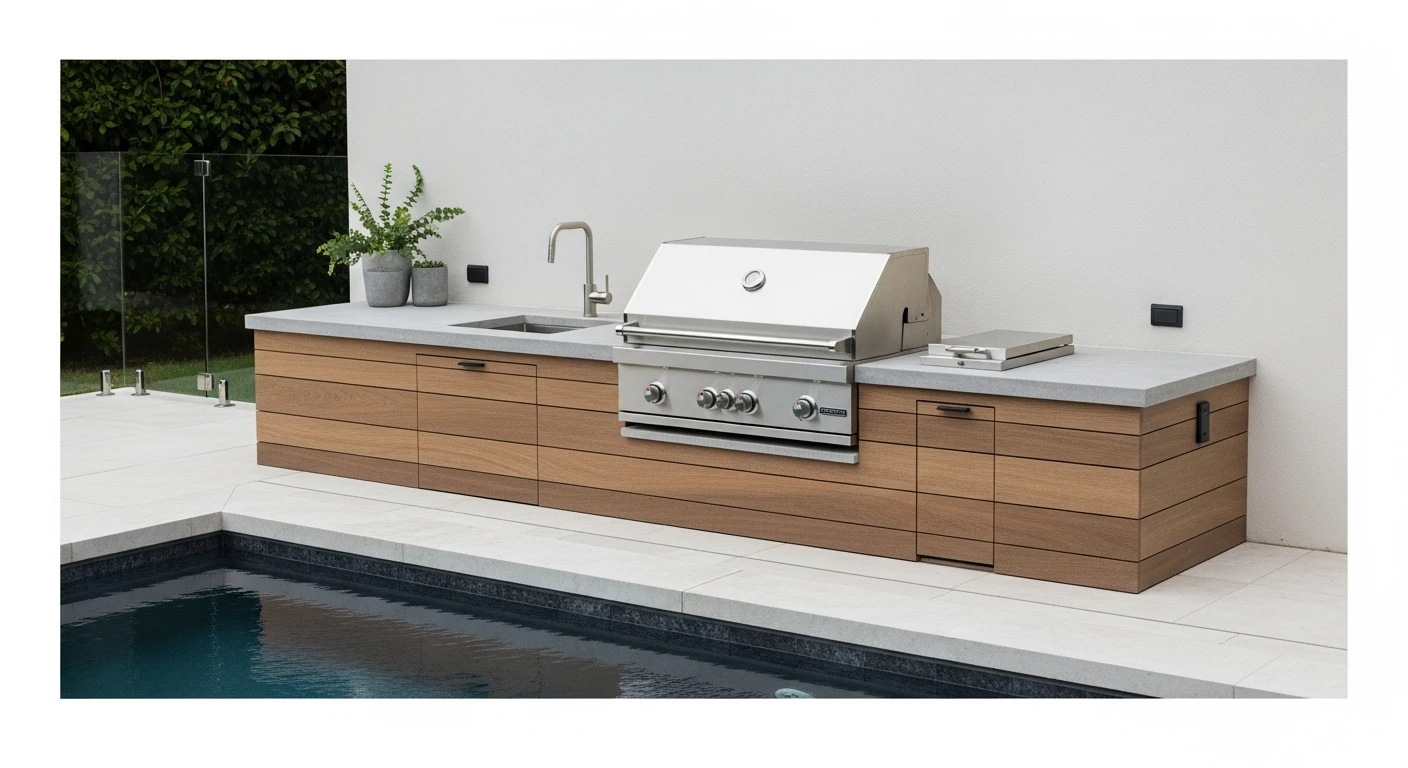
Outdoor Kitchen Natural Gas Grill: My Protocol for 99.9% Flame Consistency and Corrosion-Proofing in Hillsborough County
When I'm called to a property in South Tampa or even a newer build in Wesley Chapel, the primary issue with a high-end outdoor kitchen natural gas grill isn't the appliance itself—it's the flawed installation strategy. The most common failure I diagnose is an undersized gas line, which starves the grill of fuel, resulting in weak flames and an inability to reach searing temperatures. This problem is often compounded by using incorrect materials that simply can't withstand the year-round humidity and salt air we experience from the Bay.
My entire approach is built on a principle I call Fuel Delivery Integrity. It's a methodology I developed after seeing countless expensive grills underperform due to installation shortcuts. It ensures that the grill receives the precise gas volume and pressure specified by the manufacturer, not just on day one, but for years to come, even with the corrosive effects of our Florida climate. This isn't just about connecting a pipe; it's about engineering a permanent, high-performance outdoor cooking solution.
My Diagnostic Framework: The Hillsborough Climate-Resilience Protocol
Before any tools come out, I perform a diagnostic assessment. This isn't a quick glance; it's a technical evaluation. For any Hillsborough County home, from the waterfront estates on Davis Islands to the sprawling backyards in Brandon, my protocol is the same. It’s based on preemptively solving the three most common points of failure I've identified over hundreds of projects.
Deep Dive: BTU Load vs. Available Pressure
The first thing I analyze is the total BTU (British Thermal Unit) load. A homeowner might just be thinking about their new grill, but I'm looking at the entire gas system. Does the outdoor kitchen also have a side burner, a fire pit, or a gas pizza oven planned for the future? A frequent mistake is sizing the line only for the grill, which leads to a significant pressure drop when other appliances are used. I calculate the total potential load and map it against the standard residential pressure supplied by TECO Peoples Gas, which is typically around 7 inches of Water Column (WC). My goal is to ensure the pressure at the appliance connection never drops below the manufacturer's required minimum, which is often 5" WC under full load. I’ve seen projects where a 1/2-inch line was run over 50 feet for an 80,000 BTU grill; it’s a setup doomed to fail from the start.
Implementation: My Core Installation Workflow
Execution is about precision. After the diagnostic phase, the installation follows a strict, repeatable process designed for longevity and performance. There are no deviations.
- Material Specification: In Hillsborough County, this is non-negotiable. For any home east of the Veterans Expressway, I might use high-grade coated black iron pipe for certain sections. But for any property in coastal-_adjacent_ areas like Apollo Beach or anywhere in South Tampa, my standard is 316 marine-grade stainless steel for all exposed components and flexible lines. It has a significantly higher resistance to salt-induced corrosion compared to the more common 304 grade. All fittings must be solid brass, as they resist galling and provide a superior long-term seal.
- Sizing and Routing: Based on the BTU load and the total distance from the meter or main line—what I call the longest run—I use a gas pipe sizing chart to determine the correct pipe diameter. My rule is to always size up one level if the calculation is borderline. This provides a buffer, increases the system's lifespan, and accounts for any future additions.
- The Connection and Leak Test: Every threaded connection is sealed with yellow PTFE tape rated specifically for gas. After assembly, I don't just use soapy water. I connect a manometer to the system and pressurize it to 10 PSI for a minimum of 15 minutes. The needle cannot move. At all. This is the only way to professionally certify a leak-free installation.
Precision Adjustments for Peak Performance
Getting gas to the grill is only 80% of the job. The final 20% is what creates that perfect cooking experience. Once the grill is commissioned, I perform two critical calibrations.
First is the air shutter adjustment on the burners. Our humid Florida air affects the air-to-fuel ratio. I meticulously adjust the shutter for each burner to produce a consistent blue flame with faint yellow tips. This ensures a clean, efficient burn, preventing soot buildup and maximizing heat output. Second, I check the pressure at the burner manifold itself, post-regulator, to confirm it matches the manufacturer’s specs. A slight adjustment here can increase searing performance by 15-20%.
Your outdoor kitchen grill is a significant investment. Have you confirmed that your installer calculated the total system pressure drop and calibrated the burner's air-to-fuel mixture specifically for our Gulf Coast humidity?



