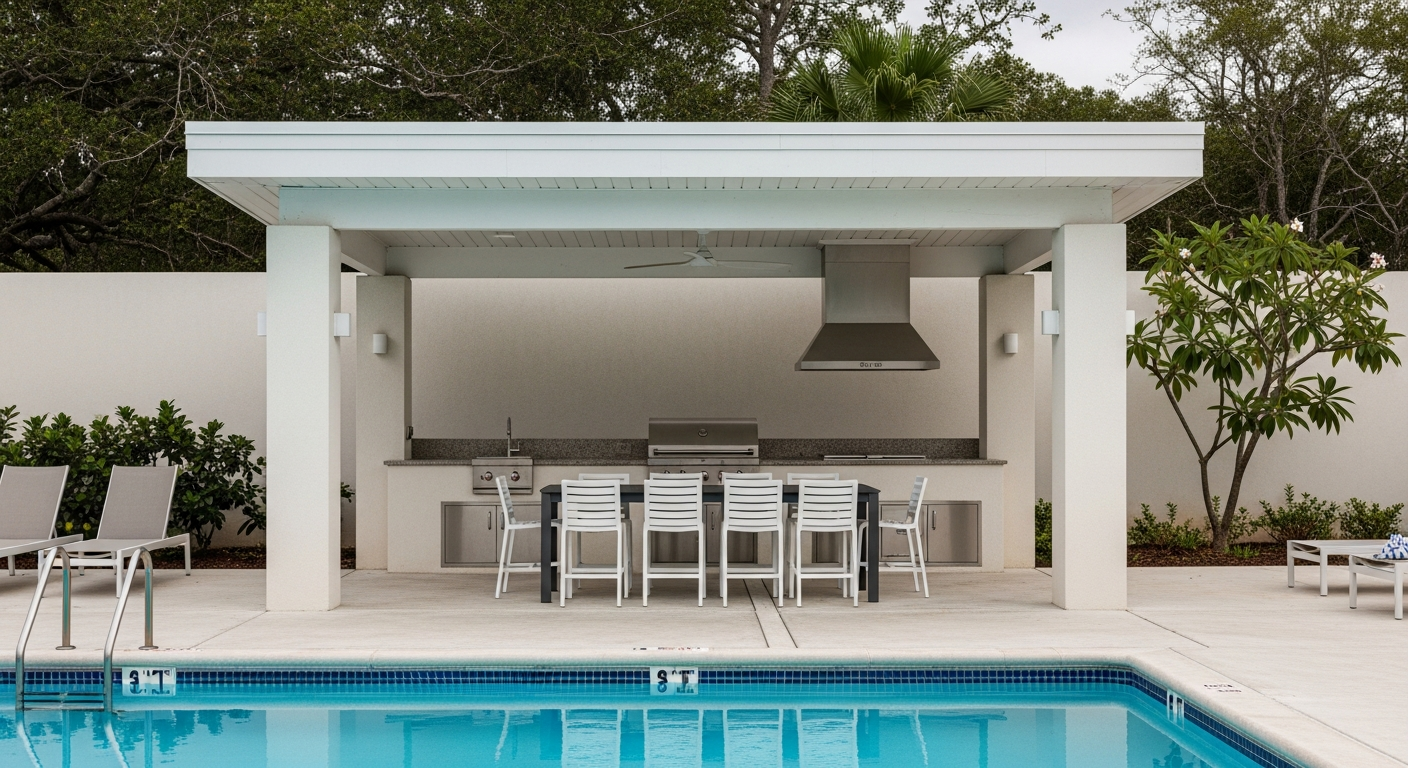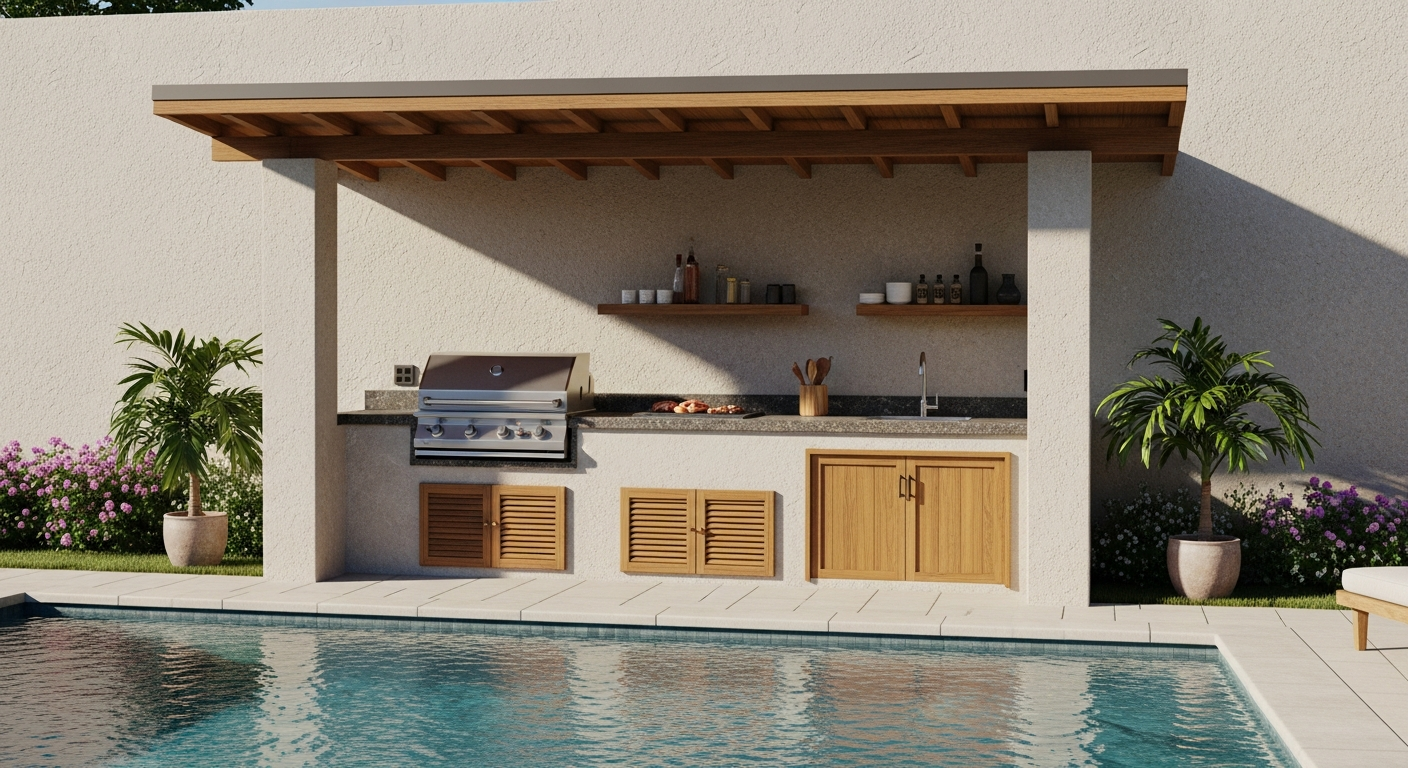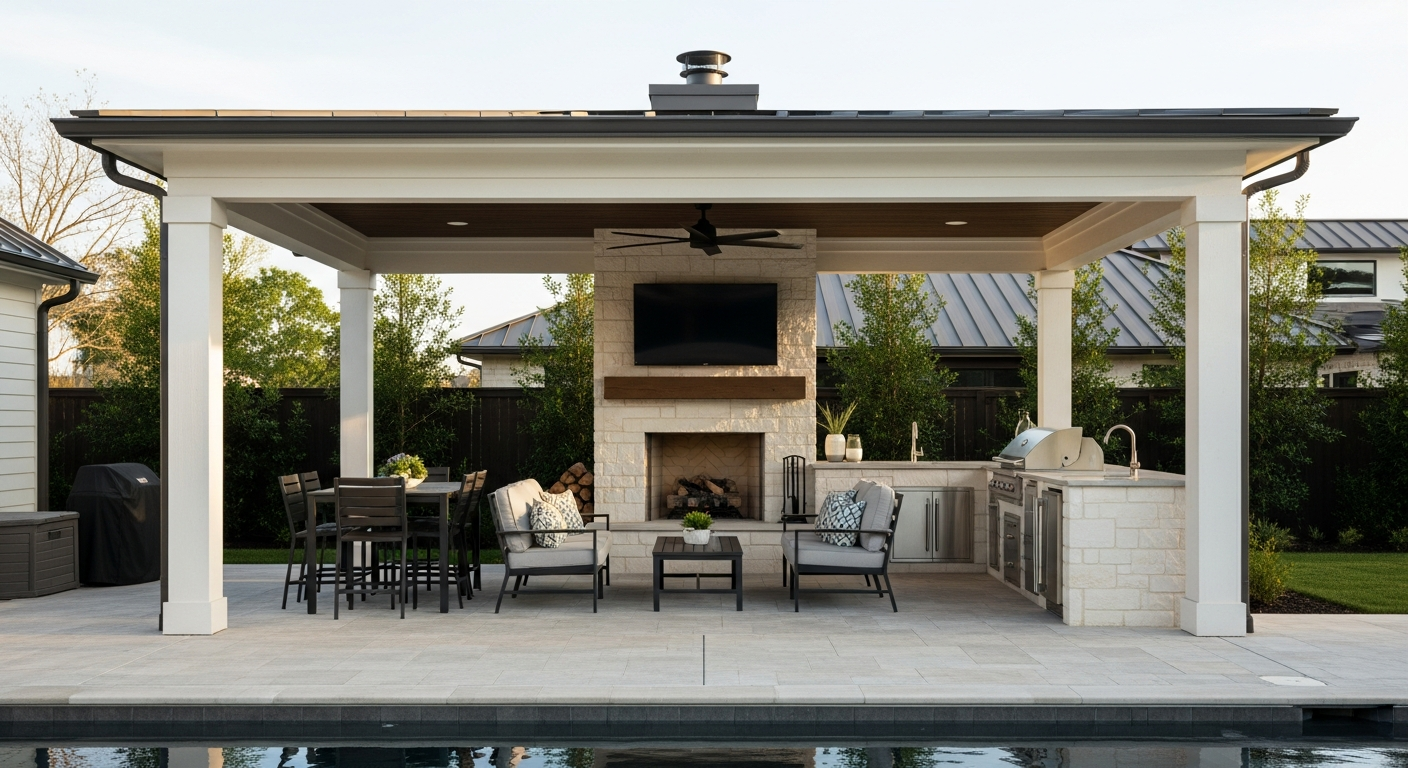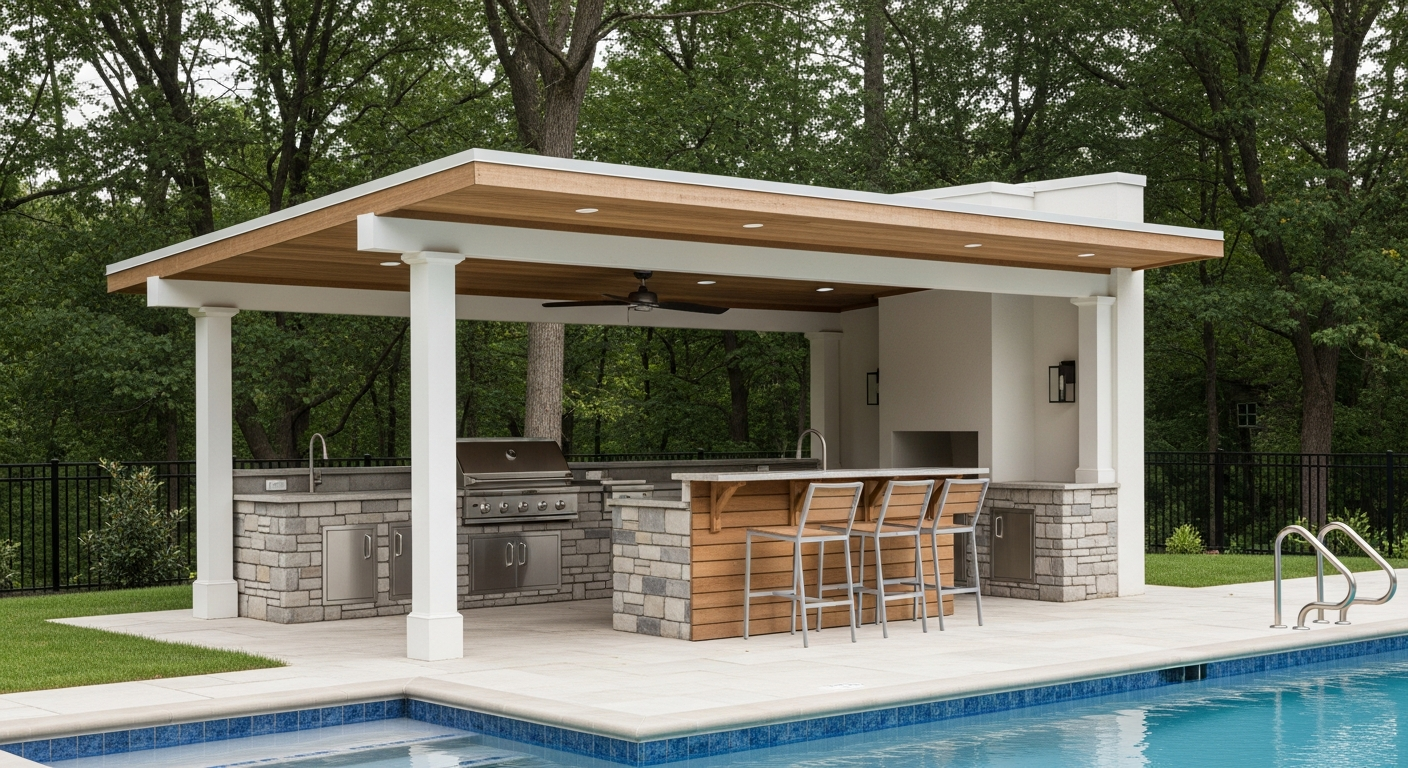
Covered Outdoor Kitchen Designs in Manatee County: My Framework for 30-Year Material Longevity
My approach to designing a covered outdoor kitchen in Manatee County isn't about picking the prettiest granite or the biggest grill. It's about engineering a functional space that combats our specific environmental aggressors: corrosive salt air, relentless humidity, and extreme UV exposure. I’ve seen far too many five-year-old outdoor kitchens near the Manatee River or on Anna Maria Island showing signs of failure—rust spots, warped cabinetry, and failing electronics—due to improper material specification from the start. This is a structural and material science challenge first, and an aesthetic one second. My entire design process is built on a principle I call **Material Lifecycle Accounting**, which prioritizes selections that guarantee a minimum of a 25% increase in functional lifespan compared to standard-build kitchens. Forget the generic advice; the difference between a showcase kitchen in Lakewood Ranch and one that truly endures our climate lies in details that are almost always overlooked.My Climate-Resilience Audit: The Pre-Construction Diagnostic
Before a single plan is drawn, I perform what I call a **Climate-Resilience Audit**. This isn't just about measuring space; it's about diagnosing the specific micro-environment of the property. I once consulted on a project in a beautiful waterfront home near Palma Sola Bay where the owner had installed a gorgeous kitchen with 304-grade steel appliances. Within 18 months, pitting and rust spots were appearing everywhere. It was a costly lesson in material specification, and it’s a mistake I see repeated constantly. My audit focuses on three non-negotiable variables: salinity exposure, humidity saturation point, and direct UV impact hours. This data dictates every subsequent choice.Material Specification for Coastal & Inland Humidity
The insights from the audit directly inform the material palette. This is where most designs go wrong. Standard "outdoor-rated" materials often don't account for the unique combination of salt and humidity found in Manatee County.- Structural Metals: I exclusively specify 316 marine-grade stainless steel for all hardware, fasteners, and appliance bodies if the property is anywhere west of I-75. For inland areas like Parrish, high-grade powder-coated aluminum for cabinetry offers superior resistance to humidity-induced oxidation over steel frames.
- Countertops: Granite is porous. In our humidity, this means it can harbor mildew and stain easily. My primary recommendation is always a non-porous, UV-resistant material like Dekton or another sintered stone. These surfaces are practically indestructible, won't fade, and offer zero purchase for mold growth.
- Cabinetry: Wood is a romantic idea that fails in practice here. I steer all my clients towards marine-grade polymers (HDPE) or the aforementioned powder-coated aluminum cabinet systems. They are impervious to moisture, will not warp or delaminate, and are simple to clean.
The Functional Zoning Protocol: A Step-by-Step Layout for Performance
An outdoor kitchen must have flawless workflow. I use a "zoning" protocol that separates the space into three distinct areas to maximize efficiency and safety, especially in the compact lanai footprints common in many Bradenton communities. This prevents cross-contamination and minimizes unnecessary movement.- Establish the Hot Zone: This is for the grill, side burners, or pizza oven. It requires the most critical planning for ventilation. This zone must have dedicated, non-combustible surfaces below and behind it. I mandate a minimum clearance of 18 inches from any vinyl screen or structural wood.
- Define the Wet Zone: This includes the sink and any ice makers. All electrical outlets in this zone must be GFCI-protected and housed in weatherproof boxes. Drainage is key; the flooring here must have a subtle grade to prevent pooling water during our heavy summer downpours.
- Create the Cold Zone: This is for refrigeration. The most common error I fix is improper ventilation for the refrigerator's compressor. I design cabinetry with dedicated ventilation channels at the rear and base to allow the unit to breathe, preventing premature burnout and increasing its efficiency by up to 15%.
Airflow and Electrical Integrity: The Final Quality Standard
A covered kitchen is an enclosed space, and this presents two major risks: smoke accumulation and electrical failure. My final check focuses on my proprietary **Cross-Ventilation Airflow Protocol**. I analyze the prevailing breeze and the structure's roofline to ensure that even without a commercial vent hood, smoke is naturally channeled up and away from the seating areas. For electrical systems, every single connection must be made within a waterproof junction box, and all wiring run through a sealed conduit. There is absolutely no room for error here; the combination of moisture and electricity is too dangerous to overlook. Instead of asking about the cost per square foot, are you prepared to calculate the Total Cost of Ownership when factoring in the premature replacement of materials not specified for Manatee County's unique coastal environment?Written by

Tags
outdoor kitchen with roof
covering for outdoor kitchen
outdoor kitchen under covered patio
covered outdoor kitchen plans
covered outdoor kitchen