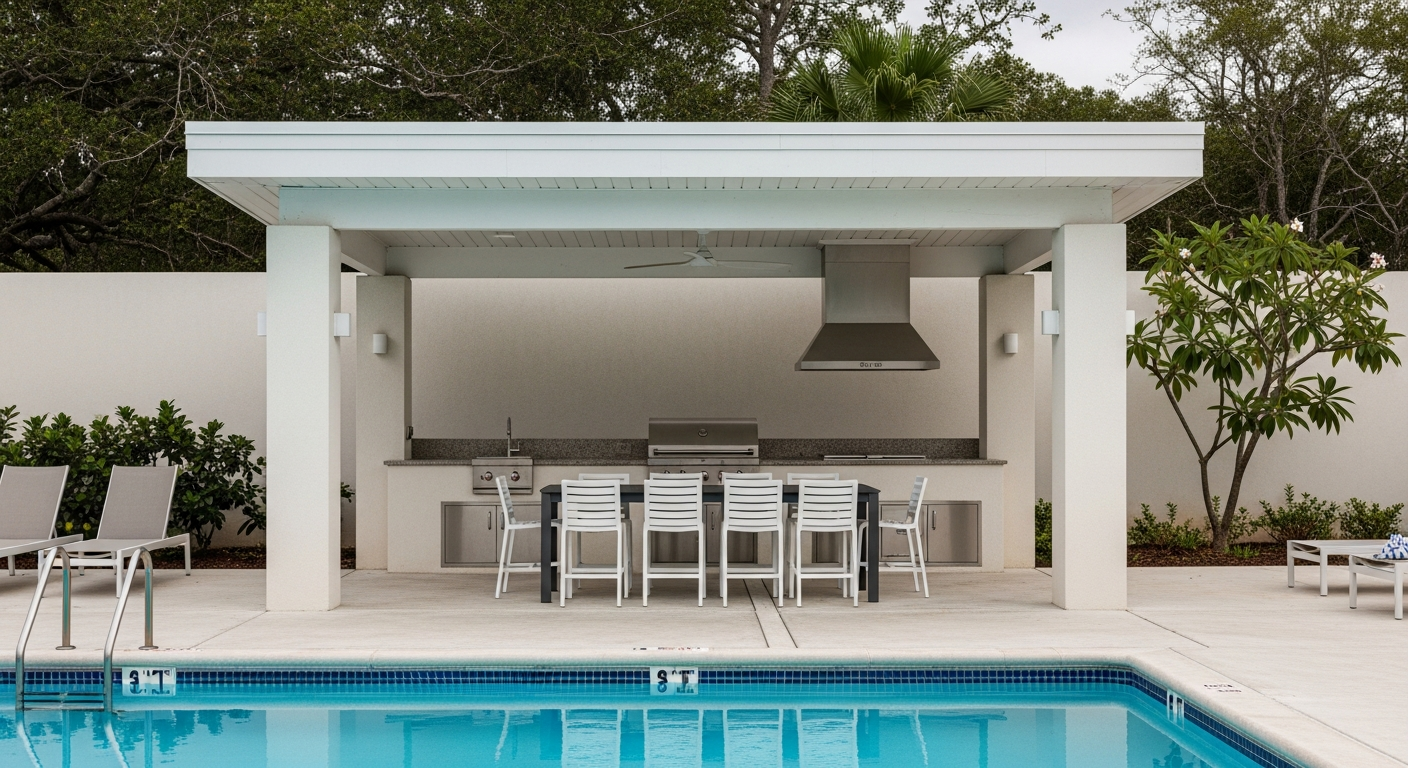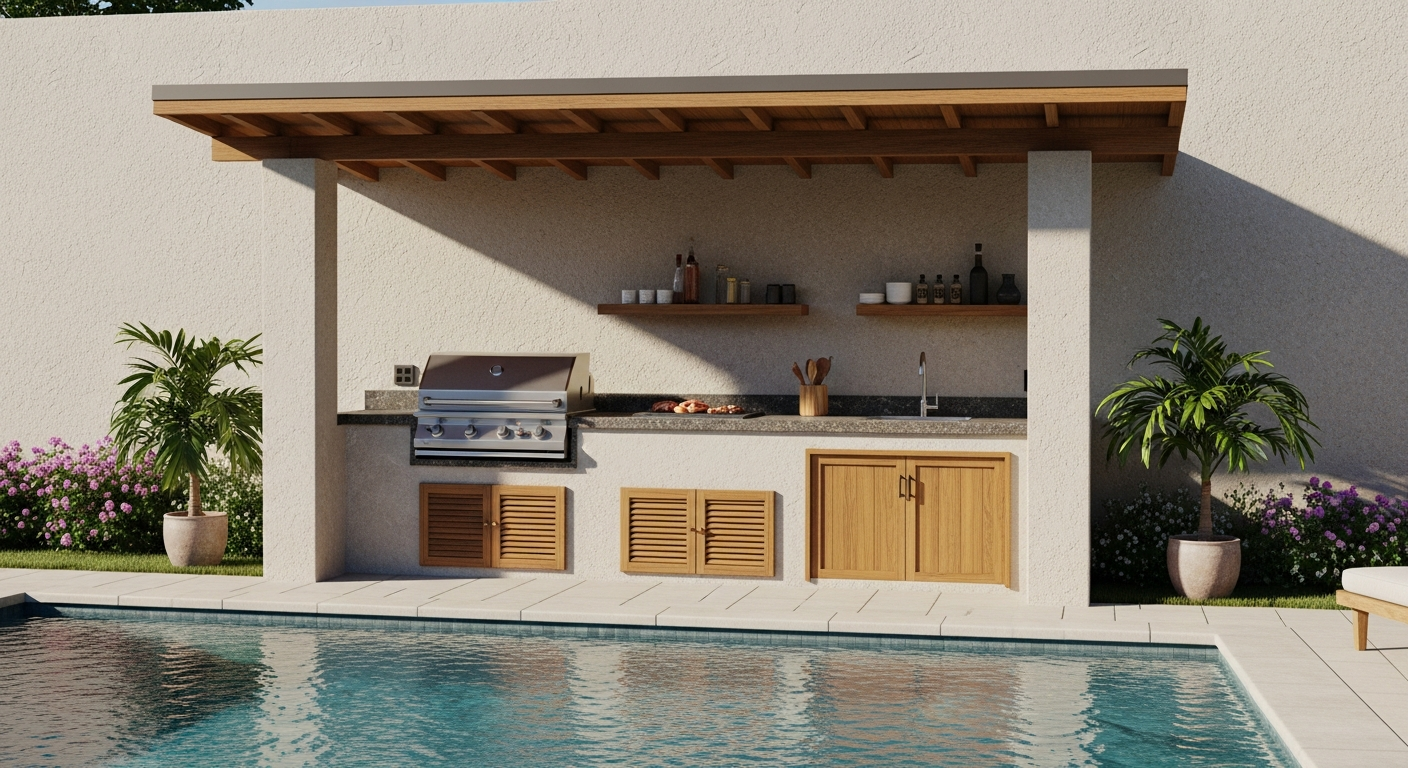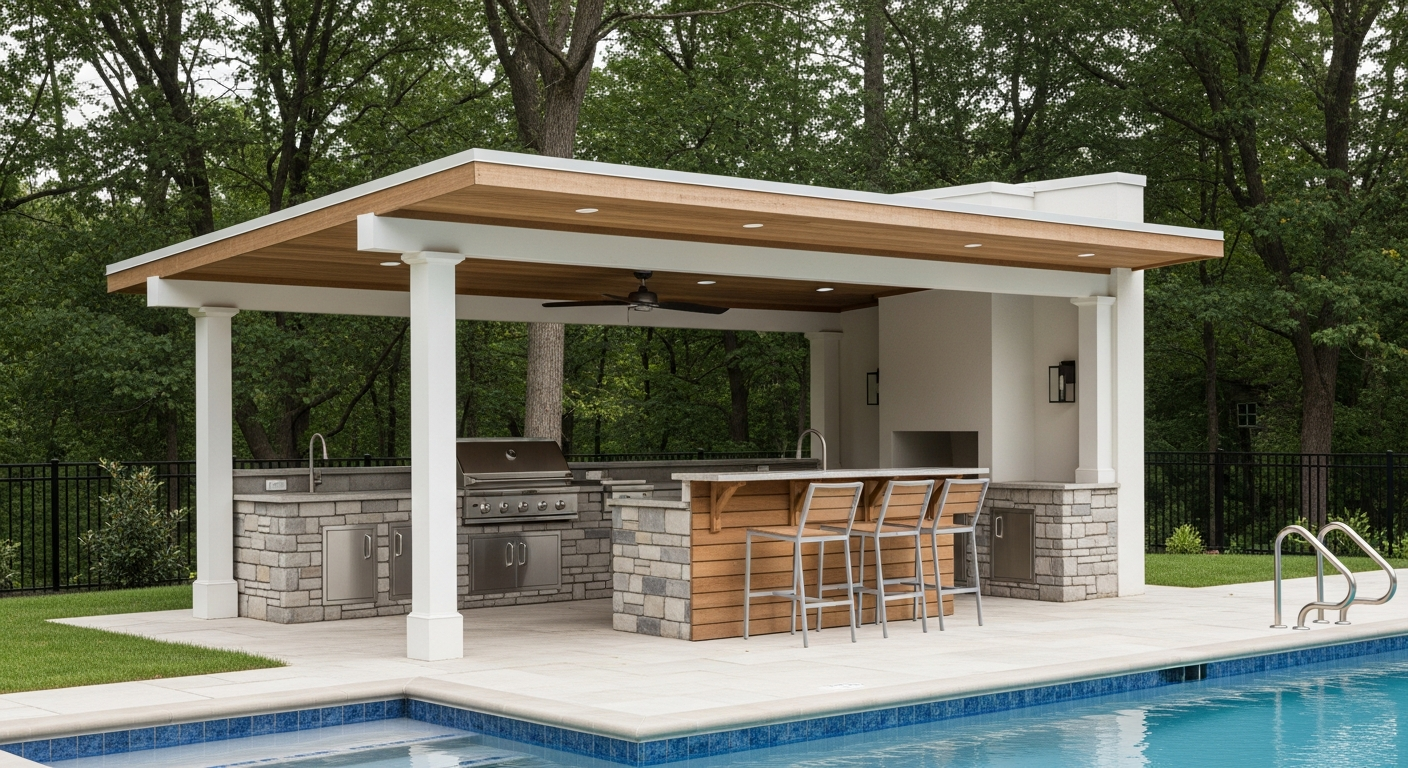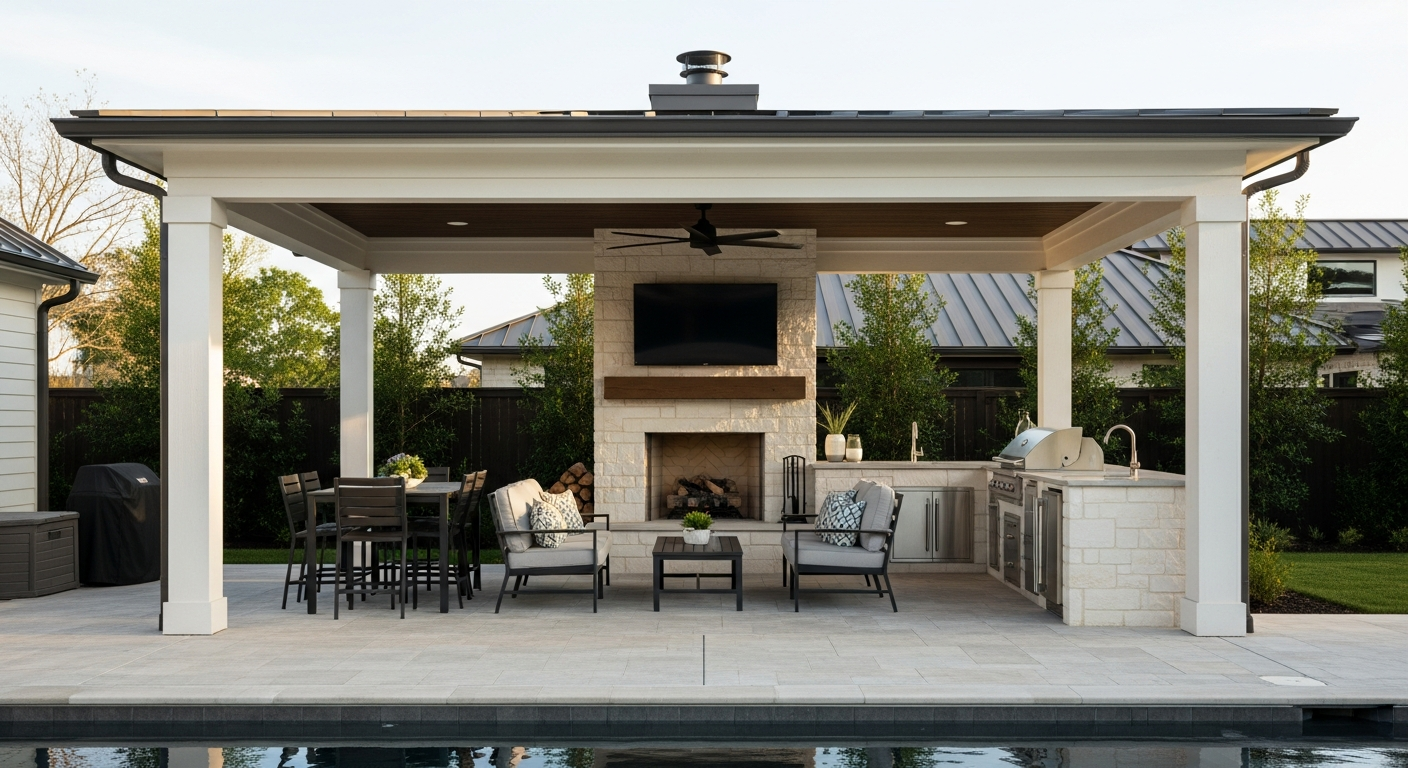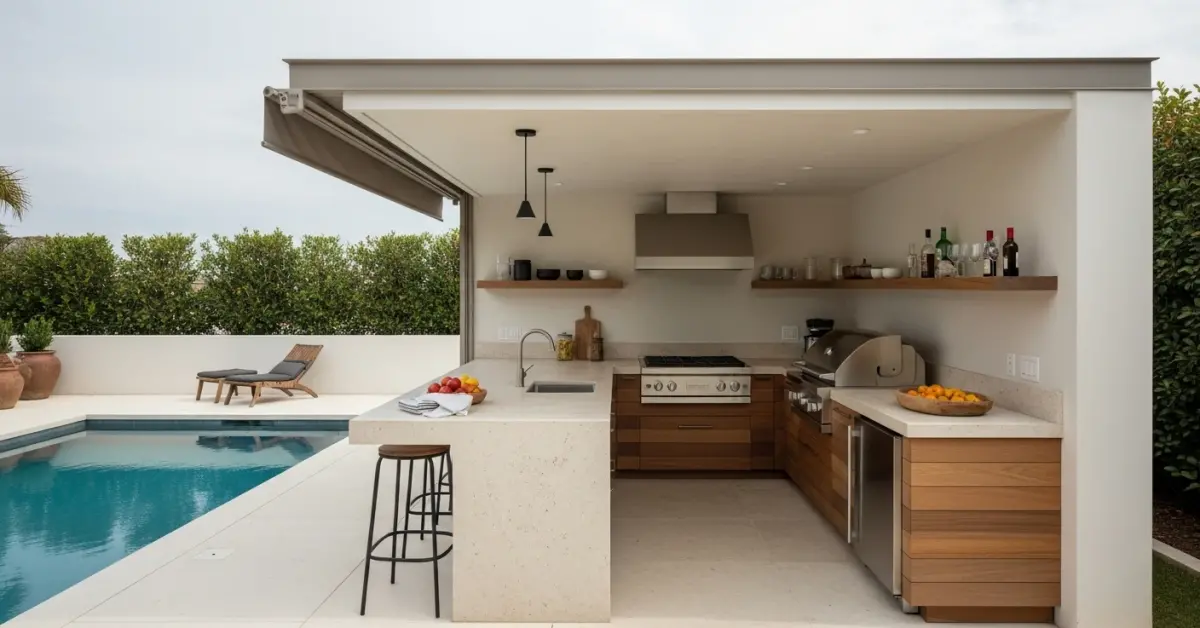
Covered Outdoor Kitchens in Manatee County: My Framework for a 30-Year Lifespan Against Salt Air and Humidity
Designing a covered outdoor kitchen in Manatee County isn't about just picking nice countertops and a grill; it's a technical battle against our specific coastal environment. I’ve seen too many gorgeous, expensive setups start to degrade in under five years because of fundamental material and engineering miscalculations. The primary failure point isn't the occasional storm, but the relentless, combined assault of high humidity, intense UV radiation, and, for anyone west of I-75, pervasive salt spray. My entire approach is built on a principle I call Environmental Material Matching. This means I don't start with aesthetics; I start with a microclimate analysis of the property. A project in a new Parrish development has a different set of challenges than a waterfront home in Palma Sola or on Anna Maria Island. Ignoring this distinction is the single most costly mistake a homeowner can make, leading to premature rust, warping, and electrical failures.Diagnosing Common Failures: My Coastal Durability Matrix
After seeing a client’s powder-coated fixtures corrode in just two seasons near the Robinson Preserve, I developed my proprietary methodology: the Coastal Durability Matrix. It’s a scoring system I use to vet every single component before it's specified for a project. Standard "outdoor-rated" products often fail here. The matrix assesses materials based on three critical Manatee County-specific vectors: Salt-Air Corrosion Resistance (SCR), UV Degradation Factor (UVDF), and Humidity & Mold Tolerance (HMT). A material must score above an 8/10 on all three to even be considered.Technical Deep Dive: Material Specification for Longevity
Most contractors get this wrong by treating all "stainless steel" or "stone" as equal. They are not. Here’s a look at my non-negotiable material standards based on years of fieldwork in our climate. For cabinetry, I abandoned wood structures years ago. Even treated marine-grade plywood will eventually swell and invite mold in a perpetually damp lanai environment. My standard is now High-Density Polyethylene (HDPE). It’s inert, waterproof, and has a UVDF score of 9.5. It doesn’t warp, and its non-porous surface gives mold nothing to feed on, achieving a perfect 10 on the HMT scale. For appliances and hardware, the critical distinction is between 304 and 316L marine-grade stainless steel. Many high-end grill brands use 304 grade, which is fine for Arizona but not for Longboat Key. I've seen 304 grade show tea staining and pitting in less than 18 months. The molybdenum content in 316L steel provides superior chloride and salt resistance, making it the only option I’ll warranty. This one detail alone can add a decade to the life of your investment. For countertops, porous materials like travertine or certain granites are a liability. They hold moisture and are susceptible to staining from pollen and mildew. I steer my clients toward ultra-compact surfaces like Dekton or certain non-porous quartzites. Their low thermal expansion also prevents cracking during our extreme temperature swings from direct sun to evening rain shower.My Implementation Protocol: From Foundation to First Use
Building it right is just as important as choosing the right materials. My process is sequential and has non-negotiable quality gates at each step. A mistake in the foundation or ventilation will undermine even the best materials.- Step 1: Structural and Wind Load Verification. Before anything else, I verify the lanai or patio slab can support the weight. I then engineer the roof structure to exceed Manatee County’s 150 mph wind load requirements, ensuring it’s an asset, not a liability, during hurricane season.
- Step 2: Utility Mapping and Safety. All electrical outlets must be GFCI-protected and housed in "in-use" weatherproof boxes. I run dedicated circuits for refrigerators and grills to prevent breaker trips. Gas lines are pressure-tested for 48 hours before any appliance is connected.
- Step 3: Strategic Ventilation Design. This is my secret weapon against humidity. I design a passive or active ventilation system into the covered structure itself. This includes vented cabinet kick plates and a properly sized grill vent hood to create continuous airflow, preventing stagnant, moisture-laden air from settling. This single step can increase the lifespan of internal components by up to 40%.
- Step 4: Component Assembly and Sealing. Every screw, hinge, and fastener is 316L grade steel. Every penetration through the cabinetry for plumbing or electrical is sealed with marine-grade silicone. This meticulous sealing prevents moisture intrusion, the primary catalyst for mold and decay.
Precision Adjustments and Quality Standards
The final 5% of the project is what ensures the first 95% performs as designed. Once the structure is built, my final check involves a thorough water test, simulating a driving rain to check for leaks and improper drainage. I also calibrate all appliances and walk the client through my recommended maintenance protocol, which is minimal by design. My standard for completion isn't when it looks good, but when I can certify that every component is optimized for the harsh reality of a Manatee County climate. The goal is a beautiful space that requires minimal intervention from the homeowner. Ultimately, is your designer accounting for the specific dew point and salinity levels of your exact location, or are they just building a pretty kitchen that's destined to fail?Written by

Tags
outdoor kitchen with roof
covering for outdoor kitchen
covered outdoor kitchen designs
covered outdoor kitchen plans
outdoor kitchen under covered patio
Covered Outdoor Kitchen in Manatee FL FAQ
What kind of ventilation is required for a grill under a covered patio?
You must install a dedicated outdoor-rated range hood with a higher CFM rating than an indoor model, typically starting at 1200 CFM. This is a non-negotiable safety requirement to manage heat, smoke, and dangerous gases like carbon monoxide. Standard indoor hoods are not built to withstand the grease load or weather exposure and will fail prematurely. The hood must be installed at a specific height, usually 30 to 36 inches above the cooking surface, and vented directly outside, never into the ceiling cavity of the covered structure, which poses a significant fire hazard.
Are special 'outdoor-rated' appliances really necessary for a covered kitchen?
Yes, using only outdoor-rated appliances is critical for both safety and longevity, even in a covered space. These units are built with 304-grade stainless steel to resist corrosion from humidity and have sealed electrical components to prevent moisture intrusion, which can cause short circuits and fire risks. An indoor refrigerator, for example, lacks the robust insulation and powerful compressor needed to maintain safe food temperatures during a 90-degree summer day, leading to spoilage and premature equipment failure.
What countertops can withstand the elements in a covered outdoor kitchen?
Granite, soapstone, and concrete are top choices for their durability and resistance to thermal shock from a hot pan or freezing temperatures. While quartz is popular indoors, most brands are not warrantied for outdoor use because the resins that bind the stone can yellow and degrade with long-term UV exposure, even in a covered but bright area. For a lower-maintenance option, consider porcelain slabs, which are non-porous, meaning they won't stain from spills like wine or grease, and are completely unaffected by UV rays or frost.
How much clearance do I need between my grill and the structure's walls?
You must maintain a minimum clearance of at least 12 inches between the back and sides of your grill and any combustible materials like wood posts or siding. This is a critical fire safety specification found in the appliance manual, and ignoring it is a common cause of structural fires. For high-powered grills, this distance may need to be even greater. We always recommend installing a stainless steel heat shield on any nearby vertical surfaces to provide an extra layer of protection and reflect radiant heat away from the structure.
Can I use standard indoor cabinets for my covered outdoor kitchen?
No, you should never use indoor cabinets, as they will quickly warp, delaminate, and rot from ambient humidity and temperature swings. Outdoor cabinetry is constructed from materials like marine-grade polymers (HDPE), stainless steel, or teak, which are specifically designed to be impervious to moisture and insect damage. A frequent point of failure even with these materials is the hardware; ensure all hinges, handles, and drawer slides are made from 304 or 316-grade stainless steel to prevent rust and seizure.
What are the key utility requirements for plumbing and gas lines?
All water supply lines must be installed with a dedicated shutoff valve and a drainage point to allow for proper winterization, preventing freeze-burst damage that can destroy pipes and flood the structure. For gas, a licensed professional must run a dedicated, properly sized line directly from the source, incorporating an accessible emergency shutoff valve located within 6 feet of the appliances. Using flexible connectors intended for indoor use is a code violation and a serious leak risk outdoors.