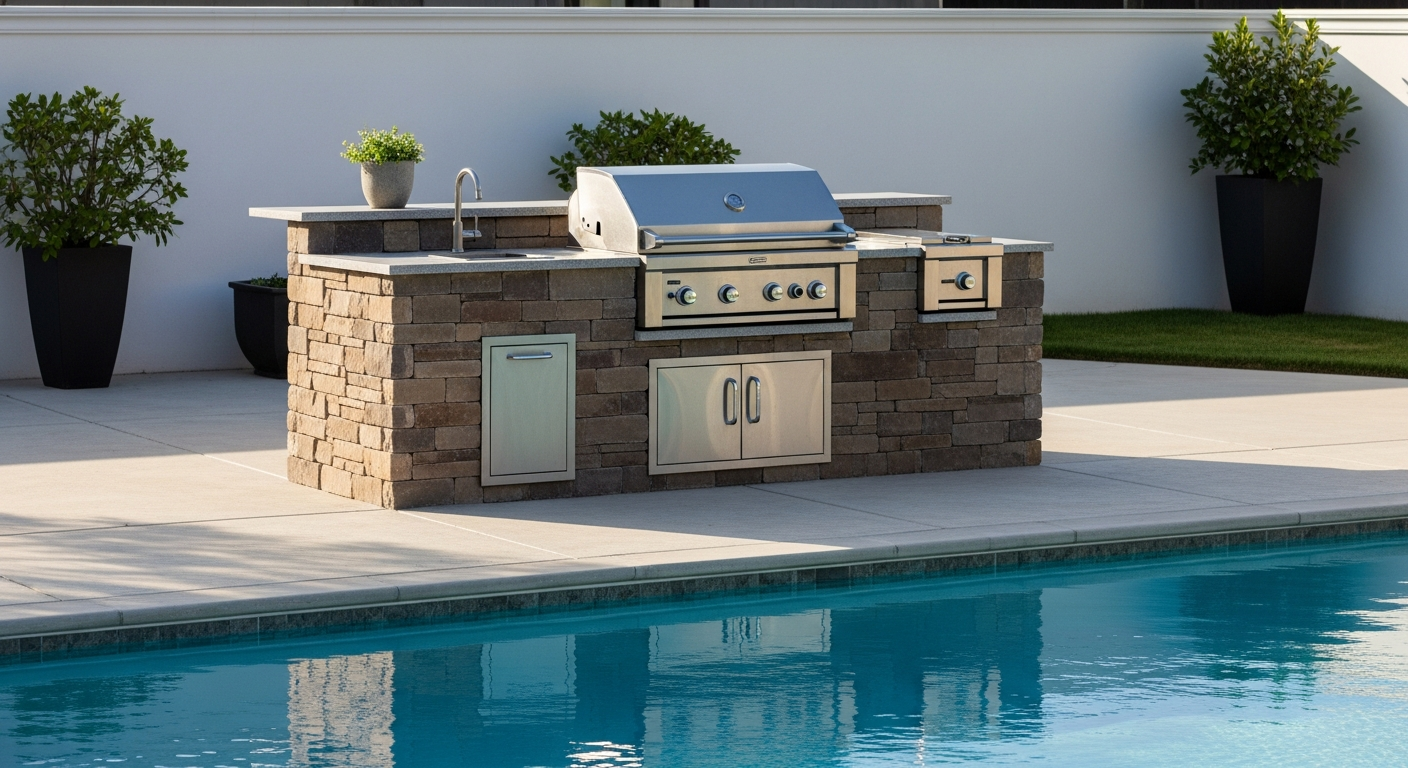
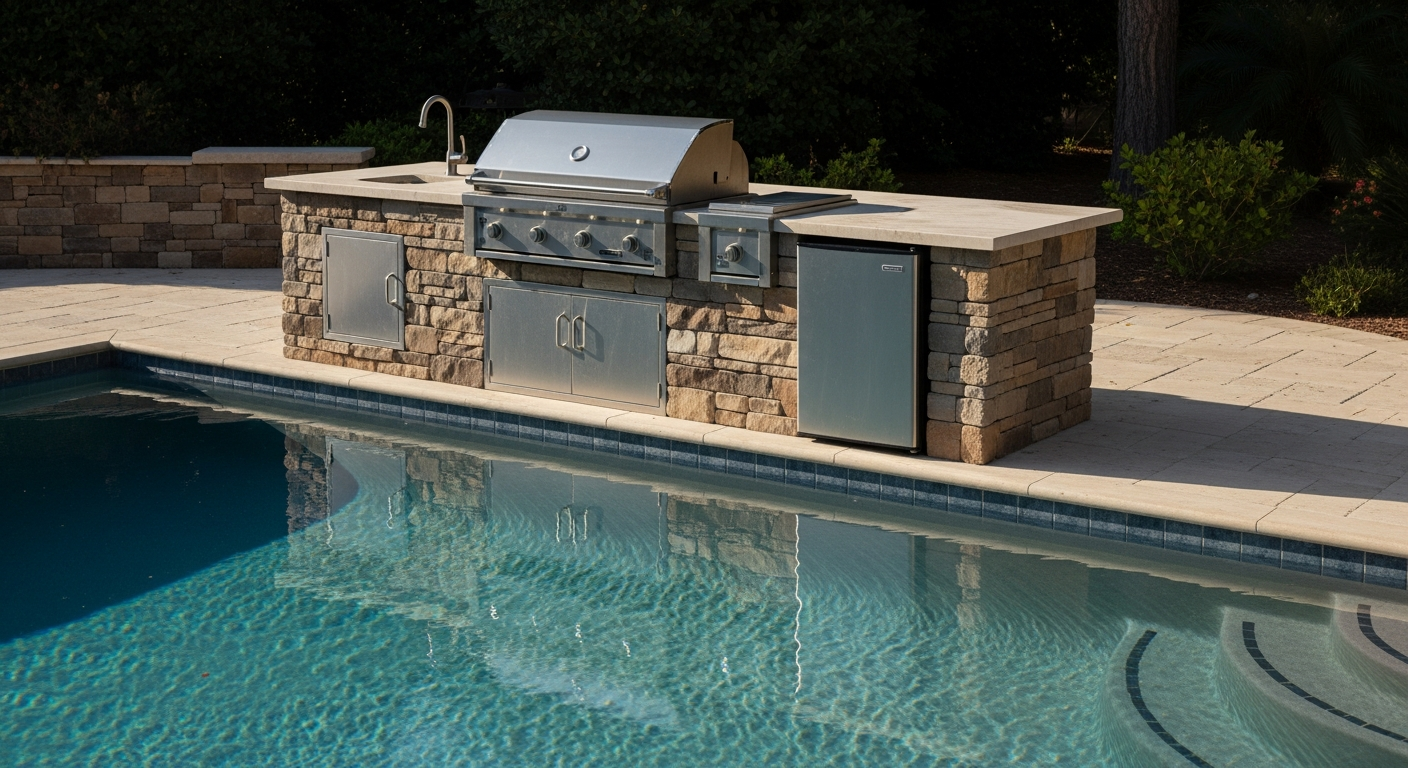
Gas Grill Island in Lee County: My Framework for a 15-Year Rust-Proof Outdoor Kitchen
I’ve seen too many gas grill islands in Lee County fail in under five years. The typical culprit isn’t a faulty grill; it's a structural failure caused by a fundamental misunderstanding of our coastal environment. The intense humidity, salt-laden air from Fort Myers Beach to Sanibel, and the relentless sun create a uniquely corrosive combination that standard construction methods simply cannot handle. My approach centers on creating a completely sealed and non-reactive structural core. This isn't about using better screws; it's about a holistic system designed to combat moisture and galvanic corrosion from the foundation up. This methodology has consistently resulted in outdoor kitchens that show minimal degradation after more than a decade of exposure, directly protecting the homeowner's investment.The Coastal Durability Diagnosis: My Proprietary Assessment Method
Before any design is drawn, I perform what I call the Coastal Durability Diagnosis. It's a non-negotiable first step. I learned its importance the hard way after a project in Cape Coral, built on a waterfront lot, showed premature rust stains within 18 months. The builder had used galvanized steel framing—a common and catastrophic error here. The zinc coating offered zero long-term protection against the constant saline humidity, causing it to corrode from the inside out. My diagnosis now focuses on three critical environmental failure points specific to properties from North Fort Myers down to Bonita Springs.Material Selection and Structural Isolation Protocol
The core of my system is material science. Standard outdoor kitchen kits often use materials that are doomed to fail in Lee County. The key is isolating reactive materials and eliminating moisture traps. My protocol mandates a 304-grade stainless steel frame, not galvanized steel or aluminum. While aluminum doesn't rust, it will corrode and pit when in contact with mortar or concrete in a high-salt environment. For the sheathing, I never use standard cement board. Instead, I specify a fiberglass-reinforced concrete board, which has a significantly lower water absorption rate. I then apply a liquid-membrane waterproofing barrier to the entire structure before the finish material is applied. This creates a monolithic, waterproof shell, preventing moisture from ever reaching the steel frame—a crucial step most contractors skip.Implementation: The Zero-Compromise Construction Sequence
Executing this requires precision. There is no room for "good enough," especially when running gas lines and dealing with the weight of granite or concrete countertops common in the lanai and poolside builds I see. A single shortcut can compromise the entire system.- Foundation Pour: We start with a monolithic concrete slab with a minimum 3,500 PSI rating, reinforced with fiber mesh and rebar. The slab is poured with a slight grade to ensure water runoff, a critical detail often overlooked.
- Frame Assembly: The 304-grade stainless steel frame is assembled using stainless steel fasteners exclusively. Every joint is checked for squareness to prevent stress on the finished structure.
- Utility Installation: All gas and electrical lines are run through waterproof conduits. I insist on a dedicated shut-off valve for the gas line located externally on the island's side for immediate emergency access.
- Waterproof Sheathing: The fiberglass-reinforced board is attached, and all seams are sealed with a polyurethane-based sealant, not silicone. Then, two coats of the liquid waterproofing membrane are applied. This is the critical moisture barrier.
- Grill and Component Installation: The grill and any side burners are installed using manufacturer-specified insulated jackets. I mandate the installation of at least two passive vent panels, creating cross-flow ventilation to prevent dangerous gas buildup. This is a life-safety issue I've seen ignored on many properties.
- Countertop and Finish Application: The countertop is set on a bed of outdoor-rated mortar. I personally inspect the fitment, ensuring proper overhang and a drip edge to channel water away from the island's base.
Precision Tuning for Peak Performance and Longevity
The final 5% of the work is what guarantees a 15-year lifespan. After the island is built, I perform a series of precision adjustments. First, I check the gas pressure at the grill manifold, ensuring it's calibrated to the correct inches of water column (WC) for that specific appliance model. Incorrect pressure is a primary cause of poor performance and premature component failure. Second, any natural stone countertops, like granite, are sealed with a marine-grade, UV-resistant impregnating sealer to prevent staining and degradation from the Florida sun. Finally, I test every single component—from the igniters to the cabinet doors—to ensure perfect fit and function, leaving a 1/8-inch expansion gap around drop-in accessories to accommodate thermal expansion. Now that your island's structure is impervious to our Lee County climate, have you considered how the specific heat output of your chosen grill impacts the necessary airflow and clearance requirements to prevent long-term heat damage to your countertop?Written by

Tags
modern outdoor grill
bbq grill kitchen
outdoor kitchen grill
outdoor kitchen bbq grill
outdoor kitchen and grill