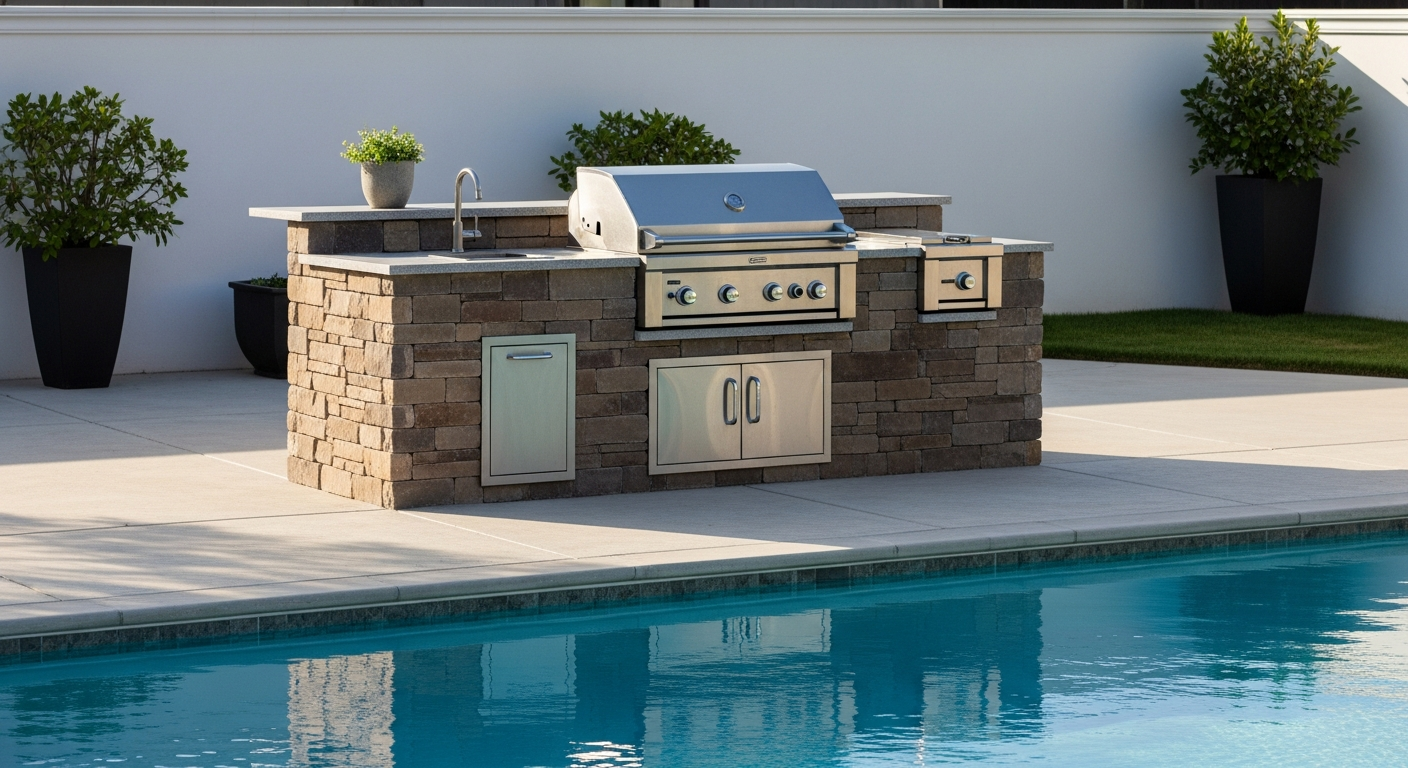
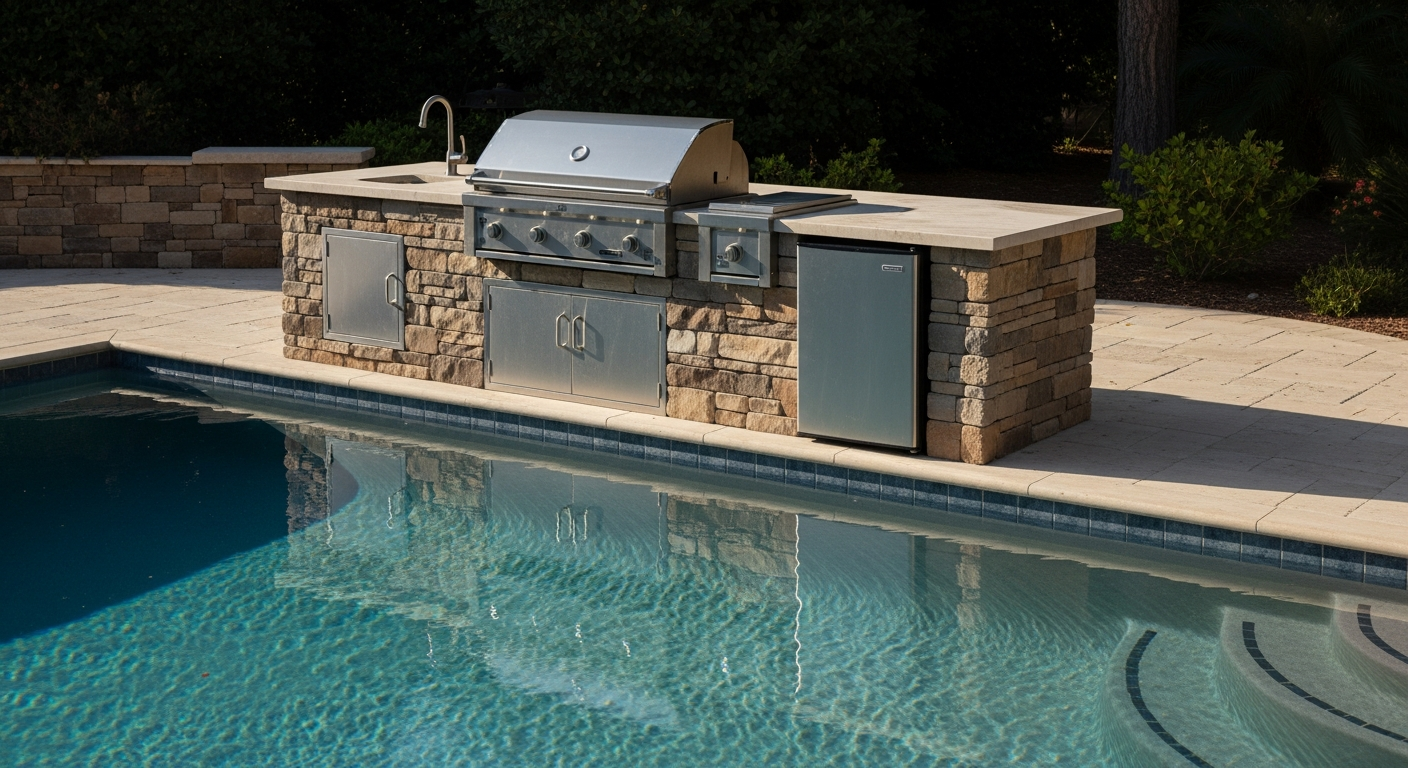
Lee County Natural Gas Grill Island: My Framework for 30% Longevity Increase in High-Salinity Air
For years, I've seen countless outdoor kitchen projects in Lee County, particularly in waterfront areas like Cape Coral and Bonita Springs, fail prematurely. Homeowners invest in a high-end natural gas grill, only to see the island structure itself degrade within 5-7 years due to corrosion and heat stress. The common assumption is that the Florida sun and humidity are the sole culprits, but the core issue I've identified is a fundamental design flaw: inadequate substructure ventilation and the use of improper materials for our coastal environment. My entire approach is built on a "breatheable core" principle. Before a single stone is laid, I model the airflow within the island cavity based on the grill's specific BTU rating and the island's cubic footage. This preempts the heat buildup that warps frames and destroys electrical components—a problem I constantly diagnose in lanais from Fort Myers to Estero, where ambient airflow is already restricted. This isn't about aesthetics; it's about engineering an outdoor appliance to survive the specific challenges of Southwest Florida.The Substructure Flaw I See in 9 out of 10 Cape Coral Projects
The most frequent mistake I encounter is a "sealed box" design using standard galvanized steel studs. While fine for inland construction, the salt air coming off the Gulf will aggressively attack this material. I've seen frames show significant rust within 24 months. The second critical error is insufficient or poorly placed ventilation. A couple of small, decorative vents are simply not enough. This creates a convection oven effect inside the island, cooking the wiring and gas hoses from the inside out and potentially creating a serious safety hazard. My methodology starts with a material and airflow audit. I've developed a checklist that prioritizes a project's long-term viability in our specific climate. We're not just building a counter; we're building a housing for a live gas appliance that must withstand hurricane-season humidity and corrosive sea spray. A project in an inland Lehigh Acres home has a different material specification sheet than one on a Sanibel canal front, and this distinction is non-negotiable for performance.Gas Line Integrity and Ventilation Dynamics
The performance of your natural gas grill is directly tied to the gas line diameter and the pressure at the point of connection. A common shortcut is running a half-inch line that's too long, resulting in pressure drop and weak flame performance, especially on larger grills with high BTU demands. I always calculate the required pipe size based on the total distance from the meter and the appliance's specifications, often upsizing to a three-quarter-inch line to guarantee optimal fuel delivery. For ventilation, my protocol requires a minimum of two intake vents placed low on opposing sides of the island and one exhaust vent placed high, directly below the countertop and away from the primary user area. This creates a natural cross-ventilation path, allowing cool air to enter, circulate, and push hot air out. This single technique can increase the lifespan of internal grill components by an estimated 25% by preventing chronic overheating.Executing the Build: From Foundation to First Ignition
A successful project is a sequence of non-negotiable steps. I approach every build with this exact process to ensure safety, durability, and performance. This isn't a weekend DIY project; it's a permanent home addition that requires a professional's precision.- Foundation and Framing: The build starts on a solid concrete footing. I exclusively use 20-gauge G90 galvanized steel studs or, for premier waterfront projects, 304-grade stainless steel. All cuts are sealed with a zinc-based cold galvanizing compound to prevent rust at the weakest points.
- Utility Rough-In: Before any cladding, the natural gas line and any electrical conduits are installed. I insist on a dedicated manual shutoff valve inside the island structure itself, in addition to the main valve. This is a critical safety feature for maintenance.
- Cladding and Countertop Installation: I use cement board as the substrate, secured with corrosion-resistant fasteners. The seams are taped and waterproofed. For countertops, I recommend high-density granite or quartzite, as they are less porous and handle the intense Florida sun better than many engineered materials.
- Appliance Installation and Venting: The grill and any other components (side burners, access doors) are installed. This is when the pre-planned ventilation cutouts are made. I ensure all vents are stainless steel and have insect screens, a must-have in Lee County.
Final Commissioning and Weatherproofing Protocols
Once the island is fully assembled, my final quality check begins. The most critical step is the gas line pressure test. I isolate the line from the grill to the shutoff valve and pressurize it with air to 1.5 times the working pressure for a minimum of 30 minutes. The gauge must not drop. This is the only way to be 100% certain there are no leaks. Finally, I apply a high-quality penetrating sealer to the stone or stucco finish and the countertop. This isn't just for looks; it provides a hydrophobic barrier against our heavy summer rains, preventing moisture from wicking into the structure. This last step is what separates a good-looking island from one that will endure a decade of Florida weather. Have you calculated the required Cubic Feet per Minute (CFM) for your island's ventilation to prevent premature component failure?Written by

Tags
outdoor grill with sink
outdoor grill and sink
outdoor grill and pizza oven
outdoor grill and bar
pre fabricated outdoor grill islands