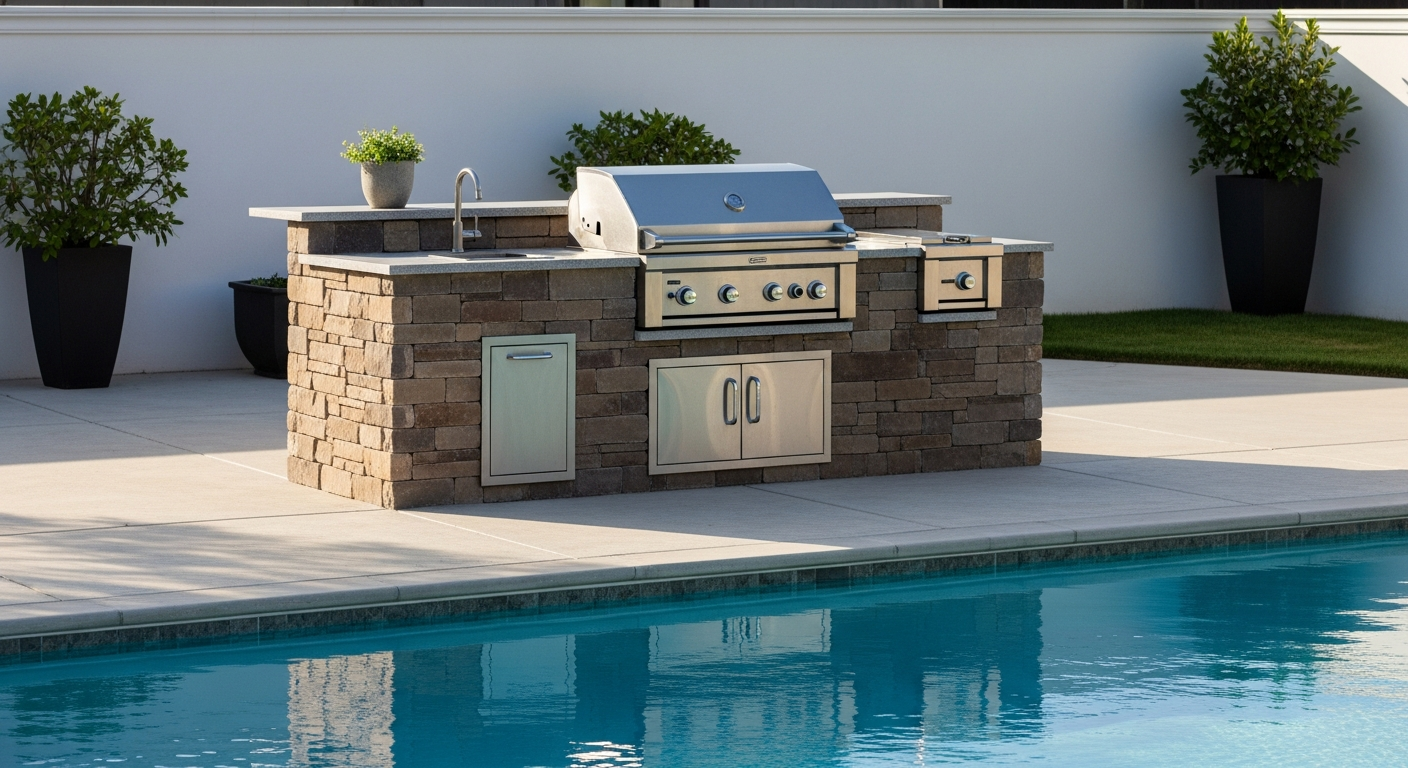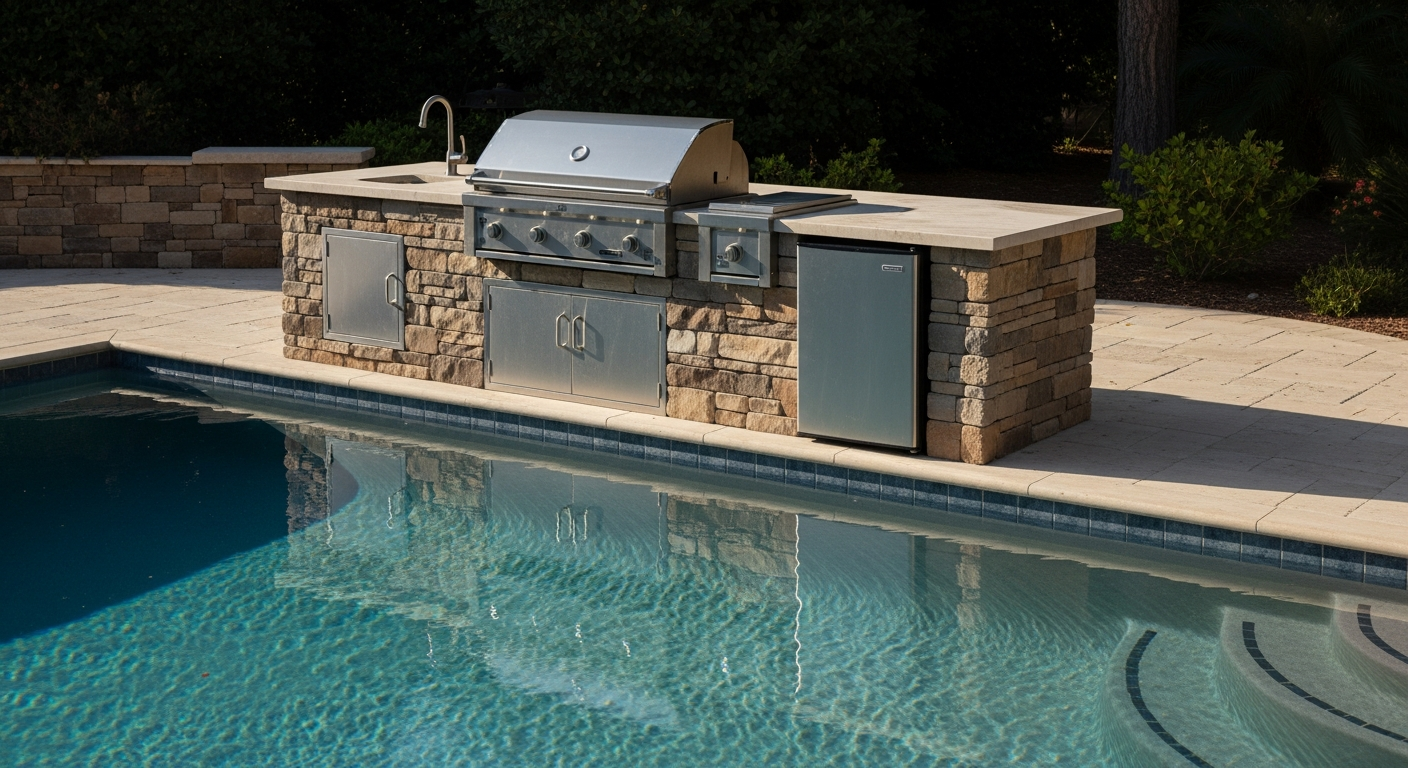
Natural Gas BBQ Island Installation: My Protocol for 100% Corrosion-Proofing in Lee County
For homeowners in Lee County, a natural gas BBQ island isn't a luxury; it's the centerpiece of the lanai lifestyle. Yet, I've seen more of these high-value projects fail within 5 years than succeed long-term. The primary culprit is almost always a fundamental misunderstanding of our unique coastal environment—the relentless humidity and salt air wreak havoc on improper gas line installations. The most common mistake I encounter, from Fort Myers to the waterfront homes in Cape Coral, is the use of standard **black iron pipe** for the final connection to the grill head. While code-compliant in many regions, here it's a ticking time bomb for corrosion. My entire methodology is built around creating a permanent, safe, and efficient system that respects our local climate, ensuring your investment is protected and your outdoor kitchen is always ready.The Critical Flaw in Most Lee County Outdoor Kitchens
After inspecting dozens of outdoor kitchen setups, I developed what I call the **Coastal Gas-Flow Integrity** protocol. It was born from diagnosing a recurring issue: a significant pressure drop at the grill burners just a few years after installation. The cause was internal corrosion and scale buildup within the gas lines, a direct result of humidity reacting with the wrong pipe material. This not only cripples the performance of a high-end grill but also poses a significant safety risk. My protocol addresses two core failures: material selection and gas line sizing. Most contractors simply calculate the BTU load for the grill itself. They fail to account for the future desire for a side burner, a fire pit, or even a pool heater tapped from the same line. This oversight leads to an undersized main line, which is an incredibly expensive fix once the pavers and island structure are in place.Gas Line Sizing and Material Selection for Coastal Environments
The heart of a durable system lies in choosing materials that are inert to salt and moisture and sizing the delivery system for maximum future flexibility. This is where I deviate from standard practice.- Material Specification: The only material I specify for the final 10-15 feet of the run within the island structure is **CSST (Corrugated Stainless Steel Tubing)**. It is flexible, which protects against the minor settling of the island's concrete base, and its stainless steel composition is inherently resistant to the corrosion that plagues black iron pipe. It's critical that the CSST is also properly **bonded and grounded** to prevent electrical arcing, a non-negotiable safety step.
- BTU Load Calculation: My standard practice is to calculate the home's total existing **BTU (British Thermal Unit)** load and then add the maximum potential load of the entire outdoor living space. For a typical grill (50,000 BTU) and a side burner (25,000 BTU), I will plan the pipe diameter to handle at least 100,000 BTUs. This **25% buffer** ensures that adding a fire feature later won't require excavating the yard to run a new, larger pipe.
Executing the Installation: A Step-by-Step Breakdown
A flawless installation is about rigid adherence to process. Rushing any of these steps is how those critical, long-term failures are introduced. Here is my core implementation checklist for a new natural gas BBQ island.- Site & Utility Mapping: I begin by physically marking all existing underground utilities. Before any trenching, I personally verify the main gas meter's capacity and pressure.
- Trenching to Code: The trench for the gas line must be a minimum of **18 inches deep** in Lee County. I insist on a clean trench with a sand bed to protect the pipe.
- Primary Line Installation: For the underground run from the meter to the island, I use high-density **polyethylene (PE) pipe**. All connections are made using heat fusion, which creates a monolithic, leak-proof bond far superior to mechanical fittings.
- Riser and Shut-off Valve Placement: A master shut-off valve is installed at the island's edge, easily accessible but aesthetically concealed. This is a **critical safety feature** for maintenance and emergencies.
- Island Penetration and CSST Connection: The PE pipe transitions to the CSST line just inside the island structure. This is the most crucial connection. I use only manufacturer-approved transition fittings and perform an initial low-pressure test at this stage.
- Final Appliance Hookup: The CSST is routed carefully within the island, avoiding sharp bends, and connected to the grill manifold. I ensure proper ventilation is built into the island structure to prevent gas accumulation.
Post-Installation Checks: Precision Testing and Safety Audits
The job isn't finished when the grill ignites. Verification is what separates a professional installation from a liability. I perform a full-system pressure test that exceeds standard code requirements. The entire line, from the meter to the grill, is pressurized with air to **10 PSI** and monitored with a **manometer** for a minimum of 30 minutes. A reading that holds perfectly steady indicates a truly sealed system. Following the pressure test, every single fitting is checked with a professional-grade leak detection solution. Only after the system passes these two checks do I introduce natural gas and commission the appliance, calibrating the burners for our local atmospheric pressure to ensure a perfect blue flame. Have you calculated the total potential BTU load for your entire future lanai setup, or just for the grill you're installing today?Written by

Tags
outdoor kitchen with pizza oven and grill
outdoor kitchen natural gas grill
outdoor kitchen with smoker and grill
outdoor kitchen with flat top grill
outdoor grill with fridge