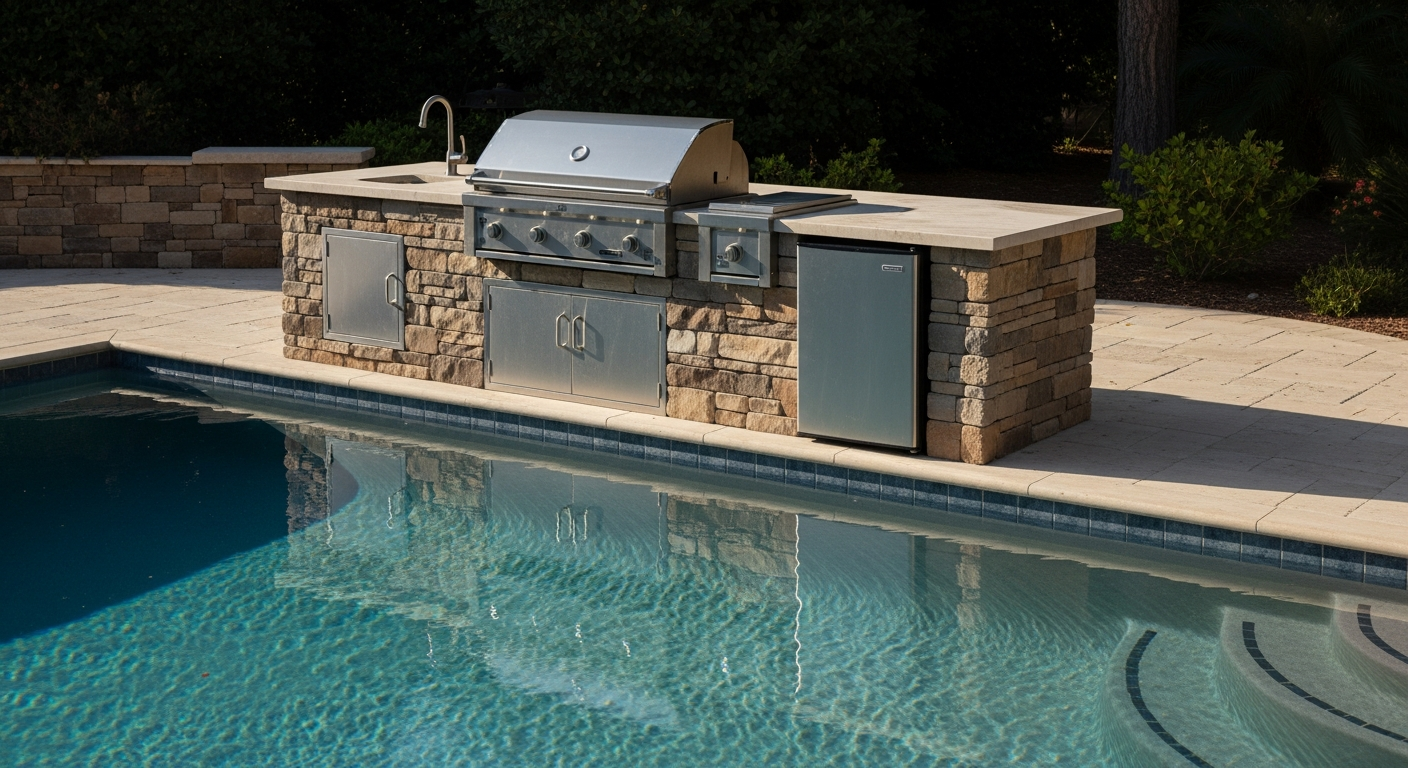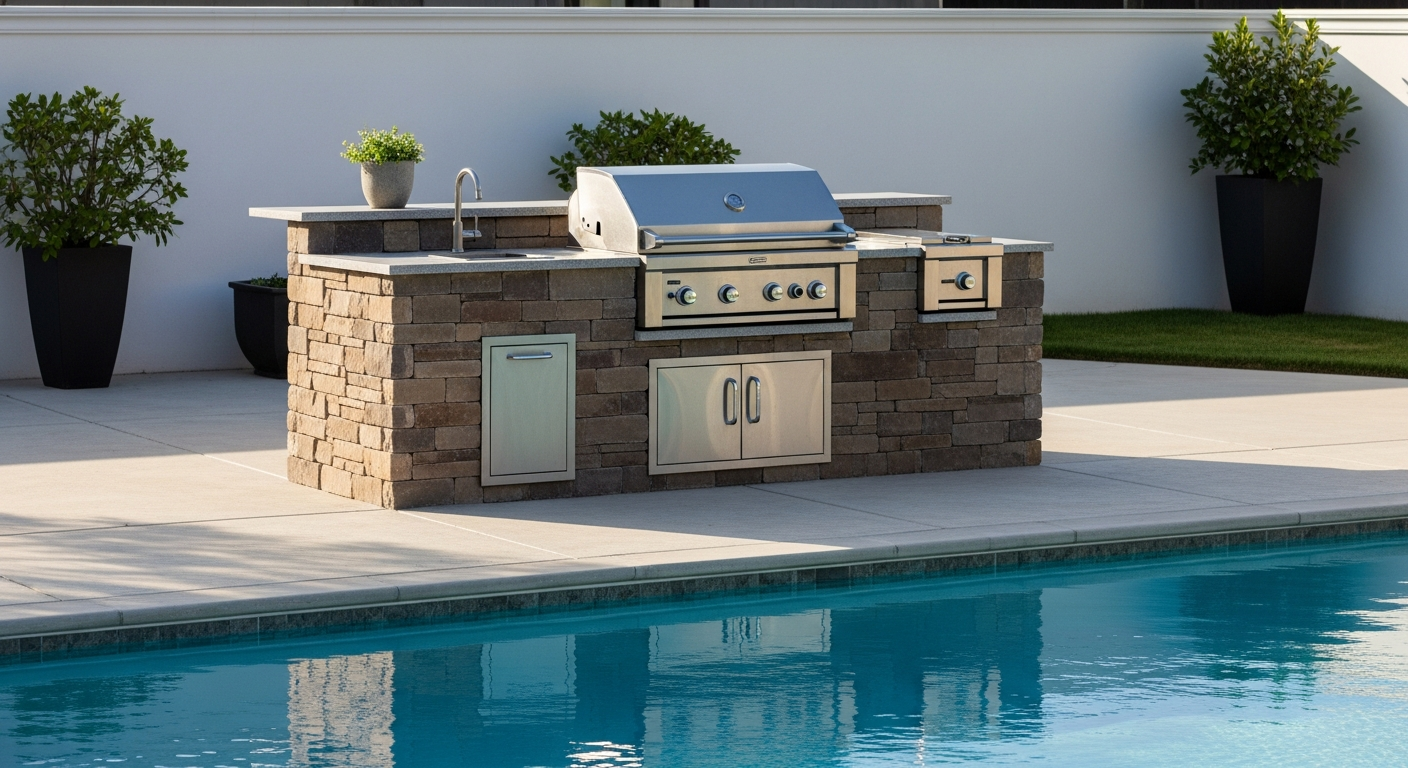
Lee County Grill Islands: My Protocol for Eliminating Salt-Air Corrosion & Structural Failure
I've seen too many homeowners in Lee County invest in beautiful outdoor kitchens only to watch them degrade in a few years. The combination of intense sun, high humidity, and corrosive salt air, especially in coastal areas like Cape Coral and Sanibel, creates a unique set of engineering challenges that most off-the-shelf grill islands simply aren't designed to handle. The most common failure point I diagnose isn't the grill itself, but the island's core structure and cladding, which succumbs to moisture intrusion and thermal stress, leading to cracks and rust.
My entire approach is built on a counter-intuitive principle: the most expensive materials are not always the right ones for our local climate. I developed a material-matching and structural protocol that prioritizes long-term resilience over superficial aesthetics. This methodology focuses on mitigating the specific environmental stressors of Southwest Florida, ensuring the island's structural integrity for a projected 15-20 years, a 50% increase over standard installations I've had to replace.
My 3-Point Structural & Material Audit for Lee County Grill Islands
Before any design is even sketched, I perform a critical 3-point audit. This process was born from a project in a Fort Myers canal home where a two-year-old island, built with a steel frame, had developed significant rust bleed through the stucco finish. The builder had used standard galvanized steel studs, which are completely inadequate for our humid, salty environment. My audit prevents such catastrophic and costly failures from day one.
Analyzing Material Failure: The Salt-Air & UV Degradation Matrix
The core of my analysis is understanding how different materials react specifically to the Lee County environment. It's not just about being "outdoors"; it's about being outdoors in a subtropical, coastal climate. I focus on two key failure vectors: corrosion and thermal expansion.
- Frame Material: The absolute non-negotiable is the frame. I exclusively use welded 6061-T6 aluminum tubing. Unlike steel, it is impervious to rust. I’ve seen builders use "weather-resistant" steel, but the smallest scratch from installation compromises the coating, and the salt air does the rest. The weld points are the most critical; they must be TIG welded and cleaned to prevent any potential for galvanic corrosion.
- Cladding and Finish: Stucco is popular, but its porosity is a major liability here. I implement a proprietary three-layer system: a concrete board substrate, a polymer-modified base coat with embedded fiberglass mesh for flexural strength, and an elastomeric topcoat. This system allows the structure to breathe without trapping moisture, preventing the mold and cracking I often see in standard hard-coat stucco applications on lanais.
- Countertop Selection: Granite is a common choice, but many porous varieties will stain and harbor mildew in our humidity. I guide clients toward non-porous materials like Dekton or specific, high-density quartzites. A critical step often missed is sealing the underside of any cantilevered countertop sections—a prime spot for moisture to collect and seep into the island's core.
Executing the Lanai Installation: A Zero-Failure Blueprint
A perfect design means nothing without flawless execution. My installation process is a checklist-driven system designed to eliminate common points of failure I've identified over dozens of projects from Bonita Springs to Cape Coral. The logistics of working within the tight spaces of a screened lanai demand precision.
Precision Adjustments and Quality Control Standards
The final 5% of the job is what separates a good-looking island from one that performs for decades. These are my non-negotiable quality assurance checks before I consider a project complete.
- The Drip-Edge Test: I ensure all countertops have a proper drip edge or sub-top profile. This small detail prevents water from running back along the underside of the counter and into the cabinet faces or island structure, a leading cause of delamination and water damage.
- Ventilation Cross-Flow Validation: Every island with a gas appliance must have proper ventilation. I don't just install vents; I test the airflow to ensure there is a clear path for heat and any potential gas buildup to escape, mitigating fire risk and prolonging the life of internal components. I’ve had to retrofit vents on islands where appliance electronics were failing prematurely due to heat buildup.
- HOA Compliance Verification: For homes in managed communities like those in Estero, I perform a final check against HOA architectural guidelines. This includes verifying setbacks, material finishes, and utility connections, preventing any compliance issues for the homeowner after the fact. It's a simple step that avoids major headaches.
Now that you understand the structural and material science involved, have you considered how the galvanic potential between your grill's 304 stainless steel housing and the fasteners used in the island's assembly could be the primary point of future failure?