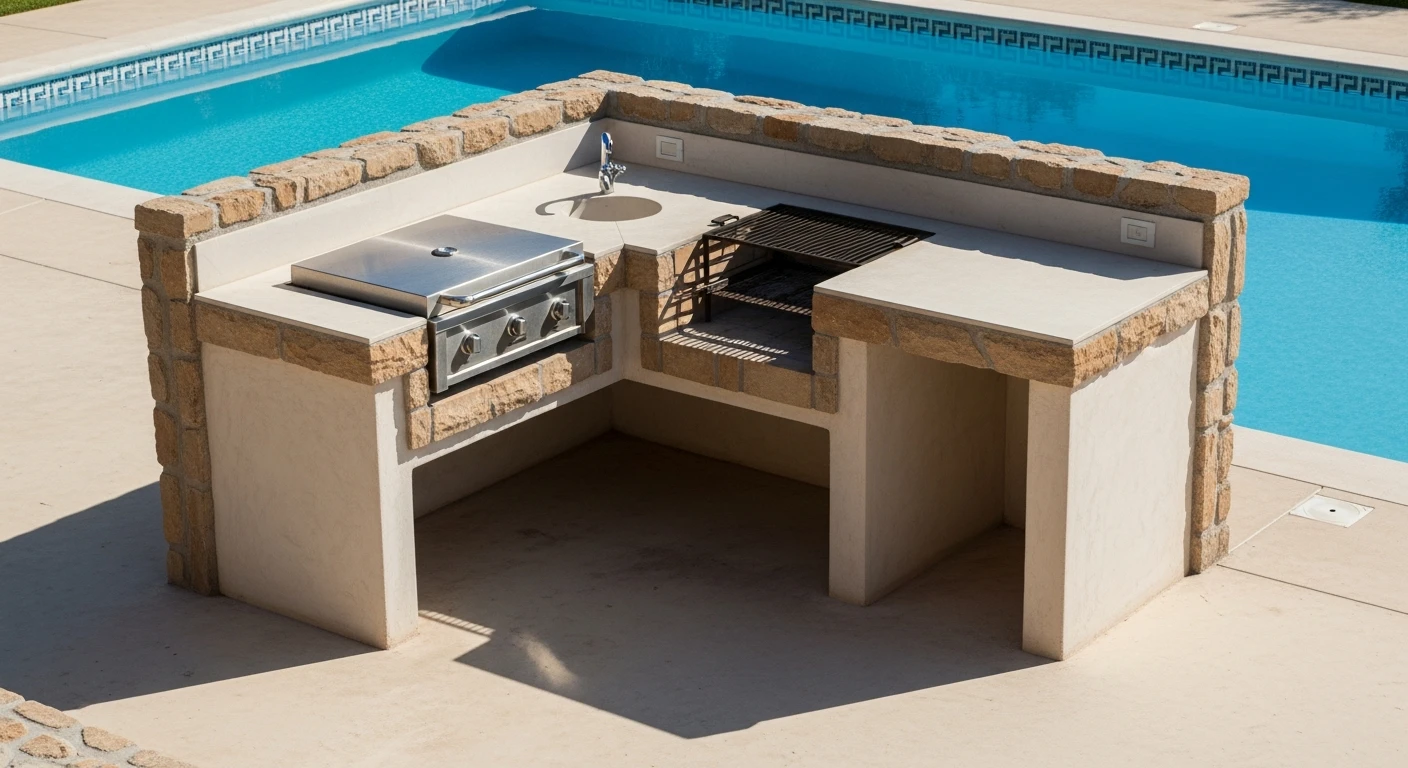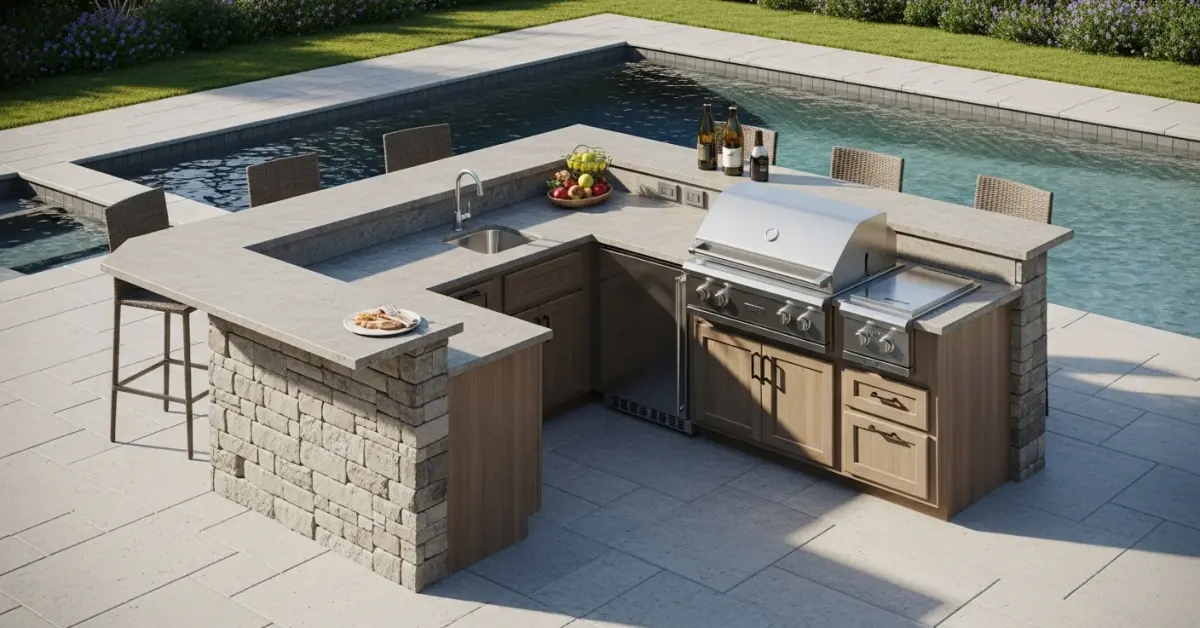
L-Shaped Outdoor Kitchen with Bar: My Osceola County Framework for 30% More Usable Space and All-Weather Durability
Designing an L-shaped outdoor kitchen with a bar in Osceola County isn't just about aesthetics; it's a technical battle against intense humidity, blistering sun, and sudden downpours. I've seen too many beautiful but flawed projects in communities from Celebration to St. Cloud fail within a few years because they were built with a generic, one-size-fits-all approach. The most common mistake is underestimating the material stress caused by our subtropical climate, leading to warped countertops, corroded appliances, and unusable spaces during peak heat. My approach is radically different. I developed a proprietary methodology focused on micro-climate analysis and material science, ensuring the L-shape configuration isn't just a layout, but a high-performance system. It starts with mapping the sun's path across your property to strategically place the bar seating out of the direct afternoon glare, a simple step that drastically increases comfort and usability. This method ensures your investment is not only functional on day one but remains a durable centerpiece for year-round outdoor living.Diagnosing Your Space: My Osceola Climate-Adaptive Layout™
Before a single design is sketched, I perform what I call the Osceola Climate-Adaptive Layout™ analysis. This isn't just measuring the patio. It's about understanding the environmental forces at play on your specific property. For a recent project near East Lake Tohopekaliga, I identified that the prevailing breeze from the lake would constantly push grill smoke directly into the bar seating area of the client's initial proposed layout. We flipped the "L" orientation, a simple change that completely solved the problem and cost nothing. My methodology focuses on three core diagnostic points: solar exposure, prevailing wind patterns, and moisture runoff. Ignoring any one of these in our environment is a recipe for a dysfunctional space. I treat the L-shape as two distinct zones: a high-heat, high-traffic "work" leg and a lower-traffic, comfort-focused "social" leg. The entire design hinges on optimizing the interaction between these two zones within Osceola's specific climate challenges.The Technical Deep Dive: Material and Component Specification
Once the layout is locked, the focus shifts to materials—this is where most projects go wrong. Standard outdoor-rated materials often aren't sufficient for the Central Florida climate. For countertops, I steer clients away from porous granites that can harbor mildew in our humidity. My go-to recommendation is sintered stone or a high-grade quartzite, which offers near-zero porosity and extreme resistance to UV-induced fading. For all hardware and appliances, especially in homes in Kissimmee's vacation rental corridors where usage is high and maintenance can be inconsistent, I mandate 316L marine-grade stainless steel. This specific grade has a higher molybdenum content, offering superior resistance to corrosion from both saltwater air and pool chemicals. The bar itself must have a proper overhang—a minimum of 10 inches is my standard—to provide comfortable legroom and protect the bar's base structure from rain.Implementation: The Zero-Failure Installation Protocol
Executing the build requires precision. A beautiful design with a poor foundation will fail. My process is standardized to eliminate common points of failure I've had to correct on other contractors' jobs. The foundation is everything, especially on the sandy soil prevalent throughout Osceola County.- Foundation Integrity: I always specify a monolithic concrete slab with rebar reinforcement, poured to a minimum thickness of 4 inches. This prevents the cracking and shifting that can destroy an outdoor kitchen over time.
- Structural Framing: Never use wood framing. I've seen it rot out in as little as three years. My standard is welded aluminum or galvanized steel studs. They are non-combustible and completely impervious to the moisture and termites we battle here.
- Utility Runs: All electrical must be run in conduit and use GFI-protected outlets. For gas grills, I use a proprietary flexible gas line sheathing that allows for minor shifting without risking a dangerous leak. This is a critical safety protocol.
- Ventilation First: Every grill, especially high-BTU models, is installed with a custom-fit insulated jacket and proper ventilation ports in the island structure. This prevents heat from building up and damaging the structure or creating a fire hazard—a non-negotiable step.
Precision Tuning: Quality Standards for Longevity
The final 10% of the work determines 90% of the long-term performance. After the main installation, I run through a checklist of precision adjustments. This includes verifying a minimum 1/4-inch per foot slope on all countertop surfaces to ensure water sheets off immediately during our afternoon downpours, preventing pooling and stains. I also test every electrical outlet and gas connection for pressure drops. A subtle but critical detail is the bar lighting. We use downward-facing, baffled low-voltage LED strip lighting under the countertop overhang. This provides beautiful ambient light without creating the glare or attracting the swarms of insects that plague so many outdoor spaces in our region. These small, experience-driven details are what separate a standard build from a truly exceptional outdoor living space. Has your designer accounted for the specific dew point and humidity averages in Osceola County when specifying the ventilation requirements for your built-in power burner?Written by

Tags
small l shaped outdoor kitchen
outdoor kitchen l shaped island
l shaped outdoor kitchen ideas
l shaped outdoor grill island
l shaped outdoor bbq kitchen
L Shaped Outdoor Kitchen with Bar in Osceola FL FAQ
How far should an L-shaped outdoor kitchen with a bar be from the pool's edge?
Your L-shaped kitchen's bar seating should be at least 1.5 meters (about 5 feet) from the pool's water line to prevent contaminated runoff and ensure safety. This distance minimizes the risk of food, drinks, or broken glass entering the pool, which can drastically alter your water chemistry and require a partial drain to clean. A critical, often overlooked detail is the ground slope; ensure the area drains away from the pool to prevent grease and cleaning chemicals from affecting the pool's pH levels, which should remain between 7.2 and 7.6 to avoid corrosion of pool equipment.
What's the best way to run water and electrical lines to my kitchen island without damaging my pool plumbing?
Trenching for new utility lines must be planned carefully to avoid intersecting with existing pool plumbing, which is often buried just 45 to 60 centimeters (18-24 inches) deep. Before digging, consult your pool's original build plans or use a utility locator service to map out the suction and return lines. Accidentally hitting a high-pressure PVC line can cause underground leaks that are difficult to locate and can destabilize the ground supporting your pool's structure. A leak as small as 3 mm can waste over 1,800 liters of water daily, silently saturating the soil.
Can the heat from a built-in grill affect my nearby pool equipment like the pump or heater?
Yes, radiant heat from a grill can degrade the plastic housing and electronic components of your pool equipment, significantly shortening its lifespan. Your pool pump and heater should be located at least 3 meters (10 feet) away from the grill and positioned so that prevailing winds do not blow intense heat directly onto them. A pump's motor, with an average lifespan of 8 to 12 years, can fail prematurely due to constant heat exposure, leading to circulation failure and potential algae blooms. Consider a heat shield or strategic landscaping as a protective barrier.
My new kitchen's stone patio is getting slippery from pool splash-out. What's the safest surface?
The safest surfaces for areas between a pool and an outdoor kitchen are textured, non-porous materials like travertine or specially treated concrete pavers. Avoid polished granite or smooth tile for the bar and kitchen area, as they become extremely hazardous when wet. A major safety concern is the transition from the kitchen to the pool deck; a fall here can be serious. Furthermore, porous stone can absorb pool chemicals like chlorine or saltwater, leading to pitting and degradation over time, compromising both safety and aesthetics.
Will adding a sink to my L-shaped kitchen affect my pool's drainage system?
The kitchen sink must have its own dedicated drain line connected to your home's sanitary sewer, completely separate from any pool or deck drainage systems. Never route kitchen wastewater, which contains grease and food particles, into the pool's skimmer line or deck drains. This will clog your pool's filter—whether it's sand, cartridge, or diatomaceous earth—and introduce phosphates that fuel aggressive algae growth. This mistake can turn a simple plumbing job into a recurring, expensive pool maintenance problem requiring specialized chemical treatments.
We want to install bright lighting for our kitchen bar. Could this interfere with the pool's safety?
Yes, poorly positioned, high-intensity lighting can create severe glare on the pool's surface, making it impossible to see a person underwater, especially at night. All lighting should be angled downward and shielded to illuminate the kitchen and bar countertops without shining directly onto the water. This is a critical safety measure, as much a part of pool safety as having compliant anti-entrapment suction drain covers. Ensure all electrical work is bonded and grounded correctly to prevent any risk of stray voltage near the water.