Outdoor Deck Kitchens in Pinellas County: My Material Protocol for Extending Lifespan by 30% Against Salt-Air Corrosion
As a designer specializing in high-performance outdoor structures, my primary focus for any outdoor deck kitchen project in Pinellas County isn't the grill or the layout—it's the material science. I’ve been called in to assess far too many failing projects, from beautiful waterfront homes in Tierra Verde to cozy bungalows in Dunedin, where a kitchen less than three years old is already showing significant pitting and rust. The common denominator is always a fundamental misunderstanding of our unique coastal environment: the relentless combination of high salinity, intense UV radiation, and suffocating humidity. My approach flips the conventional design process on its head. Instead of starting with aesthetics, I begin with a corrosion and degradation audit. This methodology ensures the structural and material integrity of your investment before a single appliance is chosen. This prevents the catastrophic (and costly) failures I've seen when standard materials are used just a few hundred yards from the Gulf. This isn't about building a pretty kitchen; it's about engineering a functional asset that withstands the specific atmospheric challenges of Pinellas County.The Salt-Air Audit: My Diagnostic Framework for Pinellas Decks
Before I even sketch a layout, I perform what I call the "Salt-Air Audit." It's a non-negotiable first step that has saved my clients thousands in premature repairs. I’ve seen projects in the Old Northeast neighborhood of St. Pete fail in under 24 months because the builder used standard 304-grade stainless steel, which simply cannot handle the persistent salt spray. My audit focuses on three critical failure points specific to our local climate. The process involves a meticulous analysis of the deck's existing condition and its environmental exposure. I assess the deck's substructure, especially on older raised homes common in Gulfport and Pass-a-Grille, to calculate the additional dead load of the proposed kitchen. Then, I analyze the proximity to saltwater and the prevailing wind direction to create a material stress map. This proprietary map dictates the minimum material grade required for every single component, from the cabinet hinges to the vent hood shell.Material Selection Deep Dive: Beyond Marine-Grade Steel
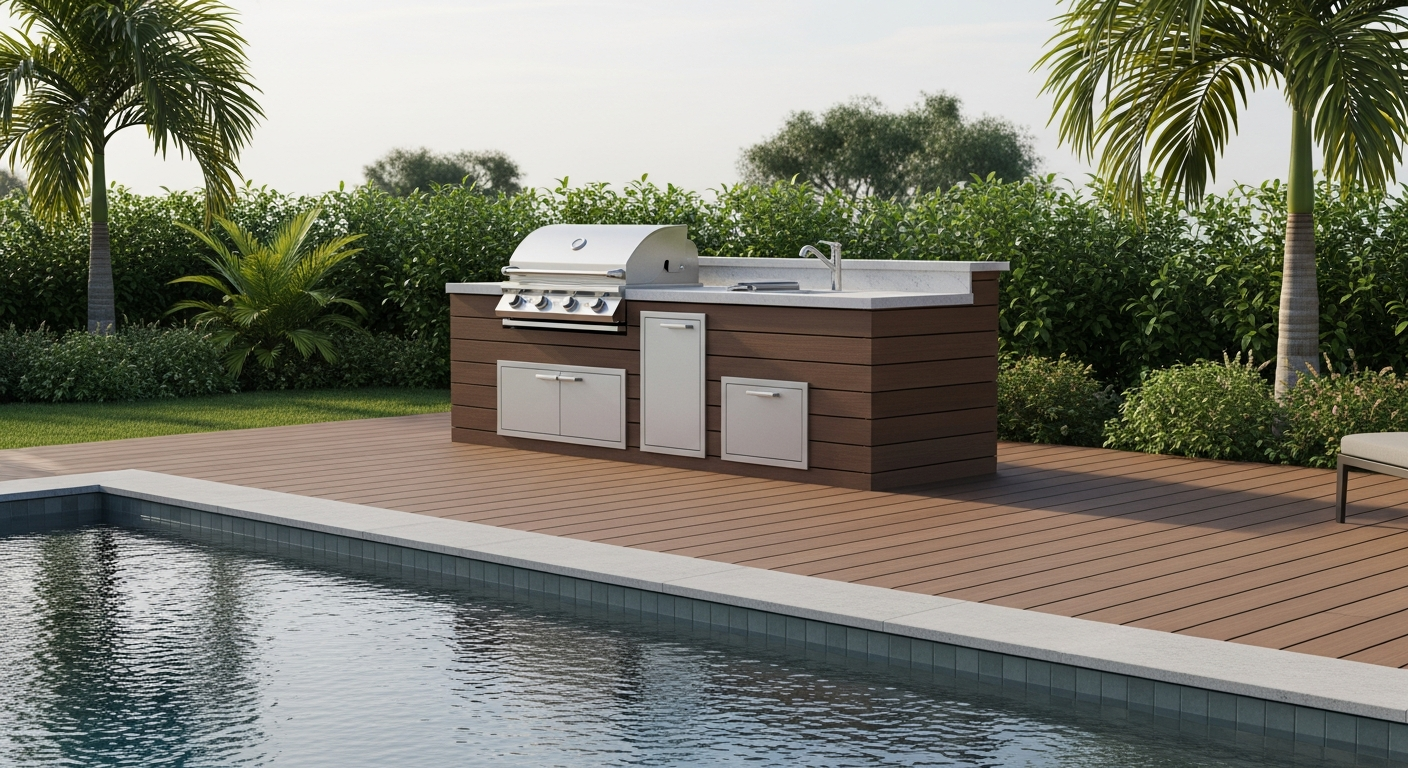
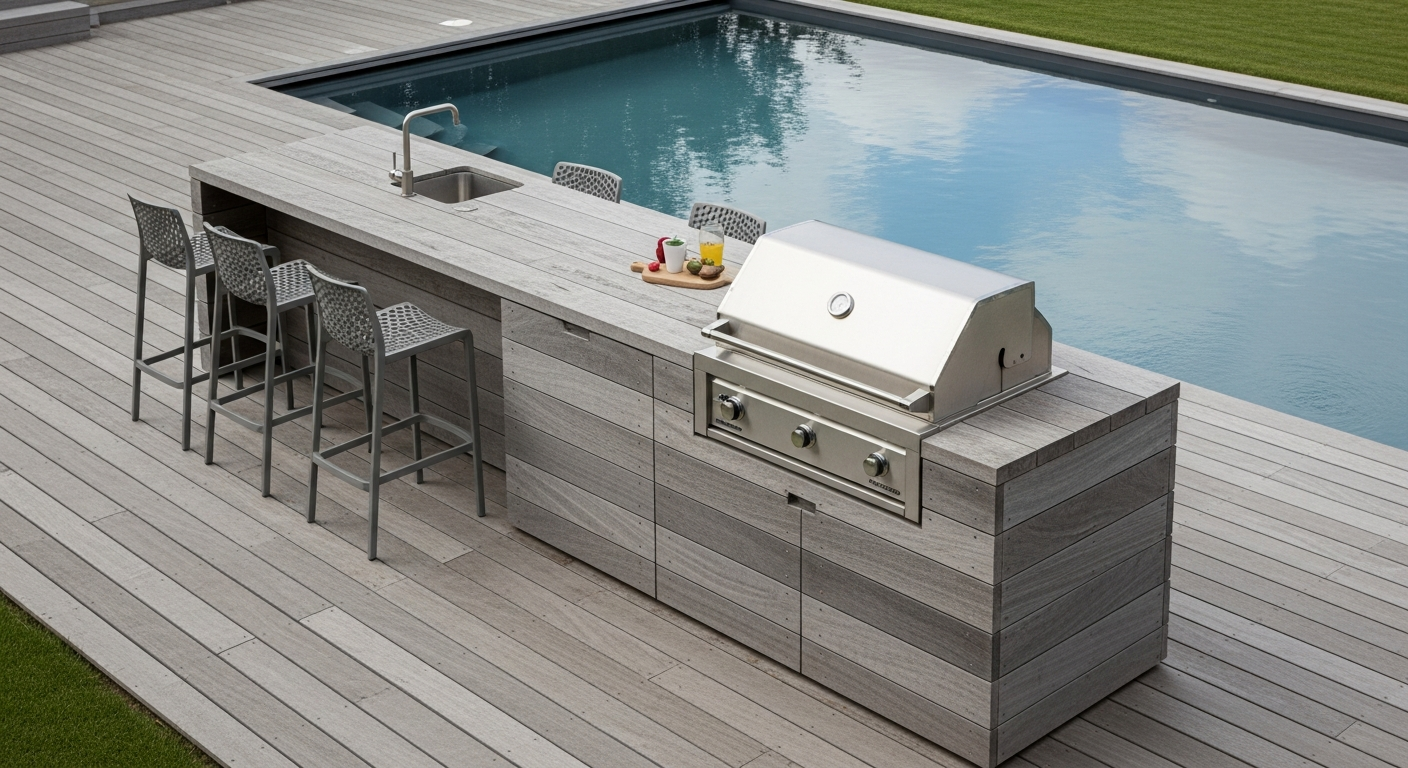
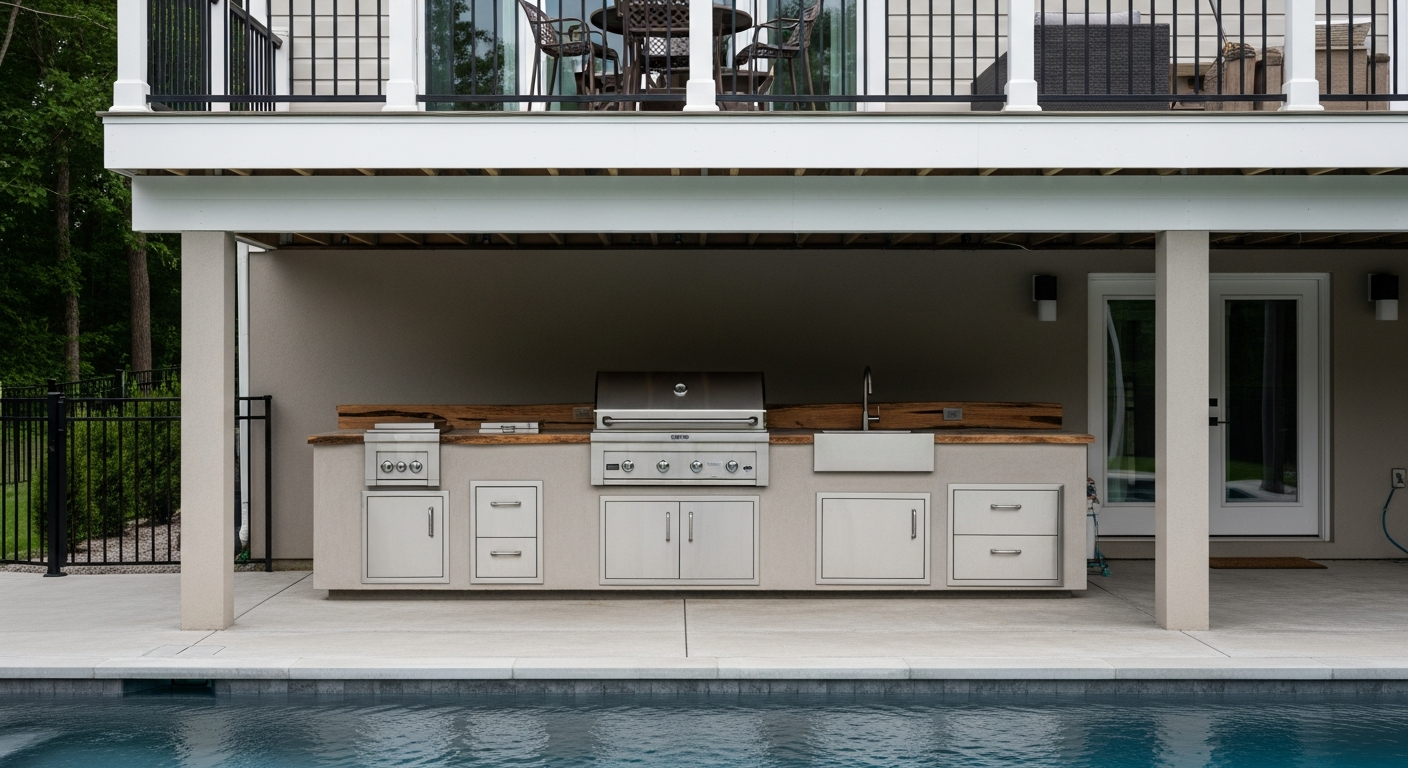
Most people hear "outdoor kitchen" and think stainless steel is the gold standard. In Pinellas, it's just the starting point, and the wrong grade is a recipe for disaster. This is the technical core of my selection process.- Cabinetry & Structure: For areas with direct salt spray exposure, like a deck on Clearwater Beach, I specify marine-grade 316L stainless steel. The "L" is critical; it denotes low carbon content, which provides superior resistance to weld decay. For less exposed areas or for clients who prefer a different look, High-Density Polyethylene (HDPE) cabinetry is my go-to. It's a polymer material that is completely impervious to moisture, salt, and will not warp or delaminate like wood or wood-veneered products.
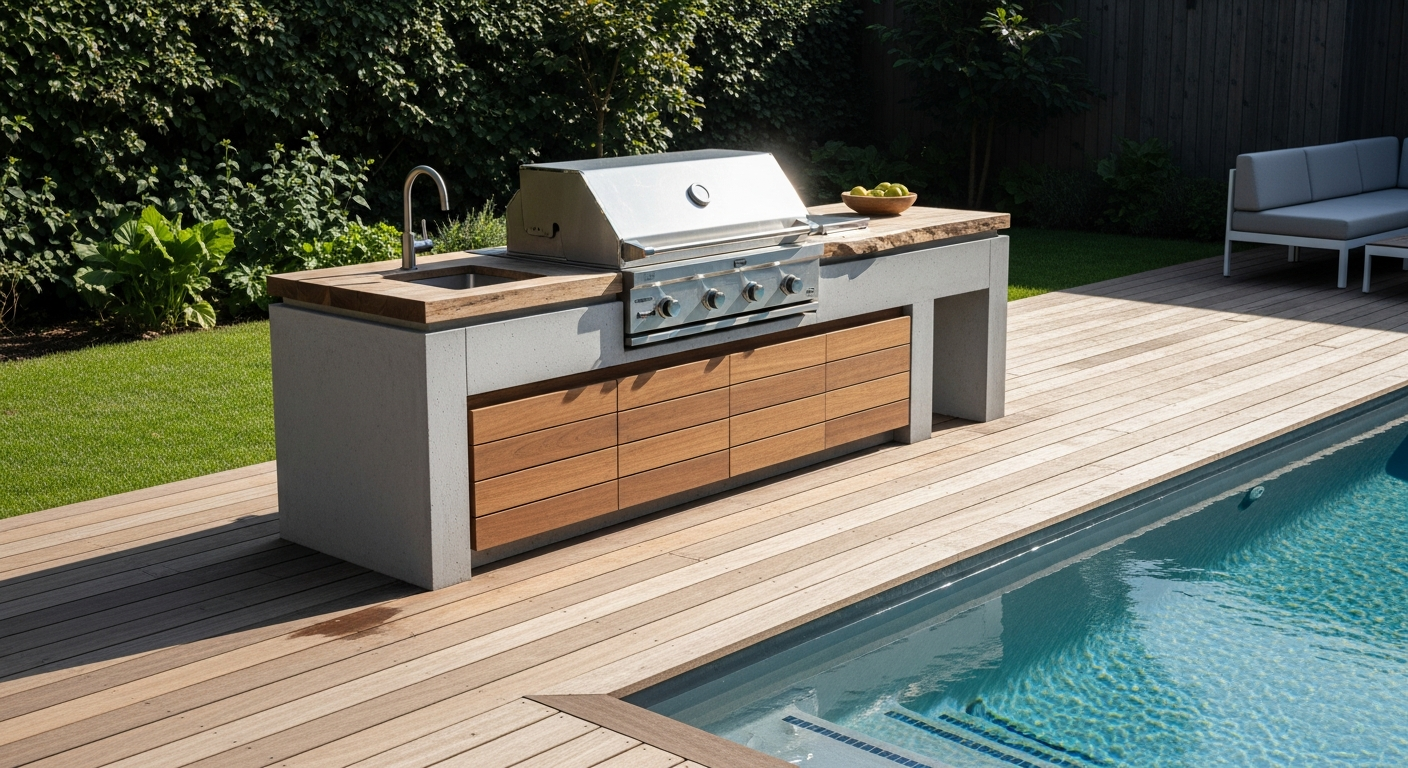
- Countertops: Granite is popular, but it's porous and requires sealing. In our high-humidity climate, I’ve seen moisture get trapped, leading to discoloration. My preference is for sintered stone (like Dekton). It’s a non-porous material with extreme UV stability, meaning the intense Florida sun won't fade its color over time, a common issue I've observed with certain quartz products.
- Fasteners and Hardware: This is a detail where a shocking number of installers cut corners. Every screw, bolt, and hinge must be, at a minimum, 316 stainless steel. Using anything less, like galvanized or 304-grade fasteners, creates points of galvanic corrosion that will bleed rust stains and compromise the entire structure. I found this to be the primary failure point in a large commercial project in Tarpon Springs.
The Phased Implementation Protocol
Once the materials are specified based on the audit, the implementation follows a rigid sequence to ensure longevity and safety. I structure every build around this checklist. Rushing a step or performing them out of order is how critical mistakes are made.- Phase 1: Substructure Verification. Verify the deck's load-bearing capacity with a structural engineer if the total weight of the kitchen (including countertops and appliances) exceeds 50 lbs per square foot. We must reinforce the joists and footings *before* any construction begins.
- Phase 2: Utility Rough-In. Plan and install all electrical and gas lines within moisture-proof conduits. I insist on GFCI outlets for all electrical connections and a dedicated gas shut-off valve that is easily accessible.
- Phase 3: Cabinet and Frame Installation. Secure the base structure to the deck using only the specified 316 stainless steel fasteners. Ensure a perfect level, as this will affect countertop installation and appliance fitment.
- Phase 4: Countertop and Appliance Placement. Set countertops with a slight drainage slope (minimum 1/8-inch per foot) away from the structure to prevent water pooling. Appliances should be installed with proper ventilation clearance as specified by the manufacturer.
- Phase 5: Final Connections & System Test. Integrate task lighting and connect all utilities. I perform a full system test, checking for gas leaks, electrical faults, and proper water drainage.
Precision Tuning for the Pinellas Climate
The final 10% of the work is what separates a standard installation from a high-performance one. These are the small adjustments that account for our specific environmental pressures. I’ve developed these standards after years of observing what works and what fails in the long term. A key quality standard I enforce is related to ventilation. A powerful grill requires a powerful vent hood, but simply matching sizes isn't enough. I calculate the required CFM (Cubic Feet per Minute) rating of the vent hood based on the total BTU output of the grill. A common error is under-sizing the vent hood, which leads to smoke and grease buildup on the surrounding deck and home structure. Another critical detail is ensuring all appliance seals and gaskets are rated for high-UV and high-humidity environments to prevent premature cracking and moisture intrusion into the electronic components. Now that you understand the material science and structural demands, how will you re-evaluate your appliance selection to ensure its internal components can withstand the same humidity your cabinets are built for?Written by

Tags
covered deck with outdoor kitchen
outdoor deck and kitchen ideas
outdoor kitchen on a wood deck
outdoor kitchen wood deck
wood deck outdoor kitchen