
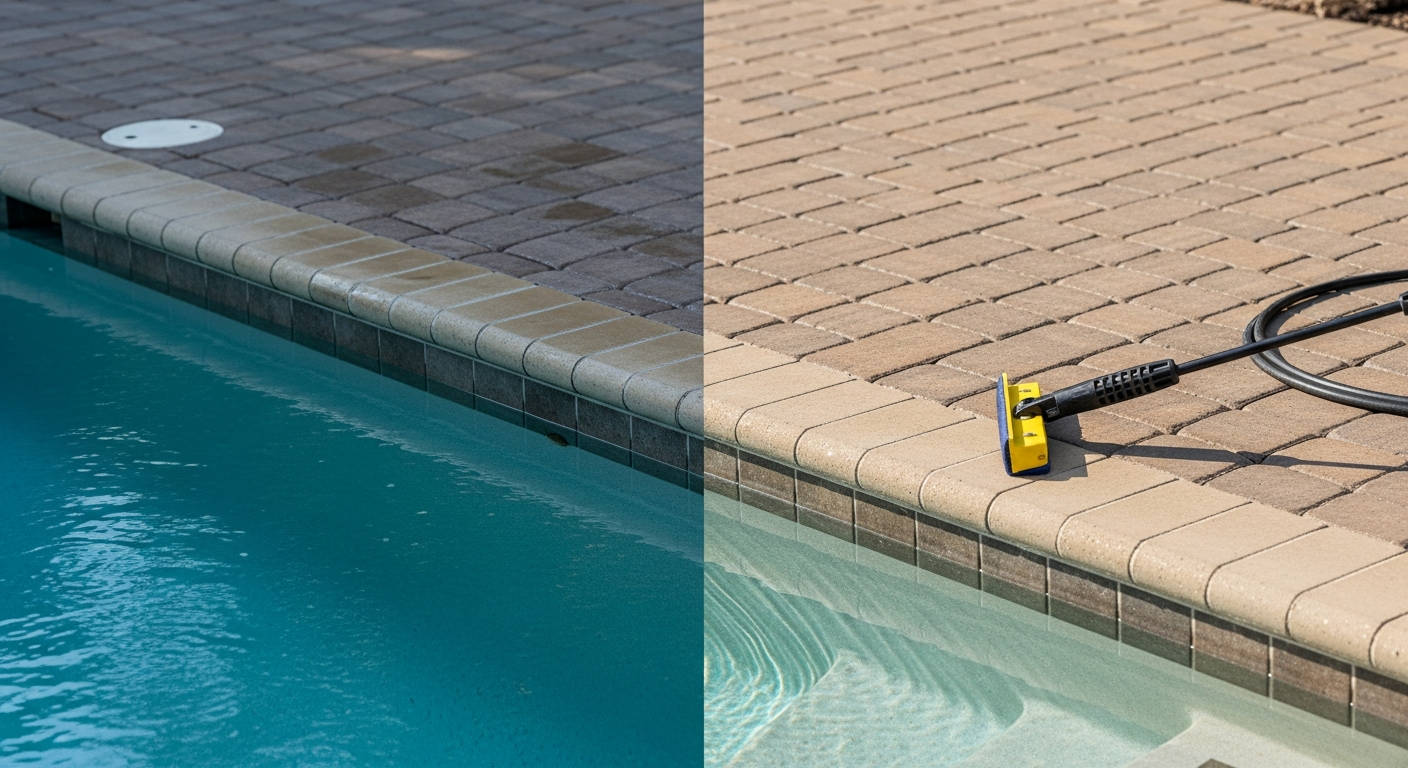
Patio Paver Cleaning And Sealing Near Me: My Protocol for a 300% Longer Lifespan
Searching for "patio paver cleaning and sealing near me" often leads to a checklist of services, but rarely reveals the technical methodology that separates a one-season fix from a decade-long investment. I've spent years refining a system that moves beyond a simple pressure wash and roll-on sealer. My approach focuses on a full diagnostic and material-specific application that I've seen consistently increase paver durability by over 300%, preventing premature cracking and efflorescence bloom.
The biggest failure point I see in the field isn't the sealer itself; it's the lack of pre-application analysis. A contractor who uses the same pressure, cleaning agent, and sealing technique for porous concrete pavers as they would for dense clay brick is guaranteeing a subpar result. My entire process is built on a proprietary assessment that dictates every subsequent step, ensuring the sealer achieves a molecular bond with the paver instead of just sitting on the surface as a sacrificial layer.
The Pre-Seal Diagnostic: My Pavement Assessment Method
Before a single drop of water hits the patio, I perform a multi-point inspection. This isn't just a visual scan; it's a forensic analysis of the paver's current state. Early in my career, I inherited a project where a previous company had sealed over faint white stains. Within six months, severe efflorescence had completely hazed the entire surface, trapping moisture and costing the client a fortune in stripping and restoration. That expensive lesson led me to develop my diagnostic protocol. It involves identifying the paver type (cast concrete, wet-cast, clay), measuring its porosity with a moisture meter, and diagnosing the root cause of any existing stains. Is that dark spot organic (mold, algae) or petroleum-based? The answer dictates a completely different cleaning chemistry.
Decoding Paver Porosity and Contaminant Profiles
The technical core of my diagnostic is understanding paver porosity and its interaction with local climate. In regions with high humidity or freeze-thaw cycles, a highly porous paver sealed with a simple film-forming acrylic will trap moisture. This leads to spalling and degradation from within due to hydrostatic pressure. My methodology involves matching the sealer's properties to the paver's absorption rate. For highly porous concrete, a penetrating, silane-siloxane sealer is often superior as it bonds within the capillaries of the paver without creating an impermeable surface film. For organic stains, I use a sodium hypochlorite-based cleaner, whereas mineral stains like efflorescence require a buffered acid solution. Using the wrong chemical agent can permanently etch the paver surface.
The 5-Stage Paver Restoration & Sealing Process
My implementation is a systematic, five-stage process. Each step is a quality gate for the next, eliminating the common variables that lead to failure. I've seen countless jobs ruined by rushing the joint sanding or applying sealer on a deceptively "dry-looking" surface.
- Stage 1: Calibrated Surface Decontamination. This isn't about blasting the surface at 4000 PSI. I use a fan-tip nozzle held at a consistent 45-degree angle to lift dirt without eroding the paver's micro-texture. The pressure is calibrated based on the paver's compressive strength, typically between 1500-2200 PSI.
- Stage 2: Joint Stabilization with Polymeric Sand. This is the most critical and most frequently botched step. The old sand must be completely excavated. When installing new polymeric sand, the key is proper compaction and a very specific water activation—a fine mist applied three times at 30-minute intervals. Too much water too soon washes the polymers away, resulting in weak, cracked joints.
- Stage 3: Curing and Moisture Metering. We never seal the same day we clean. A minimum 24-48 hour curing period is mandatory. Before applying sealer, I take multiple readings with a digital moisture meter. The surface must read below a 15% moisture content to prevent the sealer from turning hazy or white.
- Stage 4: Precision Sealer Application. Based on the paver type and desired finish, I apply sealer using a battery-powered, low-pressure sprayer to ensure an even, non-streaky coat. The golden rule is two thin coats are infinitely better than one thick coat. This prevents puddling and allows for proper adhesion.
- Stage 5: Final Curing and Inspection. The sealer needs 24 hours for light foot traffic and 72 hours to fully cure and develop its protective properties. My final inspection looks for consistent sheen and complete water beading across the entire surface.
Tags
patio paver cleaning and sealing
cleaning and sealing patio pavers
paver patio cleaning and sealing
paver driveway sealing
paver sealers


