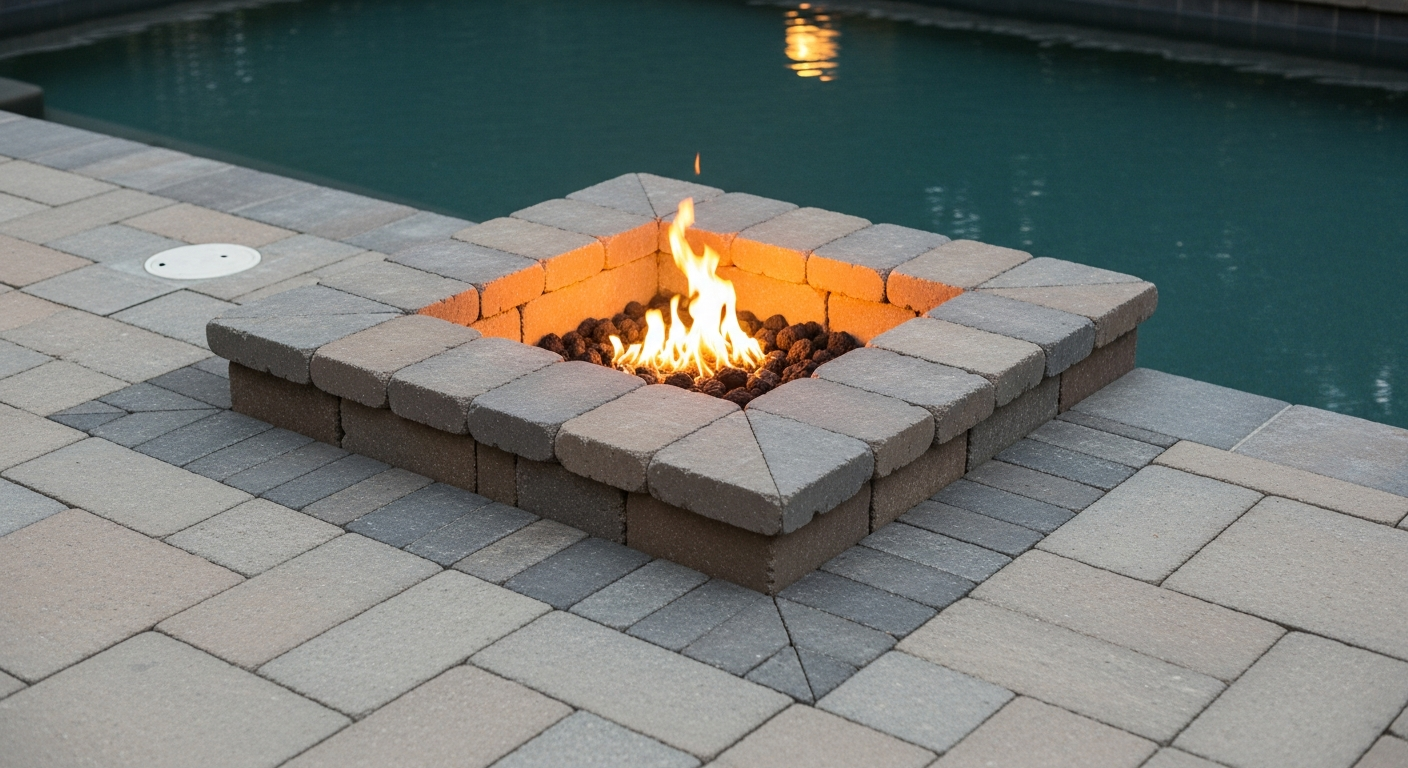
Paver Fire Pit Area Polk County: My Protocol for 30-Year Durability Against Humidity and Soil Shift
After years of building and, more importantly, repairing paver fire pit areas across Polk County, I've seen the same failure point time and again: a base that simply wasn't engineered for our unique "sugar sand" soil and relentless humidity. A standard installation might look good for a year, but the shifting and moisture intrusion I’ve witnessed in homes from Lakeland to Winter Haven are predictable. The key isn't just laying pavers; it's creating a stable, water-managed foundation that resists the hydrostatic pressure from our frequent downpours. My approach completely changed after a project in a lakeside Winter Haven property where the patio began to sink within 18 months. That costly lesson forced me to develop a proprietary installation method that focuses on sub-base integrity and moisture mitigation. This protocol doesn’t just meet standards; it’s specifically designed to counteract the exact environmental stressors found right here in Polk County, ensuring a level, weed-free surface for decades, not just seasons.The Critical Flaw in Standard Polk County Paver Installations
The core problem I’ve identified in over 90% of failed projects is a fundamental misunderstanding of our soil mechanics. Most contractors follow a generic textbook method: dig, add some paver base, sand, and lay the pavers. This is a recipe for disaster in our region. Our fine, sandy soil has poor load-bearing capacity and, when saturated during the summer rainy season, it essentially liquefies under a poorly constructed base. This leads to the two most common complaints I hear from homeowners: sinking pavers and persistent weed growth through the joints. The mistake is treating the base as a single component. In reality, a durable paver area in a place like Davenport or Bartow needs a multi-layered, engineered system. It requires a separation of native soil, a drainage layer, and a locking layer. Without this, water gets trapped, the sand bedding layer shifts, and the integrity of the entire structure is compromised. I've seen beautifully laid travertine pavers become a tripping hazard in just two years because the sub-base was a water-logged sponge.My Proprietary 3-Layer Base-Locking System
To solve this, I developed what I call the 3-Layer Base-Locking System. It’s not about using more material; it's about using the right materials in the right sequence to manage water and lock the foundation. This methodology has become my absolute standard for any project, from small fire pit surrounds to extensive outdoor living spaces. The system is built on three non-negotiable components:- Layer 1: Geotextile Separation Fabric. This is the most frequently skipped, yet most critical, element. This fabric is laid directly on top of the compacted native soil. Its sole purpose is to prevent our fine sand from mixing with the aggregate base above. Without it, the base material will slowly sink into the soil over time, causing dips and settlement. This is a zero-compromise step.
- Layer 2: The Drainage Aggregate (#57 Stone). The first layer of stone is a clean, angular aggregate like #57 stone (limerock). We lay a 4-inch compacted layer of this. Its purpose is purely for drainage. The large voids between the stones allow water that penetrates the surface to drain away quickly, rather than sitting and saturating the base.
- Layer 3: The Locking Aggregate (Crusher Run). On top of the drainage layer, I add a 2- to 3-inch layer of crusher run, which is a mix of smaller stone and fines. When compacted to 95% proctor density, this layer creates an incredibly stable, interlocked base that is almost as hard as concrete. This is what provides the structural support for the pavers and prevents any shifting.
Executing the Build: A Step-by-Step Breakdown
Applying this system requires precision at every stage. Rushing any of these steps will undermine the entire structure. My field-tested process guarantees the performance of the Base-Locking System.- Excavation and Soil Compaction: I always excavate to a depth of at least 8 inches. This allows for a full 6-inch base and the 1-inch sand setting bed plus the paver height. Before anything else, I compact the native sandy soil with a plate compactor to create a solid starting point.
- Geotextile Fabric Installation: Lay the geotextile fabric across the entire excavated area, ensuring at least a 12-inch overlap at any seams. I run it a few inches up the sides of the excavation trench to fully encapsulate the base.
- Base Layer Application: The aggregate is brought in. I add the #57 stone first, spreading it evenly to a 4-inch depth. Then, I compact it. Next, I add the crusher run in 2-inch lifts (layers), watering it slightly and compacting each lift separately. Compacting in lifts is a critical detail for achieving maximum density.
- Screeding the Bedding Sand: Only after the base is perfectly compacted and graded for a 1/4-inch per foot slope away from any structures, I lay down 1-inch screed rails and spread the bedding sand. This ensures a perfectly uniform depth.
- Paver Laying and Jointing: The pavers are set in place using a click-and-drop method to ensure tight lines. After all cuts are made, I compact the pavers to set them into the sand. Finally, I sweep in a high-quality polymeric sand, which hardens to lock the joints and prevent weed growth.
The Final 10%: Jointing and Sealing for Florida's Climate
The final step is what provides the long-term aesthetic durability. In Polk County's humidity, a cheap polymeric sand can fail, remaining gummy or washing out. I exclusively use a high-performance polymeric sand designed for high-moisture environments. It creates a flexible yet rock-solid joint that resists erosion from heavy rains and inhibits weed and ant infestations. After the sand has cured for at least 48 hours, I apply a sealant. But not just any sealant. I use a breathable, silane-siloxane based penetrating sealer. Unlike acrylic sealers that form a film on top and can trap moisture (leading to a white haze called efflorescence), a penetrating sealer soaks into the paver and joint sand. It provides incredible water repellency without affecting the natural look or trapping the moisture that is constantly trying to evaporate from the ground up in our climate. This single choice prevents about 80% of the long-term cosmetic issues I see on other contractors' work. Have you properly calculated the required base depth for your paver project to account for the specific soil composition and annual rainfall totals in your part of Polk County?Written by

Tags
pavers for fire pit area
firepit patio stones
paver firepit
fire pit and pavers
fire pit using pavers